
 By admin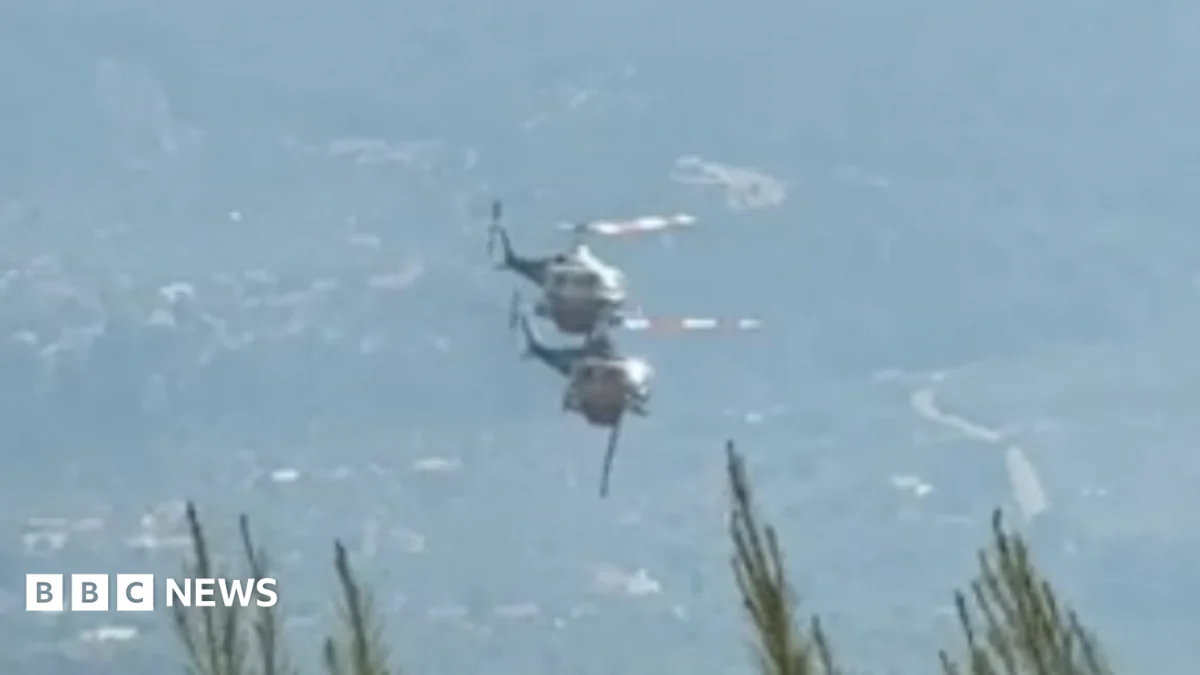
A catastrophic mid-air collision between two helicopters engaged in the desperate fight against Greece’s escalating wildfires has resulted in the tragic deaths of two crew members, sending shockwaves through the nation and highlighting the perilous nature of modern firefighting efforts. The devastating incident, which occurred approximately 65 kilometers (42 miles) west of the capital, Athens, involved two Bell helicopters leased for critical wildfire suppression operations. Local authorities confirmed the fatalities as a Danish pilot and a Greek fire service liaison officer, whose lives were extinguished in the violent aerial crash. Miraculously, a British pilot and another Greek coordinator aboard the second helicopter survived the harrowing ordeal, though details of their injuries and current condition have not been fully disclosed.
The harrowing footage captured from the scene vividly depicts the moments leading up to the disaster. One of the Bell helicopters is seen making contact with the propellers of the other, an impact that instantly ignited a fiery inferno. Both aircraft, engulfed in flames, plummeted into a deep ravine, leaving behind a scene of utter devastation. The collision occurred while the helicopters were actively participating in efforts to combat a significant wildfire raging along the Attica-Boeotia border, a region already grappling with the relentless advance of flames.
The Greek Fire Service, in its official statement, confirmed the identity of the helicopters involved as two leased Bell models, emphasizing their crucial role in tackling the blaze. The crew members of one aircraft were reportedly rescued alive, a testament to swift emergency response. However, the occupants of the second helicopter were recovered unconscious from the wreckage and were later pronounced dead. This stark contrast in outcomes underscores the unpredictable and unforgiving nature of such aerial operations.
The gravity of the loss was immediately acknowledged by Greek Prime Minister Kyriakos Mitsotakis, who expressed his "deepest sorrow" over the accident. In a poignant post on the social media platform X, formerly Twitter, he stated that the loss of the Greek coordinator and the Danish pilot "fills us all with grief." He extended his heartfelt condolences to the families of the deceased, acknowledging the immense personal tragedy that has befallen them amidst the broader national crisis.
In response to the devastating collision, a significant safety measure has been implemented. A source from the Ministry of Civil Protection informed the BBC that, as per protocol, all Bell helicopters operating across Greece have been grounded pending a thorough investigation into the incident. This precautionary measure aims to prevent any further tragedies and to allow authorities to meticulously examine the circumstances that led to this fatal crash. Meanwhile, other vital firefighting assets, including Erickson Air-Crane and Chinook helicopters, alongside Canadair water-bombing aircraft, continue their relentless efforts to contain the numerous blazes across the country.
The incident in Greece occurs against a backdrop of a severe and prolonged wildfire season gripping Europe. Several other nations have been battling devastating infernos fueled by a succession of intense heatwaves. Earlier in the week, France and Spain were particularly hard-hit, with major fires erupting near Madrid and Bordeaux. While these specific blazes have since been contained, they continue to smolder, a stark reminder of the persistent threat. In a glimmer of hope amidst the widespread destruction, approximately 300,000 people who were evacuated from their homes in these affected regions have begun to return.
In Greece, the situation remains dire, with media reports painting a grim picture of a "titanic battle" being waged across a vast swathe of territory. Regions including Porto Germeno, Psatha, Fokida, Megara, and Kefalonia are engulfed in flames, with over 500 firefighters working tirelessly for the past 72 hours to bring the infernos under control. The sheer scale of these wildfires, coupled with the constant threat of new ignitions, has placed an immense strain on emergency services.
The underlying causes of this intensified wildfire season are multifaceted, with climate change playing a pivotal and increasingly dominant role. While most wildfires are sparked by human activity, either intentionally or accidentally, the prevailing meteorological conditions have become significantly more conducive to their rapid spread and intensity. Experts point to a confluence of factors, including prolonged periods of high temperatures and insufficient rainfall, which have desiccated vegetation, transforming it into highly flammable fuel.
This year’s specific conditions are exacerbated by a mild and wet winter that encouraged robust vegetation growth across much of Europe. This lush greenery, which might typically be seen as a positive sign, has subsequently dried out under successive hot spells, creating a tinderbox effect. The abundant dead and dry plant matter provides ample fuel for fires to ignite and spread with unprecedented speed and ferocity.
The mid-air collision, while a specific and tragic event, serves as a stark illustration of the inherent dangers faced by those on the front lines of wildfire suppression. These individuals, often working in challenging and unpredictable environments, put their lives on the line daily to protect lives and property. The loss of the Danish pilot and the Greek liaison officer is a profound blow not only to their families and colleagues but also to the collective effort to combat the wildfire crisis.
The grounding of Bell helicopters, while a necessary safety precaution, may also impact immediate firefighting capabilities, underscoring the delicate balance between operational needs and safety imperatives. The reliance on a diverse fleet of aircraft is crucial for effective wildfire management, and any disruption to these resources can have significant consequences.
The international dimension of this tragedy, with a Danish pilot losing their life, also highlights the collaborative nature of modern disaster response. Wildfires do not respect national borders, and often, international support and expertise are called upon to bolster local efforts. The presence of a Danish pilot underscores the global solidarity that is often mobilized in times of crisis.
Looking ahead, the incident is likely to trigger a comprehensive review of air safety protocols in wildfire operations. Investigations into the precise cause of the collision will undoubtedly focus on factors such as flight path management, communication between aircraft, visibility conditions, and the overall operational procedures for aerial firefighting. The findings of this investigation will be crucial in preventing similar tragedies in the future.
The ongoing battle against wildfires across Europe is a stark reminder of the escalating challenges posed by climate change. The increased frequency and intensity of extreme weather events, including heatwaves and droughts, are creating a new normal for wildfire seasons. This necessitates a multi-pronged approach, encompassing not only enhanced firefighting capabilities but also a concerted global effort to mitigate climate change and adapt to its unavoidable impacts.
The brave men and women who pilot these machines and coordinate these efforts are performing an invaluable service. Their dedication, skill, and courage are essential in safeguarding communities from the destructive power of wildfires. The tragic loss of life in Greece is a somber reminder of the sacrifices they make and the profound risks they undertake. As the flames continue to rage in various parts of Greece and beyond, the memory of those lost will undoubtedly serve as a poignant impetus to redouble efforts, both in immediate response and in the long-term fight against the environmental forces that are fueling these devastating fires. The incident serves as a critical juncture, prompting urgent reflection on the safety and effectiveness of aerial firefighting techniques in an era of intensifying climate-induced disasters.
