
 By admin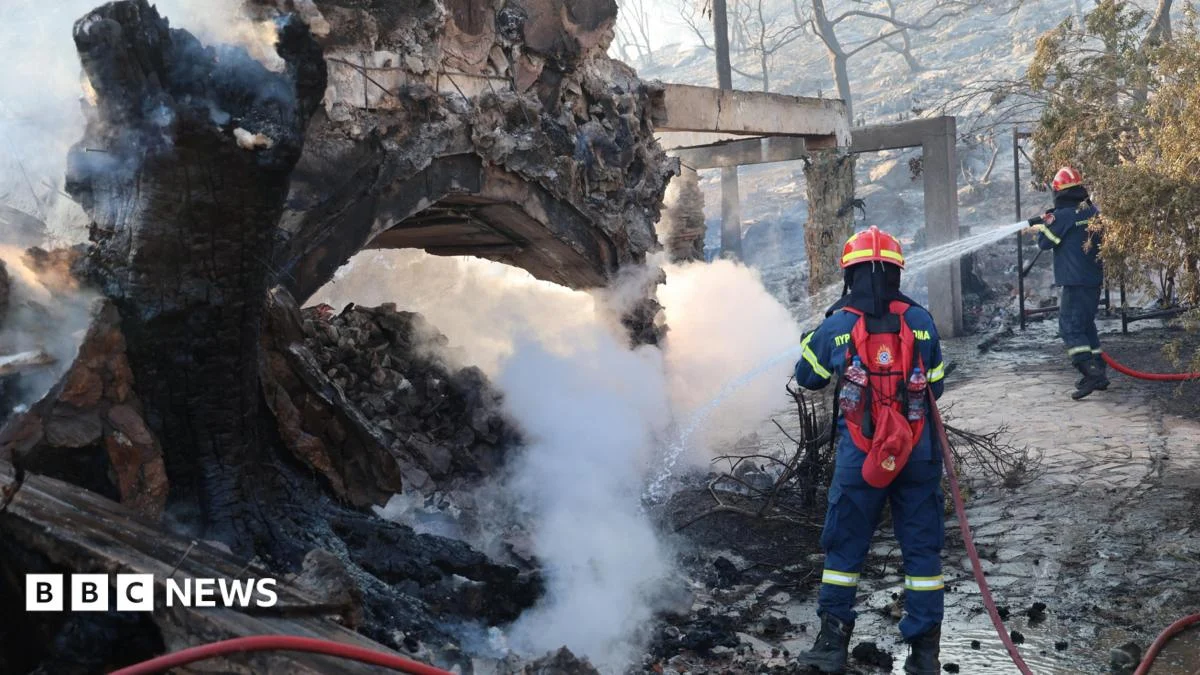
Two lives were tragically lost and hundreds of residents were forced to flee their homes as two devastating wildfires erupted with alarming speed and proximity on the Greek island of Salamina, a vital and populous island just a stone’s throw from the bustling metropolis of Athens. The infernos, which broke out in rapid succession on Sunday afternoon, presented an immediate and overwhelming challenge to emergency services, igniting fears of a larger catastrophe.
The first alarm sounded at approximately 14:40 local time (11:40 GMT) near the island’s southern coast, quickly engulfing a mixed residential and forested area in Peristeria. Fueled by a potent combination of dry vegetation and unseasonably strong winds, the blaze rapidly escalated, its fiery tendrils reaching out with terrifying speed. Just twenty minutes later, a second, equally aggressive fire ignited in the eastern part of the island, in the town of Selinia. The near-simultaneous ignition of these two separate blazes has raised immediate questions about their origin, with authorities launching investigations into potential causes, though no definitive conclusions have yet been reached.
The scale of the unfolding disaster necessitated an immediate and large-scale evacuation effort. Greek media reports indicated that over 500 individuals had already been evacuated by sea, a testament to the swift and decisive action taken by authorities to safeguard lives. The island’s strategic location, acting as a crucial naval base and a popular residential area for those working in Athens, meant that the evacuations involved a diverse population, from families with young children to elderly residents. The logistical challenge of moving such a significant number of people under the threat of encroaching flames was immense, relying heavily on the coordinated efforts of the Hellenic Coast Guard and numerous private vessels that generously offered their assistance.
The response from emergency services was swift and comprehensive, though the sheer ferocity of the fires tested the limits of their capabilities. Approximately 200 firefighters were deployed to the island, battling relentlessly to contain the twin infernos and, critically, to prevent them from converging into a single, uncontrollable conflagration. Their primary objective was to establish firebreaks and strategic defensive lines, particularly in an attempt to stop the flames from cresting a central mountain range that separates the two affected areas. The Deputy Mayor of Salamina, Thodoris Zannis, underscored the critical nature of this effort, stating that firefighters were engaged in a desperate race against time to achieve this crucial containment.
The human toll of the disaster became tragically apparent early in the response. Firefighters, bravely navigating the treacherous conditions of the first blaze in Peristeria, discovered the bodies of two individuals at the scene. While the identities of the deceased have not yet been released, their deaths cast a somber shadow over the unfolding events and highlighted the inherent dangers faced by those caught in the path of wildfires. In addition to the fatalities, the Greek Health Minister, Adonis Georgiades, reported on X that at least 10 people had suffered injuries, including burns and symptoms of smoke inhalation. Five of these individuals required immediate medical attention and were transported for treatment at local facilities, underscoring the immediate health risks associated with such intense fires.
The Greek government has mobilized significant resources to combat the crisis. A fleet of five patrol boats was dispatched to the area to support the evacuation and maritime rescue operations. The deployment of numerous aircraft, equipped with water-dropping capabilities, aimed to douse the flames from above, while 50 fire engines were actively engaged in ground operations. The urgency of the situation was further emphasized by the fact that Sunday had been designated as a day of high wildfire risk for the region, a warning that tragically proved insufficient to prevent these devastating events.
The island of Salamina itself holds significant historical and strategic importance for Greece. It is home to a major naval base, a vital component of the Hellenic Navy, and has a substantial civilian population. Its proximity to Athens makes it a popular residential choice for commuters, contributing to its densely populated areas interspersed with significant natural landscapes, including forested hillsides. This mixed landscape proved to be a volatile combination when exposed to the extreme fire conditions. The island’s geography, characterized by rolling hills and a network of roads, also presented challenges for emergency access and the establishment of effective firebreaks.
The timing of the fires, occurring on a weekend when many residents might be at home or enjoying outdoor activities, likely exacerbated the evacuation challenges and the potential for casualties. The high winds, a recurring factor in Mediterranean wildfires, played a critical role in the rapid spread of both blazes, transforming what might have initially been localized incidents into widespread emergencies. The dry vegetation, a consequence of the prevailing Mediterranean climate and potentially influenced by recent weather patterns, provided ample fuel for the fires to rage unchecked.
The cause of the fires remains a primary focus of the ongoing investigations. While accidental ignitions due to dry lightning or discarded cigarettes are common causes of wildfires, the near-simultaneous eruption of two distinct blazes has also raised the possibility of arson. Greek authorities are meticulously examining all evidence to determine the origin of these catastrophic events. The potential for human negligence or deliberate intent adds another layer of complexity and distress to an already tragic situation.
The broader context of climate change and its impact on wildfire seasons in Greece cannot be ignored. Experts have repeatedly warned that rising global temperatures are leading to hotter, drier summers, increasing the frequency and intensity of wildfires across the Mediterranean. The events on Salamina serve as a stark reminder of the escalating threat posed by these extreme weather events and the urgent need for enhanced prevention strategies, improved firefighting infrastructure, and greater public awareness regarding fire safety.
The immediate aftermath of the fires on Salamina will involve extensive damage assessment, ongoing firefighting efforts to ensure the blazes are fully extinguished, and the provision of support to the displaced residents. The psychological impact on the community, having experienced such a traumatic event, will also require significant attention. The recovery process for the island will likely be long and arduous, encompassing not only the physical rebuilding of damaged areas but also the emotional healing of a community shaken by loss and destruction.
As the smoke begins to clear, the questions surrounding the Salamina fires will persist. The loss of life is a profound tragedy, and the widespread displacement of residents underscores the vulnerability of communities living in fire-prone areas. The incident serves as a critical juncture for Greece to re-evaluate its wildfire preparedness and response strategies, drawing lessons from this devastating event to better protect its citizens and its invaluable natural heritage from the ever-growing threat of wildfires. The island of Salamina, a place of strategic importance and natural beauty, now stands as a somber testament to the destructive power of nature, amplified by the challenges of a changing climate.
