
 By admin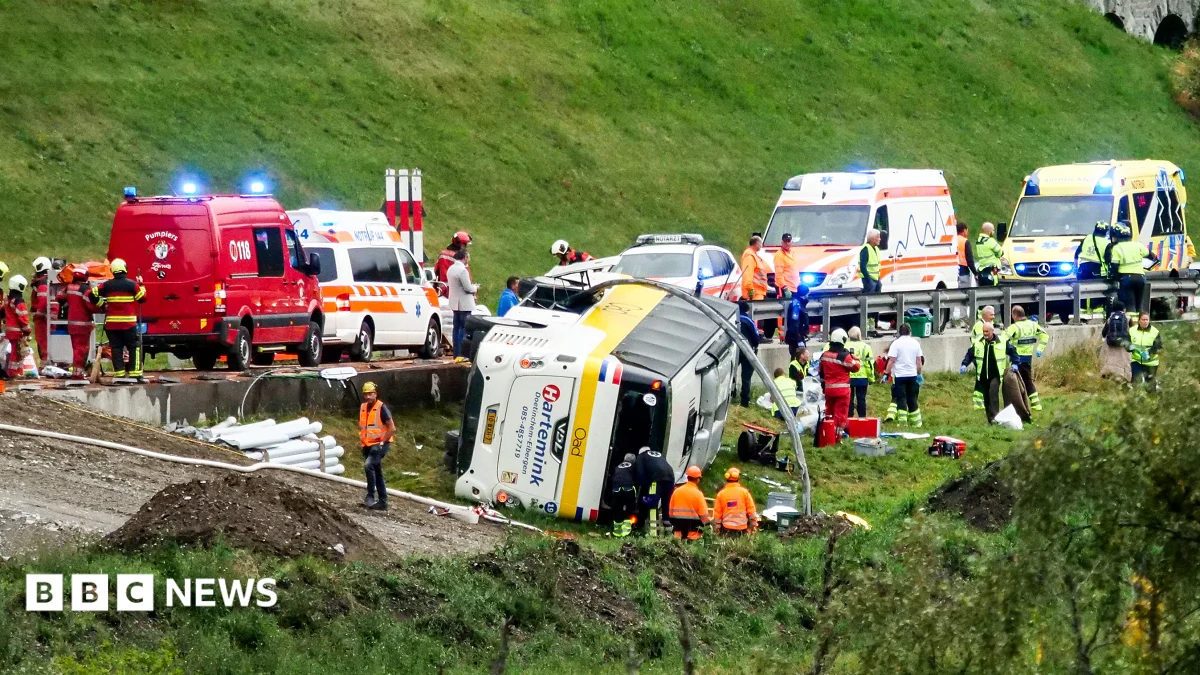
A devastating incident unfolded late Thursday afternoon in the picturesque yet treacherous terrain of the south-eastern Swiss Alps, where a tourist coach carrying 48 Dutch passengers overturned between the villages of Susch and Zernez in the Graubünden (also known as Grisons) region. Local police have confirmed that the horrific crash resulted in multiple fatalities and a significant number of injuries, casting a dark shadow over the usually serene mountainous landscape. The gravity of the situation necessitated an immediate and extensive rescue operation, with a large contingent of emergency personnel, supported by several helicopters, swiftly deployed to the remote accident site.
The ill-fated coach, operated by tour operator OAD and carrying a group of Dutch tourists, had embarked on its journey from the Netherlands on Monday. The tragic accident occurred while the bus was on a day trip to Switzerland from Austria, a common itinerary for travelers seeking the breathtaking vistas and recreational opportunities the Alps offer. The precise number of casualties, both deceased and injured, remains unconfirmed at this early stage, according to a spokeswoman for the General Dutch Association of Travel Companies, who spoke on behalf of OAD to the Dutch newspaper De Telegraaf. The spokesperson expressed the company’s deep distress and stated that their immediate priority was to gather accurate information and provide support to those affected and their families.
Images circulating on Swiss news platforms paint a stark and somber picture of the aftermath. The photographs depict a large coach lying on its side, precariously positioned beside a narrow country road. The scene is a tableau of emergency response, with numerous ambulances lined up, their flashing lights a stark contrast to the natural beauty of the surroundings. Groups of rescuers, clad in their operational gear, are seen diligently working at the scene, their efforts focused on extricating individuals and attending to the injured. The remoteness of the location, coupled with the challenging mountainous terrain, undoubtedly added layers of complexity to the rescue and recovery efforts.
Zernez, the town near the accident site, serves as a vital gateway for visitors venturing into the Swiss National Park. This expansive Alpine reserve, stretching over 100 square kilometers (approximately 40 square miles), is renowned for its pristine wilderness and dramatic landscapes, encompassing the vast and majestic Engadine valley. The region is a magnet for nature enthusiasts, hikers, and skiers, drawing international visitors seeking adventure and tranquility. The timing of the accident, during a day trip, suggests that the passengers were likely enjoying the scenic beauty of the Alps when the catastrophic event occurred.
The cause of the crash is currently under investigation by Swiss authorities. Factors such as speed, road conditions, potential mechanical failure, or driver fatigue will undoubtedly be thoroughly examined. The narrowness and winding nature of Alpine roads, while offering spectacular views, also present inherent challenges for large vehicles like tour coaches, especially during adverse weather conditions or if drivers are not fully accustomed to such routes. The Graubünden canton, being Switzerland’s largest, boasts a diverse topography ranging from high mountain passes to deep valleys, and its road network, while generally well-maintained, can be demanding.
The incident immediately triggered a coordinated response involving various emergency services. The deployment of multiple helicopters was crucial for rapid assessment of the scene, efficient transportation of critically injured individuals to specialized medical facilities, and for providing aerial support to ground crews. Local hospitals in the vicinity, as well as those in larger centers within Graubünden and potentially neighboring cantons, would have been alerted and prepared to receive casualties. The Swiss Air-Rescue (Rega) service, a highly respected organization, likely played a significant role in the air medical evacuation.
The General Dutch Association of Travel Companies (ANVR) and the tour operator OAD are now facing the immense task of managing the crisis. This includes identifying all passengers on board, contacting their next of kin, providing consular assistance to Dutch citizens, and coordinating the repatriation of those who were not seriously injured. The emotional toll on the survivors, as well as the families of those who perished, will be profound and long-lasting. Support services, including psychological counseling, will be essential in the coming days and weeks.
This tragic event brings to the forefront the inherent risks associated with travel, particularly in challenging environments like mountain regions. While Switzerland is globally recognized for its high safety standards and efficient infrastructure, accidents, though infrequent, can still occur. The country’s commitment to road safety is generally robust, with strict regulations on vehicle maintenance, driver training, and speed limits. However, the unpredictable nature of weather, especially in the Alps, can rapidly change road conditions, posing additional hazards.
The investigation into the crash will likely involve forensic analysis of the vehicle, examination of the road where the accident occurred, and interviews with any witnesses. The Swiss Transportation Safety Investigation Board (STIB) is a dedicated authority responsible for investigating accidents in the transport sector and will undoubtedly be involved in determining the root cause of this devastating incident. Their findings will be crucial in understanding what went wrong and in implementing measures to prevent similar tragedies in the future.
The Graubünden region, with its stunning natural beauty, is a popular destination for Dutch tourists. Many opt for coach tours as a convenient and often more economical way to explore the Alps, especially for larger groups. These tours are typically meticulously planned, with experienced drivers and well-maintained vehicles. The fact that this tour was a day trip from Austria suggests it was part of a larger itinerary, possibly a multi-day excursion through Central Europe.
The news of the crash has sent shockwaves through the Netherlands, where the 48 passengers originated. The Dutch Ministry of Foreign Affairs will be working closely with Swiss authorities and the Dutch Embassy in Switzerland to provide all necessary assistance to the victims and their families. Support hotlines and information channels are expected to be established to manage the flow of information and provide a point of contact for concerned individuals.
The scale of the rescue operation underscores the severity of the crash. The logistical challenges of operating in a mountainous area, especially with multiple casualties, require a high degree of coordination and expertise. Emergency responders from various cantonal police forces, fire departments, and ambulance services would have been mobilized, working collaboratively to ensure the best possible outcome for those involved. The use of specialized mountain rescue teams might also have been necessary, depending on the exact location and the condition of the coach.
As investigations continue, the focus will remain on supporting the victims and their families. The solidarity of the local Swiss community and the efficiency of the emergency services will be crucial in navigating this difficult period. The tragic loss of life and the injuries sustained serve as a somber reminder of the fragility of life and the importance of safety in all forms of travel, especially in the awe-inspiring yet demanding landscapes of the Swiss Alps. The full story of what transpired on that fateful Thursday afternoon will undoubtedly emerge as the investigation progresses, shedding light on the circumstances that led to this heart-wrenching accident. The coming days will be marked by grief, uncertainty, and a collective effort to provide comfort and support to all those affected by this profound tragedy.
