
 By admin
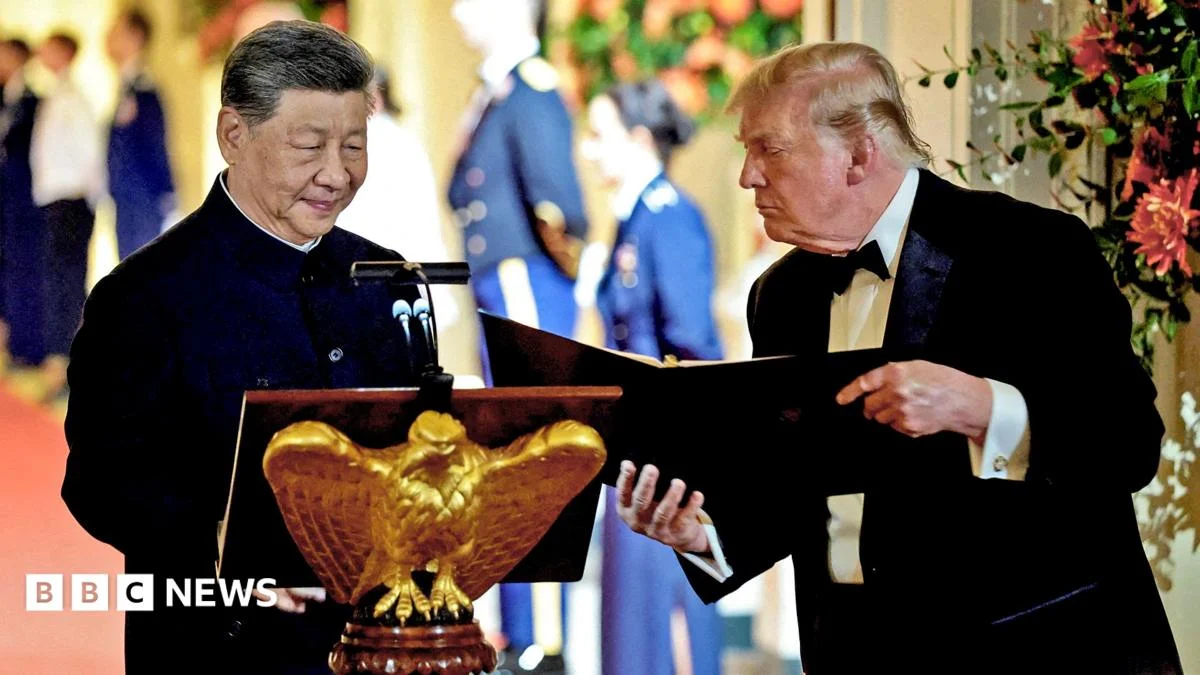
The opulent affair, held in the East Room of the White House on Thursday evening, was a spectacle of diplomatic theater, designed to project an image of camaraderie between the leaders of the world’s two most powerful nations. Amidst gleaming chandeliers and meticulously arranged floral displays, Presidents Trump and Xi offered toasts and speeches that emphasized shared ambitions and the potential for a harmonious future. However, beneath the veneer of civility, the substantive challenges that define the complex US-China relationship remained largely unaddressed, casting a shadow over the celebratory occasion.
President Xi, in his remarks, underscored the critical importance of responsible global leadership, particularly in the burgeoning field of artificial intelligence. He stressed that nations must ensure AI remains "under human control" and urged both the United States and China to act "as responsible major countries." This statement, while broadly agreeable, hinted at underlying concerns regarding the potential for unchecked technological advancement to outpace human governance, a sentiment that resonates with anxieties about AI’s societal impact. President Trump, in his reciprocal toast, painted an optimistic vision of a future characterized by "harmony, peace and success" for both nations, a sentiment that, while aspirational, did little to bridge the chasm of existing disagreements.
Despite the diplomatic niceties and the carefully curated atmosphere of cordiality, significant tensions persist between Washington and Beijing. A particularly sensitive point of contention, highlighted earlier in the day, was the status of Taiwan. President Xi urged President Trump to adopt a "correct position" on the self-governing island, which Beijing considers a renegade province and a core national interest. This plea came amid reports that the Trump administration had paused a weapons package destined for Taiwan, a move that signaled a potential shift in US policy, though the exact motivations and implications remained unclear. The sale of arms to Taiwan has long been a major irritant in US-China relations, with Beijing viewing such actions as a direct challenge to its sovereignty and a violation of the "one China" principle.
The extravagant state dinner brought together a constellation of influential figures from both the business and political spheres. Billionaire business leaders and prominent US tech CEOs were seated alongside the two presidents, underscoring the intertwined nature of economic and geopolitical interests. This gathering of titans of industry, from Silicon Valley to Wall Street, signaled the Trump administration’s intent to leverage economic ties as a potential avenue for diplomatic progress. However, their presence also highlighted the significant influence that these corporate giants wield in shaping bilateral relations, particularly in areas such as trade, technology, and intellectual property.
The arrival of President Xi and his delegation at the White House was not without its disruptions. Just outside the imposing gates of the presidential residence, protesters voiced their dissent, their shouts echoing against the hallowed grounds. Some of these demonstrators were subsequently arrested, a stark reminder that while official rhetoric may strive for unity, significant segments of the public hold differing and often critical views on the direction of US-China relations. These protests, often focusing on issues such as human rights in China, trade imbalances, and China’s growing global influence, serve as a constant undercurrent to the carefully orchestrated diplomatic engagements.
During his first visit to the United States in over a decade, President Trump lavished praise upon President Xi, telling the assembled guests that despite the two countries operating under "different systems," they had "never gotten along better." This assertion, while intended to convey a sense of unprecedented progress, may have overstated the current state of affairs, given the persistent friction points. President Xi, in his response, characterized the current moment as a "historic juncture" in US-China relations, suggesting that the ambitions of both leaders could "surely be mutually reinforcing." He articulated a vision of cooperation, stating, "China and the United States must act as responsible major countries to meet the expectations of our peoples, keep pace with the trend of our times, and explore a new approach for major countries to get along with each other." This call for a "new approach" suggests an acknowledgment of the evolving global landscape and the need for innovative diplomatic frameworks to manage the complexities of the 21st century.
While President Xi indicated that he and President Trump had engaged in "in-depth exchanges and reached common understanding on many issues," the specifics of these agreements remained conspicuously absent from public discourse. The crucial matters that divide the leaders of the world’s two most powerful countries – including trade imbalances, intellectual property theft, market access, geopolitical competition in the Indo-Pacific, and human rights – were notably downplayed or omitted from the celebratory speeches. This reticence suggests that while the leaders may have found common ground on certain broad principles, the intractable nature of their core disagreements likely prevented any significant breakthroughs from being announced.
China’s underlying perception is that the United States is actively seeking to contain its rise as a global superpower. Beijing desires Washington to refrain from interfering in its domestic affairs and to allow it the space to pursue its economic and strategic objectives, particularly in the realms of trade, technology, and territorial claims, including Taiwan. The United States, conversely, has expressed concerns about China’s trade practices, its intellectual property regime, its assertive military posture in the South China Sea, and its human rights record. President Trump, in particular, has prioritized addressing the substantial trade deficit with China and has employed tariffs as a key tool in his negotiation strategy. He had been widely expected to press for deals that would lower Chinese tariffs on American goods, increase imports of Chinese rare earth minerals (which are critical for advanced technologies), and boost exports of US agricultural products. The absence of any concrete announcements regarding these economic objectives at the state dinner suggests that either negotiations are ongoing and confidential, or that significant hurdles remain.
The evening’s focus, therefore, was on a continuation of the lavish welcome that President Xi had received throughout his visit. The ceremonial aspects of diplomacy took precedence over the substantive negotiations. A notable gesture of goodwill from President Trump was the presentation of a sculpture of a bald eagle, the national symbol of the United States, to President Xi. Trump described the eagle as embodying "the free and soaring spirit of America," adding that First Lady Melania had contributed to its design. This symbolic gift, while intended to foster a sense of shared appreciation for national identity and aspiration, offered little in terms of tangible progress on the pressing issues that confront the two nations.
The distinguished guest list for the state dinner included key figures from the Trump administration, such as Defense Secretary Pete Hegseth, chief of staff Monica Crowley, and Trump’s son-in-law, Jared Kushner, who has played a significant role in foreign policy initiatives. They were joined by a broad spectrum of American leaders from various sectors, including conservative broadcasters, influential tech industry bosses, social media CEOs, and prominent corporate executives. Among the notable attendees from the technology sector were Apple’s Tim Cook and Nvidia’s Jensen Huang, who were seated at the same table as Presidents Trump and Xi, underscoring the vital role of the tech industry in the global economy and its intersection with international relations. Elon Musk, the entrepreneur who had previously advised the Trump administration on government reduction efforts, was also present, reflecting his multifaceted engagement with policy and business.
The presence of leaders from major technology firms like OpenAI’s Sam Altman, Google’s Sundar Pichai, and Amazon’s Jeff Bezos, along with social media magnates Mark Zuckerberg and the influential American billionaire Jeff Yass, who holds a significant stake in TikTok, highlighted the strategic importance of technology in the US-China dynamic. These companies are at the forefront of innovation, and their operations and future growth are deeply intertwined with the policies and geopolitical considerations that govern Sino-American relations. Their attendance at the state dinner suggested a desire on the part of the Trump administration to engage these key industry players in discussions about trade, technology transfer, data security, and the broader implications of artificial intelligence and other advanced technologies on national security and economic competitiveness. The inclusion of these tech leaders also served as a signal to Beijing of the United States’ formidable technological prowess and its determination to maintain a competitive edge in the global technological race. The dinner, therefore, was not just a diplomatic ceremony but also a strategic gathering, aiming to foster a dialogue that could potentially influence future policy decisions and business strategies in the complex and ever-evolving landscape of US-China engagement.
