
 By admin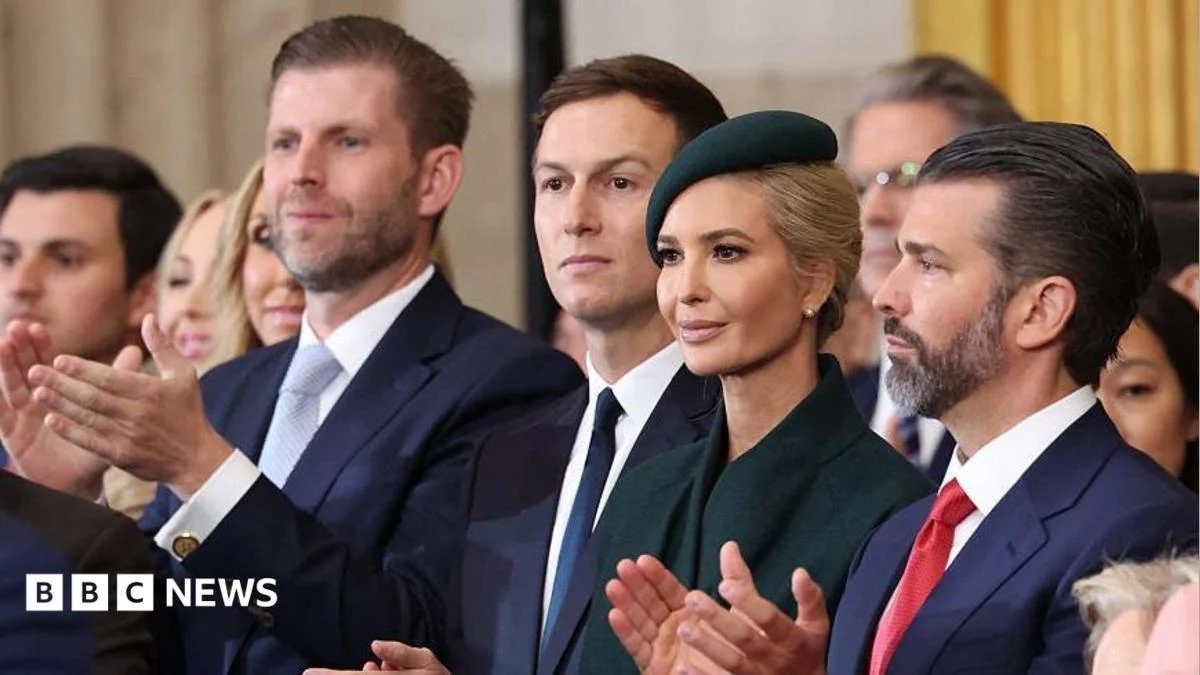
In a dramatic escalation of legal hostilities, former President Donald Trump’s legal team has vehemently accused the British Broadcasting Corporation (BBC) of "intentionally defaming" the president and engaging in a deliberate campaign to "harass him, his family, and supporters" through an aggressive subpoena request. The statement, issued directly to the BBC, frames the broadcaster’s legal maneuvers as a desperate attempt to deflect from its own "obvious liability" in an ongoing defamation lawsuit. The core of the dispute centers on a 2024 Panorama episode that Trump alleges maliciously doctored a speech he delivered on January 6, 2021, outside the Capitol building.
The BBC’s legal team, however, contends that Trump’s family members possess crucial "personal knowledge" regarding his intentions and the speech’s revisions, making their testimony and any related documents directly relevant to the president’s defamation claim. In a recent court filing, the BBC’s lawyers cite evidence previously gathered by a U.S. congressional committee to bolster their argument. This evidence suggests that Donald Trump Jr. and Ivanka Trump were present during their father’s speech revisions and delivery. Furthermore, the filing highlights that Jared Kushner had drafted a proposed statement for the former president that, if issued, would have unequivocally condemned the use of violence – a detail that could be pivotal in establishing Trump’s intent and refuting the BBC’s alleged misrepresentation.
The BBC’s renewed push for testimony comes after significant challenges in serving subpoenas to key figures within the Trump orbit. Their latest filing requests the court to permit service via email and certified mail, citing the unsuccessful attempts to personally deliver the documents. According to court documents, a representative for the BBC’s legal team faced immediate resistance when attempting to serve subpoenas at the Florida residence of Ivanka Trump and Jared Kushner. Entry was denied at a police checkpoint, and the Secret Service later informed the representative that the agency was unable to accept the subpoenas on their behalf.
Similar obstacles were encountered when attempting to serve Donald Trump Jr. at Trump Tower in New York. A representative was initially told by the concierge that the individual responsible for accepting such legal documents might be at lunch. A subsequent attempt two days later yielded a similar outcome, with the representative being informed that the "legal department" was not present that day. These repeated failures to personally serve the subpoenas underscore the challenges the BBC faces in obtaining direct testimony from the Trump family.
Donald Trump himself has initiated a high-stakes legal battle against the BBC and its subsidiaries, BBC Studios Productions and BBC Studios Distribution, stemming from the aforementioned 2024 Panorama episode. Filed in Florida, Trump’s lawsuit accuses the broadcaster of "intentionally, maliciously and deceptively doctoring" his January 6, 2021, speech. The lawsuit alleges that the editing created a false impression of his intentions and has damaged his reputation and business interests.
The BBC has publicly acknowledged an "editing error" in the program that "gave the mistaken impression that President Trump had made a direct call for violent action." However, the broadcaster is actively seeking to have the lawsuit dismissed, arguing that the Panorama episode does not meet the legal threshold for defamation and, crucially, was not made available on its U.S. platforms. This assertion regarding U.S. availability has become a significant point of contention.
In a notable development last month, Trump’s legal team conceded they lacked evidence to support their initial claims that the documentary was accessible in the United States through the BBC’s BritBox subscription service, BBC.com, BBC Select, or via U.S. broadcasters. This admission weakens a key pillar of Trump’s argument that the program had a direct and widespread impact on American audiences.
Adding another layer to the legal complexities, Trump recently agreed to drop the BBC’s commercial arm, BBC Studios, from his lawsuit. This decision followed the BBC’s argument that BBC Studios had "no role in creating or producing the documentary," suggesting that the commercial entity was improperly named as a defendant.
The legal skirmishes extend beyond the defamation claims themselves, encompassing the contentious issue of financial record disclosure. Earlier this month, the judge presiding over the case granted Trump’s request for a delay in him handing over financial documents to the broadcaster. The BBC had sought access to some of Trump’s financial records, intending to use them to support his argument that the documentary had negatively impacted his business interests. Trump’s legal team countered that the disclosure of these sensitive financial records would cause him "irreparable harm," a claim that resonated with the judge, leading to the granted delay. This aspect of the case highlights the potential financial ramifications of the defamation claims, with both sides seeking to leverage financial evidence to bolster their positions.
The legal saga is poised to continue, with a trial date tentatively scheduled for February 2027, should the case progress through its current stages. This lengthy timeline underscores the intricate nature of the legal proceedings and the potential for protracted litigation. It is important to note that BBC News operates with editorial independence from the wider BBC corporation, a distinction that is often highlighted in cases involving journalistic output and potential legal challenges. This independence is a cornerstone of public broadcasting, ensuring that news reporting is free from undue influence, though it does not exempt the organization from legal scrutiny when allegations of defamation or other misconduct arise.
The strategic positioning of both legal teams reveals a high-stakes battle where the definition of truth, the intent behind media creation, and the boundaries of journalistic responsibility are being rigorously tested. The BBC’s assertion of an editing error, while acknowledging fault, stands in stark contrast to Trump’s characterization of deliberate malice. The family members’ potential testimonies, if obtained, could offer crucial insights into the inner workings of the former president’s communication strategy and his personal involvement in shaping his public statements. The difficulty in serving subpoenas highlights a potential pattern of evasion or, as the Trump team suggests, a deliberate obstruction orchestrated to protect the former president and his inner circle.
Legal analysts suggest that the BBC’s defense hinges on proving that the program, even with the alleged editing error, did not meet the legal standard for defamation in the United States. This typically involves demonstrating that the statements made were false, caused harm to the plaintiff’s reputation, and were made with a degree of fault, ranging from negligence to actual malice, depending on the plaintiff’s public figure status. For a public figure like Donald Trump, proving actual malice – that the BBC knew the information was false or acted with reckless disregard for the truth – is a significant hurdle. The BBC’s argument that the documentary was not widely available in the U.S. further complicates this, as it challenges the notion of widespread reputational harm within the jurisdiction where the lawsuit is filed.
The Trump legal team’s counter-accusations of harassment and defamation against the BBC aim to shift the narrative, portraying the broadcaster as the aggressor rather than the victim of a baseless lawsuit. By emphasizing the BBC’s alleged attempt to "distract away from their own obvious liability," they seek to cast doubt on the BBC’s motives and the integrity of its legal strategy. This aggressive posture is a common tactic in high-profile defamation cases, designed to create public pressure and influence the perception of the legal proceedings.
The subpoena battle, with its attempts at personal service and subsequent reliance on alternative methods, illustrates the practical challenges of litigating against high-profile individuals who may have extensive security and access protocols. The involvement of the Secret Service in preventing service at the Florida residence points to the complex security considerations surrounding former presidents and their immediate families. This adds another layer of complexity to the legal process, potentially slowing down discovery and trial preparation.
As the case progresses towards the scheduled trial date, the focus will likely remain on the evidence presented regarding the editing of the speech, the intent behind it, and the extent of its dissemination and impact. The legal strategies employed by both sides – the BBC’s defense based on legal standards for defamation and U.S. availability, and Trump’s accusations of malicious intent and harassment – will be crucial in determining the ultimate outcome. The financial document dispute also looms large, as it could provide tangible evidence of the alleged damage to Trump’s business interests, a key component of his defamation claim. The unfolding legal drama promises to be a significant examination of media responsibility, political discourse, and the legal recourse available in the digital age.
