
 By Lina Irawan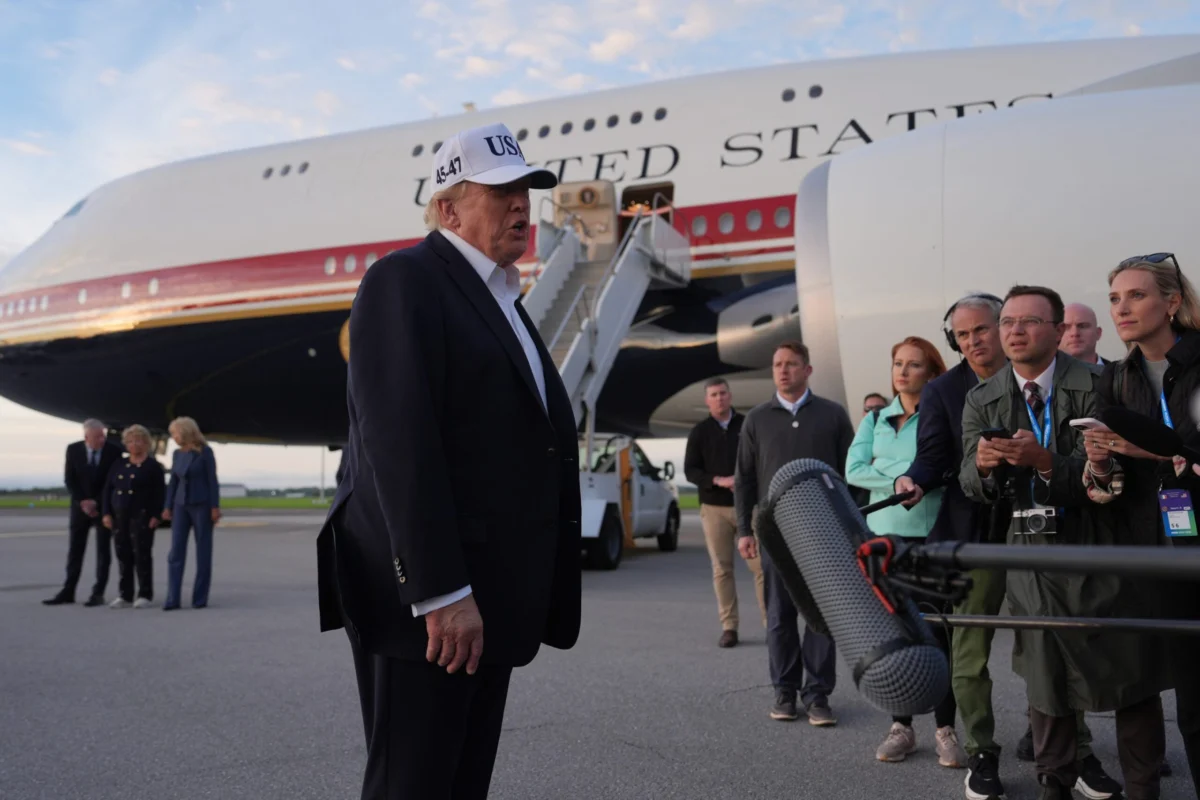
President Trump’s statement, made during a trip to Ireland, signals a potential shift in the long-standing and emotionally charged battle waged by victims’ families for greater transparency regarding the 2001 terrorist attacks. For years, these families have asserted that elements within the Saudi government or closely associated entities provided support to the 9/11 hijackers, a claim vehemently denied by Riyadh. The tragic events of September 11, 2001, saw 19 al-Qaeda terrorists hijack four commercial airplanes, crashing two into the World Trade Center towers in New York City, one into the Pentagon in Arlington, Virginia, and one into a field in Shanksville, Pennsylvania, after passengers and crew fought back. The attacks resulted in the deaths of nearly 3,000 people and reshaped global geopolitics.
Fifteen of the 19 hijackers were Saudi nationals, a fact that immediately fueled suspicions about potential Saudi complicity, despite the Saudi government’s consistent denial of any official involvement. Riyadh has always maintained that the attackers were rogue individuals who did not represent the kingdom or its policies. However, for the families of the victims, this denial has done little to quell their demand for full disclosure of all classified U.S. government documents related to the attacks. They contend that a group of extremist religious leaders gained significant influence within the Saudi government, potentially aiding the hijackers indirectly or through intermediaries.
The families’ requests for declassification are not new. They represent a persistent effort to uncover what they believe is the full truth behind the worst terrorist attack on American soil. Asked about the requests on Sunday, just before boarding Air Force One to return to Washington after a weekend in Ireland, President Trump indicated his willingness to consider the matter. "I’m going to look at it when I get back," Trump stated, adding, "I know they asked me Friday." This acknowledgment offers a glimmer of hope to a community that has often felt unheard by successive administrations.
The quest for justice for 9/11 victims has involved a lengthy and arduous legal battle against the Kingdom of Saudi Arabia. Central to this fight is Terry Strada, who lost her husband, Tom Strada, in the attacks on the World Trade Center. Strada has become a prominent voice among the victims’ families, relentlessly advocating for accountability. During the solemn remembrance ceremony in New York City on Friday, where she joined other family members in reading aloud the names of the victims, Strada directly appealed to President Trump. She urged him to "tell the Saudis to stop lying," encapsulating the frustration and profound sense of betrayal felt by many.
Strada’s critique extended beyond the Saudi government, encompassing previous U.S. presidential administrations. She asserted that past presidents had chosen "to protect the Saudis instead of standing with the 9/11 families," a sentiment widely shared among the victims’ relatives. Her plea to the current administration was clear: "stand with the families, stand with the survivors." Strada articulated the deep-seated disappointment that has characterized their nearly two-decade-long struggle, stating, "It has been one betrayal after another. President Trump can still change that." Her words underscore the families’ belief that the complete truth remains hidden, and that only a decisive action from the highest office can rectify what they perceive as a grave injustice.
The history of U.S. investigations into 9/11 has been marked by a careful balancing act between transparency, national security, and diplomatic relations with Saudi Arabia, a critical ally in the Middle East. The official 9/11 Commission Report, released in 2004, concluded that it found "no evidence that the Saudi government as an institution or senior Saudi officials individually funded al-Qaeda." However, it did acknowledge that Saudi-funded charities and individuals may have inadvertently or unknowingly supported the terrorist group. This nuanced finding left many families unsatisfied, fueling their conviction that a deeper, unrevealed truth exists.
A significant turning point in the families’ advocacy came with the push to declassify the so-called "28 pages" – a highly redacted section of the joint congressional inquiry into 9/11, completed in 2002. These pages, which were kept secret for over a decade, reportedly detailed potential links between Saudi officials and individuals involved in the 9/11 plot. After immense pressure from families and some members of Congress, the "28 pages" were largely declassified and released in July 2016. While their release did not provide a definitive smoking gun proving direct Saudi government culpability, they did highlight numerous suspicious interactions and financial transactions between Saudi government-linked individuals, including diplomats and intelligence agents, and some of the hijackers or their associates in the U.S. These included allegations that two Saudi officials in Southern California provided assistance to two of the hijackers, Nawaf al-Hazmi and Khalid al-Mihdhar, in the months leading up to the attacks. The declassified pages suggested that these interactions warranted further investigation, yet they also noted that the FBI and CIA had not been able to conclusively determine if the Saudis were witting agents of the government or merely individual sympathizers.
The declassification of the "28 pages" paved the way for the Justice Against Sponsors of Terrorism Act (JASTA) in 2016. This landmark legislation allowed victims of terrorism on U.S. soil to sue foreign governments that allegedly sponsored the attacks. JASTA was passed overwhelmingly by Congress, overriding a veto by then-President Barack Obama, who had expressed concerns that it could set a dangerous precedent, exposing U.S. personnel and diplomats to similar lawsuits abroad. The passage of JASTA reinvigorated the victims’ families’ legal efforts, allowing them to pursue claims against Saudi Arabia in U.S. courts.
Under JASTA, the families have filed extensive lawsuits, alleging that Saudi Arabia provided material support to al-Qaeda and the hijackers, either directly or indirectly, through a network of charities, individuals, and officials. The lawsuits do not necessarily claim that the Saudi government ordered the attacks, but rather that it knowingly or negligently supported a system that allowed the hijackers to operate and receive assistance. Saudi Arabia, in turn, has consistently sought to have these lawsuits dismissed, citing sovereign immunity and arguing that the evidence presented is circumstantial and insufficient to prove governmental involvement. The legal proceedings have involved extensive discovery, with families pushing for the release of more classified documents, including FBI investigation records, to bolster their case.
President Trump’s willingness to "look into" declassifying more records introduces a new dynamic into this already complex issue. Previous administrations, while expressing sympathy for the victims, often prioritized maintaining strategic relations with Saudi Arabia, a key partner in counter-terrorism efforts and a major oil producer. The U.S.-Saudi relationship has been a cornerstone of American foreign policy in the Middle East for decades. Declassifying sensitive intelligence could potentially strain this relationship, leading to diplomatic fallout and impacting cooperation on critical security and economic fronts. However, Trump’s populist rhetoric and his often-stated distrust of established institutions could make him more receptive to the families’ demands, contrasting with the more cautious approaches of his predecessors.
Arguments for further declassification center on the principles of transparency, accountability, and justice. Proponents argue that the full truth about 9/11 is essential for national healing and for ensuring that those responsible, whether directly or indirectly, are held accountable. Releasing more information could also help to complete the historical record, dispelling lingering conspiracy theories and providing a definitive understanding of the attacks. From the families’ perspective, it is a moral imperative to exhaust all avenues to uncover the truth for their lost loved ones.
Conversely, there are legitimate concerns surrounding the declassification of intelligence documents. National security experts often caution that releasing raw intelligence could expose sources and methods, compromising future intelligence gathering operations. It could also reveal sensitive diplomatic communications or classified assessments that, while not directly related to Saudi complicity, could damage U.S. foreign policy interests. Furthermore, intelligence information, by its nature, can be fragmented and subject to misinterpretation if not presented with full context and caveats, potentially leading to unwarranted accusations or diplomatic crises based on incomplete evidence. Some argue that the existing investigations, including the 9/11 Commission Report and the "28 pages" declassification, have already provided a comprehensive account, and further releases might yield little new information while incurring significant risks.
Ultimately, President Trump’s decision will carry profound implications. For the 9/11 families, it represents a pivotal moment in their protracted fight for justice and closure. For U.S.-Saudi relations, it could introduce new tensions or, depending on the content of any newly released documents, reinforce existing suspicions or finally exonerate the kingdom. The long shadow of September 11, 2001, continues to shape American foreign policy, domestic debates, and the lives of thousands of families. As the nation approaches another anniversary of the attacks, the question of Saudi Arabia’s alleged role remains a deeply sensitive and unresolved issue, underscoring the enduring quest for truth and accountability.
