
 By Lina Irawan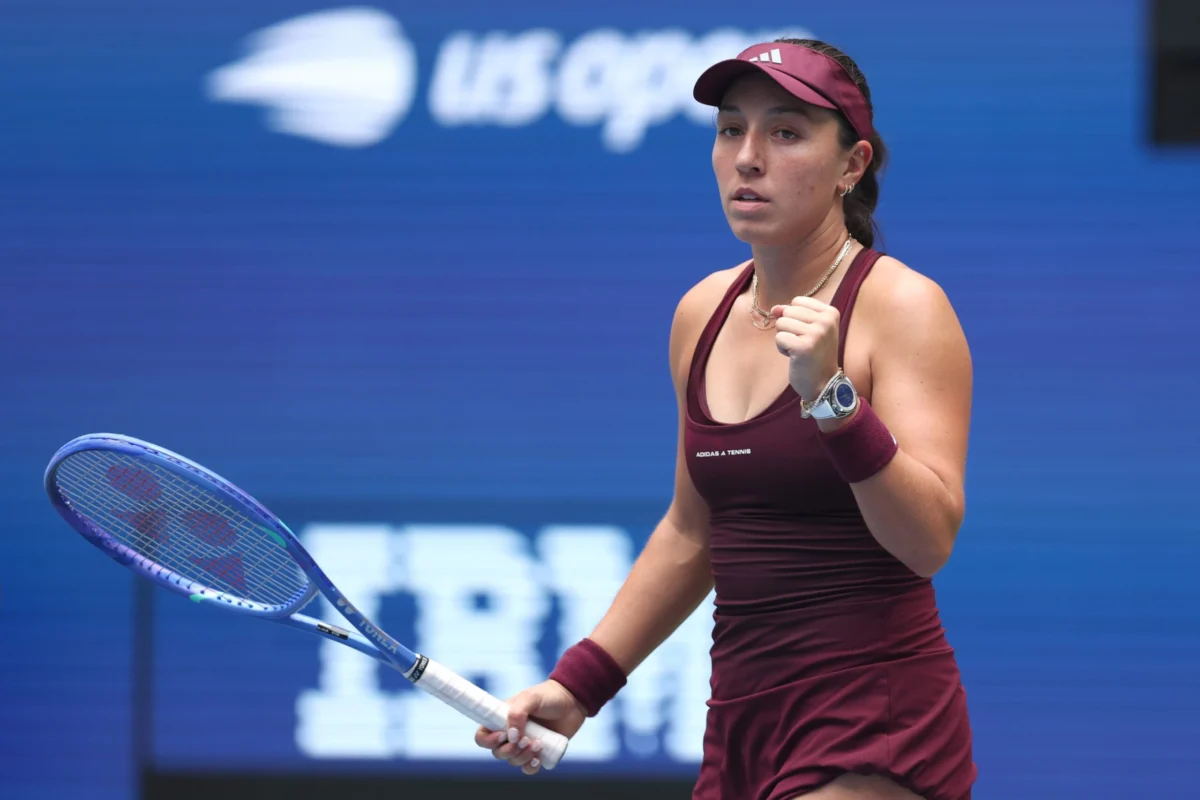
At 32 years old, Pegula has meticulously carved out an impressive career, both on and off the court. Her formidable talent and unwavering dedication have translated into over $26 million in tournament prize money, a figure that places her among the sport’s elite earners. Beyond the prize courts, her marketability has attracted significant brand partnerships with industry giants such as IBM, Hyatt, and The Farmer’s Dog, underscoring her growing commercial appeal and broader recognition. Yet, interwoven with her athletic achievements is a narrative that has persistently followed her: the extraordinary wealth of her family. This unique backdrop often prompts discussions about privilege versus performance, a dynamic Pegula herself has candidly addressed throughout her journey.
Her father, Terry Pegula, is a self-made billionaire who amassed his fortune in the highly lucrative and volatile oil and gas industry before strategically pivoting a substantial portion of his wealth—billions of dollars—into the realm of professional sports ownership. His business acumen was dramatically showcased in 2010 when he sold the majority of his company, East Resources, to energy titan Royal Dutch Shell for a staggering $4.7 billion. This foundational transaction set the stage for his subsequent ventures into sports. The very next year, in 2011, he acquired Buffalo, New York’s cherished NHL franchise, the Buffalo Sabres, for $189 million. His commitment to the city deepened significantly in 2014 when he successfully outbid prominent figures and groups, including music icon Jon Bon Jovi and business mogul Donald Trump, to purchase the NFL’s Buffalo Bills for an astounding $1.4 billion. Today, Terry and his wife Kim Pegula jointly command an estimated net worth of approximately $9.3 billion, making them one of the wealthiest sports ownership families in the world.
For Jessica, however, this immense family fortune is a facet of her life she has consciously striven to keep separate from her identity and accomplishments as a professional athlete. "I’ve always tried to carry myself as just a normal person because that’s to me how I am," Jessica shared with The Times earlier this year, reflecting on her public image. "I’m definitely aware that I was very privileged and had a lot of good opportunities, and I didn’t want to waste those." Her statement encapsulates the delicate balance she navigates, acknowledging her advantageous starting point while asserting the authenticity of her hard-earned success.
Terry Pegula’s journey from humble beginnings to an oil empire provides a compelling backstory that deeply influences his daughter’s perspective. He grew up in rural northeastern Pennsylvania, where his father worked as a truck driver and coal miner—a stark contrast to the financial stratosphere his family now inhabits. Terry initially pursued mathematics at Penn State University before transitioning to the school’s highly regarded Petroleum and Natural Gas Engineering program, a move that would ultimately define his career trajectory. He graduated in 1973, equipped with the technical knowledge and entrepreneurial drive that would soon shape his destiny.
After college, Pegula relocated to Texas to gain experience with Getty Oil Company, a common path for aspiring professionals in the energy sector. However, he eventually returned to the Rust Belt, a region with deep industrial roots and untapped natural resources. In 1983, with a modest loan of $7,500 from family and friends—a sum that underscores his truly self-made origins—he launched East Resources. This independent oil and gas exploration and production company initially focused its operations on the Appalachian Basin, a region rich in conventional and unconventional hydrocarbon reserves.
Over nearly three decades, Terry Pegula meticulously built East Resources into one of the largest privately held oil and gas businesses in the U.S. His strategic vision and willingness to embrace innovative drilling techniques, particularly in the burgeoning shale gas revolution, propelled the company’s growth. The monumental sale of the bulk of East Resources to Royal Dutch Shell for $4.7 billion in 2010 was a landmark deal, solidifying his status as an industry titan. This was followed by another significant transaction in 2014, where he sold an additional $1.75 billion in assets, further consolidating his wealth and enabling his pivot into sports ownership.
For Jessica, this narrative of starting with relatively little and meticulously building something through sheer persistence and hard work has been a foundational element of her family’s ethos. Born in 1994, she began playing tennis at the age of seven, long before her family’s financial landscape transformed. She often emphasizes that her family’s immense wealth did not materialize until she was a teenager, a crucial detail in understanding her journey.
"My dad is super blue-collar," Jessica reiterated to The Times. "He grew up with nothing and built his way up, and that mindset was instilled in my family from a young age." This direct connection to her father’s work ethic underscores her belief in meritocracy. She added, "Some people get this image that it’s really easy for me because my dad is very wealthy, but that didn’t happen till I was 17 or 18." By that age, Jessica had already demonstrated considerable promise as a young tennis player, receiving a wildcard into the main draw of the U.S. Open doubles tournament in 2011 at 17. Four years later, she made her singles debut, setting the stage for a career defined by steady progression rather than overnight stardom.
Indeed, Jessica’s rise to the upper echelons of the sport has been a gradual, deliberate ascent. Now 32, she has frequently been characterized as a "late bloomer" by professional tennis standards, a sport where many prodigies achieve Grand Slam glory in their late teens or early twenties. The two players currently ranked ahead of her—world No. 1 Aryna Sabalenka (28) and world No. 2 Elena Rybakina (27)—are younger and have already secured multiple Grand Slam titles. Jessica, meanwhile, continues her tenacious pursuit of her first major trophy, a goal she has openly stated is paired with her long-standing ambition to one day reach the No. 1 ranking. She firmly believes that neither her age nor her family’s wealth alters the fundamental requirements for achieving such elite status.
"Everyone who knows sports, or is an athlete, or is highly competitive, or has made it very far, I think, knows that you’re not really going to get there unless you work hard, are talented, and are really driven to get there," Jessica articulated to Forbes in 2023. "It’s really difficult." This philosophy perfectly mirrors the advice Terry Pegula has consistently imparted to his children throughout their lives: "Work hard, love what you’re doing, and treat people right." It’s a simple yet profound mantra that has evidently guided both father and daughter in their respective, highly successful, and challenging fields.
The 2026 U.S. Open continues to unfold as a pivotal chapter in Jessica Pegula’s career. On Friday, September 4th, she demonstrated her prowess and composure by defeating the formidable No. 31 seed Leylah Fernandez in a hard-fought match, securing her advancement to the fourth round. Her next challenge will be against the No. 16 seed, Sorana Cirstea of Romania, a veteran player known for her powerful game and experience. As the tournament progresses and the stakes intensify, all eyes will be on Pegula, watching if her dedication and "blue-collar" spirit can propel her to historic heights. Fortune reached out to the Pegulas for comment but received no response at the time of publication.
Jessica Pegula is not the only rising tennis star whose journey is set against a backdrop of significant family wealth. Emma Navarro, the No. 26 seed at this year’s U.S. Open, also comes from an affluent background. Her father, Ben Navarro, has an estimated net worth of $3.2 billion, built through a successful career in finance. Much like the Pegula family, Emma has consistently emphasized the profound role her family’s ingrained work ethic has played in shaping her own success on the court. "My family instilled in me the value of hard work, resiliency, and perseverance," Emma stated earlier this year. "My dad always taught us to never give up no matter the circumstances and to always give one hundred percent effort in everything you do." These shared sentiments highlight a common thread among athletes from privileged backgrounds who strive to prove their mettle independently.
Yet, the world of tennis, perhaps more than many other sports, illustrates that there is no singular formula for achieving success. While the sport can indeed be expensive to enter and sustain, involving significant costs for elite coaching, specialized equipment, travel, and club memberships, some of its most iconic figures have emerged from families without enormous fortunes. Many of these players have, through sheer will and talent, gone on to construct multimillion-dollar empires of their own.
Serena and Venus Williams stand as quintessential examples. They grew up in a middle-class family in Compton, California, under the visionary and unconventional tutelage of their father, Richard Williams. Their story is one of overcoming immense odds, defying societal expectations, and shattering racial barriers to become two of the most successful and recognizable athletes in tennis history, and indeed, in global sports. Serena Williams’s net worth is now estimated at a staggering $400 million, while Venus has accumulated over $50 million through prize money, lucrative endorsements, and strategic investments. The sisters have frequently credited their upbringing and the values instilled by their parents as crucial to their legendary careers. "I think the main value that [my parents] instilled in me is just humility, and I think that goes way better than any championship or anything, because it keeps you grounded as an individual," Serena Williams told CNBC. "It keeps you respectful, and it keeps you just like everybody else, because at the end of the day, we’re all the same."
Similarly, Novak Djokovic, the Serbian maestro who holds the record for the most Grand Slam singles titles in men’s tennis, has often spoken about the profound sacrifices his parents made to support his burgeoning tennis career amidst the tumultuous backdrop of his homeland. He vividly recalls a poignant moment from his childhood when his father revealed that their family of five had just $10 left to their name—a powerful lesson in persistence and resilience that indelibly shaped Novak’s character and competitive spirit. "Go forward no matter what, fall hard on your nose, and then stand up and keep going forward and fall again and then bounce back again," Djokovic famously articulated. "And then, you will win."
These narratives from the Williams sisters and Djokovic underscore a fundamental truth in professional tennis: while financial resources can undoubtedly provide an initial advantage in terms of access to coaching and facilities, they are ultimately secondary to an individual’s innate talent, mental fortitude, relentless work ethic, and an insatiable desire to win. Jessica Pegula’s journey, poised at the precipice of history, serves as a compelling modern-day illustration of this principle. She represents the synthesis of privilege and perseverance, a player determined to define her legacy not by the wealth she was born into, but by the sweat, skill, and unwavering commitment she brings to every point, every match, and every shot in her pursuit of Grand Slam glory and the world No. 1 ranking. Her story resonates as a testament to the idea that true success, particularly in a sport as demanding as tennis, must always be earned, regardless of one’s starting line.
