
 By admin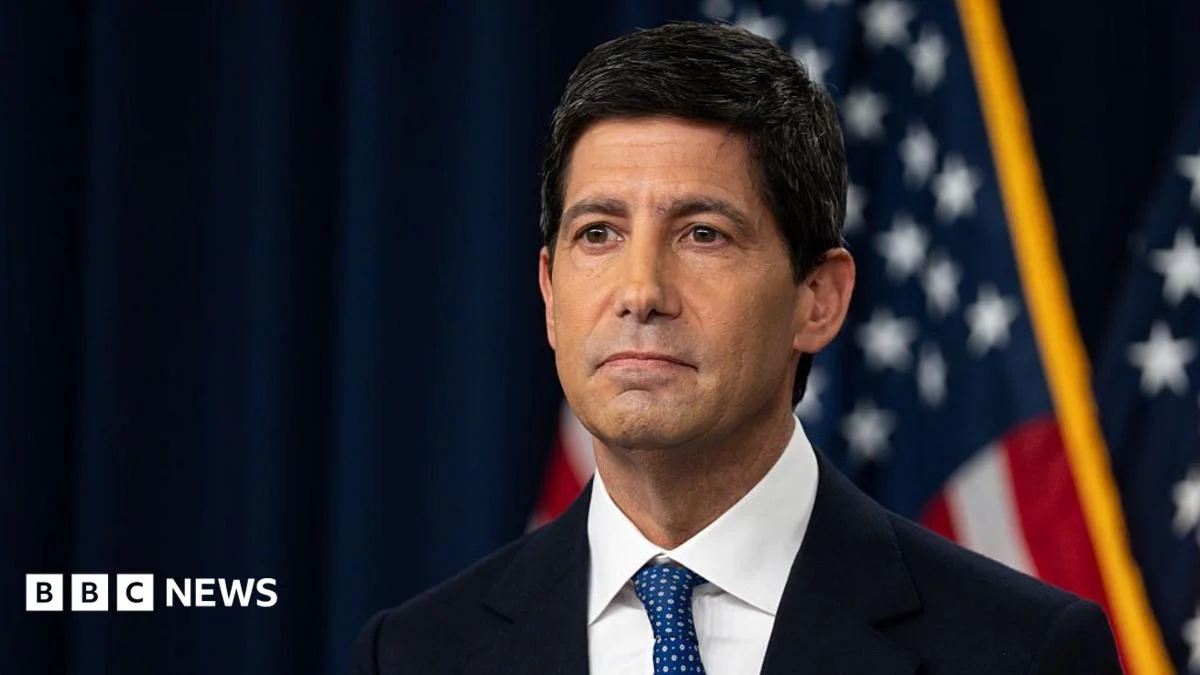
In a significant move aimed at curbing persistent inflation, the U.S. Federal Reserve has implemented its first interest rate increase in more than three years, signaling a potential tightening of monetary policy that could persist as policymakers grapple with escalating prices. The unanimous decision by the Federal Open Market Committee (FOMC) saw the benchmark federal funds rate lifted to a target range of 3.75%-4%, a quarter-percentage-point increase from its previous 3.5%-3.75% setting. This move comes despite vocal opposition from President Donald Trump, who had publicly and repeatedly advocated for interest rate cuts, arguing for lower borrowing costs to stimulate economic growth.
Federal Reserve Chair Kevin Warsh articulated the rationale behind the hike during a press conference, stating, "Inflation is too high and has been for too long." He characterized the decision as "sober" and "responsible," emphasizing the central bank’s mandate to maintain price stability. In stark contrast, President Trump took to social media shortly after the announcement, asserting that rates "should be 1%, or less, because we are the Best Credit in the World – BY FAR." This ideological divide underscores a fundamental disagreement on the appropriate course of action for the U.S. economy.
The implications of higher interest rates are multifaceted. For consumers, it means borrowing becomes more expensive. Individuals seeking to secure new loans, whether for mortgages, auto purchases, or credit cards, will likely face higher interest charges. Similarly, businesses looking to finance expansion or operations will encounter increased borrowing costs, potentially impacting investment decisions. On the other hand, savers may find themselves benefiting from improved returns on their deposits as interest rates on savings accounts and other interest-bearing instruments typically rise in tandem with the federal funds rate.
Chair Warsh, while acknowledging an "attitude of optimism" within the Fed’s leadership regarding the broader economic landscape, underscored that inflation remains the paramount concern. The Federal Reserve, like many central banks globally, operates with a dual mandate of fostering maximum employment and maintaining price stability, with an explicit inflation target of 2% or below. Warsh pointed out that U.S. inflation has persistently exceeded this target for "more than five years," a prolonged period that has eroded purchasing power and become a significant economic burden for households.
The persistent inflationary pressures have directly contributed to affordability becoming a top concern for American voters. The cost of living has been significantly impacted by soaring energy prices, with diesel fuel reaching all-time highs and regular gasoline prices surpassing the $4 per gallon mark on average. This surge in global oil prices has had a cascading effect, driving up the cost of a wide array of goods and services, from transportation and manufacturing to food and everyday consumables. While Chair Warsh conceded that the Fed "cannot affect any individual price – whether it be oil prices, whether it be food stuffs at the grocery store," he stressed the central bank’s role in preventing price increases from becoming broadly embedded across the entire economy.
The strength of the U.S. labor market and the overall resilience of the economy provide the Federal Reserve with the latitude to focus on price stabilization. Warsh emphasized that those least well-off stand to gain the most from a reduction in inflation, as it disproportionately impacts lower-income households who spend a larger portion of their income on essential goods and services. Central banks typically resort to raising interest rates during periods of high inflation as a mechanism to cool down aggregate demand. By making borrowing more expensive, the intention is to discourage excessive spending and encourage saving, thereby moderating the pace of price increases. However, this strategy is not without its risks. Higher interest rates can also deter businesses from investing in new projects and expansions, potentially leading to a slowdown in economic growth. This delicate balancing act between controlling inflation and supporting economic expansion is a recurring challenge for monetary policymakers.
The confirmation of Kevin Warsh as Fed Chair had been met with skepticism by some Democratic lawmakers, who had predicted he would act as President Trump’s "sock puppet" and implement his demands for lower interest rates. Indeed, many Fed watchers had anticipated that Warsh would be more amenable to Trump’s persistent calls for rate cuts, especially given Trump’s highly critical stance towards his predecessor, Jerome Powell, for not lowering rates sooner. When questioned about the message the rate hike sent to President Trump, Warsh responded with a chuckle, stating, "I have got nothing for you on a discussion with the president," deflecting the political undertones of the question.
The political ramifications of the Fed’s decision were immediate. President Trump, undeterred by the central bank’s independent action, reiterated his demand on social media, urging, "LOWER THE INTEREST RATES FOR THE UNITED STATES OF AMERICA, AND FAST!" Meanwhile, Democrats on Capitol Hill voiced concerns that the rate increase would make loans more expensive, potentially pushing more Americans into debt. Senate Minority Leader Chuck Schumer articulated this sentiment, stating, "This is going to make everything become more expensive. This is because Donald Trump does not know how to manage the economy." This political rhetoric highlights the ongoing tension between the White House and the Federal Reserve regarding monetary policy.
The current rate hike marks the first upward adjustment in the federal funds rate since July 2023, and the first move in any direction since December 2025, when rates were last lowered. The increase is poised to impact various sectors of the financial market. Major U.S. banks, including JP Morgan, KeyCorp, and BNY Mellon, swiftly responded by raising their prime lending rates to 7% from 6.75%. This adjustment directly influences the interest rates charged on a range of consumer credit products, such as credit cards and personal loans.
For prospective homebuyers, the rise in interest rates could translate into higher mortgage costs. While mortgage rates have been on an upward trend over the past year, they remain below the peaks observed in 2023. Currently, the average rate for a 30-year fixed-rate mortgage stands at 6.76%, with a 15-year fixed-rate mortgage averaging 6.09%, according to data from Freddie Mac. It is crucial to note that many existing homeowners with 30-year and 15-year fixed-rate mortgages will not see their monthly payments change, as their interest rates are locked in. However, individuals looking to purchase a new home or refinance an existing mortgage will be subject to the new, higher borrowing costs.
Looking ahead, Chair Warsh declined to offer specific projections on the future trajectory of Fed rates, deferring to the collective wisdom of his fellow policymakers. However, the projections released by the FOMC indicate a hawkish outlook, with a majority of policymakers anticipating further rate hikes before the end of the current year, pushing the target range to between 4% and 4.25%. A slight majority also suggested that rates could climb further to 4.25%-4.5% in the following year, with potential rate cuts not expected until 2028 and 2029. These forecasts suggest a prolonged period of higher interest rates designed to bring inflation back down to the Fed’s target. The projections also indicate an expectation that price rises will gradually ease in the coming years, with the cost of living, as measured by inflation, predicted to steadily decline towards the Fed’s 2% objective by 2029.
The U.S. Federal Reserve is not an isolated entity in its struggle with rising inflation. The global economic landscape is characterized by widespread inflationary pressures, exacerbated by various factors including the ongoing geopolitical tensions and supply chain disruptions stemming from the Iran war. In response, other major central banks are also tightening their monetary policies. The European Central Bank (ECB) recently raised its interest rates last week, and the Bank of England is anticipated to make its own decision on interest rates on Thursday, underscoring the synchronized global effort to combat inflation. The coordinated approach by central banks worldwide highlights the interconnectedness of the global economy and the shared challenge of navigating inflationary pressures in the post-pandemic era.
