
 By admin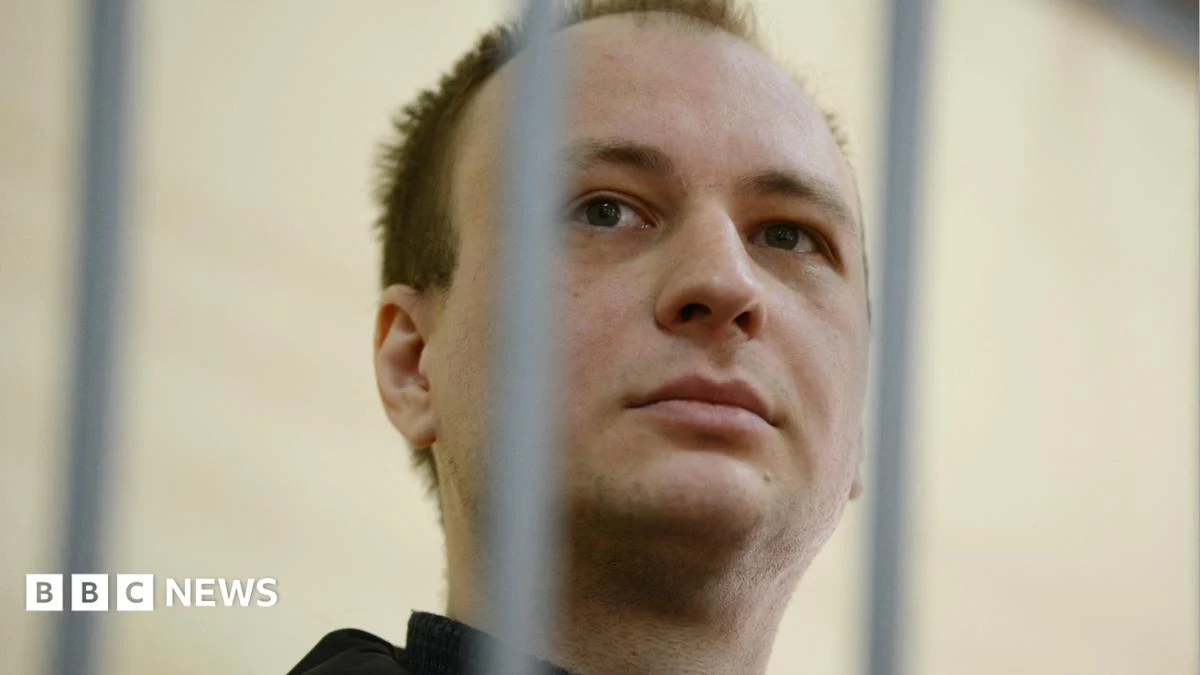
In a significant diplomatic breakthrough, United States Marine Robert Gilman, who had been held in a Russian prison under reportedly dire health conditions, has been released. President Donald Trump announced the development on his social media platform, Truth Social, stating that following his personal discussions with Russian President Vladimir Putin, Russia had agreed to Gilman’s release on "very much a Humanitarian Basis." Crucially, President Trump emphasized that no prisoner swap was involved in securing Gilman’s freedom. The news brings a profound sense of relief to Gilman’s family and supporters who had been anxiously monitoring his deteriorating health and advocating for his release.
Robert Gilman, a 32-year-old Marine veteran from Massachusetts, was arrested in Russia in January 2022. The initial charges stemmed from an alleged incident where he, reportedly intoxicated, kicked a police officer while aboard a train bound for Moscow. This led to an initial sentence of three and a half years. However, his legal troubles escalated when he was later found guilty of assaulting a prison inspector during a cell check. This subsequent conviction resulted in his sentence being increased to a formidable 10 years.
In the months leading up to his release, Gilman’s health had taken a critically severe turn. Reports indicated he had been moved from prison to a civilian hospital in Russia after lapsing into a "catatonic-like state." His family later described his condition as being in "life-threatening condition" due to what they characterized as "harsh and abusive treatment" during his incarceration. This harrowing ordeal has left deep emotional and physical scars on the young veteran.
President Trump confirmed that Gilman was en route to the United States, traveling on a flight accompanied by his mother, medical personnel, and members of the administration. This detail underscores the high-level involvement and urgent nature of the repatriation efforts. Upon arrival in the US, Gilman is expected to be transferred to a US military hospital in Texas. There, he will undergo comprehensive medical assessments and receive necessary treatment to address the severe health issues he has developed.
The profound gratitude of Gilman’s family was palpable in their public statements. His sister, Lexi Hudson, expressed her anguish and relief, stating, "The Russians treated my brother so badly. They hurt him for no reason, other than that he was both an American and a Marine." She further articulated her deep appreciation for President Trump’s intervention, adding, "I am so grateful to President Trump for saving my brother’s life." The sentiment highlights the personal nature of the advocacy and the critical role played by the former president in this humanitarian effort.
The efforts to secure Gilman’s release were not solely attributed to the former president. Massachusetts Senator Ed Markey also played a significant role in the advocacy for his repatriation. Senator Markey’s office had been actively involved in the case, engaging with relevant authorities and providing support to the Gilman family. In a statement, Senator Markey provided further insight into Gilman’s medical condition, explaining, "Approximately 50 days ago, Robert was diagnosed with a dissociative stupor – a condition where he is non-responsive and unable to interact or eat." This medical diagnosis sheds light on the severity of his psychological and physical deterioration.
Further details of the alleged abuse Gilman endured were provided by Eric Lebson, who advocated for Gilman’s release as part of the advocacy group Global Reach. Speaking to CBS News, the BBC’s media partner, Lebson detailed the extent of the mistreatment. He revealed that Gilman was subjected to repeated harassment, including grueling forced exercise training sessions that lasted for up to 16 hours a day. Additionally, Lebson alleged that Gilman was administered psychotropic drugs. The abuse was reportedly so extreme that at one point, Gilman required a feeding tube inserted through his nose to sustain him. This graphic description paints a grim picture of the conditions within the Russian penal system.
Robert Gilman’s service record indicates he was a dedicated member of the US Marines, serving from August 2019 to August 2020. His transition from military service to civilian life, and subsequently to a Russian prison, represents a tragic trajectory for a former service member. The circumstances surrounding his arrest and subsequent prolonged detention have raised serious questions about due process and human rights within the Russian justice system.
The case of Robert Gilman is not an isolated incident. Eric Lebson also highlighted that five other Americans remain in Russian confinement, each reportedly facing their own significant medical challenges. The names of these individuals are Aleksandr Antonov, David Barnes, Olga Jezler, Andre Khachatoorian, and Chuck Zimmerman. The ongoing presence of American citizens in Russian prisons, especially those with documented health issues, underscores a broader pattern of concern regarding the welfare of US nationals in Russia and the complexities of diplomatic relations between the two countries.
The release of Robert Gilman, while a cause for celebration for his family and a testament to dedicated advocacy, also serves as a stark reminder of the precarious situation faced by Americans detained abroad. The intervention by President Trump, leveraging his personal relationship with President Putin, demonstrates a unique channel of diplomacy that can be employed in humanitarian crises. However, the broader context of strained US-Russia relations and the ongoing geopolitical tensions likely cast a long shadow over the future prospects for the other American citizens still held in Russia. The focus now shifts to Gilman’s recovery and the ongoing efforts to secure the release of the remaining Americans. The intricate web of international law, human rights, and political negotiation continues to be tested in these high-stakes diplomatic scenarios. The long road to recovery for Robert Gilman, both physically and psychologically, has just begun, but his return to American soil marks a crucial victory for his family and for those who tirelessly worked to bring him home. The international community will undoubtedly continue to monitor the situations of the other Americans detained in Russia, hoping for similar humanitarian resolutions.
