
 By admin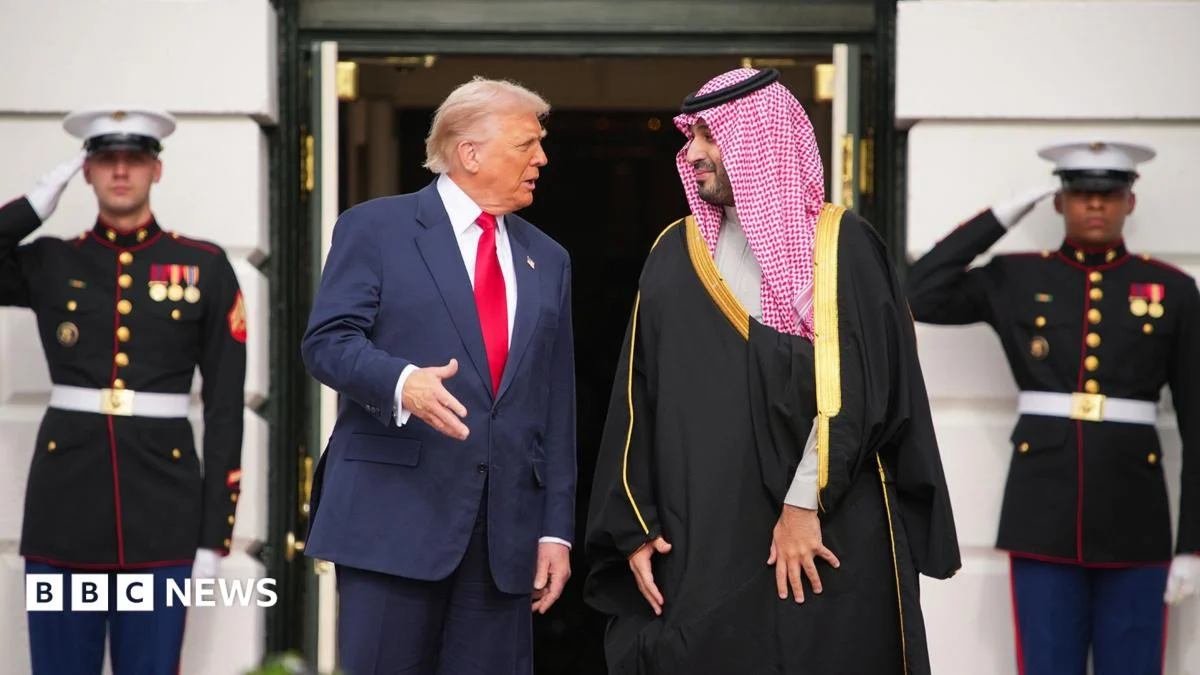
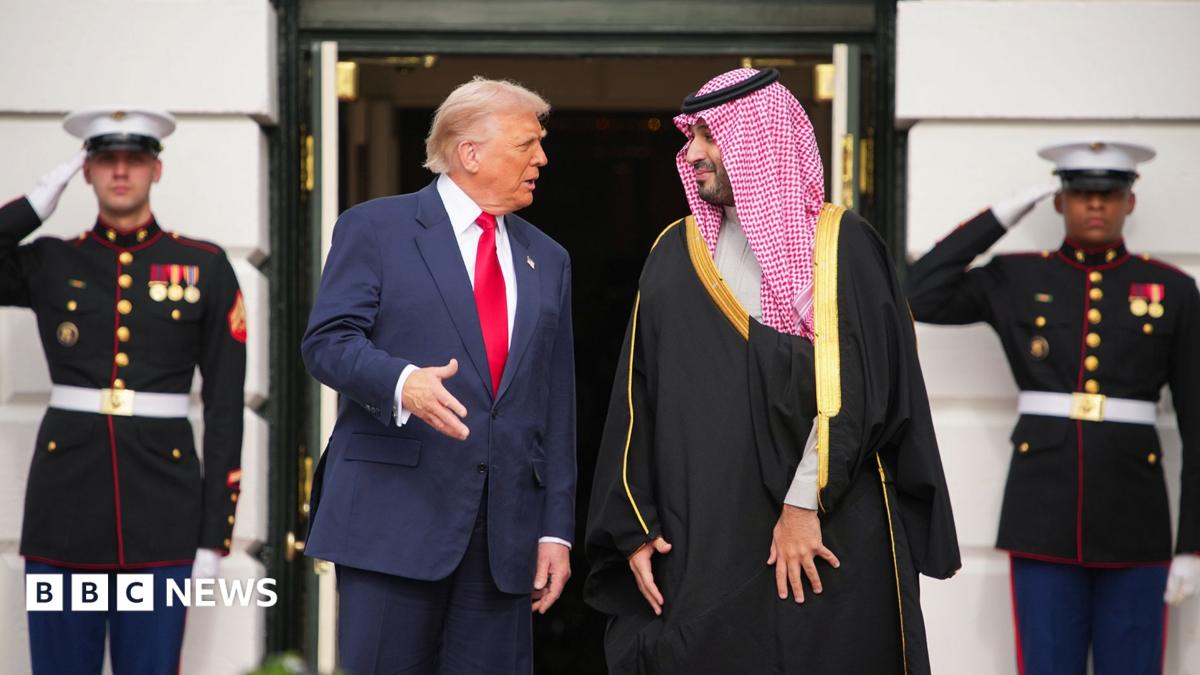
A landmark civil nuclear cooperation agreement between the United States and Saudi Arabia, aimed at facilitating the Gulf kingdom’s development of nuclear energy, is now contingent upon Riyadh’s formal recognition of the State of Israel, according to a declaration by former President Donald Trump. In a pronouncement made via his social media platform Truth Social, Trump stated, "The Civil Nuclear Deal (There will be no enrichment of material!)… which pertains only to non-military use… will be approved, but is totally subject to Saudi Arabia joining the very respected and successful Abraham Accords." This assertion introduces a significant geopolitical condition to a deal that has already sparked apprehension among international observers and lawmakers regarding potential nuclear proliferation in an already volatile region.
The precise nature of this condition remains somewhat opaque. It is unclear whether the stipulation for Saudi Arabia to join the Abraham Accords was an integral component of the nuclear deal’s text, which has not been publicly released, or if it represents a unilateral demand by Trump. Saudi Arabia has, thus far, remained silent in response to Trump’s remarks, leaving the international community to await an official stance from Riyadh.
However, White House press secretary Karoline Leavitt elaborated on Trump’s position on Thursday, asserting that the former president had repeatedly communicated this prerequisite to Saudi leadership during numerous prior discussions. "He has said if they don’t join the Abraham Accords, the deal is off," Leavitt stated. "So we’ll continue to have those conversations with our Saudi counterparts moving forward." This underscores the significant leverage Trump believes he wields and his intention to utilize the nuclear agreement as a bargaining chip for broader regional normalization.
Trump’s intervention comes in the wake of considerable criticism from various experts and political figures who have voiced concerns that the US-Saudi nuclear deal, announced on Wednesday, could inadvertently pave the way for future nuclear proliferation. The specter of a nuclear-armed Saudi Arabia, especially given its proximity to Iran and ongoing regional tensions, has ignited alarm bells. Both Republican and Democratic lawmakers have echoed these anxieties, although the current Republican control of both chambers of Congress suggests that opponents of the deal may lack the necessary votes to successfully block its passage.
According to the US Department of Energy, the agreement encompasses a "peaceful nuclear co-operation agreement" and a "bilateral safeguards agreement." A statement released by the department described these accords as laying "the legal foundation for a decades-long, multi-billion-dollar partnership that advances several priority economic and strategic objectives, including nuclear nonproliferation." The department also confirmed that the agreement would be submitted to the US Congress for a mandated review period.
The International Atomic Energy Agency (IAEA) acknowledged on Thursday that it was aware of the joint US-Saudi plans for a "bilateral civil nuclear cooperation agreement and the plan to ask the IAEA to implement verification measures in relation to this." An IAEA spokesperson indicated, "We look forward to receiving the request for such verification and to working with the US and KSA [Kingdom of Saudi Arabia] in ensuring the implementation of those measures." This suggests that the IAEA is prepared to play its role in monitoring and verifying the peaceful nature of Saudi Arabia’s nuclear activities, should the agreement proceed.
The Abraham Accords, brokered during Trump’s presidency, marked a significant diplomatic breakthrough, leading to the normalization of relations between Israel and several Arab nations, including the United Arab Emirates (UAE) and Bahrain. These accords were later expanded to include Sudan, Morocco, and Kazakhstan. Historically, Saudi Arabia has maintained that any such normalization would be contingent upon the establishment of an independent Palestinian state, a long-standing demand that has been a central obstacle to broader Arab-Israeli peace. The White House’s current stance, as articulated by Leavitt, directly challenges this position by making the nuclear deal conditional on Riyadh’s accession to the accords, irrespective of progress on the Palestinian issue.
Israel has reacted positively to Trump’s statement. The office of Prime Minister Benjamin Netanyahu issued a statement on X, formerly Twitter, declaring that Saudi Arabia joining the Abraham Accords "would be an historic leap forward for peace in the Middle East." While the statement did not directly address the nuclear deal itself, it signaled Israel’s strong endorsement of a regional diplomatic realignment that includes Saudi Arabia. Israeli Economy Minister Nir Barkat previously indicated that his country could "manage" the situation if Saudi Arabia were to possess nuclear power for peaceful purposes, suggesting a pragmatic approach from Jerusalem regarding the potential for Saudi nuclear development.
However, not all Israeli voices have been as sanguine. Former Israeli defense minister Avigdor Lieberman offered a more cautionary perspective, stating, "Every military nuclear program begins with a civilian one." This sentiment reflects a deeply ingrained concern within Israel, which itself is widely believed to possess nuclear weapons, though it maintains a policy of nuclear ambiguity. The historical and ongoing Israeli-Palestinian conflict, coupled with regional security dynamics, fuels this apprehension.
The US-Saudi deal is officially framed as a "peaceful nuclear co-operation agreement" designed to provide "great access for American companies in the Saudi nuclear energy programme," according to the US Department of Energy. This framing aims to assure Congress and the international community that the primary objective is energy development, not weapons acquisition.
The nuclear question has been a persistent undercurrent in the protracted US-Israeli conflict with Iran. Tehran has consistently denied Western accusations that its nuclear program is aimed at developing nuclear weapons, asserting its right to peaceful nuclear technology. This has created a complex geopolitical landscape where regional powers are highly sensitive to any perceived shifts in the nuclear balance.
Crown Prince Mohammed bin Salman, Saudi Arabia’s de facto ruler, has previously addressed the kingdom’s nuclear ambitions. In a 2018 interview with CBS News, he stated that Saudi Arabia was not planning to acquire nuclear weapons. However, he also famously declared, "without a doubt if Iran developed a nuclear bomb, we will follow suit as soon as possible." This statement has been interpreted as a clear commitment to developing a nuclear deterrent should Iran cross the threshold, raising significant concerns about a potential nuclear arms race in the Middle East.
Earlier media reports had suggested that the US-Saudi deal could potentially permit Saudi Arabia to enrich uranium, a dual-use technology that can fuel nuclear power plants but also serve as a critical component in the creation of nuclear bombs. Trump’s assertion that "there will be no enrichment of material!" directly contradicts these reports, aiming to reassure those worried about the proliferation risks.
Rosemary Kelanic, director of the Middle East program at the US-based think tank Defense Priorities, expressed strong skepticism about the prospect of the US permitting Saudi Arabia to establish indigenous uranium enrichment facilities. "The US has never done that before. We have never helped another country enrich on their own soil," she stated, highlighting the unprecedented nature of such a concession. Kelanic further elaborated that "if you can produce your own nuclear fuel, you become a much bigger risk" for eventually developing nuclear weapons, underscoring the strategic implications of such a capability. The US’s historical non-proliferation policy has largely centered on preventing other nations from developing indigenous enrichment capabilities, making any deviation from this stance a significant policy shift with potentially far-reaching consequences for global nuclear security. The debate surrounding the US-Saudi nuclear deal, therefore, is not merely about energy cooperation but also about the delicate balance of power and the enduring challenge of preventing the spread of nuclear weapons in one of the world’s most sensitive geopolitical regions.
