
 By Titik Puspa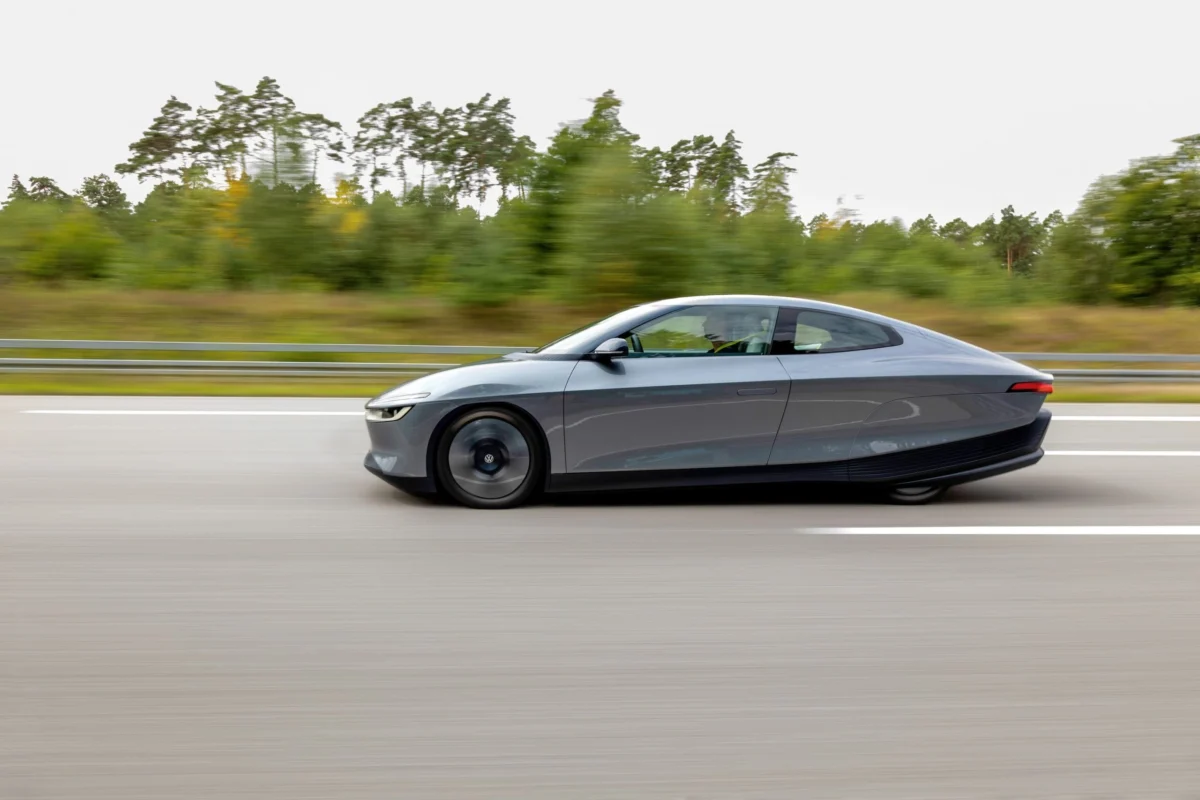
Volkswagen has dramatically pushed the boundaries of electric vehicle efficiency with the unveiling of its Mission Efficiency prototype, a vehicle capable of achieving an astonishing equivalent of 323 miles per gallon under ideal conditions. This remarkable figure positions the prototype as one of the most efficient cars ever conceived, raising significant questions about the future trajectory of sustainable automotive design and engineering. While automakers frequently showcase ambitious concept cars with impressive, albeit sometimes theoretical, performance metrics, Volkswagen has distinguished itself by not only conceptualizing but also physically constructing and demonstrating the capabilities of the Mission Efficiency.
The true testament to the prototype’s efficiency lies in its ambitious 794-mile (1,278-kilometer) journey from Volkswagen’s home base in Wolfsburg, Germany, to Vienna. This extensive road test was not merely a demonstration of range but a rigorous validation of its energy consumption. During this arduous trip, the Mission Efficiency prototype required only a single charging stop. Upon arrival in Vienna, the vehicle still retained an impressive 104 miles (168 kilometers) of range. This feat translates to an actual measured consumption of 7.51 kilowatt-hours per 100 miles, equating to approximately 279 miles per gallon equivalent (MPGe). This real-world performance significantly surpasses the theoretical claims and provides tangible evidence of the vehicle’s groundbreaking efficiency.

The Mission Efficiency prototype is a striking visual testament to its engineering purpose, featuring a distinctive teardrop shape. This aerodynamic form is not merely aesthetic; it is a critical component of its efficiency. The vehicle leverages the electric motor and battery systems derived from the ID. Polo, components that Volkswagen states bring the prototype to a "near-production" status. This suggests that while it may not be a final production model, the underlying technology is grounded in achievable engineering. The implications of such a highly efficient electric vehicle are profound, especially when compared to current market leaders. For context, the Mission Efficiency prototype is nearly twice as efficient as the Lucid Air Pure, which currently holds the title of the most efficient production car globally. The Lucid Air Pure, a luxury electric sedan, achieves an estimated 410 MPGe combined, according to EPA ratings, but this is achieved with a significantly larger 84-kilowatt-hour battery.
Delving deeper into the efficiency metrics, preliminary calculations suggest that the Mission Efficiency, with its modest 54.9-kilowatt-hour battery, could potentially deliver over 400 miles of range. While this is not an official EPA rating, it offers a compelling comparison to the Lucid Air Pure’s 420 miles of range from its larger battery. The difference highlights Volkswagen’s success in optimizing every aspect of the vehicle for maximum energy utilization. This level of efficiency, if translated into a production vehicle, could fundamentally alter consumer perceptions of electric vehicle range anxiety and charging infrastructure requirements.
However, achieving such extraordinary efficiency invariably involves significant design compromises. The most visually apparent of these is the vehicle’s roofline. It tapers sharply after its peak above the driver’s head, a design feature known as a Kammback. This profile is one of the most aerodynamically favorable shapes for a vehicle, allowing designers to reduce the coefficient of drag to an exceptional 0.158. This is significantly lower than most production cars, which typically have drag coefficients ranging from 0.25 to 0.35. Furthermore, Volkswagen has managed to maintain a low frontal area of just 2.08 square meters, further minimizing air resistance.

These aerodynamic optimizations directly impact the vehicle’s interior space. The Mission Efficiency is classified as a 2+2, meaning its rear seating is extremely limited. The tapered roofline means the rear headroom is severely restricted, making the back seats suitable only for very small individuals. Volkswagen has specified that the rear seats are designed for occupants shorter than 5 feet 3 inches (approximately 1.6 meters). The company states that the prototype was designed with the theoretical possibility of use by a "young family of four," but the practical reality of fitting anyone, even children, comfortably in the rear for extended periods is highly questionable, a common characteristic of 2+2 configurations.
Another area where compromises were made for the sake of efficiency is in the wheel wells. Wheels and tires are significant contributors to aerodynamic drag, accounting for roughly a quarter to a third of a vehicle’s total drag. To mitigate this, the designers have significantly reduced the clearance between the wheel arches and the front tires. While this undoubtedly enhances aerodynamic performance, it likely comes at the cost of ride quality. The limited space for wheel articulation means that the suspension has less room to effectively absorb road imperfections, potentially leading to a harsher ride.
Despite these compromises, Volkswagen has maintained certain design elements that prioritize driver experience and safety. For instance, the sideview mirrors, while a source of aerodynamic drag, were retained. The company acknowledges that while cameras could offer marginal drag reductions, they do not provide the same depth perception and spatial awareness as traditional mirrors, which are crucial for driver confidence and safety. This decision suggests a balancing act between absolute aerodynamic purity and practical usability.

Adding a further layer of technological innovation, Volkswagen has integrated solar cells onto the roof and the trunk lid of the Mission Efficiency prototype. While this feature is likely to capture public imagination and may contribute to the vehicle’s eco-friendly image, its practical impact on range is relatively modest. Under ideal conditions – perfectly flat terrain, constant speed of 42.25 mph (68 kph), and sunny weather – the solar cells can add approximately 18 miles (30 kilometers) of range. This highlights the current limitations of solar technology in significantly powering vehicles, though it serves as an interesting addition to the efficiency-focused design.
The interior of the Mission Efficiency prototype also reflects a minimalist approach to design, prioritizing lightweight materials and construction for the seats. In a move reminiscent of some electric vehicle startups, such as Slate Auto with its barebones pickup, Volkswagen has omitted a traditional infotainment system and built-in speakers from the dashboard. Instead, the prototype is equipped with a portable Bluetooth speaker, implying that occupants are expected to use their own personal devices for entertainment and connectivity. This stripped-down interior design further contributes to weight reduction and simplifies the vehicle’s electrical architecture, both of which are crucial for maximizing efficiency.
While Volkswagen has repeatedly referred to the Mission Efficiency as a "near-production" vehicle, the company has not yet committed to actual production. However, the automaker has a precedent for producing highly specialized, efficiency-focused halo cars. Over a decade ago, Volkswagen produced 250 units of the XL1, another groundbreaking vehicle designed with extreme efficiency as its primary objective. The XL1, like many halo cars, came with a substantial price tag, retailing for approximately €110,000 (around $140,000 USD at the time) when it was released in 2013. This suggests that if the Mission Efficiency were to reach production, it would likely be a limited-run, high-cost vehicle, serving more as a technological showcase and brand statement than a mass-market offering.

The development and demonstration of the Mission Efficiency prototype represent a significant milestone in the pursuit of electric vehicle efficiency. It underscores Volkswagen’s commitment to exploring innovative solutions for sustainable transportation. The vehicle’s remarkable real-world performance on its lengthy journey from Germany to Austria provides a compelling vision of what is technically achievable in terms of energy conservation. While the compromises made in terms of practicality and comfort are evident, they serve as a stark reminder of the engineering trade-offs inherent in pushing the boundaries of efficiency. The question remains whether these advanced technologies and radical design philosophies will eventually trickle down into more mainstream Volkswagen models, influencing the development of future production electric vehicles and shaping the broader landscape of automotive sustainability. The Mission Efficiency, while perhaps not destined for mass production in its current form, undoubtedly offers a valuable blueprint for the future of hyper-efficient electric mobility.
