
 By admin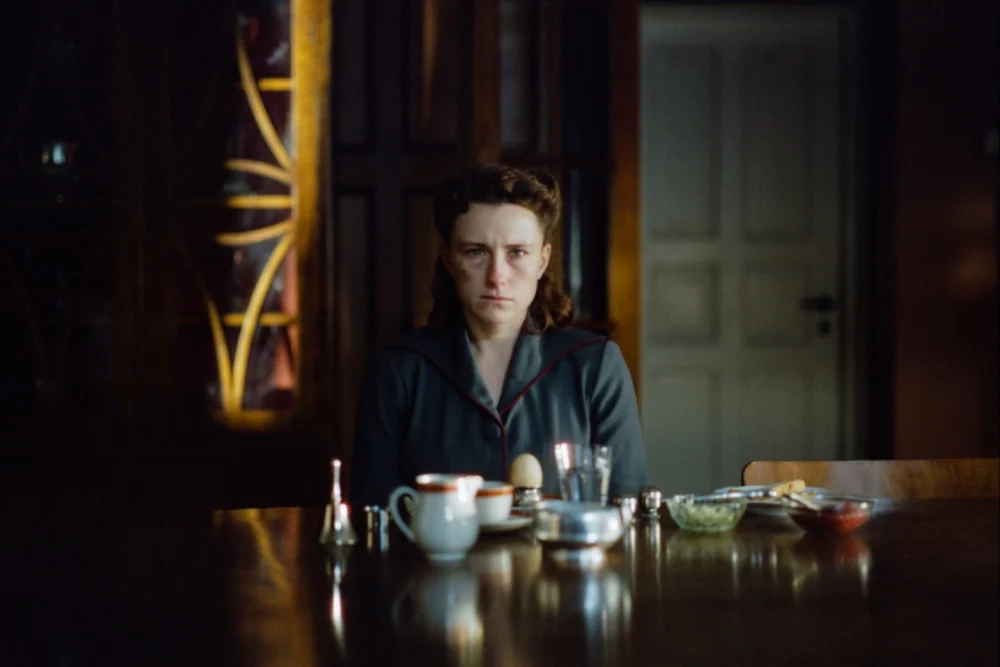
Director May el-Toukhy’s latest cinematic endeavor, "Woman Unknown," delves into the often-overlooked and deeply stigmatized experiences of Danish women who formed relationships with German soldiers during the tumultuous years of World War II. This ambitious project, born from a desire to illuminate a marginalized facet of history, challenges conventional narratives and seeks to provide a nuanced portrayal of these women, whose stories have largely been relegated to the shadows of national memory. "When we started to build a story about a ‘horizontal collaborator,’ we realized that, during and after the war, the female body became part of national identity. But in Denmark, it wasn’t really explored," el-Toukhy explains, highlighting the pervasive silence surrounding this complex issue.
The genesis of "Woman Unknown" was a departure from el-Toukhy’s initial artistic aspirations. She had initially intended to craft a film addressing the witch hunts that swept through Europe after the Reformation in the 16th century. However, the historical figures involved presented a challenge for emotional connection. "It was difficult to relate to the perpetrators because many of them were just maniacs. And I’m interested in ambiguity," she states, revealing her preference for exploring the gray areas of human behavior. It was a chance encounter with an archival photograph – a stark image of a woman with a swastika crudely painted on her back – that irrevocably shifted her focus. This powerful visual served as a potent symbol of public humiliation and societal judgment, a practice with deep historical roots.
El-Toukhy observes that the public shaming and stigmatization of women for their perceived transgressions, particularly those involving their sexuality or relationships, is a recurring theme throughout history. "You can find very similar stories that are thousands of years old. The shaving of a woman’s hair or her public shaming for ‘sharing’ her body is a very old concept. Even today, it’s still happening in many armed conflicts," she notes, drawing a chilling parallel between historical practices and contemporary instances of gender-based violence and punishment. This historical continuum of silencing and ostracization is precisely what el-Toukhy aims to challenge with "Woman Unknown."
Despite the ubiquity of such suffering, it has often been marginalized or entirely ignored by historical scholarship. The very title of el-Toukhy’s film, "Woman Unknown," directly references this historical erasure. The inspiration for this evocative title, and indeed for the film’s thematic core, comes from the work of Belarusian writer Svetlana Alexievich. "I was inspired by Belarusian writer Svetlana Alexievich who wrote ‘The Unwomanly Face of War.’ She gathered these testimonies from women who talked about having their periods in war zones, hiding in sheds, and giving birth. It’s rare to have such recollections of the female experience during or after the war," el-Toukhy shares, emphasizing the profound lack of documented female perspectives in war narratives. Alexievich’s oral histories, collected from women who experienced World War II from diverse vantage points, provided a crucial model for el-Toukhy’s own endeavor to unearth and amplify silenced voices.
The film’s narrative centers on Marie, a housemaid and nanny whose life is a delicate balancing act between her desire for a brighter future and the precariousness of her hidden past. On the cusp of liberation in 1945, as Denmark anticipates the departure of German forces, Marie is engaged to her wealthy employer, a union that promises her a life of security and social mobility. However, this impending happiness is shadowed by the fear that her secrets – her relationships with German soldiers – will be exposed, shattering her carefully constructed world. "Our main character wants to remain unknown, but we haven’t told stories about these women either. When you see their photographs in the archives, they’re often labeled ‘unknown woman.’ Also because people didn’t care," el-Toukhy explains, underscoring the dual nature of the title’s meaning: the anonymity imposed upon these women by history and their own desperate attempts to disappear from public scrutiny.
Ironically, "Woman Unknown" has already generated significant discussion, albeit not solely for its artistic merits. The film’s inclusion in the Venice Film Festival’s main competition became a focal point for broader conversations about gender parity in cinema. Venice’s initial announcement featured only one female director in the main competition, a decision that drew widespread criticism and prompted the festival to later add the documentary "Naza," co-directed by Rachel Szor. El-Toukhy acknowledges this controversy with a mix of gratitude and critical awareness. "Obviously, I’m delighted to have been invited to this historic festival. But I would have loved to be in the company of more female directors in the competition. I do believe it’s a structural problem," she states, advocating for systemic change rather than tokenistic gestures.
Her observations extend beyond the confines of film festival programming, touching upon the deeply entrenched systemic issues that hinder women’s advancement in the film industry. "We discussed how the idea of publicly shaming women is an old concept. Not having enough films by women is also an issue that goes way back. It’s reflected in the budgets we work with and the talent that wants to be involved. Even journalists talk about male directors differently than they talk about women. I’ve never heard a female director called a ‘genius’ – and I read many articles about male geniuses," el-Toukhy laments, articulating the subtle yet pervasive biases that shape perceptions and opportunities.
When prompted about potential solutions to these deeply ingrained inequalities, el-Toukhy emphasizes collective responsibility. "Everyone has to chip in and be a part of it. I will now have a chance to discuss this issue through my film, which is rather aptly called ‘Woman Unknown.’ I’m happy to do so, even though the circumstances surrounding me being in the main competition are what they are," she asserts, viewing her film as a platform for critical dialogue. "We have a lot of work to do in order to change that," she concludes, underscoring the long road ahead for achieving true equality in the industry.
El-Toukhy is not only a filmmaker but also an advocate for innovative approaches to filmmaking, actively participating in the new Dogma 25 movement. As previously reported by Variety, she is a signatory to the movement’s manifesto, which aims to challenge traditional filmmaking practices and address the unsustainable pressures faced by directors. "It’s always healthy to disrupt your process as a filmmaker," she notes, embracing the spirit of reinvention. The Dogma 25 principles, which emphasize a more conscious and sustainable approach to production, resonate deeply with her experiences. "Dogma 25 is very much about how we make films. Even though I heard many yeses while making this film, I still feel like I had to run much faster. That that kind of sprint doesn’t necessarily benefit the result," she confesses, illustrating the relentless pace often demanded by the industry.
The toll of such demanding production cycles is significant. "The way we have to work is almost unbearable. You finish a film and you’re completely stressed out and exhausted. I could make another big European arthouse drama in the future – I’m not saying goodbye to that format. I just think we really need to rethink the way we make movies," el-Toukhy states, advocating for a more humane and sustainable industry model. This call for a reevaluation of filmmaking processes reflects a growing sentiment among artists who seek to balance creative ambition with personal well-being and ethical production.
Consistent with her previous work, notably her critically acclaimed film "Queen of Hearts," el-Toukhy deliberately eschews the creation of conventionally likable protagonists. In "Queen of Hearts," she explored the morally ambiguous actions of a woman who engaged in a transgressive relationship with her teenage stepson. Similarly, in "Woman Unknown," Marie navigates a treacherous path, making choices that are often questionable as her carefully constructed facade begins to crumble under mounting pressure. "It would be a betrayal to my sisters around the world if I only portrayed women as saints. It’s important that we tell stories about complex women in a nuanced way, just as we do with male characters. That rings truer to life," el-Toukhy explains, defending her commitment to portraying women with the same multifaceted humanity often afforded to male characters in cinema. This artistic stance challenges the pervasive tendency to sanitize or idealize female characters, arguing instead for their representation in all their complexity and imperfection.
A deliberate choice in the filmmaking process was to maintain a steadfastly female perspective. "Early on, we made a rule that we would never reproduce the male experience of war. [Marie] goes out of the house, but the streets represent danger. People are celebrating and there’s euphoria, chaos and vigilantism. Her safe space is at home, but then insecurity and danger move in. Suddenly, there’s no safe space anymore," el-Toukhy elaborates, detailing how the film meticulously crafts Marie’s world as an internal experience of vulnerability and threat, a stark contrast to the external narratives of war often dominated by male combatants. The film emphasizes how the aftermath of war, particularly for women, was not just about physical survival but also about navigating a society grappling with its own identity and morality.
The narrative also confronts the difficult historical reality that the "liberators" of Denmark were not universally lauded, and their methods were not always beyond reproach. For a significant period after the war, there was a reluctance to openly criticize those who had resisted the Nazi occupation, creating a climate where dissent was suppressed. "For the longest time, no one dared to criticize ‘the liberators’ and their brutal methods," el-Toukhy observes, acknowledging the sensitive nature of her subject matter. She anticipates that some audience members may react with discomfort or anger, particularly those whose families were involved in the resistance movement, which was indeed strong in Denmark. "It would have been harder to tell this story 25 years ago when those generations were still alive. Some audience members will still be shocked or angry because their grandfather was part of the resistance movement, which became very strong in Denmark right up to the liberation. But not everyone should have been a part of it," she states, advocating for a more critical and honest historical reckoning.
Ultimately, "Woman Unknown" serves as a powerful call for historical introspection and the dismantling of harmful narratives. "It’s important to have discussions about what actually happened so that we don’t recreate false narratives. It’s hard to change the direction you’re going in if you’re not looking back," el-Toukhy concludes, highlighting the vital role of confronting uncomfortable truths in shaping a more accurate and equitable future. By bringing the silenced stories of these women into the light, el-Toukhy not only challenges historical amnesia but also contributes to a broader cultural conversation about female agency, societal judgment, and the enduring impact of war on individual lives.
