
 By Titik Puspa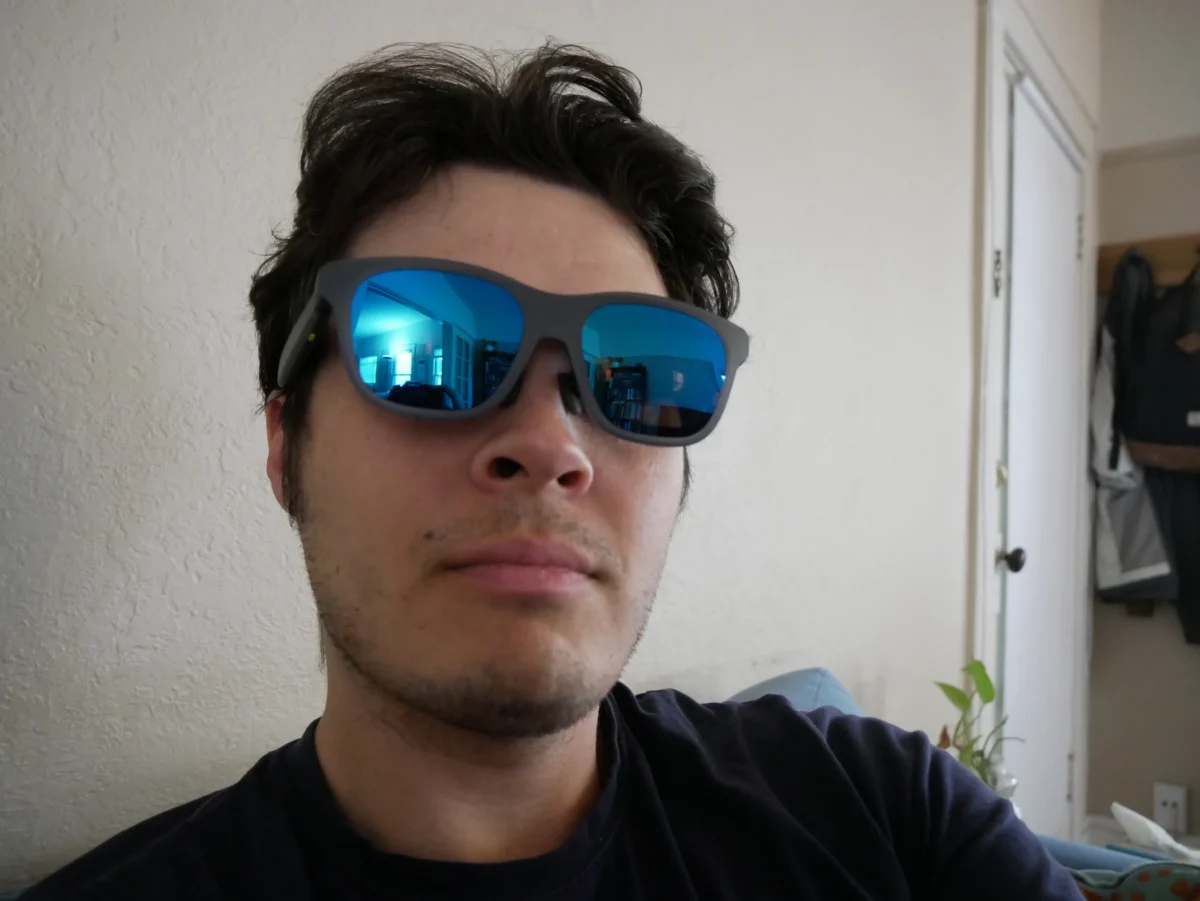
As a self-proclaimed cinephile, my life revolves around the silver screen and the constant quest for novel ways to immerse myself in cinematic worlds. When XREAL, a company at the forefront of smart glasses technology, sent over their a01 model, a recent May release, my curiosity was piqued. I eagerly anticipated evaluating this new contender in the ever-evolving landscape of personal media consumption.
The XREAL a01 positions itself not as a fully integrated augmented reality headset, but rather as a sophisticated external display. Unlike its more software-centric AR counterparts, such as Meta’s Orion or Snap’s Spectacles, the a01 functions as a portable screen. Crucially, it lacks an internal battery, relying instead on a USB-C connection to a host device for both power and content. This design choice significantly impacts its portability and user experience, but also contributes to its more accessible price point, currently hovering around $300. This cost places it within reach for many consumers looking to experiment with immersive displays without a substantial financial commitment.
While XREAL touts the a01’s optimization for gaming, particularly its compatibility with devices like the Steam Deck, my personal interest lay in its potential as a portable cinema. Plugging the a01 into my personal laptop, I fired up the Criterion Channel and settled in to watch David Lynch’s cult classic, "Wild at Heart." The iconic scene where Nicolas Cage, resplendent in his snakeskin jacket, delivers a memorable Elvis Presley performance after a bar brawl, provided an immediate test of the glasses’ visual fidelity.
The visual output of the a01 is, I must admit, impressive. Equipped with dual mini OLED panels, the glasses deliver a crisp 1080p resolution with a remarkable peak brightness of 1,600 nits. This translates into vibrant colors and a surprisingly immersive viewing experience. Aimed at a blank wall, the effect is akin to using a high-quality home projector, or perhaps more evocatively, the nostalgic allure of a drive-in movie theater. In the controlled environment of a darkened room, the a01 genuinely brings you a step closer to the coveted in-theater ambiance, creating a private viewing bubble.
However, as the immersive experience unfolded, a fundamental question began to surface: why would I choose to wear a pair of glasses connected to a laptop mere inches away, to watch content already displayed on that same laptop? XREAL’s answer lies in the claimed immersive quality, with the device projecting an experience equivalent to viewing content on a 147-inch screen. While this offers a significantly larger perceived display, the inherent redundancy of watching a movie on two screens simultaneously inevitably prompts a critical examination of the device’s core purpose.

XREAL suggests the a01 can also function as a "second monitor," a concept further supported by its classification as a "wearable display." Yet, the practical application of this functionality is again questionable. The glasses’ immersive nature makes it challenging to perceive anything beyond the projected content. This presents a significant hurdle for multitasking, rendering tasks like working on a laptop while wearing the glasses a cumbersome, if not impossible, endeavor. The device’s singular focus on displaying content, while beneficial for dedicated viewing, limits its utility as a productivity tool.
The prospect of connecting the a01 to a smartphone offers a more compelling vision of portability. Unfortunately, my older iPhone’s proprietary port proved incompatible with the a01’s standard USB-C cable. A necessary adapter would have been required to bridge this connectivity gap. This highlights an important consideration for potential users: ensuring device compatibility is paramount for unlocking the full potential of the a01.
Despite this personal setback, the user experience of connecting to a phone is relatively straightforward to envision. This connection liberates the user from the tether of a laptop, opening up possibilities for on-the-go entertainment. Imagine watching a film during a long train journey or a transatlantic flight, transforming mundane travel time into a private cinema experience. Even the more whimsical notion of watching a movie while strolling down the street, while perhaps ill-advised due to the inherent risks of impaired spatial awareness, illustrates the device’s potential to de-localize the viewing experience.
However, even when paired with a smartphone, inconvenient limitations persist. The a01 primarily functions as a screen mirroring device. This means the phone’s screen must remain active and powered on during use, perpetuating the aforementioned redundancy issue. While tucking the phone into a pocket might seem like a solution, any significant jostling or movement could disrupt the playback, making for a frustrating viewing session. The reliance on a constantly active phone screen also contributes to battery drain on the mobile device, an important factor for extended viewing sessions.
To address the limitations of direct device connection, XREAL offers the Beam Pro, an optional accessory that functions as a standalone streaming hub. This mini-tablet allows users to download content and connect it to the a01, creating a more integrated and less redundant viewing experience. However, this added functionality comes at a further cost of $200, increasing the overall investment for a more seamless experience.
Beyond the functional considerations, the issue of heat generation is a notable drawback. The a01, like many XR devices, tends to warm up after extended use, producing a subtle tingling sensation on the bridge of the nose and around the eyes. This is a common challenge in cramming significant computing power into compact form factors. While not unique to XREAL, it is a disconcerting aspect of wearing a device directly on one’s face, raising concerns about comfort during longer viewing sessions.

Despite the heat issue, the a01 is commendably lightweight and comfortable to wear. It avoids the cumbersome feel of some earlier smart glasses I’ve encountered. For comparison, Snap’s Spectacles, which I tried at CES earlier this year, were significantly heavier, though it’s important to note they represent a different category of device with more integrated AR capabilities. The a01’s design prioritizes a less obtrusive form factor, making it more amenable to extended wear.
XREAL’s commitment to product development is evident in their iterative approach. Each new device appears to address shortcomings of its predecessors. This is particularly true when considering their upcoming device, Project Aura, which I had the opportunity to preview at Google I/O. Aura promises a significantly more immersive and user-friendly experience, aiming to resolve many of the existential dilemmas presented by the a01.
Powered by Android XR, a specialized operating system from Google and Samsung, Aura boasts native hand tracking – a feature notably absent in the a01 – and access to the Google Play Store. This opens up a wider range of interactive applications and advanced AR potential. Furthermore, Aura includes a tethered "puck" that serves as both a charging source and a compute node. This pocketable unit grants users substantially more mobility, eliminating the need to remain plugged into a separate device, a significant improvement over the a01’s power dependency.
Returning to the a01, from a dedicated cinephile’s perspective, its suitability for serious movie watching is questionable. The fundamental desire for a large screen experience, the bigger the better, remains a core tenet of cinematic appreciation. In a market saturated with massive 4K OLED televisions, even a modest 55-inch TCL S-series TV offers a home viewing experience that is both more comfortable and deeply satisfying than what the a01 can provide. The intimate experience of watching a film on a large flat-screen television, second only to the communal magic of a cinema, contrasts sharply with the close-proximity viewing offered by the a01. While the glasses provide a unique sense of immersion through their proximity, they fall short of what I would consider an optimal movie-watching experience.
Ultimately, the XREAL a01 serves as a fascinating, albeit imperfect, window into a rapidly evolving hardware industry still finding its consumer footing. Its accessible price point and impressive visual fidelity offer a tantalizing glimpse into the future of portable, personal displays. However, its limitations in terms of power dependency, functionality, and the inherent redundancy of its core use case prevent it from being a definitive replacement for traditional viewing methods. I remain keenly interested in how XREAL’s upcoming Aura will redefine the user experience, and I am certainly game to re-evaluate my personal movie-watching preferences when that time comes, armed with a more advanced and integrated technology. The journey of smart glasses is far from over, and the a01 represents an important, if incremental, step in that ongoing evolution.
When you purchase through links in our articles, we may earn a small commission. This doesn’t affect our editorial independence.
