
 By admin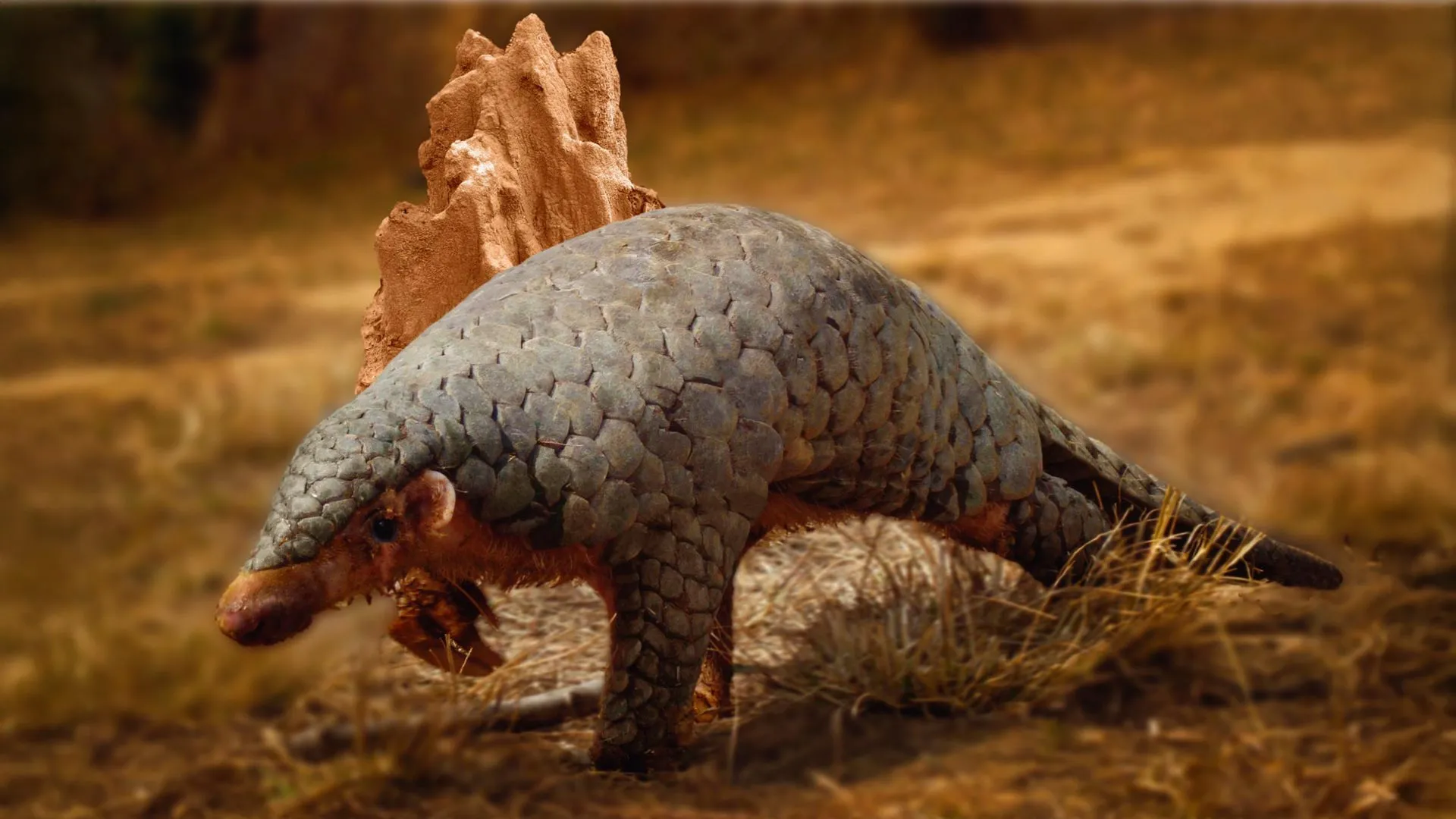
In a significant stride for biodiversity and conservation science, researchers have now definitively confirmed the existence of a previously unrecognized Asian pangolin species, Manis aurita, thriving in the challenging terrains of Nepal and Northern India. This groundbreaking revelation, published in the esteemed journal Communications Biology, is far more than a mere academic reclassification; it represents a critical clarification of the intricate relationships between different pangolin species, precisely where they inhabit, and the unique characteristics that distinguish them. Such detailed information holds immense potential to empower authorities in identifying the origins of illegally traded pangolins, thereby strengthening global efforts to combat the devastating scourge of poaching.
"We can’t protect what we do not know, and now that we have confirmed that this other species of pangolin exists, we can use that information to help protect these endangered animals," emphasized Anderson Feijó, the Negaunee Assistant Curator of Mammals at the Field Museum and a co-corresponding author of the pivotal study. His statement underscores the fundamental principle that accurate taxonomic knowledge forms the bedrock of effective conservation strategies. Without knowing exactly what species exists and where, conservation resources can be misdirected, legal protections can be inadequate, and reintroduction programs can inadvertently cause more harm than good.
Narayan Koju, a lead researcher at the Nepal Engineering College at Pokhara University and the study’s first author, further elaborated on the journey to this discovery. "This finding marks the culmination of more than five years of research that began in Nepal, where we first documented evidence suggesting that Himalayan pangolins represented a distinct evolutionary lineage," Koju stated. "The confirmation of Manis aurita as a valid species demonstrates the importance of long-term research, international collaboration, and museum collections. Most importantly, it provides a strong scientific basis for conservation planning, wildlife forensics, and efforts to protect one of the world’s most trafficked mammals from extinction." This highlights the arduous, multi-faceted nature of modern scientific discovery, marrying fieldwork with advanced genetic analysis and historical specimen review.
Untangling the Pangolin Family Tree: A Taxonomic Odyssey
The journey to definitively classify these Himalayan pangolins has been a complex one, marked by evolving scientific understanding and the rigorous application of taxonomic principles. The classification of these elusive creatures had already begun to shift prior to this latest research. As recently as 2025, another independent research team had determined that animals previously grouped under the umbrella term "Chinese pangolins" actually represented two distinct species. One of these was primarily found in China, while the other inhabited the majestic Himalayan foothills, stretching across parts of Nepal, India, Bhutan, and Myanmar. The researchers, in their findings, had named this newly recognized mountain-dwelling form Manis indoburmanica, or the Indo-Burmese pangolin.
However, scientific nomenclature operates under strict international rules, most notably the principle of priority. This fundamental rule dictates that when the same species has been assigned more than one scientific name over time, the earliest validly published name takes precedence. This is crucial for maintaining stability and clarity in biological classification, preventing confusion and ensuring a consistent global understanding of biodiversity.
At the time of the 2025 reclassification, Feijó and his dedicated colleagues were already immersed in their own extensive, decade-long investigation into pangolin evolution. Their ambitious work meticulously combined robust DNA evidence with a comprehensive analysis of physical characteristics, aiming to precisely determine the total number of extant pangolin species and, critically, to map out their evolutionary relationships. This holistic approach is essential for accurate taxonomy, as morphology alone can sometimes be misleading, and genetic data provides an unparalleled window into evolutionary history.
It was during this exhaustive research that Feijó’s team encountered historical records of Manis aurita, a pangolin species originally described way back in 1836. Over the intervening nearly two centuries, M. aurita had gradually been reclassified and demoted to a mere subspecies of the more widely recognized Chinese pangolin. This historical ambiguity presented a formidable challenge to the researchers.
"This left us with a core taxonomic riddle: what is the relationship between indoburmanica and aurita? Are they the same species or different species?" recounted Kai He, another of the paper’s co-corresponding authors and a leading researcher at the South China Biodiversity Research Center at Guangzhou University. The resolution of this riddle hinged on a remarkable piece of scientific detective work. "The ultimate, most thrilling piece of the puzzle came from the Natural History Museum in London," He continued, highlighting the invaluable role of historical collections. "Thanks to their incredible expertise and assistance, the NHM team successfully sequenced the DNA directly from the historical type specimen of the Nepalese subspecies (aurita). This specimen dates back to 1836, making it nearly 190 years old." This extraordinary feat of extracting and sequencing ancient DNA from such an old, delicate specimen was a game-changer, providing the definitive link to the past.
DNA From 1836 Provides the Answer: A Bridge Through Time
The genetic material painstakingly recovered from this historic museum specimen, collected almost two centuries ago, unequivocally settled the long-standing question. Modern Himalayan pangolin samples, obtained from contemporary populations, exhibited a precise genetic match with the ancient aurita specimen. This crucial finding demonstrated beyond doubt that the animals described in 2025 as M. indoburmanica were, in fact, members of the species first named Manis aurita in 1836. Consequently, under the ironclad rule of priority in scientific naming, M. aurita is now definitively recognized as the correct and valid scientific name for this distinct Himalayan pangolin species.
"This taxonomic clarification provides a crucial scientific basis for combating illegal poaching and lays the groundwork for protecting this cryptic endangered species," affirmed Yan Hua, a co-corresponding author of the study and a researcher at the Guangdong Academy of Forestry. The impact of such clarity cannot be overstated, providing a stable foundation for legal frameworks and international cooperation against wildlife crime.
The Himalayan pangolin, M. aurita (briefly and formerly known as M. indoburmanica), while often mistaken for its Chinese counterpart, exhibits several subtle yet vitally important distinctions. "Compared to the Chinese pangolin, the Himalayan pangolin has a bigger body, a longer tail, and smaller ears," Feijó detailed, providing key morphological identifiers. Intriguingly, the revived name aurita itself is derived from the Latin word for "eared," directly referencing the animal’s distinctive, relatively prominent ears—a trait that, paradoxically, Feijó describes as "smaller" in comparison to the Chinese pangolin’s overall proportions, yet still a key feature.
Beyond physical characteristics, the two species are also separated by significant geographical boundaries. Their known ranges do not overlap, creating a natural barrier that reinforces their distinct identities. For critically endangered animals, especially those facing intense pressure from rampant poaching, understanding precisely which species lives where is not just academically interesting but absolutely essential for targeted, effective conservation interventions. Misidentifying a species or its range could lead to ineffective protection measures or, worse, unintended harm to fragile populations.
A New Tool Against Pangolin Trafficking: Forensic Science for Conservation
The illegal trade in pangolins is a crisis of staggering proportions. Pangolin scales, derived from their unique keratinous armor, are erroneously believed to possess potent medicinal properties—from being a powerful aphrodisiac to a cure for various ailments—in traditional Chinese medicine practices. This unfounded belief, coupled with demand for pangolin meat as a delicacy, fuels a massive, illicit global trade, making pangolins the most trafficked mammals on Earth. Estimates suggest that over a million pangolins may have been poached in the last decade alone, driving populations to the brink. Preventing this rampant trafficking is incredibly difficult, in part because authorities frequently encounter confiscated scales or meat rather than intact animals, making species identification a formidable challenge.
"In the marketplaces you basically only find pangolin scales, not the whole animals, which makes it hard to know which species are being hunted and where they are coming from," Feijó explained, highlighting the core difficulty faced by law enforcement. Without this crucial information, efforts to trace supply chains and dismantle poaching networks are severely hampered.
This new research, however, offers a powerful new weapon in the arsenal against wildlife crime. The sophisticated DNA methods employed in the study can make future seizures of pangolin products far more informative. Conservation scientists and forensic experts can now analyze confiscated scales, often mere fragments, to precisely determine not only which pangolin species they originated from but potentially also their geographic origin. This allows for the creation of "genetic fingerprints" that can trace illegally traded material back to specific regions or even populations where poaching pressure is most intense.
This intelligence can then be used by conservationists and law enforcement agencies to work backward from illegally traded material to identify and target the specific populations and poaching syndicates involved. Such data can inform targeted anti-poaching patrols, enhance cross-border cooperation, and lead to more effective prosecutions, ultimately disrupting the illegal supply chains that threaten these animals with extinction.
Moreover, a clearer understanding of species boundaries and their natural geographic ranges significantly improves efforts related to reintroduction programs. These ambitious initiatives aim to return pangolins to areas where their populations have been decimated or where they once thrived. For such programs to succeed, it is paramount that conservationists ensure they are releasing the appropriate species into its correct historical and ecological geographic range.
"Before, you might have introduced Chinese pangolins into Nepal, because you didn’t know the difference," Feijó remarked, illustrating the very real risks of misidentification. Such errors could lead to genetic pollution, the introduction of diseases to naive populations, or the release of animals poorly adapted to a specific local environment, ultimately undermining conservation goals. "By defining the differences between the species and the limits of where each species is found, we can make better conservation decisions."
Museum Collections Reveal Hidden Biodiversity: A Repository of Knowledge
The researchers universally acknowledge that these practical conservation advances, along with the fundamental scientific breakthrough, would have been immeasurably harder, if not impossible, without the invaluable resources provided by natural history museums. These institutions serve as vital repositories, preserving pangolin specimens collected over centuries. Such collections provide scientists with unparalleled access to animals from locations and populations that are now often extremely difficult, if not impossible, to sample in the wild due to habitat loss, rarity, or political instability.
"Using museum collections allows us to have access to more individuals across the species’ range," Feijó elaborated on the critical advantage. "If you only rely on fresh material, since the animals are so rare to find in the wild, this greatly limits the information that you can gather. We used collections to have a more complete sampling of the species. It’s a big advantage to have this resource available as a repository of material that we can look back and keep learning from." These historical specimens offer a snapshot of past biodiversity, providing crucial baseline data against which current populations can be compared, and offering the raw material for ancient DNA analysis that bridges centuries of evolutionary history.
This monumental study was a testament to the power of international and interdisciplinary collaboration, drawing expertise from a vast network of institutions. Scientists from Guangzhou University, Nepal Engineering College, Pokhara University, the Chinese Academy of Sciences, University of Washington, the Smithsonian National Museum of Natural History, the University of Sevilla, the Guangdong Academy of Forestry, Tribhuvan University, Aspect Ecology Oxfordshire, the Chinese Wildlife Forensic Science Service, Chengdu University of Traditional Chinese Medicine, and the Field Museum all contributed their specialized knowledge and resources to unraveling this complex taxonomic puzzle. This collective effort underscores that addressing global conservation challenges requires a united front, leveraging diverse skills and perspectives from around the world.
The confirmation of Manis aurita as a distinct species in the Himalayas is more than just a footnote in a scientific journal; it is a beacon of hope and a call to action. It provides a clearer roadmap for protecting one of the world’s most unique and imperiled mammals, demonstrating how foundational scientific research, enabled by historical collections and cutting-edge technology, directly underpins tangible conservation outcomes. As humanity grapples with an accelerating biodiversity crisis, every taxonomic clarification, every genetic insight, and every collaborative effort brings us closer to safeguarding the intricate web of life on Earth.
