
 By admin
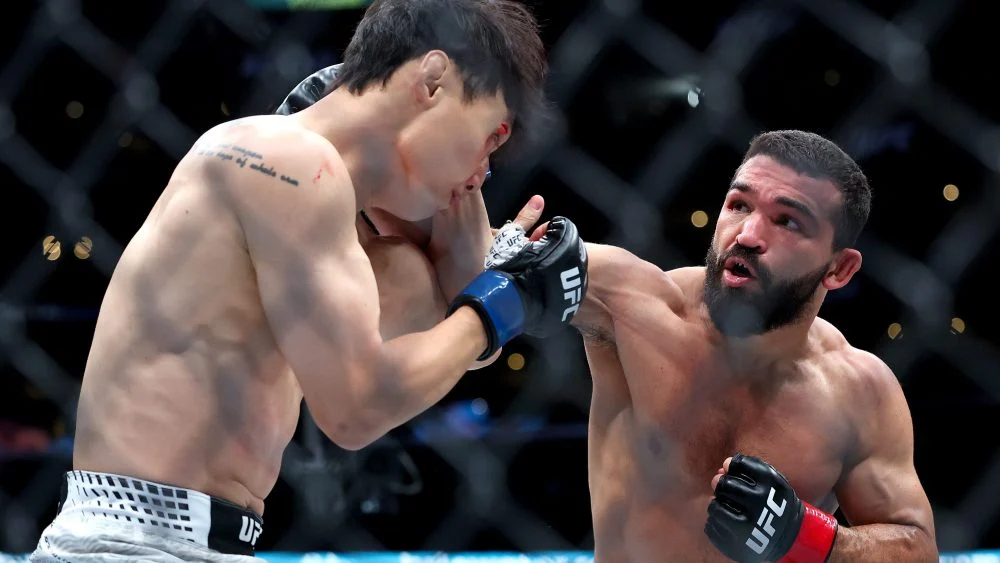
TKO Group Holdings, the parent company encompassing iconic combat sports and entertainment brands like UFC and WWE, has experienced a monumental third quarter, propelled by the unprecedented success of the Ultimate Fighting Championship (UFC). The mixed martial arts powerhouse delivered a string of sellout events, igniting a surge in revenue and adjusted earnings that pushed TKO to new financial heights. This stellar performance underscores the enduring appeal of live sports and entertainment, positioning TKO at the forefront of a rapidly evolving premium ecosystem.
The UFC’s impact on TKO’s Q3 financials was nothing short of spectacular. The organization reported double-digit gains across all key performance indicators, demonstrating a robust and consistent growth trajectory. Revenue surged by an impressive 60% year-over-year, reaching a staggering $519.2 million. This substantial increase was largely fueled by a remarkable $132.3 million jump in media rights, production, and content revenue. This signifies the escalating value of UFC’s broadcast partnerships and the growing demand for its compelling content library across various platforms. Furthermore, live events and hospitality revenue experienced a significant spike of $36 million, a testament to the unwavering fan engagement and the league’s ability to consistently pack arenas. Complementing these gains, partnerships and marketing revenue saw a healthy $20.5 million increase, highlighting the brand’s attractiveness to sponsors and advertisers eager to tap into its dedicated fanbase. Consumer products licensing and other revenue also contributed positively, adding a $5.2 million boost.
In contrast, WWE, while still a vital component of TKO’s portfolio, faced a more challenging quarter. This relative dip can be attributed, in part, to a comparative analysis with the previous year’s third quarter, which featured three additional main roster events. This slight disparity in event cadence, while not indicative of a fundamental weakness in the WWE brand, illustrates the delicate balance of scheduling and its impact on short-term financial reporting. Despite this, the full-year forecast for both UFC and WWE remains exceptionally strong, as does the outlook for IMG, which includes the premium events business, On Location. On Location, in particular, enjoyed a robust quarter, bolstered by the influx of high-profile events, including those associated with the recent World Cup, further solidifying TKO’s diversified revenue streams.
Mark Shapiro, President and COO of TKO, articulated the company’s optimism and strategic vision during a recent financial disclosure. "Our third quarter performance reflects the secular tailwinds powering live events and experiences around the world, and TKO’s assets sit front and center of that premium ecosystem," Shapiro stated. He elaborated on the company’s execution strategy, noting, "As we close out what we’ve called our year of execution, our decision to raise full-year guidance for the second time this year is the clearest expression of our conviction across the entire portfolio." This repeated upward revision of guidance signals a profound confidence in TKO’s business model and its ability to navigate market dynamics. Shapiro further emphasized the inherent durability of TKO’s operations: "Our business is durable and our fundamentals are solid, with the vast majority of our existing revenues locked in for the next five to seven years. Macro trends are firmly in our favor, every facet of sports consumption is pointing north, and we see substantial runway ahead." This long-term revenue visibility through existing contracts provides a strong foundation for sustained growth and investor confidence.
The overarching financial picture for TKO in the third quarter paints a picture of robust expansion. The company reported total revenue of $1.36 billion, marking a significant 21% increase. This growth was not solely top-line; profitability also saw a substantial improvement. Adjusted earnings before interest, taxes, depreciation, and amortization (EBITDA) spiked an impressive 54% to $555.7 million. This surge in profitability was a direct result of the stellar performance of its constituent brands, with UFC contributing a substantial $119.7 million increase and WWE adding a commendable $9.4 million gain. The efficiency and profitability of TKO’s operations were further underscored by the expansion of its adjusted EBITDA margin to a healthy 41%, a notable improvement from 32% in the same period last year. This expansion signifies TKO’s ability to leverage its revenue growth into greater profitability, demonstrating effective cost management and operational synergy.
Buoyed by these exceptional Q3 results and the sustained positive momentum, TKO has revised its full-year financial targets upwards for the second time in the fiscal year. The company now anticipates total revenue for the full year to fall within the range of $5.790 billion to $5.830 billion. This upward adjustment reflects a confident outlook on continued strong performance across its diverse portfolio. Furthermore, the projected adjusted EBITDA for the full year has been raised to between $2.295 billion and $2.315 billion. These revised forecasts underscore TKO’s consistent ability to outperform expectations and solidify its position as a leader in the global sports and entertainment landscape.
The success of the UFC, in particular, can be attributed to a multifaceted strategy that has resonated deeply with a global audience. The organization has consistently delivered high-stakes matchups featuring compelling athletes who possess both extraordinary talent and captivating personalities. This has translated into a consistent demand for pay-per-view events, which form a significant revenue stream. Beyond the marquee fights, the UFC’s strategic expansion into international markets has broadened its fanbase and opened up new revenue opportunities. Furthermore, the increasing sophistication of its media rights deals, both domestically and internationally, has ensured a steady flow of income and amplified the reach of its content. The production quality of UFC events has also reached new heights, offering a premium viewing experience that justifies the associated costs for consumers and partners alike.
The strategic integration of WWE into the TKO Group Holdings umbrella, following the Endeavor acquisition, has begun to demonstrate its synergistic potential. While WWE experienced a slight year-over-year fluctuation in its Q3 performance, its long-term value proposition remains undeniable. The wrestling behemoth boasts a loyal and passionate fanbase, a robust touring schedule, and a valuable intellectual property portfolio that includes a vast archive of content. The ongoing efforts to integrate WWE’s operations with those of UFC and other TKO assets are expected to yield further efficiencies and revenue enhancements in the future. This includes leveraging shared resources, cross-promotional opportunities, and a unified approach to content distribution and monetization.
The "On Location" premium events business, a key component of TKO’s diversified strategy, also played a crucial role in the company’s Q3 success. The World Cup, a global sporting spectacle, provided a significant boost to On Location’s revenue, as it offers exclusive hospitality and experiential packages to discerning fans. This segment highlights TKO’s ability to capitalize on major international sporting events, further diversifying its income streams beyond its core combat sports and wrestling properties. This strategic diversification insulates TKO from the inherent cyclicality of any single sport or event and provides multiple avenues for growth.
The commentary from Mark Shapiro provides valuable insight into the underlying drivers of TKO’s success. His emphasis on "secular tailwinds" suggests that the company is benefiting from fundamental shifts in consumer behavior and market trends. The increasing demand for live experiences, particularly in the post-pandemic era, has created a fertile ground for businesses like TKO that can deliver engaging and memorable events. The "premium ecosystem" he refers to encompasses not just the events themselves but also the associated media rights, merchandise, sponsorships, and digital content that create a holistic fan experience. TKO’s strategic positioning at the heart of this ecosystem allows it to capture value across multiple touchpoints.
The "year of execution" narrative suggests a period of focused strategic implementation and operational improvement. The fact that TKO has raised its full-year guidance for the second time within this year is a powerful indicator of its disciplined approach to achieving its financial objectives. This consistent upward revision of targets builds credibility with investors and demonstrates a proactive management team that is adept at identifying and capitalizing on growth opportunities.
The assertion that "the vast majority of our existing revenues locked in for the next five to seven years" is a critical piece of information for investors. This long-term revenue visibility provides a high degree of predictability and reduces the uncertainty associated with future financial performance. It suggests that TKO has secured substantial contractual agreements with broadcasters, sponsors, and other partners, which will underpin its revenue streams for the foreseeable future. This stability allows for more effective long-term planning and investment in growth initiatives.
The observation that "macro trends are firmly in our favor, every facet of sports consumption is pointing north" speaks to the broader positive environment in which TKO operates. The global appetite for sports content continues to grow, driven by factors such as increasing disposable incomes in emerging markets, the proliferation of digital media platforms, and the enduring cultural significance of athletic competition. TKO’s brands are well-positioned to capitalize on these trends, given their broad appeal and established global presence. The phrase "substantial runway ahead" further reinforces the optimistic outlook, suggesting that TKO has ample room for continued expansion and innovation.
Looking ahead, TKO’s strategy will likely involve continued investment in its core brands, the exploration of new growth opportunities, and the ongoing optimization of its operational structure. The company’s ability to consistently deliver compelling live events, leverage its valuable intellectual property, and capitalize on evolving media consumption patterns will be critical to its sustained success. The integration of WWE, the continued expansion of UFC’s global footprint, and the strategic development of its premium events business all point towards a future of continued growth and financial outperformance for TKO Group Holdings. The company’s strong Q3 performance serves as a powerful testament to its strategic vision and its ability to execute effectively in a dynamic and competitive market.
