
 By admin
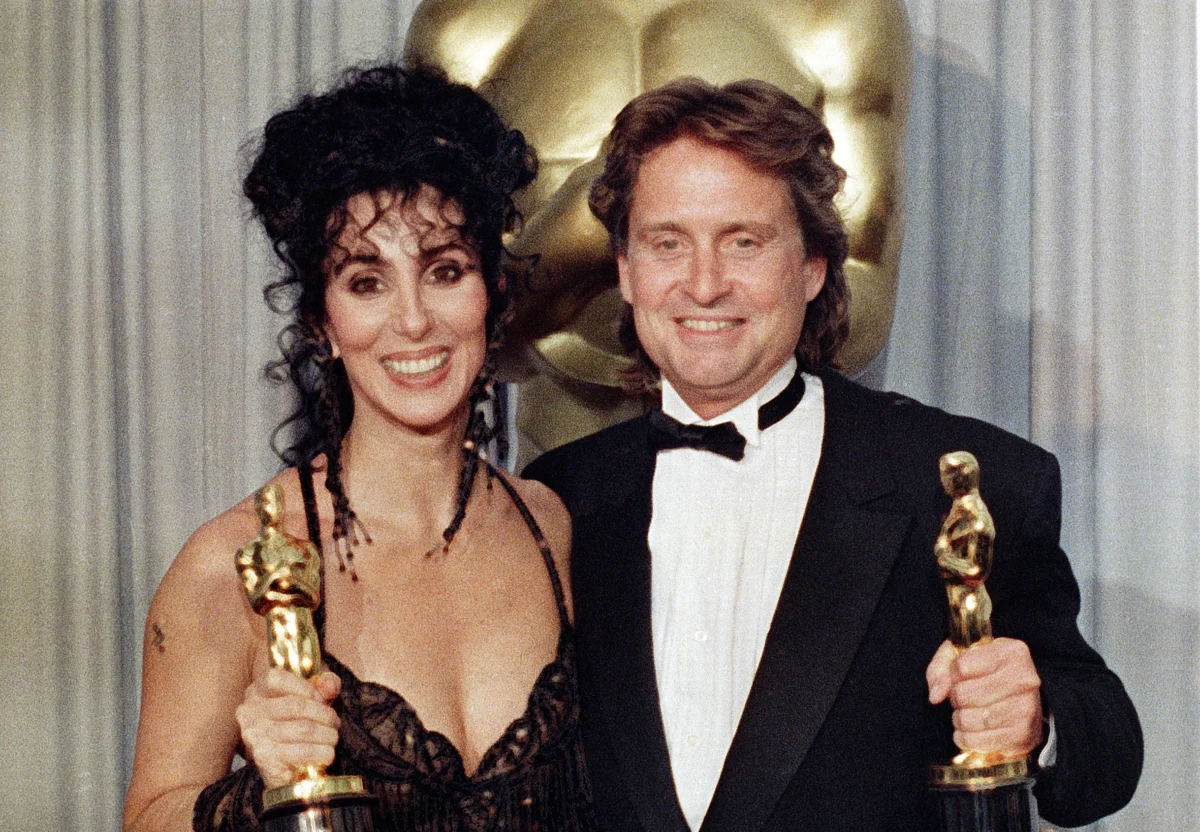
Cher, the legendary entertainer whose career spans music, film, and fashion, has responded with remarkable grace and a touch of playful defiance to recent remarks made by actor Michael Douglas. Douglas, during an appearance on "The Graham Norton Show" alongside his "Fatal Attraction" co-star Glenn Close, expressed his enduring belief that Close was unfairly overlooked for her powerful performance in the 1987 thriller, suggesting Cher’s win for "Moonstruck" that year was a misstep by the Academy. A representative for Cher, speaking to Entertainment Weekly, unequivocally stated, "Cher adores Michael Douglas," a sentiment that neatly encapsulates the icon’s approach to the playful, yet pointed, "shade" thrown her way.
The Oscar ceremony in question, the 60th Academy Awards held in April 1988, saw a fierce competition in the Best Actress category. Cher, lauded for her transformative role as Loretta Castorini in Norman Jewison’s beloved romantic comedy "Moonstruck," ultimately took home the golden statuette. Her victory came at the expense of Glenn Close, who was nominated for her chilling portrayal of Alex Forrest in "Fatal Attraction." It is this decision, nearly four decades later, that Michael Douglas still finds contentious. On the television program, Douglas, with Glenn Close seated beside him, declared, "she should have won [the Oscar] with ‘Fatal Attraction’" and highlighted Close’s status as a four-time nominee at that point in her career. When host Graham Norton expressed surprise at Cher’s win, Douglas’s wry response, "I know, that’s what we all said!", ignited a social media firestorm and reignited discussions about the 1988 Academy Awards race.
Glenn Close, ever the diplomat and a seasoned performer herself, offered a gentle rebuke to her longtime colleague and friend. "Michael, be kind," she implored, turning to Douglas with a knowing smile as the studio audience erupted in laughter. This moment, captured and widely shared online, underscored the camaraderie between the actors, even as Douglas aired his lingering grievances. Close’s plea for kindness served as a subtle reminder of the subjective nature of artistic recognition and the often-intense pressure surrounding award ceremonies.
The 1988 Oscars were a significant night for all three involved. Cher, already a celebrated artist, solidified her status as a formidable acting talent with her Best Actress win. Michael Douglas, a rising star with a powerful performance in Oliver Stone’s "Wall Street," also took home an Oscar for Best Actor that evening. Notably, Douglas was the sole nominee from "Wall Street," making his win a singular achievement for the film. In contrast, "Moonstruck" was a critical darling, earning six nominations in total, including Best Picture, and ultimately securing Oscars for Best Adapted Screenplay (John Patrick Shanley) and Best Supporting Actress (Olympia Dukakis), in addition to Cher’s win.
"Fatal Attraction," while a commercial and critical success that garnered significant attention, also received six nominations. However, despite its widespread acclaim and the undeniable power of Close’s performance, it left the ceremony empty-handed. Both "Moonstruck" and "Fatal Attraction" were contenders in major categories, including Best Picture and Best Director, but ultimately yielded to Bernardo Bertolucci’s epic "The Last Emperor," which swept the awards season with nine wins. The narrative of the 1988 Oscars, therefore, is not just about individual wins but also about the complex interplay of critical reception, audience impact, and the Academy’s voting patterns.
Michael Douglas’s recollection of Glenn Close’s Oscar history is accurate. Entering the 1988 ceremony, she was indeed a four-time nominee. Her previous nominations were for Best Supporting Actress for her roles in "The World According to Garp" (1982), "The Big Chill" (1983), and "The Natural" (1984). "Fatal Attraction" marked her first foray into the Best Actress category, a testament to the intensity and complexity of her characterization. Since then, Close’s career has continued to be marked by critical acclaim and further Oscar nominations. She has been nominated four more times for her performances in "Dangerous Liaisons" (1988), "Albert Nobbs" (2011), "The Wife" (2018), and "Hillbilly Elegy" (2020). Despite her numerous nominations and consistently outstanding work, Close has yet to win a competitive Oscar. However, her illustrious career is set to be honored with an honorary Academy Award at the upcoming Governors Awards, a long-overdue recognition of her indelible contributions to cinema.
Cher’s Oscar journey also has a rich history. Her win for "Moonstruck" was not her first brush with Academy recognition. She had previously earned a nomination for Best Supporting Actress in 1984 for her compelling performance in Mike Nichols’ "Silkwood." This earlier nomination demonstrated her burgeoning talent and foreshadowed her eventual triumph. Cher’s ability to transition seamlessly between musical superstardom and acclaimed acting roles is a testament to her multifaceted artistry and enduring appeal.
The "viral diss," as it has been termed, from Michael Douglas, while perhaps intended as a lighthearted jab among peers, has inadvertently amplified the enduring legacy of the 1988 Oscar race. It highlights the subjective nature of award decisions and the passionate debates they often inspire among audiences and industry professionals alike. Cher’s calm and affectionate response, however, underscores her poise and magnanimity. Her statement that she "adores Michael Douglas" suggests an understanding that such comments, especially when made in a jovial context alongside a fellow nominee, are not meant as personal attacks but rather as expressions of professional opinion and enduring loyalty to colleagues.
The context of the 1988 Academy Awards also provides further depth to the discussion. "Moonstruck," a film celebrated for its charm, wit, and emotional resonance, resonated deeply with audiences and critics. Cher’s portrayal of Loretta, a woman finding unexpected love and self-discovery, was universally praised for its vulnerability and comedic timing. The film itself was a critical darling, lauded for its screenplay, direction, and performances. Conversely, "Fatal Attraction," while a cinematic phenomenon that tapped into societal anxieties, presented a darker and more unsettling narrative. Glenn Close’s performance as the obsessive Alex Forrest was a tour de force, a character that has become iconic in cinematic history for its sheer intensity.
The debate over who "should have won" is a perennial feature of awards season, and the 1988 Oscars are no exception. Michael Douglas’s comments, while reigniting this particular debate, also serve to remind us of the enduring impact of both "Moonstruck" and "Fatal Attraction" on cinema. They also underscore the remarkable careers of Cher and Glenn Close, two actresses who have consistently delivered memorable performances and have left an indelible mark on Hollywood. Cher’s graceful response, coupled with her continued success and adoration from fans, exemplifies her status as a true icon who navigates the sometimes-turbulent waters of public opinion with unwavering dignity and charm. The lingering affection she holds for Michael Douglas speaks volumes about her character and her understanding of the often-complex dynamics within the film industry.
