
 By admin
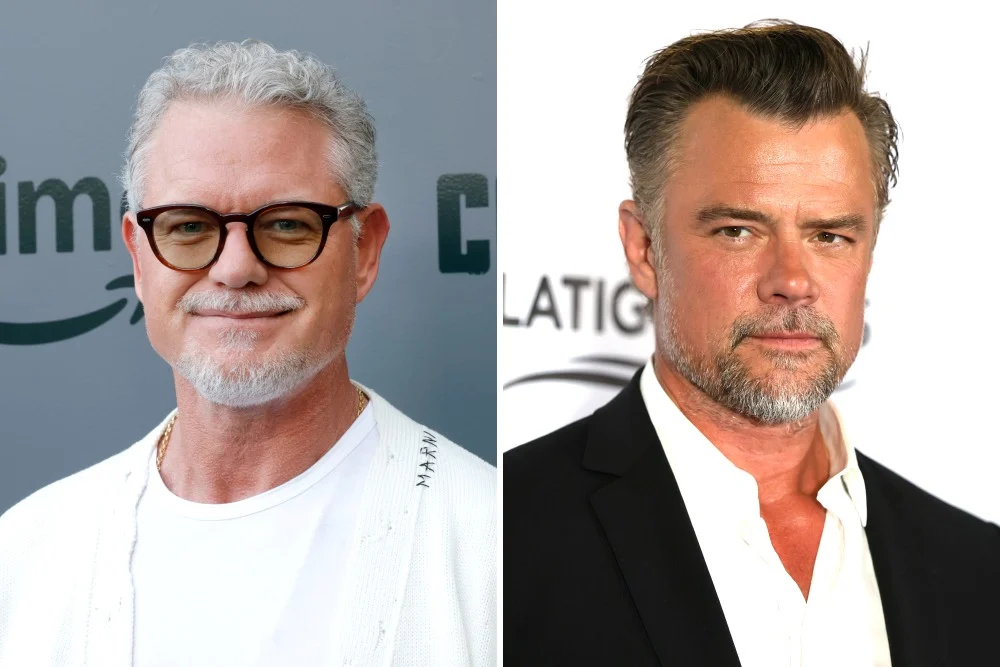
In a candid and posthumously released memoir, "My Book of Days: A Memoir in Moments," actor Eric Dane has pulled back the curtain on a dramatic on-set confrontation with fellow actor Josh Duhamel during their time on the NBC series "Las Vegas." The revelation offers a raw glimpse into the pressures and interpersonal dynamics that can simmer beneath the surface of even seemingly glamorous television productions. Dane, who guest-starred on the popular crime drama that Duhamel headlined for five seasons between 2003 and 2008, recounted an incident where a planned fight scene escalated into a genuine altercation, fueled by Dane’s physical discomfort and Duhamel’s intense immersion in his character.
The seeds of the conflict were sown when Dane, at the time grappling with a debilitating herniated disc in his neck, requested Duhamel to exercise restraint during a fight sequence. "We’re about to film a fight scene," Dane wrote, as reported by Entertainment Weekly. "I ask the lead, Josh Duhamel, to please not grab me by the tie during the scene. He promises me he won’t." However, the promise proved to be short-lived. On the first take, as the director called "Action," Duhamel, caught up in the physicality of the scene, allegedly grabbed Dane by the tie. The action sent searing pain through Dane’s neck, prompting him to call out, "Whoa, whoa, whoa, we have to stop." Despite Duhamel’s apology and Dane’s pained grunts, the second take replicated the painful maneuver.
This repeated disregard for his injury, even after a clear request and a promise, pushed Dane to his limit. He turned to a producer, issuing a stern warning: "You better rein in your boy." Duhamel, sensing the rising tension and perhaps realizing the impact of his actions, apologized again, attributing his behavior to being "caught up in the moment." This explanation, however, did little to appease Dane, who was already experiencing significant physical distress.
The breaking point arrived during the third take. "Fine. Okay. Take three, and son of a bitch, he grabs my fucking tie again," Dane recounted, his frustration palpable even in written form. The cumulative pain and perceived disrespect ignited a firestorm within him. In a moment of uncharacteristic rage, Dane shed his suit coat and challenged Duhamel directly, "Let’s go, you pussy ass actor." He balled his fists and advanced towards Duhamel, a move that was captured by the rolling cameras. "Nobody calls ‘Cut,’ the camera keeps rolling, and to the world who sees the whole nasty scene, I’m the aggressor, the hothead, I start the fight," Dane reflected with evident regret.
Looking back, Dane acknowledged the incident as a low point and a lapse in his professional conduct. He expressed his remorse, stating, "Josh and I have seen each other since and we’re cool. But I want to say it again. Josh, I was wrong. I should’ve walked away. I’m sorry, dude." This public apology, offered years after the event, underscores Dane’s desire for reconciliation and his recognition of his own culpability in the escalation.
The "Las Vegas" role was a significant stepping stone for Dane, who guest-starred in two episodes in 2004. This appearance predated his breakout role as the charismatic Dr. Mark Sloan in the second season of ABC’s medical drama "Grey’s Anatomy," a role that catapulted him to widespread fame. Before his stint on "Las Vegas," Dane cultivated a steady presence on television, appearing in guest roles on iconic sitcoms like "Roseanne" and "Married… with Children," and holding recurring parts in series such as "Charmed" and "Gideon’s Crossing." His early career showcased a versatility that hinted at the leading man he would become.
Interestingly, Duhamel himself has spoken about his own intense acting methods, which have, at times, made him a challenging colleague. Earlier this year, in an interview on "In Depth with Graham Bensinger," Duhamel admitted to going to "pretty extreme places in my head" to embody his characters. He cited his role as Danny McCoy, a former U.S. Marine grappling with PTSD and navigating the complex world of casino management in "Las Vegas," as an example.
Duhamel described the impact of his immersive approach on set: "When I got on set, people would be like, ‘Whoa, what the fuck is wrong with this dude?’" He elaborated on his portrayal of Danny McCoy in the show’s second season, explaining, "my character had gotten deployed to Iraq and he came back and he had seen some shit, and he was in a real dark place… That was the only way I knew how to do it, was to get into this place and stay there. [I] didn’t talk to anybody. I was just, sort of, in it. And people didn’t want to be around me. And people would, sort of, avoid me and it scared people a little bit, including me." This self-awareness from Duhamel provides a potential context for his actions on set, suggesting that his absorption in the character, coupled with Dane’s physical vulnerability, may have contributed to the unfortunate clash.
The revelation in Dane’s memoir adds another layer to the narrative of "Las Vegas," a show that, despite its glitzy setting, was not immune to the raw human emotions and professional challenges faced by its cast. Dane’s posthumous sharing of this experience offers a poignant reflection on memory, regret, and the enduring impact of on-set conflicts. "My Book of Days: A Memoir in Moments" is now available for purchase, inviting readers to explore more of Dane’s life and career through his own words. The memoir serves as a testament to his candor and his willingness to confront even the most difficult moments of his professional journey, offering valuable insights into the often-unseen realities of Hollywood. The book’s release provides a platform for fans to connect with Dane on a deeper level, understanding not just the characters he played, but the man behind them, with all his triumphs and his very human failings. The detailed recounting of the "Las Vegas" incident, in particular, highlights the delicate balance between artistic commitment and interpersonal respect, a balance that, when disrupted, can lead to lasting repercussions. Dane’s willingness to own his part in the altercation, even while detailing the provocations, speaks volumes about his character and his reflective nature, offering a mature perspective on a heated moment from his past. The fact that he and Duhamel have since reconciled further underscores the temporary nature of such on-set friction and the possibility of growth and understanding between professionals. This episode, captured in his final memoir, serves as a powerful reminder that even amidst the artificiality of filmmaking, genuine human emotions and reactions are always at play.
