
 By admin
The recent midterm elections in the United States delivered a political earthquake that resonated far beyond American borders, sparking a wave of optimism in Canada, with many viewing the Democratic gains as a significant repudiation of Donald Trump’s protectionist trade policies, particularly his imposition of tariffs on close allies. Ontario Premier Doug Ford, on Wednesday morning, jubilantly declared it "a victory for Canada," expressing his elation with cartwheels down the street. While the immediate prospect of tariff removal remains uncertain, the seismic shift in American political power has ignited anticipation for a more favorable environment for Ottawa to secure a beneficial trade agreement, as on-again, off-again negotiations regain momentum.
The core of American voters’ concerns heading into the midterms revolved around affordability, a sentiment directly impacted by the very tariffs that have become a point of contention. A September survey conducted by the Cato Institute revealed a striking statistic: approximately 75% of Americans believed that tariffs had contributed to rising prices. This sentiment was not confined to abstract economic theory; it played a tangible role in hard-fought electoral battles across several key states.
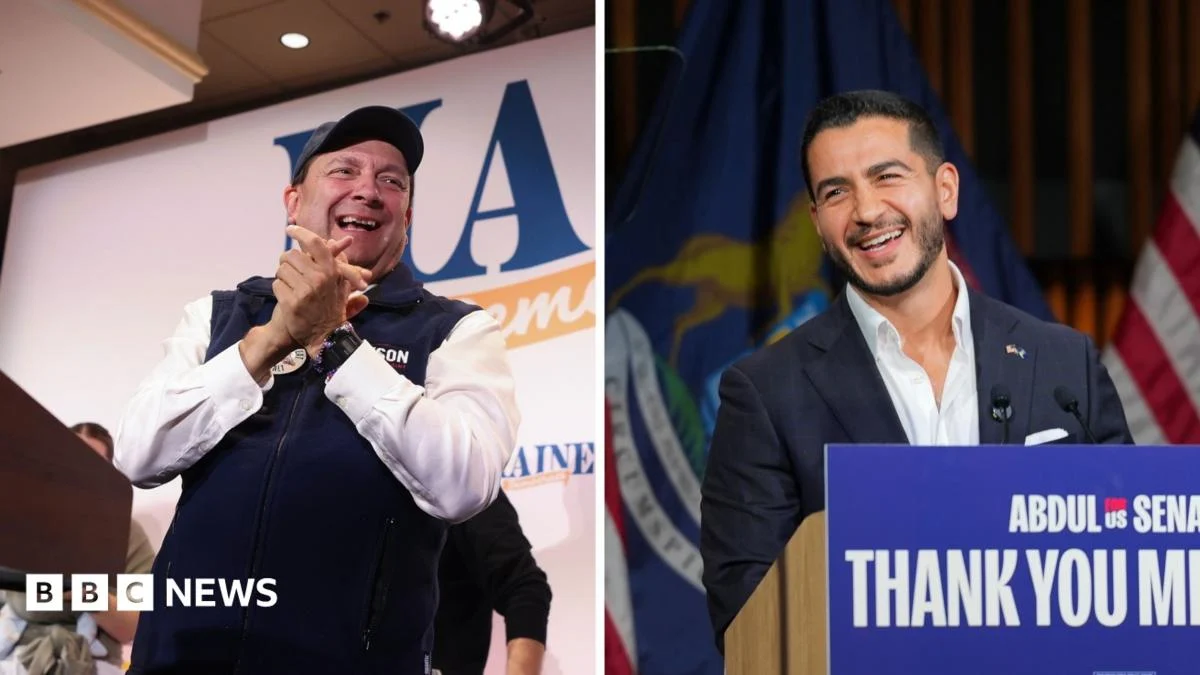
In Maine, for instance, incumbent Republican Senator Susan Collins found herself in direct opposition to the White House over the tariff issue. While she successfully lobbied for the removal of certain duties that disproportionately affected her state, including those on essential goods like road salt, refrigeration equipment, and seaweed, her efforts ultimately could not secure her re-election. She ultimately lost to Democrat Troy Jackson, a testament to the electorate’s desire for policy shifts that addressed their economic anxieties.
A similar narrative unfolded in Michigan, a state with an automobile manufacturing industry deeply intertwined with its Canadian counterpart. Here, Democratic candidate Abdul El-Sayed triumphed over Republican Mike Rogers, a victory that underscored the economic interdependence between the two nations and the growing dissatisfaction with policies that threatened these vital links. In Ohio, Senator-elect Sherrod Brown, who defeated Republican Jon Husted, vocally denounced the levies as a "disaster," vowing to slash costs for voters by advocating for their elimination. This sentiment was echoed by prominent Democratic leaders such as Hakeem Jeffries and Chuck Schumer, who, now empowered by their party’s gains, have historically pushed for the reining in of tariffs on Canada.
However, the extent to which Democratic control of Congress will translate into tangible relief from these tariffs remains a complex question. A significant portion of Trump’s tariffs were enacted through executive orders, bypassing the need for congressional approval. This executive authority grants the President considerable power, and as President Trump himself touted to Fox News on Tuesday night, he possesses the "ultimate power" of veto, a tool he can wield to block any legislation passed by Congress that he disapproves of. Furthermore, the political landscape is nuanced, with some Democratic lawmakers having previously supported certain tariffs as a means to protect American manufacturing jobs. This means that while the general sentiment might lean towards relief, the willingness to maintain some protective measures could persist.
The current trade landscape between Canada and the United States is characterized by a multi-layered imposition of tariffs, with significant impacts on sectors such as autos, steel, aluminum, and forestry. Following the collapse of trade talks between Ottawa and Washington in August, the Trump administration escalated the trade dispute by imposing an additional 50% tariff on a wide array of Canadian goods valued at $20 billion (approximately £15 billion). These goods spanned a diverse range, from dairy products and cosmetics to furniture. In a further aggressive move, the US declared a complete import ban on motorcycles, whey protein, and alcohol.
Canada, in response, retaliated with its own "dollar-for-dollar" tariffs, effectively mirroring the US imposition. This retaliatory measure extended to provinces, with most Canadian provinces banning the sale of US alcohol. The trade war threatened to escalate further, with President Trump having previously indicated his intention to raise tariffs on sectors, including auto manufacturing, as of January 1st.
In the lead-up to the midterm elections, there were subtle indications that the Trump administration might have become more sensitive to the optics of its tariff policies towards Canada. Just days before the vote, President Trump conveyed to reporters that a trade deal was "very close" following discussions with Prime Minister Mark Carney. Speaking to reporters on Tuesday evening, Prime Minister Carney observed that US negotiators were "asking less and they’re offering more" in recent discussions, suggesting a potential softening of the US stance.
On Wednesday, Canada’s Minister of Trade, Dominic LeBlanc, tempered expectations regarding the immediate impact of the midterm results, stating that they would not alter the situation in the short term. He dismissed speculation about the new Congress’s actions once seated in the new year as merely "an interesting discussion at a faculty club luncheon." Minister LeBlanc reiterated Canada’s consistent approach, stating, "Our approach will not change and we don’t intend to speculate on the approach being taken by the Americans."
Pierre Poilievre, the leader of Canada’s Conservative Party, offered a pragmatic assessment on Wednesday, acknowledging that "nobody controls Donald Trump." However, he emphasized that the midterm results indicated Canada possessed "massive leverage" given the widespread unpopularity of the tariffs. He urged the government to "use that goodwill to pressure for tariff-free trade."
The prevailing sentiment among some experts is that President Trump may indeed feel increased pressure to reach a trade agreement with Canada, particularly in light of the clear message of voter frustration delivered at the polls. Colin Robertson, a former Canadian diplomat and a fellow at the Canadian Global Affairs Institute, suggested, "Will this change Trump’s mind? It might, because he suffered such a beating at the polls." However, he cautioned that it remains to be seen how Trump will ultimately react to this significant electoral setback.
Robertson highlighted an opportune window for Canada to finalize a trade deal: the period between now and January, when the newly elected Democratic lawmakers are sworn into office. Following this transition, Trump is likely to be preoccupied with investigations launched by Democrats into his family, finances, and members of his administration. Earlier this year, US Trade Representative Jamieson Greer had expressed ambitions to have interim agreements in place with Canada and Mexico concerning the North American free trade deal, known as the USMCA in the US and CUSMA in Canada, before the end of the year. While Prime Minister Carney has adopted a more optimistic tone regarding current Canada-US trade talks, he had previously informed Politico that he was prepared to wait for a new American president if necessary to secure a comprehensive deal with the US. The midterm election results, therefore, present a complex mix of opportunity and uncertainty for Canada’s trade objectives, underscoring the intricate interplay between domestic American politics and international trade relations.
