
 By admin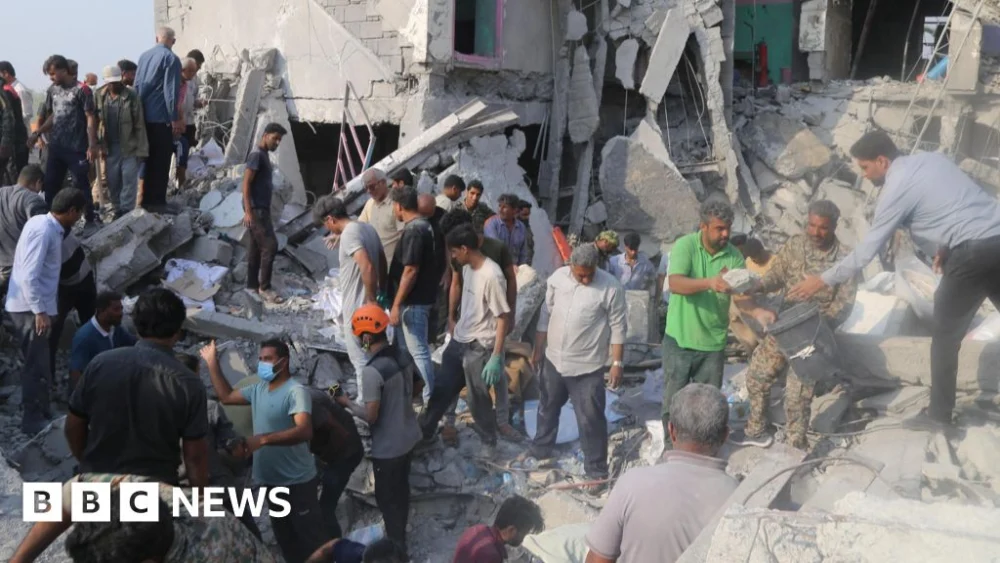
A devastating reported strike on a school in southern Iran has resulted in the deaths of at least 148 people, according to official Iranian sources. The incident, which occurred in the town of Minab, Hormozgan province, has ignited a firestorm of accusations, with Tehran unequivocally pointing fingers at the United States and Israel. The US military’s Central Command (Centcom) has stated it is investigating the reports, while the Israeli military has asserted it has no knowledge of operations in the vicinity. The school’s proximity to an Islamic Revolutionary Guard Corps (IRGC) base, a facility that has been a recurrent target, further complicates the already fraught geopolitical landscape.
The Iranian Red Crescent has provided a grim tally, reporting a total of at least 201 fatalities and 747 injuries in air strikes across Iran since Saturday. Iranian President Masoud Pezeshkian has vehemently condemned the attack, labeling it a "barbaric act" and "another black page in the record of countless crimes committed by the aggressors." This strong rhetoric underscores the deep-seated animosity and mistrust that has characterized the relationship between Iran and its perceived adversaries.
Centcom spokesman Tim Hawkins, in a statement to US media, acknowledged the seriousness of the reports. "We take these reports seriously," Hawkins stated. "The protection of civilians is of utmost importance, and we will continue to take all precautions available to minimise the risk of unintended harm." This statement, while acknowledging the gravity of the situation, does little to quell the immediate outrage emanating from Iran.
Following the initial reports of the incident on Saturday, officials from the Red Cross and Red Crescent in Geneva announced the mobilization of response teams to the affected school. An Iranian official described the school as having been "targeted by three missile attacks," emphasizing its location approximately 600 meters (1970 feet) from the IRGC base. This geographical adjacency has become a focal point for Iran’s accusations, suggesting a deliberate targeting of an area with military significance.
The BBC has verified video footage depicting the aftermath of the explosion, showing plumes of smoke billowing from a damaged building while panicked crowds gather nearby, their screams audible in the background. However, the BBC has been unable to independently verify the reported death toll. This limitation is a direct consequence of Iran’s restrictive visa policies for international news organizations, which significantly hampers their ability to gather information on the ground. Such limitations often lead to reliance on official statements, which can be subject to bias and propaganda.
The news of the school attack has elicited widespread anger on Iranian social media platforms. Many Iranian expatriates, particularly those opposed to military intervention in their homeland, have voiced their dismay. One individual commented, "The first victims of this war are 40 girls in Minab, hit by a missile attack. Is this the war you cheer for?" This sentiment highlights the profound human cost of escalating regional conflicts and the devastating impact on innocent civilians, especially children.
However, the deep-seated mistrust of the Iranian regime among segments of its population, both domestically and abroad, means that official pronouncements are often met with skepticism. Some Iranians have directly accused the regime of orchestrating or indirectly causing the attack. One social media user articulated this sentiment, writing, "Even if the regime did not directly target schools, the deaths of children in Minab remain the responsibility of the Islamic Republic. People have no shelters, the internet is cut, phone lines are down, and there has been no warning to keep children out of school. In these conditions, the minimum requirement should be to stay at home." This perspective points to systemic failures in civilian protection and preparedness, suggesting that even if the strike was external, the regime’s policies and infrastructure shortcomings contributed to the tragic outcome.
The school tragedy unfolded against a backdrop of intense aerial bombardment. The US and Israel launched a series of air strikes targeting various locations across Iran throughout Saturday. These attacks reportedly continued into Sunday, following the reported killing of Iran’s Supreme Leader Ali Khamenei in an earlier air strike, an event that, if confirmed, would represent a seismic shift in the regional power dynamics and a significant escalation of hostilities. The timing of the school incident, amidst this retaliatory wave of strikes, has fueled Iran’s narrative of targeted aggression.
The geopolitical context surrounding this event is crucial for understanding its ramifications. Iran has long been a significant player in the Middle East, supporting various proxy groups and actively challenging the influence of the US and its allies, particularly Israel. The ongoing conflict between Israel and Hamas, which has drawn in regional actors, has created a volatile environment where miscalculation and escalation are constant threats. Iran’s support for groups like Hezbollah and its nuclear program have been major points of contention, leading to a protracted period of sanctions and diplomatic isolation.
The Islamic Revolutionary Guard Corps (IRGC) plays a pivotal role in Iran’s security apparatus and has been a primary target of Western and Israeli efforts to curb Iran’s regional influence. The IRGC’s extensive network of bases and its involvement in various military and paramilitary operations make it a constant focus of intelligence gathering and potential military action. The proximity of the school to an IRGC base in Minab, therefore, is a key element in Iran’s narrative, suggesting a potential attempt to degrade Iran’s military capabilities, albeit with catastrophic collateral damage.
The international community’s response to such incidents is often characterized by a delicate balancing act. While condemning civilian casualties and calling for de-escalation, nations also grapple with the complex geopolitical realities of the region. The US, as a key ally of Israel, finds itself in a position where it must acknowledge Iranian claims while also maintaining its own security interests and alliances. The "investigation" by Centcom signifies a commitment to due diligence, but the swiftness and thoroughness of such investigations are often scrutinized in the context of ongoing conflicts.
The Iranian regime, under President Pezeshkian, has consistently adopted a hardline stance against perceived external aggression. The language used, such as "barbaric act" and "countless crimes," is consistent with the regime’s long-standing rhetoric of victimhood and defiance. This narrative serves to rally domestic support and project an image of strength and resolve on the international stage. However, it also risks further entrenching divisions and making diplomatic solutions more elusive.
The varying perspectives from within Iran itself, as evidenced by social media reactions, highlight the internal complexities and divisions. While some Iranians may align with the government’s accusations against external actors, others are more critical of the regime’s own policies and their contribution to the country’s vulnerability. This internal dissent, though often suppressed, offers a more nuanced understanding of the public mood and the challenges faced by the Iranian leadership. The emphasis on lack of shelters, communication breakdowns, and insufficient warnings points to a deeper critique of governance and disaster preparedness.
The notion of "collateral damage" is a grim reality of modern warfare. However, the scale of casualties reported at the school raises serious questions about the targeting protocols and the precautionary measures taken by any military involved. International humanitarian law mandates the protection of civilians and civilian infrastructure, including schools, during armed conflict. Any deliberate targeting of such facilities, or indiscriminate attacks that result in disproportionate civilian harm, can constitute war crimes.
The situation in Iran is further exacerbated by the broader regional instability. The ongoing conflict in Gaza has intensified existing tensions and created new avenues for proxy warfare. Iran’s role in supporting various militant groups in the region, coupled with its nuclear ambitions, has placed it at the center of international concern. The alleged killing of Ayatollah Khamenei, if true, would represent a significant destabilizing event, potentially leading to a power vacuum and further escalation of conflict as various factions vie for control and influence.
In conclusion, the reported strike on the school in Minab is a deeply tragic event with profound implications for regional stability. The immediate accusations by Iran against the US and Israel, coupled with the ongoing air strikes and the alleged assassination of the Supreme Leader, paint a picture of a rapidly escalating conflict. The international community faces the challenge of navigating this complex geopolitical landscape, demanding accountability for civilian casualties while simultaneously seeking to prevent a wider conflagration. The lack of independent verification and the deep-seated mistrust between the involved parties underscore the urgent need for transparency, de-escalation, and a renewed commitment to diplomatic solutions, however distant they may seem. The lives of thousands, particularly the children in Minab, hang in the balance as the specter of full-scale regional war looms larger.
