
 By admin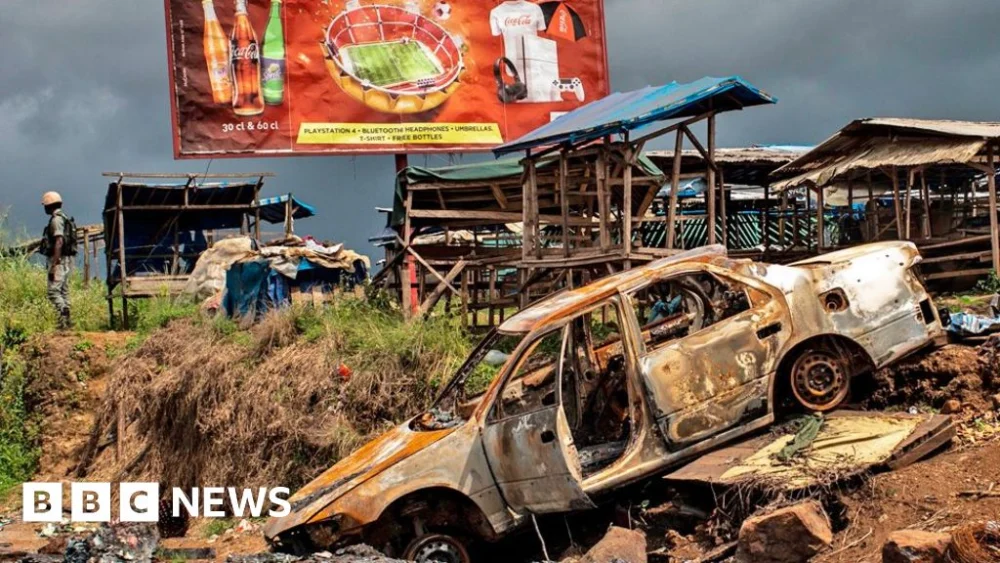
Three individuals have been detained in Belgium as part of a significant judicial investigation into alleged crimes against humanity and war crimes linked to Cameroon’s escalating secessionist rebellion, Belgian federal prosecutors announced. The detainees are reportedly senior figures within the Ambazonia Defence Forces (ADF), a prominent militia advocating for the independence of Cameroon’s two Anglophone regions, which stand in stark contrast to the nation’s predominantly French-speaking administration.
The federal prosecutor’s office detailed that evidence suggests funds are being channeled from Belgium to support the armed struggle, including the procurement of weapons and ammunition. Furthermore, allegations indicate that instructions for carrying out attacks are being issued from within Belgium. This development marks a critical juncture in international efforts to hold accountable those implicated in the protracted and often brutal conflict that has gripped Cameroon’s Anglophone territories for nearly a decade.
The United Nations has provided harrowing statistics, estimating that over 6,500 lives have been lost since the conflict erupted in 2017. The roots of this violence trace back to 2016 when lawyers and teachers in the North-West and South-West regions initiated protests against the perceived marginalization of the Anglophone minority within a Francophone-dominated government. Their grievances centered on the increasing use of French in legal proceedings and educational institutions, sparking widespread discontent.
When activists, frustrated by what they viewed as systemic discrimination, declared the establishment of an independent state named Ambazonia in 2017, the situation rapidly devolved into armed conflict. The ADF emerged as a key militant group, spearheading the fight for self-determination. However, the conflict has not been confined to state forces versus separatists. Human rights organizations have documented egregious abuses committed by both sides, painting a grim picture of the humanitarian crisis.
The arrests in Belgium, which occurred on Sunday, were the culmination of coordinated searches conducted in the bustling city of Antwerp and the Flemish town of Londerzeel. While four individuals were initially apprehended, a subsequent review by an investigating judge resulted in three of them being remanded in custody. The federal prosecutor’s office confirmed that its investigation into individuals residing in Belgium suspected of holding leadership positions within the ADF commenced last summer.
This Belgian investigation is not an isolated incident. It follows similar probes launched in other European nations and the United States, underscoring a growing international commitment to addressing the atrocities occurring in Cameroon. These transnational investigations highlight the complex network of support and operations that may extend beyond Cameroon’s borders, complicating efforts to achieve peace and accountability.
The Anglophone crisis, at its core, is a deeply entrenched struggle over identity, political representation, and historical grievances. The Anglophone regions, formerly British Southern Cameroons, were amalgamated with French Cameroun in 1961. Over the decades, many Anglophones have felt increasingly marginalized and disenfranchised by a central government perceived as favoring French culture and language. The initial protests, characterized by peaceful strikes and civil disobedience, were met with a forceful response from the state, which authorities argued was necessary to maintain national unity and territorial integrity.
However, this response, according to numerous human rights reports, has often involved excessive force, arbitrary arrests, and extrajudicial killings by state security forces. The rebels, in turn, have been accused of carrying out targeted assassinations, kidnappings, and acts of terror against civilians perceived as collaborators or those who do not support the secessionist cause. The cycle of violence has created a climate of fear and instability, making it exceedingly difficult for ordinary citizens to live their lives.
The humanitarian toll of the conflict is staggering. The United Nations reports that the unrest has displaced over 490,000 people from their homes, forcing them to seek refuge in often precarious conditions. Furthermore, more than 1.5 million individuals are estimated to be in urgent need of humanitarian assistance, a figure that continues to rise as the conflict persists. The loss of life, as previously noted, is in the thousands, with many more suffering life-altering injuries and psychological trauma.
Despite the severity of the crisis, diplomatic efforts to resolve the conflict have yielded limited success. President Paul Biya, who has held power in Cameroon for over four decades, has consistently maintained that his government is committed to finding a peaceful resolution. His administration has pointed to various initiatives, including dialogue and development programs, aimed at addressing the grievances of the Anglophone population. However, critics argue that these efforts have been insufficient and that the government’s approach remains largely militaristic, failing to address the fundamental political and social issues at the heart of the conflict.
The government’s continued restrictions on political freedoms and civil liberties in the country also draw significant criticism from international observers and human rights advocates. These restrictions are seen by many as exacerbating the sense of marginalization and fueling further dissent. The lack of space for political expression and peaceful protest can inadvertently push aggrieved populations towards more extreme measures, including armed resistance.
The involvement of international legal bodies and law enforcement agencies in investigating alleged war crimes and crimes against humanity in Cameroon signifies a global recognition of the severity of the situation. Such investigations, while often lengthy and complex, are crucial for ensuring accountability, deterring future atrocities, and providing a measure of justice for the victims. The arrests in Belgium, Norway, and the US suggest a concerted effort to dismantle the networks that sustain and fund the conflict, both within Cameroon and abroad.
The ADF, as a primary militant group, plays a significant role in the ongoing conflict. Its activities, along with those of other separatist factions, have been instrumental in perpetuating the violence. Understanding the internal structure, leadership, and operational mechanisms of these groups is vital for any comprehensive strategy aimed at de-escalating the conflict and fostering peace. The Belgian investigation’s focus on suspected ADF leaders underscores the importance of targeting the command and control structures of militant organizations.
The broader context of Cameroon’s political landscape also bears relevance. The country is a diverse nation with a complex history, and the Anglophone crisis is intertwined with broader issues of governance, ethnic relations, and economic development. The French-speaking majority and the Anglophone minority have distinct cultural and historical experiences, and the perceived imbalance of power has been a source of tension for decades.
The international community faces a multifaceted challenge in addressing the Anglophone crisis. This includes providing sustained humanitarian assistance to those affected, supporting credible peace processes, advocating for human rights protections, and ensuring that perpetrators of atrocities are held accountable. The recent detentions in Belgium represent a step forward in the pursuit of accountability, potentially sending a strong message to all parties involved in the conflict that impunity will not be tolerated.
However, the path to lasting peace in Cameroon’s Anglophone regions remains arduous. It will likely require a comprehensive approach that combines security sector reform, inclusive political dialogue, genuine decentralization of power, and sustained economic development initiatives tailored to the specific needs of the Anglophone communities. Without addressing the root causes of the grievances and ensuring that all voices are heard and respected, the cycle of violence risks continuing, further devastating the lives of ordinary Cameroonians. The ongoing investigations offer a glimmer of hope for justice, but they are just one piece of a much larger and more complex puzzle. The long-term resolution hinges on a genuine commitment to peace and reconciliation from all stakeholders, both within Cameroon and on the international stage. The implications of these arrests extend beyond Belgium, potentially prompting greater scrutiny and action from other nations involved in supporting or influencing the conflict. The intricate web of international connections in such conflicts often means that localized actions can have far-reaching consequences, impacting funding streams, recruitment efforts, and the overall strategic landscape of the rebellion. The success of these investigations will be measured not only by convictions but also by their contribution to a broader shift towards a more peaceful resolution in Cameroon.
