
 By admin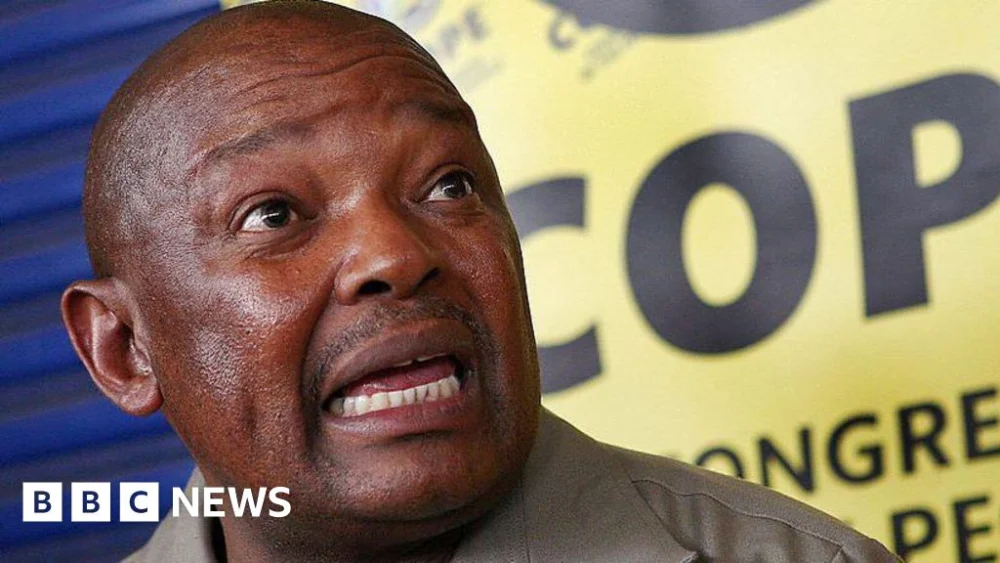
The vibrant political landscape of South Africa has dimmed with the passing of Mosiuoa Lekota, a towering figure in the nation’s struggle for liberation and a distinguished public servant. Lekota, who held the critical portfolio of Minister of Defence for a decade, died at the age of 77 after a period of illness. His death marks the end of an era for a leader whose life was inextricably woven into the fabric of South Africa’s tumultuous journey from apartheid to democracy.
Born in 1948, Lekota’s early life was shaped by the injustices of the apartheid regime. His commitment to dismantling this oppressive system led him to join the anti-apartheid movement, where his courage and conviction quickly propelled him to prominence. Like many of his generation who dared to challenge the status quo, Lekota faced the brutal hand of the state. His defiance earned him a lengthy prison sentence, and he found himself incarcerated on the infamous Robben Island, a place that became synonymous with the sacrifice and resilience of anti-apartheid activists. It was within the stark confines of this island prison that he shared a cell with future president Nelson Mandela, forging bonds that would endure throughout their lives and underscore their shared vision for a free South Africa.
Following his release, Lekota remained a steadfast advocate for justice and equality. He played a pivotal role within the African National Congress (ANC), the vanguard of the liberation movement. His leadership qualities were recognized when he ascended to the position of Chairperson of the ANC, a role that placed him at the helm of the party during a crucial period of transition. His tenure as Chairperson, spanning a decade, was marked by his unwavering commitment to the party’s ideals and his significant contributions to shaping its post-apartheid trajectory.
Lekota’s political career was not without its complexities and significant divergences. A defining moment arrived in 2008 when, disillusioned by what he perceived as growing corruption and a departure from the ANC’s founding principles, he made the momentous decision to break away from the ruling party. This schism was triggered by the ousting of then-President Thabo Mbeki, an event that sent ripples through the political establishment. Lekota, alongside other prominent former ANC leaders, including Mbhazima Shilowa, co-founded the Congress of the People (Cope). This new political entity was born out of a desire to offer an alternative to what they viewed as the ANC’s increasingly compromised governance and the pervasive allegations of graft that were beginning to tarnish its image.
The establishment of Cope generated considerable excitement and offered a potent challenge to the ANC’s dominance. In the 2009 general elections, the party experienced a notable surge in support, securing 30 seats in the National Assembly. This initial success underscored the public’s appetite for a political force that promised a return to the core values of integrity and accountability. However, the trajectory of Cope was soon impacted by internal strife, most notably a protracted leadership dispute between Lekota and Shilowa. These internal conflicts, unfortunately, began to erode the party’s electoral strength, leading to a steady decline in its representation in subsequent elections. By the 2024 general elections, Cope’s support had dwindled to the extent that it failed to secure any parliamentary seats, a stark contrast to its initial promise.
Beyond his leadership roles in political parties, Lekota’s public service extended to crucial governmental responsibilities. He served as the inaugural premier of the newly formed Free State province after South Africa’s transition to democracy in 1994. This appointment was a testament to his leadership capabilities and his deep understanding of provincial governance. His most enduring governmental role, however, was as the Minister of Defence. He held this vital portfolio for an impressive ten years, from 1998 to 2008, making him one of South Africa’s longest-serving ministers in this capacity. During his tenure, he navigated complex security challenges and played a significant role in shaping the country’s defence policy and its engagement with regional and international security initiatives. His decade at the helm of the defence ministry solidified his reputation as a pragmatic and capable leader, entrusted with the nation’s security.
Lekota was affectionately known by the nickname "Terror," a moniker that reportedly stemmed from his formidable prowess on the football field during his youth. This nickname, while seemingly at odds with his statesmanlike demeanor, hinted at a competitive spirit and a fierce determination that characterized his public life. It served as a reminder of his multifaceted personality, a blend of intellectual acuity, political acumen, and a hidden reservoir of competitive drive.
The news of Lekota’s passing has elicited widespread tributes from across the political spectrum. President Cyril Ramaphosa, speaking from Johannesburg, paid a heartfelt tribute, hailing Lekota as a "patriot and freedom fighter" and a "servant of the people." Ramaphosa emphasized Lekota’s enduring legacy, stating, "His life was one of resilience, courage, and steadfast belief in justice." These words resonate deeply, capturing the essence of a man who dedicated his life to the pursuit of a just and equitable South Africa. The President’s acknowledgment of Lekota’s resilience and courage is particularly poignant, given the immense personal sacrifices he made in the fight against apartheid and his subsequent navigation of the complex and often divisive political landscape of post-apartheid South Africa.
The political party he co-founded, Cope, issued a statement confirming his death and attributing it to a "period of illness." This statement, while somber, acknowledged the profound loss felt by his party and the nation. The party’s confirmation of his stepping back from public office in August of the previous year due to his declining health provided some context for his final months, though the specific nature of his illness remained undisclosed. His withdrawal from public duties at that time signaled a recognition of his failing health, a natural progression for any individual, however prominent, as they age.
Lekota’s political journey was marked by a consistent theme of seeking to uphold principles of good governance and accountability. His departure from the ANC, while painful for the party, was a testament to his strong moral compass and his unwillingness to compromise on his convictions. His establishment of Cope, though ultimately facing significant challenges, represented a bold attempt to inject a fresh perspective and a renewed focus on ethical leadership into South African politics. Even as Cope’s electoral fortunes waned, Lekota remained a voice of conscience, often speaking out on issues of governance and public ethics.
His legacy is not solely defined by his electoral successes or failures, but by his unwavering commitment to the ideals of a democratic South Africa. He was a participant in the foundational moments of the nation’s liberation, a prisoner of conscience who endured hardship for his beliefs, and a leader who sought to shape the country’s future through various political platforms. His contribution as Minister of Defence during a decade of significant post-apartheid development and security consolidation is a crucial part of his public service record.
The passing of Mosiuoa Lekota leaves a void in South African public life. He was a figure who commanded respect, even from his political adversaries, for his intellect, his principled stance, and his deep understanding of the nation’s history and its ongoing challenges. His life story is a powerful reminder of the sacrifices made by so many in the fight for freedom and the complex journey of nation-building that continues to this day. His contributions, from the harsh confines of Robben Island to the corridors of power as a minister and party leader, have left an indelible mark on the South African narrative. His legacy will continue to inspire future generations of leaders to champion justice, uphold integrity, and remain steadfast in their commitment to a better South Africa.
