
 By admin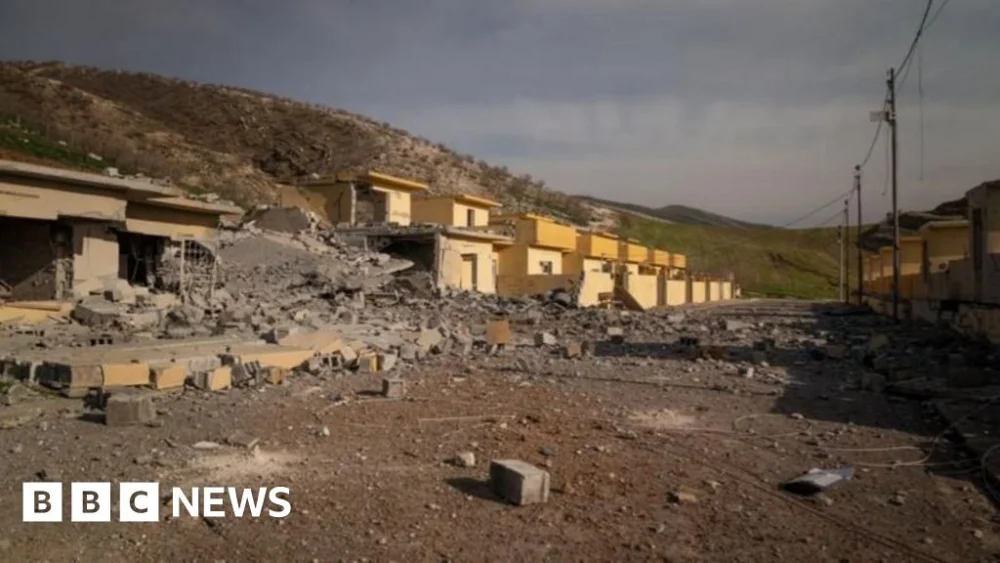
Northern Iraq, March 7, 2026 – Iran’s military has intensified its campaign against Iranian Kurdish opposition groups, launching a series of missile and drone strikes on their bases in northern Iraq. These attacks, confirmed by the BBC to have resulted in one fatality and three injuries, underscore a significant escalation in Tehran’s efforts to quell dissent and exert influence in the region. The timing of these strikes coincides with growing speculation that the United States, under President Donald Trump, is exploring avenues to leverage these Kurdish factions in its broader geopolitical strategy against Iran.
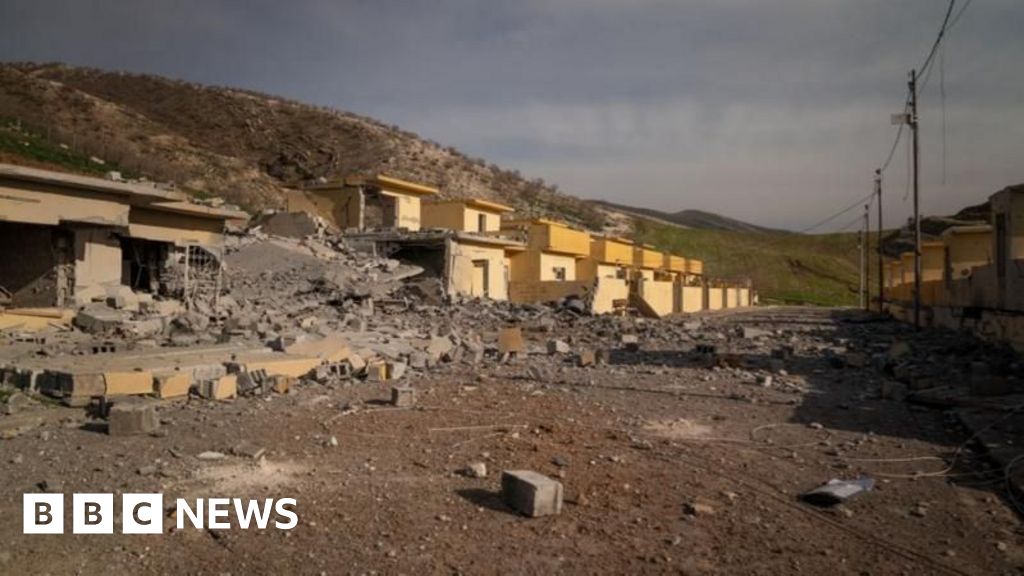
The Iranian military announced it had targeted "Kurdish groups opposed to the [Islamic] revolution in Iraqi Kurdistan with three missiles" on Tuesday and Wednesday. The BBC’s reporting from the ground paints a stark picture of the aftermath. At one base, a ballistic missile strike at approximately 11:00 local time on Wednesday obliterated a building, leaving rubble and twisted metal strewn across the landscape. A gaping hole in the earth bore witness to the missile’s destructive impact. A Kurdish Peshmerga fighter, who later succumbed to his injuries, was among four injured in this assault. At a separate base belonging to the Democratic Party of Iranian Kurdistan (KDPI), the BBC observed the devastation caused by a double drone strike on Tuesday, which reportedly injured a civilian.
These actions come amidst a complex and rapidly evolving regional dynamic. Reports suggest that President Trump is considering involving Iranian Kurdish forces in a potential confrontation with Iran, a move that has been met with a mixture of hope and caution by the opposition groups themselves. However, Kurdish Iranian opposition parties operating from Iraq have vehemently denied any incursions into Iranian territory, refuting Tehran’s narrative of cross-border aggression.
Hanna Hussein Yazdan Pana, a representative of the Kurdistan Freedom Party (PAK), unequivocally stated, "This is not true. Do not believe it. Not a single Peshmerga [fighter] has moved. No-one moves alone." She elaborated that while six recently formed coalition of Kurdish opposition groups are indeed coordinating their strategies, their ability to act is contingent on external support, particularly from the United States. "We need the Americans to pave the way for a move," she explained to the BBC, emphasizing that any offensive would require the neutralization of Iran’s air superiority and the destruction of its security forces’ weapon depots. "Otherwise, it would be suicidal," she cautioned. Pana also appealed for the establishment of a no-fly zone to provide crucial protection for Kurdish forces, highlighting their limited arsenal: "The regime is very brutal, and the most advanced weapon we have is a Kalashnikov."
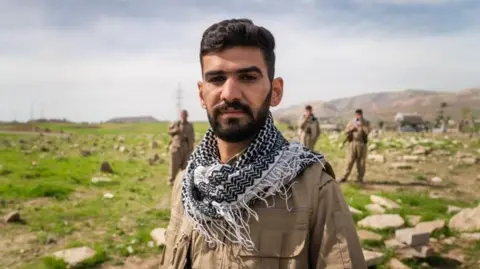
The White House has, for its part, denied reports that President Trump is contemplating arming these Kurdish factions. Nevertheless, the persistent speculation fuels a sense of anticipation within the Kurdish ranks. A 25-year-old fighter named Hassan, armed with an AK-47 at the KDPI base, expressed his eagerness to fight for freedom in Iran. "We are closer than ever," he declared, embodying the aspirations of many who have long yearned for self-determination and an end to perceived oppression.
A senior political leader of the KDPI, speaking on condition of anonymity, expressed his belief that a confrontation within Iran was imminent, though he refrained from providing a specific timeline. He also declined to comment on whether President Trump had engaged in recent discussions with the KDPI leader, adding another layer of intrigue to the unfolding situation.
Sir Simon Gass, former British ambassador to Tehran, provided a broader geopolitical context, describing Iran as "a patchwork of different ethnicities" with a Persian majority and significant minority populations including Kurds, Balochs, Arabs, and Azeris. He posited that if the United States and Israel were to "ignite some of those groups into armed insurrection against the regime," it would present an "extremely difficult" challenge for Tehran to manage. However, Gass also tempered expectations regarding the capabilities of the Iranian Kurdish opposition, noting that they are "relatively lightly armed" and would struggle against the Iranian armed forces under normal circumstances. He suggested that external support, such as from special forces with air support capabilities, could significantly alter this dynamic.
The Kurdish people, numbering over 30 million, inhabit a vast mountainous region that spans the borders of Turkey, Iraq, Syria, Iran, and Armenia. As the fourth-largest ethnic group in the Middle East, they have historically strived for a sovereign nation-state but have yet to achieve this goal. Within Iran, Kurds constitute approximately 10% of the predominantly Shia Muslim population of 91 million. These Kurds, largely Sunni Muslims, are concentrated in the country’s northwestern provinces. Amnesty International has consistently highlighted the "long-suffered deep-rooted discrimination" faced by Iranian Kurds, documenting the repression of their social, political, and cultural rights, as well as the stifling of their economic aspirations.
The current escalation of Iranian strikes in northern Iraq, coupled with the geopolitical maneuvering surrounding potential US involvement, signals a critical juncture for the Iranian Kurdish movement. The desire for self-determination, long suppressed, is now finding itself at the nexus of international power plays, with the remote bases in Iraqi Kurdistan becoming a focal point of both Iranian retaliation and potential external support. The coming weeks and months will likely reveal the extent to which these long-standing grievances can be translated into a significant challenge to the Iranian regime, and whether the Kurdish people can finally forge a path towards their own nation. The complex tapestry of ethnic identities within Iran, coupled with the volatile regional security landscape, ensures that this is a story with profound implications for the future of the Middle East.
