
 By admin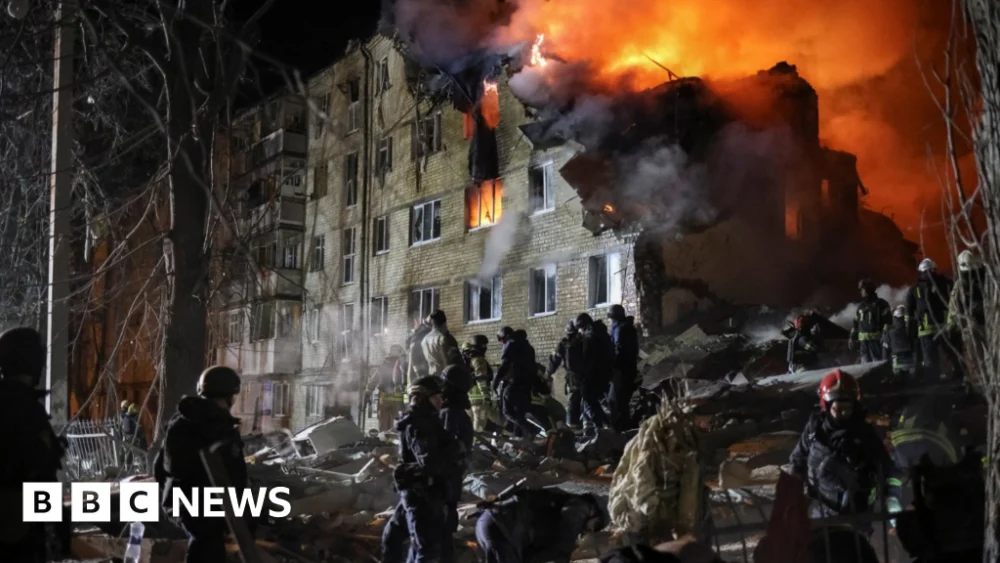
A devastating Russian airstrike on a residential apartment building in Kharkiv on Saturday morning has claimed the lives of at least seven people, including children, with President Volodymyr Zelensky confirming the tragic toll and warning that more individuals may still be trapped beneath the rubble. The missile strike, which tore through a five-storey building, has left a trail of destruction, injuring numerous others and prompting an immediate and intensive rescue operation. The incident is part of a broader wave of coordinated Russian attacks that have targeted critical infrastructure across Ukraine overnight, igniting air alerts in multiple regions and prompting neighboring Poland to scramble fighter jets in defense of its airspace.
Regional governor Oleg Synegubov provided grim details of the Kharkiv attack, confirming that a 65-year-old woman, a 40-year-old man, and a 13-year-old girl were among the initial casualties identified. Later updates revealed the bodies of four more individuals, including a nine-year-old boy, being recovered from the debris, bringing the total confirmed fatalities to seven. The attack also inflicted significant damage on the surrounding urban landscape, with seven apartment buildings, vital power grids, and an administrative building in Kharkiv sustaining damage. President Zelensky underscored the ongoing peril, stating, "There may still be people under the rubble," and assuring that "All necessary services are working at the scene to rescue them." He further reported that at least ten more people, including children, sustained injuries in the Kharkiv attack.
The Kharkiv incident occurred amidst a barrage of Russian strikes that engulfed Ukraine throughout the night. Russia’s Ministry of Defence acknowledged its forces employed drones to execute strikes targeting what it described as Ukrainian military compounds, airfields, and energy facilities, as reported by the Interfax news agency. This assertion comes as Ukraine’s President Zelensky detailed the scale of the overnight assaults, stating that Russia unleashed a formidable combination of 29 missiles and an staggering 480 drones. These attacks, he elaborated, were strategically directed at energy facilities in the Kyiv, Khmelnytskyi, and Chernivtsi regions, as well as railway infrastructure in the Zhytomyr region. Zelensky’s urgent plea for international support highlighted the severity of the situation: "There must be a response from partners to these brutal attacks on life."
The implications of these widespread attacks extend beyond Ukraine’s borders. The Polish Air Force confirmed it had activated military jets to safeguard its airspace in regions adjacent to Ukraine, a standard procedure implemented during significant Russian aerial assaults. This proactive measure underscores the heightened tensions and the potential for spillover effects from the ongoing conflict.
The human cost of the Kharkiv attack is a stark reminder of the indiscriminate nature of the conflict. The recovery efforts, involving diggers and emergency service personnel working amidst the wreckage, are fraught with the grim task of sifting through debris in the hope of finding survivors, while simultaneously retrieving the bodies of those lost. Images from the scene depict the arduous nature of these operations, with rescuers carrying bags containing the remains of victims, a somber testament to the destructive power of the missile.
Beyond Kharkiv, the repercussions of the Russian offensive were felt across other Ukrainian regions. In the Nikopol district of Dnipropetrovsk, Oleksandr Ganzha, head of the Regional Military Administration, reported that one person was killed and another wounded during overnight attacks. Ganzha detailed on Telegram that the Russian army unleashed approximately 20 rounds of attacks in the area, utilizing a combination of drones, artillery, and rockets. Further south, in Zaporizhzhia, a separate strike resulted in injuries to a baby, highlighting the vulnerability of the youngest civilians. In Chuguiv, within the Kharkiv region, Mayor Halyna Minayeva reported that two individuals were injured when a drone struck a house in the city center.
The repeated targeting of civilian infrastructure, particularly residential buildings and energy facilities, raises serious concerns about Russia’s adherence to international humanitarian law. The deliberate targeting of civilian objects is a war crime, and the scale and systematic nature of these attacks suggest a concerted effort to sow terror and disrupt civilian life. The use of drones, often employed for reconnaissance and precision strikes, coupled with missile barrages, indicates a multi-pronged approach aimed at maximizing damage and psychological impact.
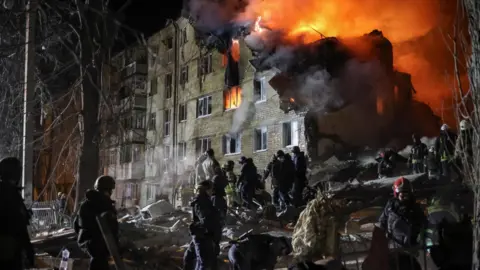
The destruction in Kharkiv is not an isolated incident but rather a grim continuation of a pattern of attacks that have plagued Ukrainian cities since the full-scale invasion began. Residential areas, hospitals, schools, and critical infrastructure have been repeatedly targeted, leading to immense civilian casualties and widespread displacement. The resilience of the Ukrainian people in the face of such relentless aggression is remarkable, yet the psychological and physical toll of living under constant threat is immeasurable.
The international community has widely condemned Russia’s actions, with many nations providing significant military, financial, and humanitarian aid to Ukraine. However, the ongoing violence underscores the urgent need for greater international pressure and accountability for these alleged war crimes. President Zelensky’s call for a "response from partners" echoes the sentiment of many Ukrainians who feel that existing sanctions and diplomatic efforts have not been sufficient to deter Russia’s aggression.
The impact on Ukraine’s energy infrastructure is particularly concerning, as the country grapples with the coming seasons and the potential for further disruptions. Attacks on power grids not only lead to blackouts, impacting homes and businesses, but also affect critical services such as heating, water supply, and medical facilities. The resilience of Ukraine’s energy sector has been a testament to the dedication of its workers and the support of international partners, but repeated assaults place an immense strain on these efforts.
The broader geopolitical implications of these attacks are significant. They underscore the instability created by the conflict and the potential for escalation. Poland’s precautionary measures are a clear indicator of the regional security concerns. The international response to these events will be crucial in shaping the future trajectory of the conflict and in upholding international norms and laws.
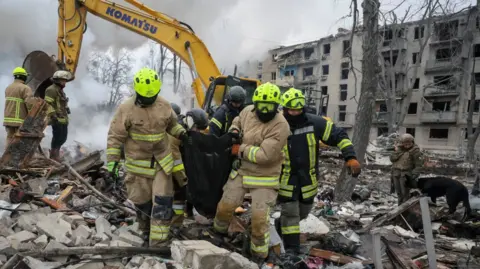
As rescue efforts continue in Kharkiv, the focus remains on saving lives and providing support to those affected. The images of destruction and the personal stories of loss serve as a poignant reminder of the human cost of this brutal war. The international community faces a continued challenge in its efforts to support Ukraine, to hold perpetrators accountable, and to ultimately find a path towards a lasting and just peace. The events of Saturday morning in Kharkiv serve as a stark and tragic illustration of the ongoing suffering endured by the Ukrainian people.
