
 By Rifan Muazin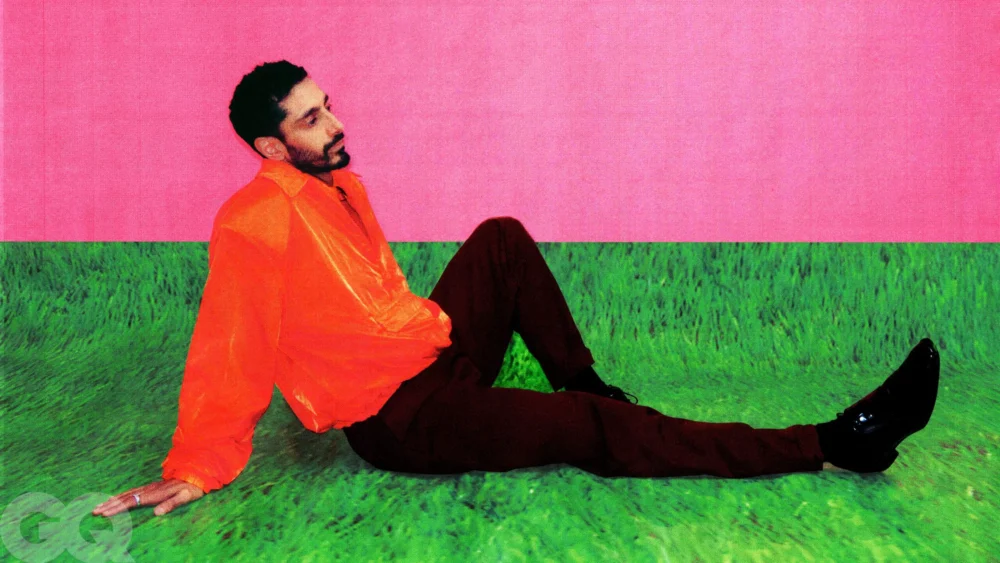
Riz Ahmed arrives at the café not as a subject to be interrogated, but as an investigator in his own right. Before the digital recorder is even placed on the table, he is the one steering the conversation, his large brown eyes—the same expressive features that have anchored some of the most searing indie performances of the last two decades—fixed with intense curiosity. He wants to know about accents, origins, and the specific trajectories of migration that lead a person to a King’s Cross coffee shop on a weekday morning. After a brief pause to order "the weakest almond matcha you can make" from a barista in a space that feels more like a tech-startup hub than a traditional London local, he returns to the questioning. For Ahmed, identity is not a static label but a "secret sauce," a complex layering of contradictions that he has spent his career exploring, deconstructing, and, more recently, attempting to transcend.

At 43, Ahmed occupies a unique position in the cultural landscape. He is a child of Wembley, a graduate of the elite Merchant Taylors’ School and Oxford University, a world-class actor, and a sharp-tongued rapper both as a solo artist and as one-half of the Swet Shop Boys. His career has been a masterclass in versatility, ranging from the frantic, desperate energy of a cameraman’s assistant in Nightcrawler to an Oscar-nominated turn as a heavy-metal drummer losing his hearing in Sound of Metal. Yet, despite his presence in massive franchises like Star Wars and Marvel, Ahmed’s newest project, Bait, signals a return to the messy, vulnerable, and deeply personal storytelling that first defined his rise.
Bait is a six-part comedy-drama for Amazon Prime Video that Ahmed both wrote and stars in. It follows Shah Latif, a struggling actor whose life is upended by a media firestorm after he is spotted leaving an audition for the role of James Bond. While the premise suggests a satire of the "Who will be the next 007?" obsession that grips the British press every few years, the show is actually a deeper exploration of mental health, family dynamics, and the exhausting performance of authenticity. Ahmed describes the character’s journey as one of "taking off the mask," a process he admits is far more difficult than putting one on. For Ahmed, the Bond element is a narrative Trojan horse—a way to bring the suspense and scale of a spy thriller into a story that is, at its heart, about self-love and the "fish out of water" experience of the modern migrant.

The genesis of Bait lies in the disjunction between public perception and private reality. Ahmed recounts a period in the mid-2010s when his professional star was rising exponentially while his personal life felt increasingly surreal. During the week the first promotional images for Rogue One: A Star Wars Story were released, Ahmed was battling a health crisis that would eventually inspire his film Mogul Mowgli. He recalls receiving texts congratulating him on "smashing it" while he was privately wondering if he could make it to the bathroom in time. Another incident saw him banned from a Tesco on Old Kent Road on suspicion of shoplifting. He had been carrying a massive bag of laundry because his washing machine was broken and was dressed in a garish combination of a bright green puffer jacket and pink swim shorts—the only clean clothes he had left. The "texts were coming in" about his Hollywood success while he was being escorted out of a grocery store. This sense of living a double life—of being "crowned" by the industry while simultaneously being marginalized by the mundane reality of the street—is the engine that drives Bait.
Ahmed’s relationship with Hollywood blockbusters is one of calculated pragmatism. Following his breakout in 2014’s Nightcrawler, he found himself on a "domino effect" trajectory that led to Jason Bourne, Rogue One, and Venom. However, he soon realized that the "bigger machine" of franchise filmmaking often came with a glass ceiling. In these massive productions, he was frequently cast as the "number two"—the tech expert, the pilot, or the billionaire villain. Being "number one" was rarely on the table for someone of his background within that specific ecosystem. This realization prompted a pivot toward independent films where he could "rip up his process and start from scratch." Projects like Mogul Mowgli, which he co-wrote, and Sound of Metal allowed him to tap into his own life and push himself to the point of creative vertigo.

This commitment to growth is what drew him to his latest film, Digger, a highly anticipated comedy directed by Alejandro G. Iñárritu and starring Tom Cruise. While details of the plot remain under wraps, Ahmed’s co-star Sandra Hüller describes him as an actor of rare seriousness and agility. Hüller notes that unlike many performers who look for "holes to escape through" to avoid the weight of a scene, Ahmed leans into the task with an intellectual intensity. Their conversations on set often revolved around the responsibility of the artist and the desire to have a tangible impact on the world. This sense of mission is central to Ahmed’s work; he views storytelling as a way to "stretch culture" and create "new tables" rather than just fighting for a seat at the existing one.
However, this mission comes with the heavy "burden of representation," a topic Ahmed has become increasingly weary of discussing. In a follow-up interview via Zoom, the mention of the word "representation" prompts a visceral reaction. He mimics loading a gun and placing it in his mouth, a theatrical gesture of exhaustion. "Just fucking bored of it, bro," he says, leaning into the camera. His frustration stems from a "sad irony": while discussing representation was once a necessary tool to open doors, it has now become a way of reducing artists to their identity markers. He argues that by constantly focusing on his "brownness" or his "British-Pakistani identity," the industry and the media continue to marginalize his actual craft. He wants his characters, like Shah in Bait, to be seen as "wet clay"—complicated, layered, and capable of moving in any direction, rather than being serves as mere symbols for a community.

This tension extends to his choice of collaborators. When asked about working with Amazon—a company often criticized for its labor practices—Ahmed doesn’t offer a polished PR response. He goes quiet, stares intensely, and asks, "Where is the clean money?" It is a blunt acknowledgment of the ethical minefield of modern entertainment. He views his participation not as a defense of the corporate structure, but as an attempt to "interrogate" the system from within. "When you step into the room, do you change the room, or does it change you?" he muses. For Ahmed, the goal is to use the resources of the "big machine" to tell stories that are messy, vulnerable, and defiantly human.
The James Bond framing of Bait required a delicate diplomatic touch. Before production began, Ahmed met with Barbara Broccoli, the long-time gatekeeper of the 007 franchise. Despite warnings that she was protective of the Bond brand, Broccoli gave Ahmed her blessing after hearing his pitch. He explained to her that the show wasn’t a parody of Bond, but an exploration of how life can feel like one big, never-ending audition. It is a story about the universal desire to fit into an "archetype of alpha masculinity and career success" while grappling with the reality of one’s own vulnerability.

As the interview concludes, Ahmed’s "secret sauce" becomes clear. He is a man who has mastered the art of code-switching—from the elite halls of Oxford to the rap battles of his youth, from the indie film sets of London to the multi-million dollar soundstages of Hollywood. But he is no longer interested in the performance of these identities. He is looking for something more profound: the moment when the mask comes off. Quoting a J. Cole sample of The Tao of Leadership, he asks, "Which is more important: getting, or letting go?" For Riz Ahmed, the answer lies in the latter. He has enough ego to believe he has something to offer, but he has reached a point in his career where he is more interested in the "bottomless pit" of creative exploration than the "pat on the back" of traditional success. In Bait, he invites the audience to watch him take off the mask, revealing the messy, contradictory, and brilliant artist underneath.
