
 By admin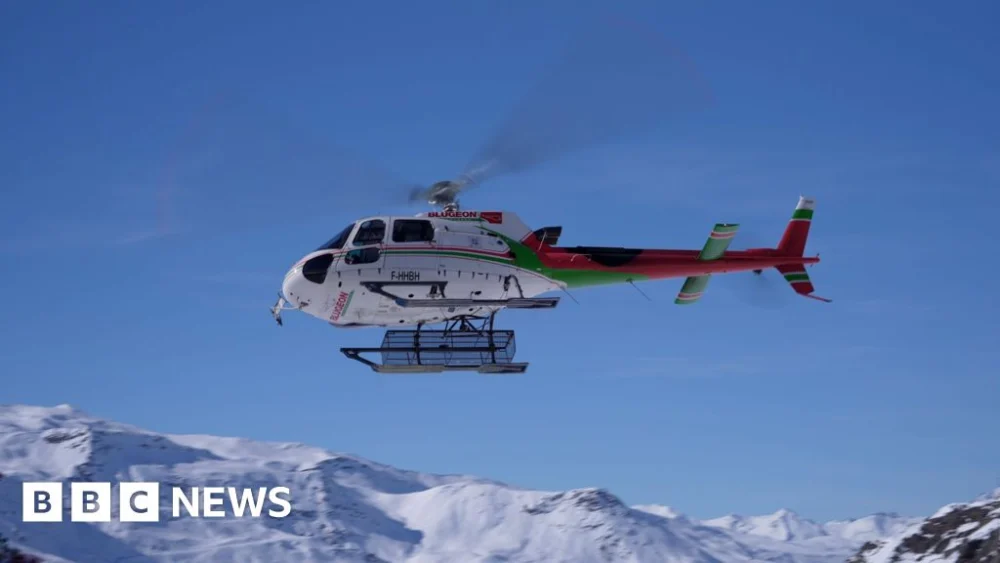
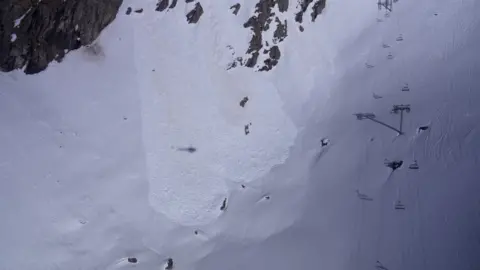
From the dizzying vantage point of a rescue helicopter hovering above the French Alps, the landscape below is a breathtaking tableau of jagged peaks and vast expanses of pristine white. Yet, this serene beauty is increasingly marred by the stark evidence of recent avalanches – visible as unsettling scars and dimples across the snow-laden slopes. This season, the serene allure of the mountains has been overshadowed by a grim reality: more than 100 people have lost their lives to avalanches across the Alps, a tragic statistic not seen in eight years, according to the European Avalanche Warning Services. As our pilot expertly maneuvers the aircraft over a formidable ridge, the tiny figures of skiers can be observed, either patiently queuing at ski lifts or gracefully descending the marked pistes, a stark contrast to the hidden dangers lurking just beyond the groomed trails.
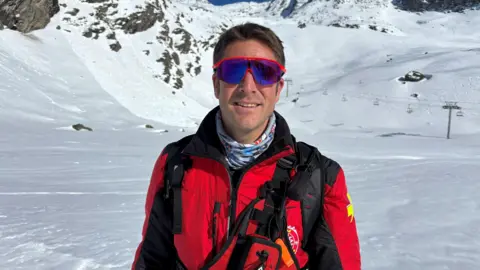
The Tarentaise region, an imposing network of valleys nestled in the heart of the French Alps, is currently blanketed in an enthralling, yet increasingly precarious, layer of snow. This season’s snowpack, while thick, has proven to be alarmingly unstable, directly contributing to the surge in fatal avalanche incidents. Frédéric Bonnevie, a seasoned mountain patroller with 32 years of experience and our guide for this journey, attributes this phenomenon to the undeniable reality of a changing climate. "As with all around the world, the climate is changing," Bonnevie states, his gaze sweeping across the immense mountain panorama. He points to the observable effects: shorter winters and the best, most coveted powder now being found at increasingly higher altitudes. While the mountain patrols meticulously manage and control conditions on the designated pistes, ensuring the safety of recreational skiers, the off-piste terrain remains an unpredictable and inherently dangerous environment. It is precisely in these untamed areas where many skiers have found themselves in perilous situations, often with tragic consequences.
Stéphane Bornet, the director of Anena, a prominent French snow safety association, offers a sobering perspective on the victims. "A lot of the victims are skiers who come here often, are technically skilled, but aren’t necessarily connoisseurs of the mountain environment," he suggests. This highlights a critical disconnect: a high level of skiing proficiency does not automatically equate to an understanding of the complex and dynamic forces at play in an alpine environment. Bornet further elaborates on the alarming lack of preparedness among some individuals. He notes that several victims were not equipped with essential safety kits, such as transceivers to signal their location or shovels for rescue efforts. Compounding this, he claims, was a failure to conduct basic research on the routes they intended to traverse.
The statistics underscore the vital importance of these safety measures. Emergency crews report that individuals carrying a transceiver have a significantly higher survival rate, with a 70% chance of being located and rescued. The initial 16 minutes following burial are considered critically important. In contrast, the absence of a transceiver can drastically extend rescue operations, often requiring dozens of personnel and extensive equipment, leading to a precipitous drop in the survival rate to a mere 20%.
Pierre Boulonnais, who has dedicated 17 years to patrolling the slopes of Val Thorens, speaks with the gravitas of a man intimately familiar with the mountain’s unforgiving nature. His weathered face tells a story of countless winters spent navigating treacherous terrain. "Most of the time when we’re coming, it can be too late," he admits, his voice tinged with the weariness of witnessing too many preventable tragedies. "That’s why you need to have all the rescue equipment on you and to be in a group, but sometimes you can just be in the wrong place at the wrong time," he adds, acknowledging the element of sheer chance that can befall even the most prepared.
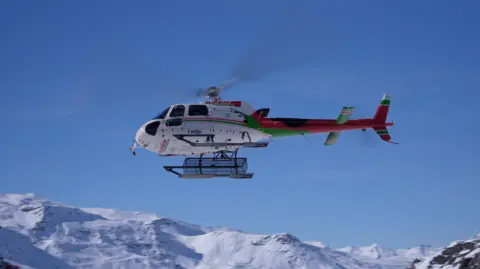
During a brief off-piste excursion, the sheer physical exertion required to move through the deep, soft powder becomes immediately apparent. Each step is a struggle against the sinking snow, demanding constant effort to avoid becoming mired. After patiently allowing time for breath to be regained, Boulonnais meticulously explains the nuances of snow composition, differentiating between wet and dry snow. He demonstrates by running a metal ruler through approximately 60cm (2ft) of the soft upper layer, encountering the dense, compressed snow beneath – a distinction that is often invisible to the untrained eye. "If you are trapped under just 50cm of snow of this density, you already have more than a quarter of a tonne on top of you," Bornet explains, painting a vivid and terrifying picture of the immense pressure exerted by even a relatively shallow layer of avalanche debris.
The grim reality of the avalanche season has dominated French media coverage. In a recent incident in La Chapelle d’Abondance, the bodies of two female skiers were tragically discovered buried beneath snow after their vehicle had been left in a car park. In a separate event, 64 people were airlifted to safety by helicopter after their village in Isère was cut off by heavy snowfall. One local resident described the experience as akin to "being in the depths of Siberia." These events have fueled discussions about the impact of climate change and have even led to calls for "foreigners and the reckless" to bear the costs of rescue operations.
With millions of visitors flocking to these renowned ski resorts annually, British tourists constitute a significant portion, approximately a quarter of the total. For those disembarking ski lifts at altitudes as high as 2,800 meters (9,200 feet), the recent spate of avalanche incidents is clearly a cause for concern. Bella, a snowboarder interviewed on the slopes, voices this apprehension: "Obviously we are keeping a really close eye on it. Last week we had lots of friends away over half-term who had amazing snow conditions but obviously there were lots of stories about avalanches all over our social media, so we are just feeling a little bit twitchy."
The inherent risk of avalanches is typically categorized on a scale of one to five, with level one indicating generally stable conditions and level five signifying the imminent threat of several large, naturally occurring avalanches. Mountain rescue teams consistently report encountering a higher number of fatal incidents at level three. This phenomenon is often attributed to a dangerous underestimation of the risks associated with this moderate level of danger. The rescue teams interviewed for this report emphasize that the threat of avalanches remains acutely high, even as the season progresses.
The devastating power of avalanches extends beyond individual skiers. In Switzerland, a train was recently derailed when an avalanche slammed into its side, thankfully without any fatalities. In St. Anton, Austria, Diego Gonçalo captured harrowing footage of the immediate aftermath of an avalanche that sent a massive snow cloud billowing through the valley, resulting in the deaths of three people. "Everybody was amazed by the sight," he recalls. "There was no sound, but then we heard the emergency rescue team arrive – helicopters, ambulances and the police." He adds with profound reflection, "It’s amazing what nature can do, and then you realise it can kill you and you can’t do anything. You feel so small in such a situation."
While avalanche fatalities have reached these alarming levels in the past, and there is a growing consensus that climate change is a contributing factor, the precise extent of its influence remains a subject of ongoing analysis. However, the observed fluctuations in temperature are undeniably impacting the patterns of snowfall – influencing not only the quantity of snow that falls but also the timing and location of these accumulations. Bonnevie, the head of the mountain patrol teams, explains this dynamic: "We had a lot of snow at the end of October, then not enough over the Christmas holidays. So when we had a lot of snow in January, there was a high avalanche risk." This unpredictable pattern creates a complex and often dangerous environment for skiers.
An off-piste instructor with 25 years of experience shared his observations on a perceived cultural shift within the skiing community. He notes that in previous years, off-piste enthusiasts would typically wait a few days after a significant snowfall to allow the snowpack to stabilize. However, he claims that this practice has largely diminished, with many now venturing out immediately after a snowfall to maximize their limited holiday time. Bonnevie concurs with this assessment, stating, "The new generation want to be the best, the biggest and the quickest." This desire for immediate gratification and extreme experiences, coupled with the inherent unpredictability of the mountain environment, creates a dangerous cocktail.
Rescue teams express a growing concern that human complacency plays a significant role alongside the evolving weather patterns. For officials like Bornet, addressing and mitigating human behavior is a more tractable challenge than altering the overarching forces of climate change. "You have to keep in mind that the mountains are a magnificent playground, a field of adventures," he says, his words a gentle but firm reminder. "Let’s make sure your memories are positive ones." This sentiment encapsulates the delicate balance between embracing the thrill of the mountains and respecting their inherent power, ensuring that the pursuit of adventure does not end in tragedy.
Additional reporting by Paul Pradier and Marianne Baisnée.
