
 By admin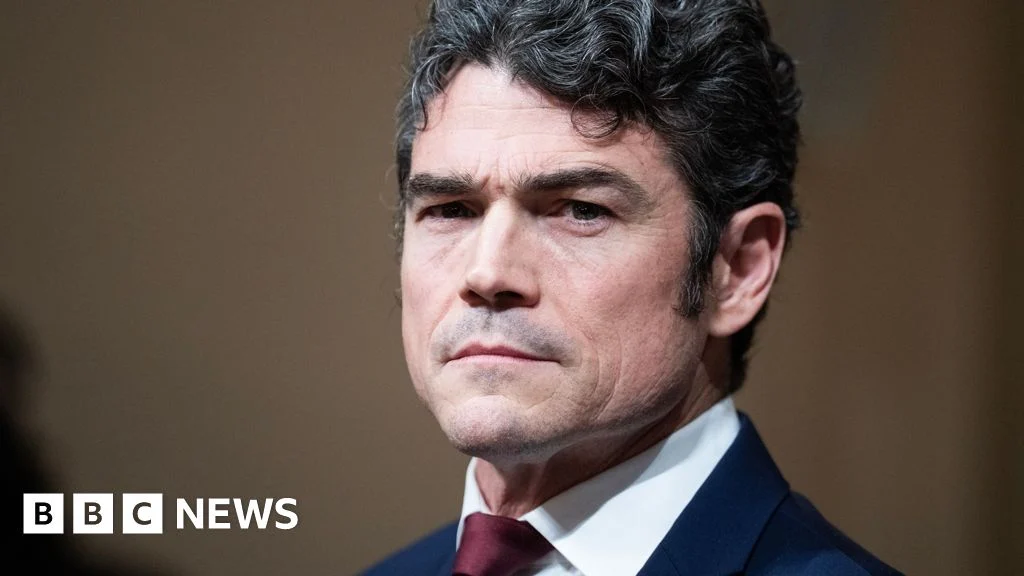
The resignation marks a significant public rebuke of President Trump’s foreign policy from a high-ranking official directly involved in national security. Kent’s letter, dated and released on Tuesday, directly challenged the administration’s rationale for what he described as an "unnecessary war," stating unequivocally that "high-ranking Israeli officials" and prominent American journalists had propagated "misinformation" that ultimately misled the President into undermining his own "America First" platform. He elaborated that this "echo chamber was used to deceive you into believing that Iran posed an imminent threat to the United States. This was a lie."
The White House, in its immediate response, vehemently dismissed Kent’s claims. Press Secretary Karoline Leavitt issued a statement asserting that President Trump possessed "strong and compelling evidence" that Iran was preparing to launch an attack on the United States. Leavitt characterized Kent’s suggestion that the President’s decision was influenced by external actors as "both insulting and laughable," reinforcing the administration’s narrative of preemptive defense against an active threat.
President Trump himself weighed in on Kent’s departure during a press conference in the Oval Office on Tuesday. While acknowledging Kent as a "nice guy," the President candidly stated that he considered him "weak on security." Trump further remarked that Kent’s resignation letter solidified his belief that "it was a good thing that he’s out," underscoring his complete disagreement with Kent’s assessment of the Iranian threat. This public dismissal from the President himself amplified the significance of Kent’s dissent, framing it as a fundamental ideological clash within the administration’s national security apparatus.
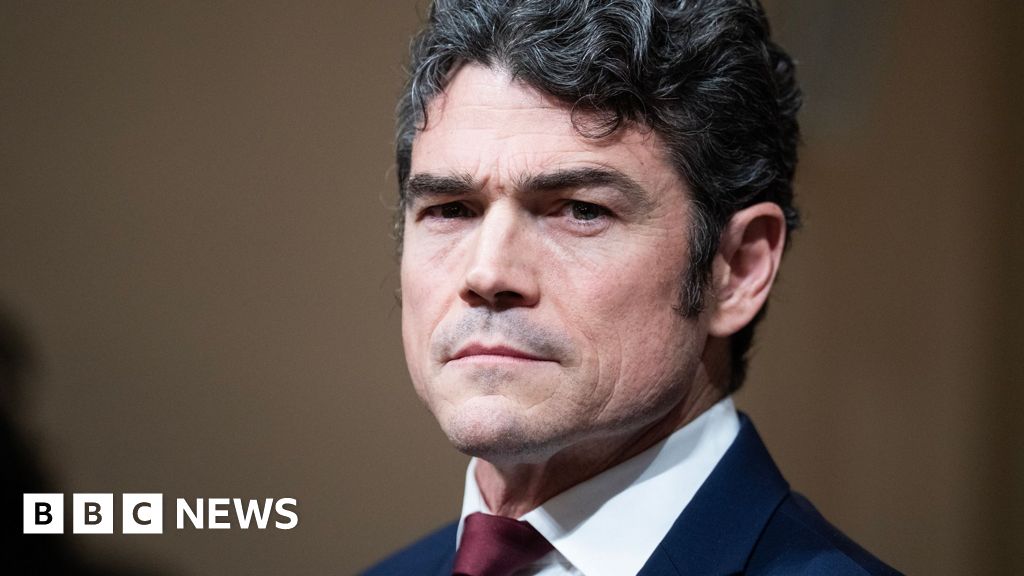
Joe Kent, 45, is a figure with a complex and often controversial background. A veteran of numerous overseas deployments, including with the U.S. Army’s special forces in Iraq, he later served as a paramilitary officer at the CIA. His personal life was tragically marked by the death of his wife, Navy cryptologic technician Shannon Kent, who was killed in a bombing in Syria in 2019. This profound personal loss, he stated in his resignation letter, profoundly shaped his perspective, declaring, "I cannot support sending the next generation off to fight and die in a war that serves no benefit to the American people nor justifies the cost of American lives."
Kent’s foray into politics prior to his government appointment included two unsuccessful runs for Congress, where he cultivated a reputation as a staunch supporter of President Trump. His nomination to head the National Counterterrorism Center was met with considerable debate, with many Democrats raising concerns about his alleged ties to extremist groups, including members of the Proud Boys. During his confirmation hearings, Kent also drew scrutiny for his refusal to disavow claims that federal agents may have instigated the January 6th Capitol riot and his continued assertion that President Trump had won the 2020 election. At the National Counterterrorism Center, Kent was responsible for overseeing the analysis and detection of global terrorist threats, reporting directly to the Director of National Intelligence, Tulsi Gabbard.
The specific "war in Iran" to which Kent refers likely pertains to the heightened military posture and rhetoric surrounding Iran’s nuclear program, its regional influence, and alleged provocations against U.S. interests and allies in the Middle East. In recent months, the Trump administration had ramped up sanctions and deployed additional military assets to the region, citing Iran’s destabilizing activities and its support for militant groups. This increased pressure had led to a series of escalations, including drone strikes and naval incidents, creating a volatile and unpredictable geopolitical landscape. Kent’s contention that the threat was not "imminent" directly challenges the administration’s stated justifications for these aggressive actions.
The role of Israel and its "powerful American lobby" in shaping U.S. foreign policy towards Iran has long been a subject of discussion and debate among foreign policy experts and policymakers. Proponents of a tougher stance on Iran often point to shared security concerns with Israel, arguing that Iran’s ballistic missile program and support for proxies pose a direct threat to Israeli security and regional stability. However, critics, like Kent appears to be, argue that this influence can sometimes lead to policies that are not necessarily in the best interest of the United States, pushing for military interventions or confrontations that could have unintended and severe consequences. Kent’s accusation of "misinformation" suggests a belief that the intelligence and public discourse surrounding the Iran threat may have been manipulated to serve specific agendas.
The "echo chamber" Kent describes could refer to a convergence of hawkish voices in government, think tanks, and media outlets that consistently advocate for a confrontational approach to Iran. This group often includes individuals with long-standing ties to neoconservative foreign policy circles, who have historically favored assertive military action to counter perceived threats from hostile states. Their arguments often emphasize Iran’s human rights record, its pursuit of nuclear weapons, and its support for groups designated as terrorist organizations. Kent’s resignation implies that he believes these voices have unduly influenced President Trump, pushing him towards a path of conflict that he believes is strategically unsound and morally questionable.
The reference to undermining Trump’s "America First" platform is particularly pointed. The "America First" doctrine, as articulated by President Trump, generally emphasizes prioritizing domestic interests, skepticism of international entanglements, and a transactional approach to foreign policy. Kent’s argument suggests that the push for a confrontation with Iran is at odds with these core principles, potentially drawing the U.S. into a costly and protracted conflict that does not directly serve American economic or security interests, but rather those of allies or special interest groups.
The intervention of conservative media commentator Tucker Carlson, a close personal acquaintance of Kent’s, further highlights the significance of this resignation. Carlson, known for his often contrarian views on foreign policy and his critical stance towards interventionism, praised Kent as "the bravest man I know" and dismissed any attempts to "destroy him as a nut." He emphasized that Kent, by resigning, sacrificed a position of access to "the highest-level relevant intelligence," suggesting that Kent’s convictions outweighed his personal and professional interests. Carlson’s endorsement lends considerable weight to Kent’s perspective within a segment of the conservative media landscape that is often skeptical of mainstream foreign policy consensus.
The context of other recent high-profile resignations within the Trump administration, such as that of Margaret Ryan and Ric Grenell, is also relevant, though the article notes that Trump’s second term has seen "far less turnover" than his first. This suggests that Kent’s departure, particularly on such a contentious issue, is more notable in its timing and the specific policy area it addresses. The fact that Kent is the "most high-profile figure from within the Trump administration to publicly criticise the US-Israeli operation in Iran" underscores the rarity and impact of his dissent.
Kent’s background as a military and intelligence veteran imbues his statements with a certain gravitas. His direct experience in combating terrorism and his personal tragedy—the loss of his wife in a conflict zone—likely contribute to his strong convictions against engaging in what he perceives as unnecessary wars. His letter is not merely a political statement but a deeply personal one, rooted in his understanding of the human cost of conflict and his disillusionment with the rationale presented for potential military engagement.
The administration’s insistence on having "compelling evidence" of an imminent Iranian threat places the burden of proof squarely on the White House. In the absence of further declassified information or independent corroboration, Kent’s resignation serves as a significant counter-narrative, raising questions about the accuracy and completeness of the intelligence being presented to the public and potentially to the President himself. The differing interpretations of the threat posed by Iran have been a persistent point of contention, and Kent’s departure injects a powerful insider perspective into this ongoing debate.
Ultimately, Joe Kent’s resignation represents a stark indictment of a foreign policy direction he believes is misguided and potentially disastrous. His public appeal to President Trump to "reverse course" is a final, urgent plea from within the national security establishment, urging a reevaluation of the path towards potential conflict with Iran. His actions have not only highlighted deep divisions within the administration but have also provided a significant platform for a dissenting viewpoint on one of the most critical geopolitical challenges facing the United States. The implications of his resignation will likely be felt in the ongoing debates about U.S. policy towards Iran and the broader principles guiding American engagement in the Middle East.
