
 By admin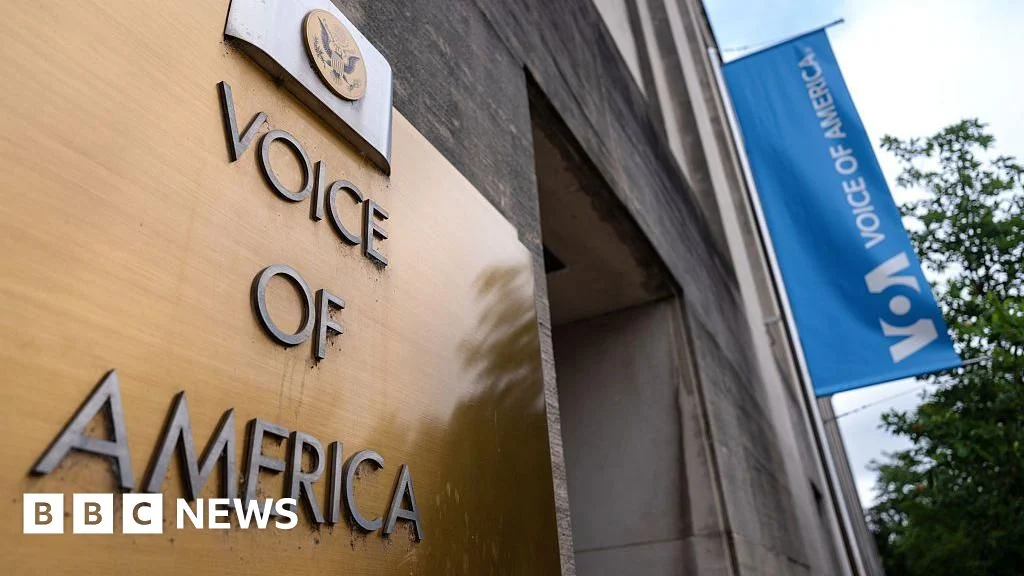
A significant legal victory for international journalism has been declared in the United States, as District Court Judge Royce Lamberth has ruled that the effective closure of the Voice of America (VOA) last year was an "illegal" act. The landmark decision mandates the reinstatement of hundreds of VOA journalists and gives authorities a strict one-week deadline to bring the internationally recognized broadcaster back to full operational capacity. The ruling strikes a blow against what critics have described as an attempt to politicize and dismantle a crucial American soft power tool.
The Voice of America, a venerable institution established during the tumultuous years of World War Two, was conceived with the express purpose of countering Axis propaganda and disseminating factual information to a global audience. Its mission has evolved over the decades, adapting to new media landscapes while remaining committed to its core principle of providing independent news and analysis. However, in the weeks following his return to office, former President Donald Trump issued an executive order targeting the VOA and other U.S.-funded international broadcasters, including Radio Free Europe and Radio Free Asia. Trump’s administration accused these outlets of harboring a "left-wing bias" and sought their "elimination to the maximum extent consistent with applicable law."
This directive set in motion a series of actions that have now been deemed unlawful by the federal court. At the helm of this upheaval was Kari Lake, appointed by Trump to lead the U.S. Agency for Global Media (USAGM), the parent organization responsible for overseeing and funding the VOA and its sister organizations. Under Lake’s leadership, a drastic restructuring occurred, resulting in the dismissal of over 85% of the agency’s employees. At the VOA alone, this amounted to more than 1,000 staff members being let go, leaving only a skeletal crew to maintain operations. Many of these terminated journalists have been on paid administrative leave since the mass dismissals, a situation that has created significant uncertainty and hardship. Notably, reporters from the VOA’s Persian Service were recalled to active duty following the Israeli attack on Iran last June, highlighting the VOA’s continued relevance in covering critical global events.
The legal challenge against these actions was initiated by three VOA journalists who argued that the dismissals were politically motivated and violated established legal procedures. Their case gained traction when, last week, Judge Lamberth issued a preliminary ruling stating that Lake did not possess the legal authority to order the suspension of the USAGM workforce. This was due to her failure to undergo the constitutionally mandated confirmation process by the U.S. Senate.
In his most recent and decisive ruling on Tuesday, Judge Lamberth further elaborated on the illegality of the mass terminations. The federal judge characterized the decision to sack the journalists as "arbitrary and capricious," a legal standard indicating a decision that is unreasonable and lacks a rational basis. He pointed to the government’s failure to consider existing legislation that delineates the specific languages and regions the VOA is mandated to serve. "Defendants have provided nothing approaching a principled basis for their decision," Lamberth wrote, emphasizing the lack of legitimate justification for the drastic measures taken.
The implications of this ruling are far-reaching, not only for the individual journalists affected but also for the future of American public diplomacy and international broadcasting. Patsy Widakuswara, one of the three VOA journalists who brought the lawsuit, expressed profound gratitude for the judge’s decision. "We hope the American people will continue to support our mission to produce journalism, not propaganda," she stated in an interview with the Associated Press, underscoring the VOA’s commitment to its journalistic integrity.
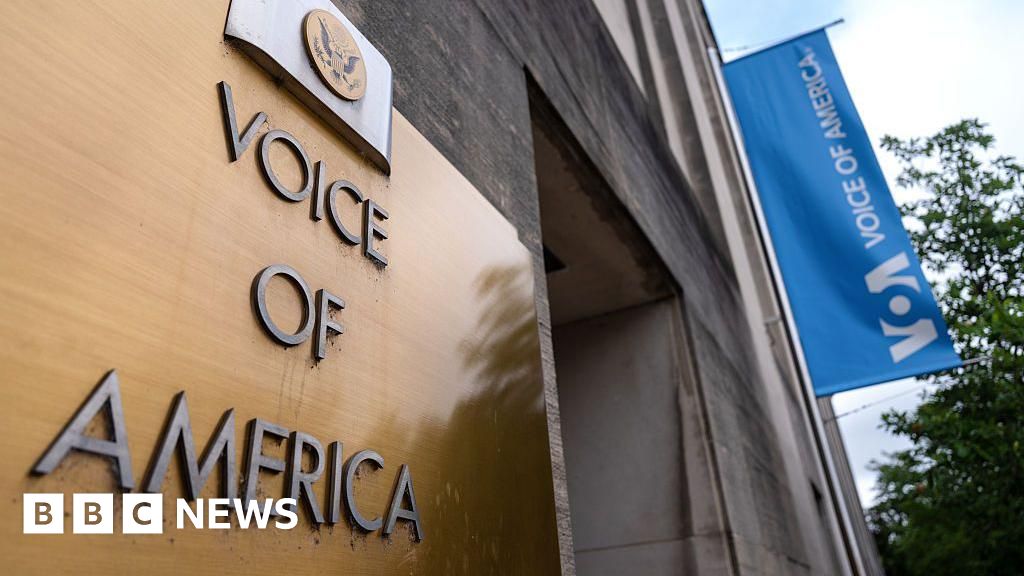
The legal battle, however, may not be entirely over. It remains unclear whether Kari Lake’s nominated successor, Sarah Rogers, whose appointment also requires Senate confirmation, will pursue an appeal against Judge Lamberth’s ruling. The VOA, prior to its effective shutdown, boasted a substantial global reach, broadcasting television, radio, and digital content in nearly 50 languages. This extensive network served as a vital conduit for American values and perspectives, as well as a platform for diverse voices from around the world.
Donald Trump’s criticisms of the VOA are consistent with his broader pattern of challenging and often denigrating the mainstream U.S. media. Studies have indicated that American news consumers perceive the media landscape as highly polarized, a sentiment that Trump’s rhetoric has often amplified. The VOA, by its nature as a government-funded broadcaster, has always faced scrutiny regarding its editorial independence. However, the recent actions have raised concerns among press freedom advocates and foreign policy experts about a potential shift towards using international broadcasting as a partisan tool rather than a platform for objective reporting.
The historical context of the VOA’s establishment underscores its significance. Emerging from the shadow of World War II, it was envisioned as a crucial element of the Allied information war, a counterpoint to the pervasive propaganda disseminated by the Nazi regime. Its mandate was to provide an unfiltered, truthful alternative, fostering understanding and democratic ideals in a world grappling with totalitarianism. Over the decades, the VOA has navigated numerous geopolitical shifts, from the Cold War to the digital age, consistently adapting its methods while upholding its core mission. Its broadcasts have reached millions, offering news, cultural programming, and educational content to audiences in regions where independent media is suppressed or heavily censored.
The appointment of Kari Lake to lead the USAGM was itself a point of contention. As a vocal proponent of election integrity claims that have been widely disputed, her appointment signaled a potential departure from the agency’s traditional emphasis on journalistic impartiality. Critics argued that placing individuals with strong partisan affiliations in charge of international broadcasters could undermine their credibility and effectiveness on the global stage. The subsequent mass dismissals, particularly of seasoned journalists with deep knowledge of their respective regions and languages, fueled these concerns.
The "arbitrary and capricious" nature of the dismissals, as identified by Judge Lamberth, points to a lack of due process and a disregard for established protocols. The decision to remove such a large percentage of the workforce without clear, legally sound justification raises questions about the motives behind the actions and the potential for damage to the VOA’s institutional memory and operational capacity. The recall of Persian Service reporters, for instance, suggests an ongoing need for their expertise in covering a volatile region, even as their colleagues remained on leave. This highlights the practical consequences of the leadership’s decisions, potentially hindering the VOA’s ability to respond effectively to unfolding international crises.
The legal precedent set by Judge Lamberth’s ruling could have lasting implications for the governance of U.S. international broadcasting. It reinforces the importance of adherence to legal and constitutional processes, particularly concerning appointments and employment decisions within government agencies. The emphasis on legislative mandates regarding language and regional coverage also underscores the VOA’s statutory mission, which extends beyond mere political alignment.
The future of the VOA now hinges on the actions of its current leadership and the Senate’s confirmation process for new appointees. The ruling provides an opportunity to rebuild and re-establish the VOA as a trusted source of information, free from political interference. The reinstatement of journalists is a crucial first step, but a comprehensive review of leadership and operational strategies may be necessary to fully restore the VOA’s global standing and effectiveness. The challenge ahead is to ensure that the VOA, and other U.S. international broadcasters, continue to serve as beacons of truth and independent journalism in an increasingly complex and often deceptive global information environment. The commitment to "produce journalism, not propaganda," as stated by one of the reinstated reporters, remains the cornerstone of this vital mission, a mission that the court has now affirmed as legally protected and essential. The broad range of languages and content previously offered by the VOA underscores its ambition to connect with diverse audiences, fostering understanding and dialogue across cultural and political divides. The loss of this capacity, even temporarily, represents a significant deficit in America’s ability to engage with the world through the powerful medium of information.
