
 By Rifan Muazin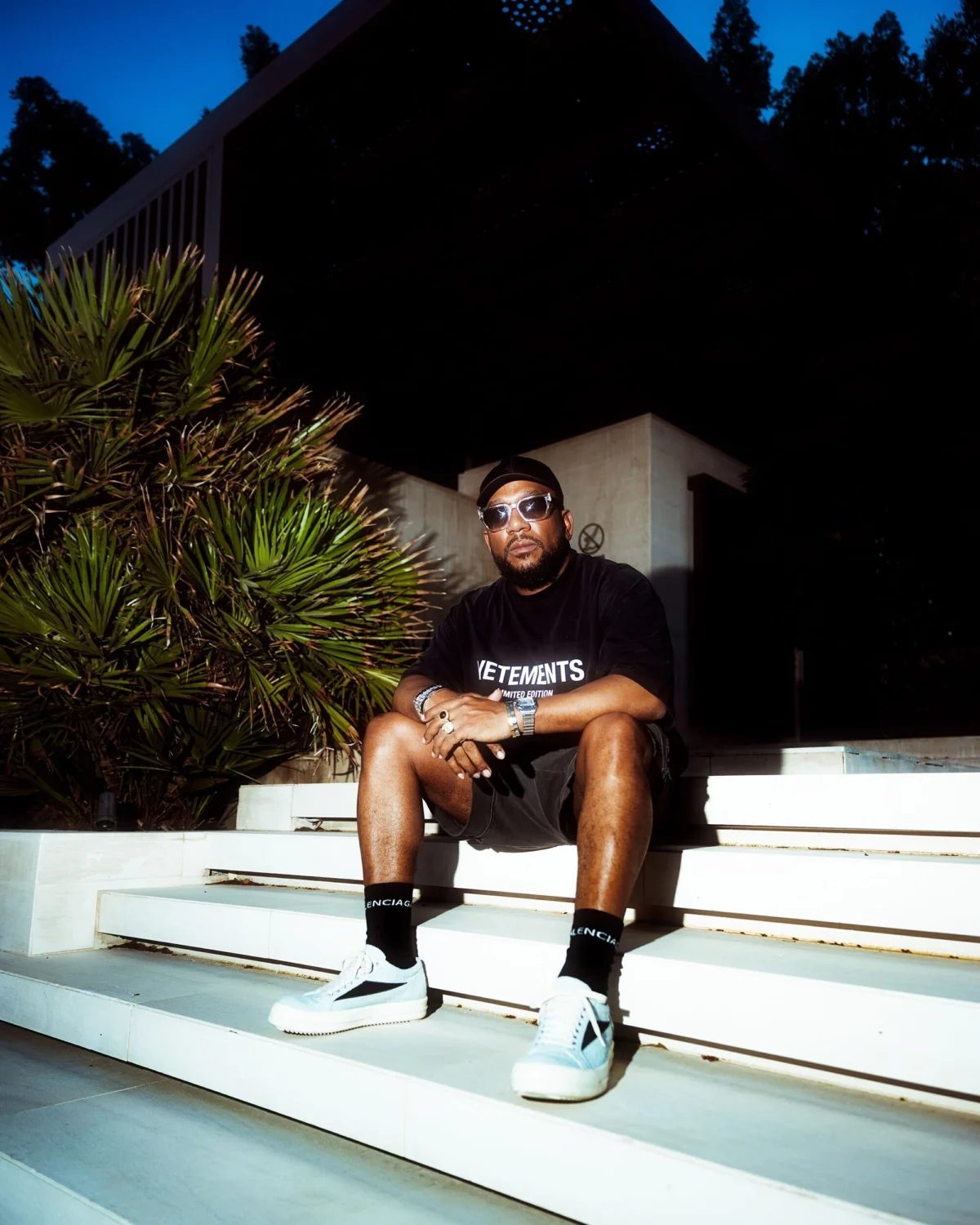
In the pantheon of modern hip-hop, few figures occupy a space as enigmatic and essential as CyHi the Prynce. Born Cydel Charles Young in Stone Mountain, Georgia, the Atlanta-bred emcee has long been regarded as the "secret weapon" of Ye’s (formerly Kanye West) G.O.O.D. Music imprint. Since his official induction into the collective in 2010, CyHi has served not only as a formidable lyricist in his own right but as a primary architect behind some of the most influential sounds of the 21st century. While many of the label’s original pillars have drifted away or seen their bridges incinerated by Ye’s increasingly volatile public outbursts, CyHi remains a stalwart soldier—perhaps the last man standing in a kingdom that once dominated the cultural zeitgeist.
After years of operating in the background, CyHi is finally breaking his silence. His recent output, specifically the poignant "The G.O.O.D. Ole Days," serves as a retrospective autopsy of a label that was once the gold standard for creative excellence. The track, and the subsequent conversations surrounding it, reveal a man grappling with the nostalgia of a lost era while attempting to reconcile the generosity of his mentor with the chaos that eventually dismantled their empire. This is not merely a comeback; it is a meticulous accounting of hip-hop history from a man who was in the room for every pivotal moment.
The catalyst for CyHi’s sudden transparency was a seemingly innocuous social media post. In early 2026, he tweeted his longing for "street lyricists," sparking a firestorm of speculation that he was taking a subliminal shot at J. Cole. While CyHi clarifies that the comment was a broader critique of the current rap landscape—where "experienced lyricism" is often replaced by "literature-taught" metaphors—the ensuing backlash reminded him of a decade-old grievance. In 2016, J. Cole released "False Prophets," a track widely interpreted as a critique of Ye’s declining mental state and the "yes men" surrounding him. At the time, CyHi was prepared to fire back, but he claims Ye instructed him to stand down.
"Ye likes to take stuff on the chin," CyHi explains, reflecting on why the response was delayed by nearly ten years. He describes himself during that era as a "yes man" in the sense of loyalty, not blind obedience. To CyHi, the "False Prophets" narrative was an insult to the community Ye had built. He views Ye not as a falling idol, but as a savior who provided stability to artists who, like CyHi himself, came from "dangerous lives" with no safety nets. CyHi, a 10th-grade dropout, credits Ye with providing a level of financial and creative security that allowed him to escape the gravity of his environment. When Cole attacked that circle, CyHi felt it was a personal affront to the man who had opened doors for the entire generation of "clean-cut" rappers that followed.
The tension between creative freedom and industry politics is a recurring theme in CyHi’s narrative. He points to the infamous "G.O.O.D. Fridays" era—a period in 2010 when the label released a new track every week leading up to My Beautiful Dark Twisted Fantasy—as the peak of their collective power. These sessions were described as high-pressure environments, reminiscent of Tupac Shakur’s legendary recording pace, where tracks were often finished and released within a 30-minute window. CyHi recalls freestyling his verse on "So Appalled," a track that eventually became a standout on what many consider the greatest hip-hop album of the decade. According to lore, it was Beyoncé who, upon hearing CyHi’s rough verse, insisted that it remain on the final cut.
However, the camaraderie of the 2010s eventually gave way to the turbulence of the late 2010s and early 2020s. CyHi identifies a singular turning point: the $1.75 red "Make America Great Again" hat. In his view, that piece of headwear was the "block out of the Jenga castle" that caused an $11 billion empire to collapse. The fallout was total—Ye lost his family, his monumental Adidas partnership, his label’s standing, and the support of many of his closest collaborators. CyHi watches this from a unique perspective, defending Ye’s controversial actions as the byproduct of a man who "takes the bullet" for marginalized or bullied groups, regardless of how the public perceives them.
CyHi offers a radical defense of Ye’s political and social outbursts, suggesting that the rapper is often "regurgitating" high-level, classified information he hears while traveling with world leaders, sheikhs, and billionaires. "He’s not as well-versed as some people may be, but he’s getting this information from different people," CyHi says, characterizing Ye’s public statements as poorly translated versions of private, elite discourse. This perspective paints Ye as a man overwhelmed by information, attempting to challenge "ideologies" without the rhetorical tools to do so gracefully. Whether it is the use of Ku Klux Klan-style imagery—which CyHi claims was an attempt to reclaim symbols originally used by the Moors—or his alignment with Trump, CyHi views these as "challenges to the status quo" rather than endorsements of hate.
This loyalty, however, has come at a personal cost. CyHi’s career has often been sidelined to facilitate Ye’s vision. Since his 2017 debut No Dope On Sundays, CyHi has been more visible as a writer for others than as a solo artist. He reveals deep-seated frustrations with the "feature swap" economy of modern rap, specifically citing his work on Travis Scott’s Astroworld. Despite contributing significantly to what is arguably Scott’s magnum opus, CyHi claims he waived his publishing rights in exchange for a "verse swap" that Scott has yet to honor. "I’ve always been the guy to take the short end of the stick," he admits, noting the irony that while he helped build the "coliseums" Scott now performs in, his own solo discography remains sparse.
The internal politics of G.O.O.D. Music were further complicated by outside interference. CyHi alleges that "higher-ups" in the industry, threatened by Ye’s market share, actively worked to dismantle the label by poaching talent with astronomical offers. He suggests that the tension and resentment that eventually fractured the relationship between Ye and artists like Big Sean or Pusha T were orchestrated by corporate interests looking to weaken Ye’s entourage. "It’s hard for people to turn that type of money down," CyHi notes, though he maintains that his own bond with Ye remains unbroken.
As he looks toward the future, CyHi is transitioning into an executive role, weary of the traditional label system that he feels prioritized his pen over his persona. His upcoming project, Mr. EGOT, is a conceptual nod to Philip Michael Thomas, the Miami Vice star who famously coined the term for winning an Emmy, Grammy, Oscar, and Tony before ever being nominated. For CyHi, the title represents the struggle of the Black artist to achieve recognition on the highest platforms. He plans to release his new music through direct-to-consumer channels, bypassing the clearances and bureaucratic hurdles that have kept his "computer full of beautiful things" hidden from the public for years.
The portrait CyHi paints of Ye is one of extreme duality: a man who will "work you to death" but ensure you are the highest-paid writer in the industry; a man who might wear a "red hat" but will also buy a $3 million home for a homeless friend from his past without telling a soul. CyHi recalls receiving a Bentley from Ye as a gesture of gratitude, a story he says is just one of thousands that the public never hears.
In the end, CyHi the Prynce remains the ultimate "fly on the wall," a witness to the greatest triumphs and most public collapses in modern music history. His decision to finally "get things off his chest" isn’t a betrayal of the circle, but a final act of service—a way to provide context to a legacy that is currently defined more by controversy than by the revolutionary art that built it. As he prepares to step out from the shadows of G.O.O.D. Music, CyHi is no longer just writing the hits; he is writing the history. "I’m going down with the ship," he says, a statement that defines a career built on a level of loyalty that is increasingly rare in the volatile world of hip-hop. Whether the ship sinks or finds new waters, CyHi the Prynce has ensured that the "G.O.O.D. Ole Days" will at least be remembered accurately.
