
 By admin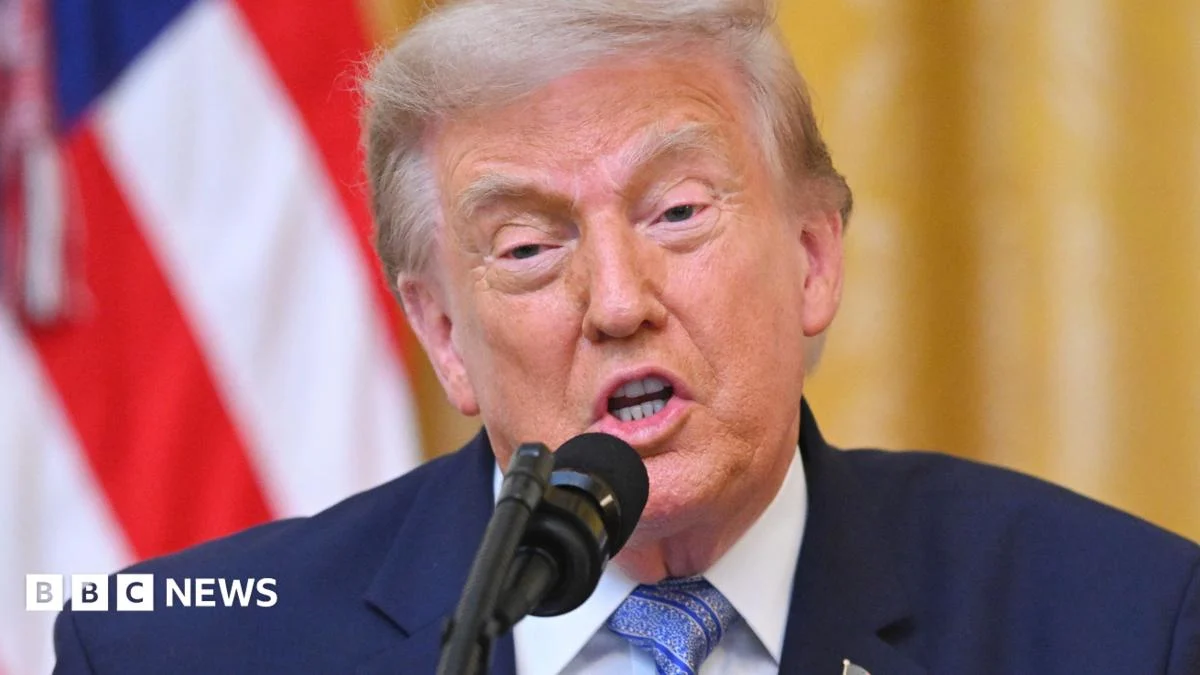
In a highly anticipated primetime address delivered from the hallowed halls of the White House, U.S. President Donald Trump leveled explosive accusations, alleging that China actively interfered in the 2020 presidential election and warning of "shocking vulnerabilities" within American voting systems. The address, delivered three months before the pivotal midterm elections, marked a significant escalation of Trump’s persistent, yet largely unsubstantiated, claims of widespread voter fraud and foreign meddling that he contends marred his defeat to President Joe Biden.
During the half-hour speech, President Trump declared that he had declassified hundreds of intelligence files, asserting these documents provided concrete evidence of Beijing’s attempts to sway the election in favor of Joe Biden. This assertion directly challenges the consensus of the U.S. intelligence community, which has previously concluded that China did not interfere in the 2020 election. The intelligence community’s assessment, detailed in a 2021 report by the U.S. National Intelligence Council, stated with "high confidence" that China did not engage in interference efforts and, while considering influence efforts, ultimately decided against deploying them with the intent to alter the election’s outcome. The report posited that China likely refrained from such actions because neither election outcome was perceived as sufficiently advantageous to risk potential blowback if discovered.
In a swift and forceful response, China’s Ministry of Foreign Affairs vehemently denied the allegations of interference in the 2020 presidential election, dismissing them as "entirely fabricated." Foreign Ministry spokesman Lin Jian characterized Trump’s claims as "malicious smears" that have "long been proven to be groundless."
President Trump, flanked by several members of his top advisory team during the televised address, did not permit journalists to pose questions, limiting the interaction to a one-way communication channel. Within his remarks, he accused China of the "illicit acquisition" of an estimated 220 million voter files, including sensitive personal information. He further alleged that voter data in 18 states was "bought, stolen or hacked by China." Trump also levied criticism against "those responsible for sounding the alarm," accusing them of failing to disclose this alleged discovery to government officials or members of Congress.
It is crucial to note that a significant amount of voter data in the United States is publicly available, as outlined by resources such as the National Conference of State Legislatures. President Trump, however, did not present any specific evidence during his speech to demonstrate that China had utilized this information to alter voting systems or exert influence over election outcomes.
Accompanying Trump’s address, the White House released hundreds of pages of intelligence documents. A preliminary review by the BBC revealed that many of these documents were heavily redacted, obscuring specific details.
Meanwhile, Democrats swiftly condemned President Trump’s speech, accusing him of deliberately attempting to sow seeds of doubt regarding the security of the upcoming November midterm elections, which will determine control of Congress for the remainder of President Biden’s term. Top Senate Democrat Chuck Schumer took to social media platform X to state, "Let’s be clear – in America, voters choose their leaders, not the other way around." He further vowed, "Democrats will fight like hell to make sure every American voter can cast their ballot freely, without obstruction or interference from Donald Trump." Former Vice President Kamala Harris echoed similar sentiments on X moments before Trump’s remarks, warning, "He wants you to lose confidence in our electoral system so you stay home this November."
The president’s latest pronouncements starkly contrast with previous assessments by U.S. intelligence agencies. Beyond the 2021 National Intelligence Council report, the U.S. Cybersecurity and Infrastructure Security Agency (CISA) declared the 2020 election to be "the most secure in American history," asserting that no voting systems were compromised.
The timing of Trump’s White House address followed the release of a new poll by Washington Post-Ipsos, which indicated a decline in his approval rating to 37%. The poll also suggested that many voters were expressing pessimism regarding the rising cost of living and the ongoing conflict with Iran, suggesting a potential backdrop of domestic concerns influencing public sentiment.
In his address, President Trump broadened his allegations, claiming that U.S. voting machines are "extremely exposed" to interference from foreign adversaries, explicitly naming Russia, China, and Iran. The vulnerabilities within U.S. election infrastructure have been a subject of documented concern. Some of these issues were addressed following the 2016 election, which Trump won, after U.S. intelligence agencies concluded that Russia had engaged in a comprehensive election meddling campaign. This campaign reportedly included hacking, sophisticated social media influence operations, and financial support for on-the-ground electioneering activities.
Further alleging malfeasance, President Trump claimed that a state investigation conducted by Michigan law enforcement uncovered a voter registration fraud scheme orchestrated by a group affiliated with the Democratic Party. He asserted, however, that the FBI constrained the investigation from taking decisive action before the statute of limitations expired, characterizing the situation as "pay, play and cheat." Crucially, Trump did not provide any evidence to substantiate claims of votes or tabulations being altered or voting machines being hacked.
In a separate assertion, Trump stated that the Department of Homeland Security had identified 278,000 non-citizens registered to vote. He did not, however, specify whether any of these individuals had actually voted or if their registration had any discernible impact on any election outcome.
Concluding his address, President Trump reiterated his call for the passage of the SAVE America Act. This proposed legislation seeks to ban most forms of mail-in voting, mandate proof of citizenship for voter registration, and require photo identification to cast a ballot. This legislation has faced significant hurdles, having been stalled in the Senate for months. Trump urged Americans to pressure their representatives in Congress to support its passage, though such efforts are widely considered unlikely to succeed unless Republicans are willing to abandon established Senate procedures.
The president’s speech is anticipated to do little to alleviate the concerns of Democrats, who believe Trump is strategically aiming to undermine confidence in the integrity of the upcoming midterm elections and the 2028 presidential election. The persistent focus on election integrity by Trump and his allies, following dozens of unsuccessful legal challenges after the 2020 election, has fueled these anxieties.
In a notable and controversial segment of his address, President Trump also targeted media outlets, including ABC, NBC, and CNN, for not broadcasting his speech live. He suggested that these networks should have their broadcast licenses revoked, an action that would represent a significant and potentially unprecedented governmental intervention in media operations.
The aftermath of the 2020 election saw Trump and his allies launch numerous legal challenges aimed at overturning Joe Biden’s victory. These challenges, however, consistently failed to produce credible evidence of widespread fraud. The consensus among election security experts and government agencies remains that the 2020 election was conducted securely and without compromise to its fundamental integrity.
