
 By admin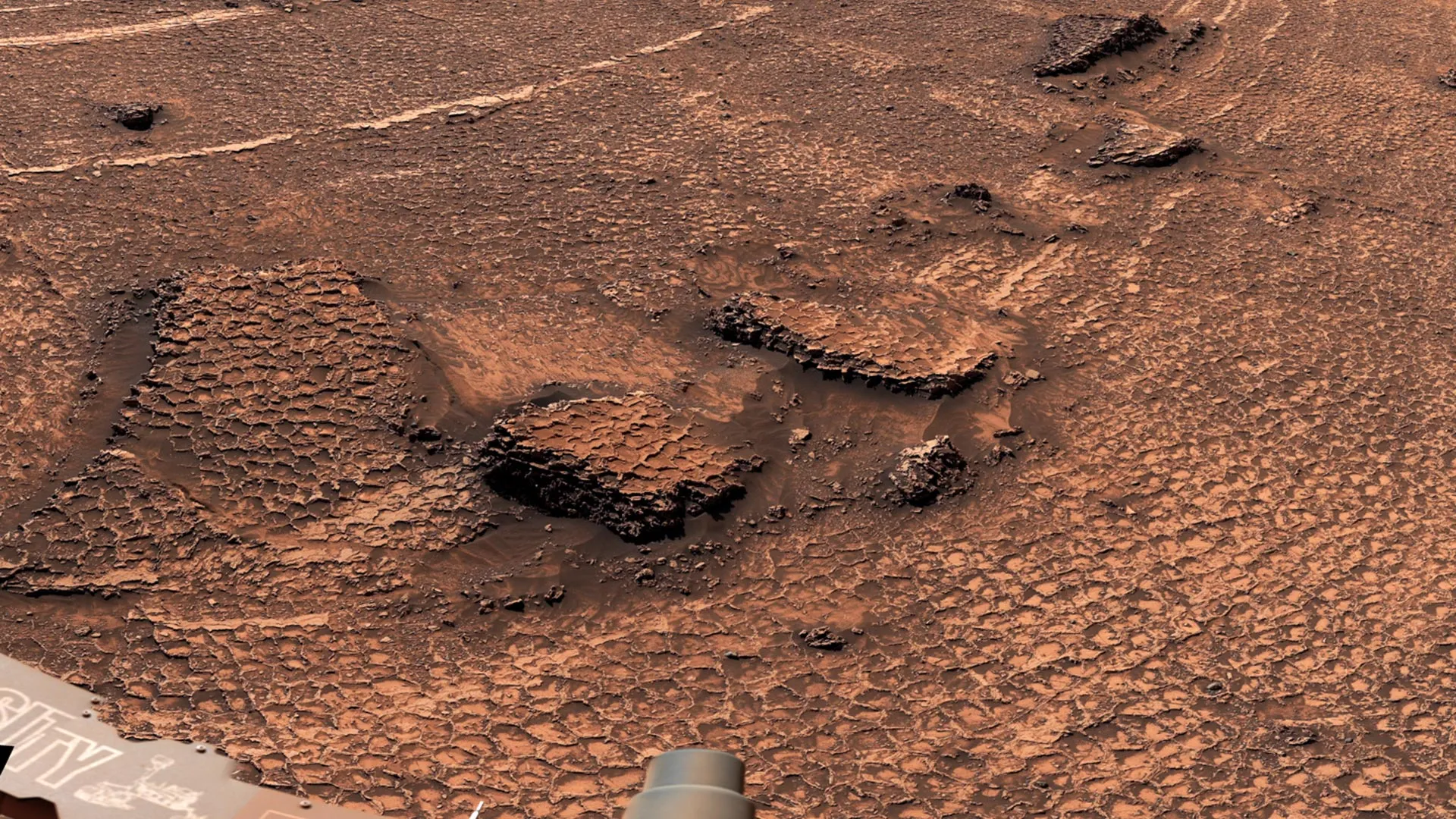
Curiosity has observed small, isolated clusters of similar geometric shapes on Mars before, notably in areas where ancient lakebeds are thought to have existed. However, none of these previous sightings approached the vast expanse and continuous nature of the field now visible across Valle Grande. This newly revealed "sea of polygons" signifies a significant departure from earlier observations, suggesting a more widespread or intense geological process at play than previously documented. The sheer continuity of these patterns across the Martian terrain underscores the potential for a large-scale environmental event or a persistent geological mechanism that shaped this region of Gale Crater. Scientists are particularly keen to understand why these polygons are so extensive here, contrasting with the more localized occurrences found elsewhere on Curiosity’s traverse.
A Sea of Polygons Across Mars: A Panoramic Revelation
The full, breathtaking extent of these intricate formations was captured in a comprehensive 360-degree panorama on June 19 and 20, during the 4,930th and 4,931st Martian days, or sols, of the mission. This detailed composite image reveals the polygons stretching across the terrain in every direction, continuing as far as the rover’s advanced Mast Camera (Mastcam) can discern with its wide-angle and telephoto lenses. The patterns are not confined to the valley floor; they also dramatically climb the steep sides of a nearby butte, aptly nicknamed "Miraflores" by the mission team. This geological feature rises approximately 20 feet (6 meters) above the surrounding landscape, its summit capped by a thick, undulating layer of sand, indicating the dynamic interplay of ancient geological processes and more recent aeolian (wind-driven) activity. The presence of polygons ascending the butte’s flanks provides crucial stratigraphic context, suggesting these features formed prior to or during the deposition of the butte’s rock layers, and were subsequently exposed by erosion.
"We’ve seen a lot of fascinating landscapes through Curiosity’s eyes over the past 14 years, but this sea of polygons took our breath away," expressed Ashwin Vasavada, the mission’s project scientist at NASA’s Jet Propulsion Laboratory (JPL) in Southern California. Vasavada, who has been instrumental in guiding Curiosity’s scientific investigations, emphasized the immediate impact of the discovery. "Our team has initiated careful measurements of their shapes, dimensions, and chemistry using Curiosity’s suite of scientific instruments. We are highly hopeful that the rich data we collect from this expansive field will provide definitive clues as to how these extraordinary features formed." The scientific community recognizes this as a prime target for detailed analysis, potentially unlocking secrets about Mars’ deep past that have long eluded researchers.
Unraveling the Mystery: What Created the Honeycomb Patterns?
The formation of polygonal patterns on planetary surfaces is a phenomenon observed across the solar system, from Earth’s permafrost regions to the icy plains of Pluto. On Mars, scientists have identified several distinct processes that can lead to these characteristic honeycomb appearances. Some polygonal formations previously examined by Curiosity, for instance, clearly originated as desiccation cracks – the result of drying mud. These features typically form when water-rich sediments rapidly lose moisture, causing them to shrink and crack in a polygonal pattern. The presence of such cracks is a strong indicator of ephemeral lakes or ponds that experienced wet-dry cycles, conditions highly relevant to the planet’s past habitability.
However, the sheer scale and morphological characteristics of the Valle Grande polygons suggest a more complex story, potentially involving other mechanisms:
-
Thermal Contraction Cracks: Repeated cycles of extreme warming and cooling, particularly in the presence of water or ice, can cause the ground to expand and contract, fracturing into geometric shapes. On Earth, this process is common in permafrost environments, where freeze-thaw cycles create distinctive ice-wedge polygons. If ancient Mars experienced periods of significant climate variability, perhaps with widespread ground ice that thawed and refroze seasonally, such thermal stresses could have generated the observed patterns. The depth and regularity of these cracks often provide clues to the thermal gradient and material properties.
-
Syneresis Cracks: Unlike desiccation cracks, which form due to drying, syneresis cracks can develop underwater. These occur when sediments undergo chemical changes, causing them to contract and crack while still submerged. This process doesn’t require exposure to air and could indicate prolonged subaqueous conditions followed by specific geochemical alterations in the water or sediment.
-
Diagenetic Processes and Compression: Another compelling hypothesis involves diagenetic processes, where sediments are buried under subsequent layers, subjected to immense pressure, and undergo chemical and physical transformations. Compression can force water out of the sediment, leading to compaction and the development of stress fractures. These fractures can form polygonal networks as the pore water migrates and the sediment matrix consolidates. This mechanism implies that the polygons formed at depth, only to be later exhumed by erosion, offering a window into the subsurface geology of ancient Mars. The fact that the polygons ascend the Miraflores butte lends credence to this idea, as it suggests these features are part of the bedrock stratigraphy.
Scientists are now meticulously studying the newly discovered formations in Valle Grande, utilizing Curiosity’s sophisticated suite of instruments to gather comprehensive data. The Mastcam provides high-resolution color images and stereo views for morphological analysis. The Chemistry and Camera (ChemCam) uses a laser to vaporize tiny rock samples and determine their elemental composition, while the Alpha Particle X-ray Spectrometer (APXS) offers detailed chemical analysis of the surface material. The Mars Hand Lens Imager (MAHLI) captures close-up, microscopic images, revealing textural details of the cracks and the material within them. By analyzing the crack morphology (width, depth, regularity, intersection angles), the mineralogy of the surrounding rock, and the composition of any infill material, researchers hope to discern which of these processes, or possibly a combination thereof, ultimately shaped this extraordinary Martian landscape. Understanding the precise mechanism will provide invaluable insights into the specific hydrological and geological conditions that existed in Gale Crater billions of years ago.
Fourteen Years of Martian Surprises: Curiosity’s Enduring Legacy
The enormous polygon field in Valle Grande represents just the latest in a long and impressive series of unexpected discoveries made by Curiosity since its spectacular landing on Mars 14 years ago, on Aug. 5, 2012. Designed for a two-year primary mission, Curiosity has far exceeded all expectations, demonstrating remarkable resilience and engineering prowess. Its continued operation underscores the success of NASA’s Mars Exploration Program and the robustness of its design, enabling scientists to gather data for over a decade longer than originally planned.
Throughout its journey across Gale Crater, Curiosity has acted as a robotic field geologist, encountering a diverse array of geological wonders that have continually reshaped our understanding of Mars. Early in its mission, it found intriguing sulfur crystals, suggesting complex interactions between water and rock. It has also identified reflective meteorites, offering glimpses into the composition of objects that have impacted the Red Planet over its history. Beyond these captivating individual finds, Curiosity’s most profound contribution has been its transformation of scientists’ understanding of ancient Mars. The rover has unequivocally demonstrated that billions of years ago, Mars was not the barren desert it is today, but rather a planet that possessed abundant liquid water, essential chemistry, and critical nutrient sources – all key ingredients that could have supported microbial life.
Evidence of Mars’ Watery Past: A Habitable Ancient Environment
Curiosity’s primary mission objective was to assess whether Mars ever had environmental conditions favorable for microbial life. Its journey through Gale Crater, particularly its ascent of Mount Sharp (Aeolis Mons), has been a systematic exploration of a vast geological archive. Billions of years ago, the lower foothills of Mount Sharp, a towering 3-mile-tall (5-kilometer-tall) mountain, were home to a dynamic system of lakes and streams. Sediment layers observed by Curiosity, including finely laminated mudstones and cross-bedded sandstones, serve as irrefutable evidence of ancient waterways and long-lived lake environments within the crater. These sedimentary structures, coupled with the identification of specific clay minerals (like smectites) and sulfates (like gypsum), point to periods when water persisted for millions of years, interacting with the surrounding rocks and potentially creating habitats conducive to life.
More critically, the rover has unearthed chemical traces left behind by this ancient wetter period, which include complex carbon-based molecules. Among these are organic molecules believed to be precursors to RNA and DNA, the fundamental nucleic acids that carry genetic information in all known terrestrial life. These discoveries were made using the Sample Analysis at Mars (SAM) instrument, which "sniffs" the air and "tastes" powdered rock samples, analyzing their chemical composition. The presence of thiophenes, benzene, toluene, and small carbon chains within ancient Martian mudstones provides compelling evidence that the building blocks of life were present on Mars at a time when water was also abundant.
While scientists cannot definitively determine whether these organic molecules were produced through biologic processes (i.e., by ancient microbes) or through geologic processes (e.g., hydrothermal activity or meteorite impacts), both explanations remain plausible. The challenge lies in identifying unambiguous "biosignatures" – specific patterns or structures that can only be formed by life. Even so, the discovery of these organic
