
 By admin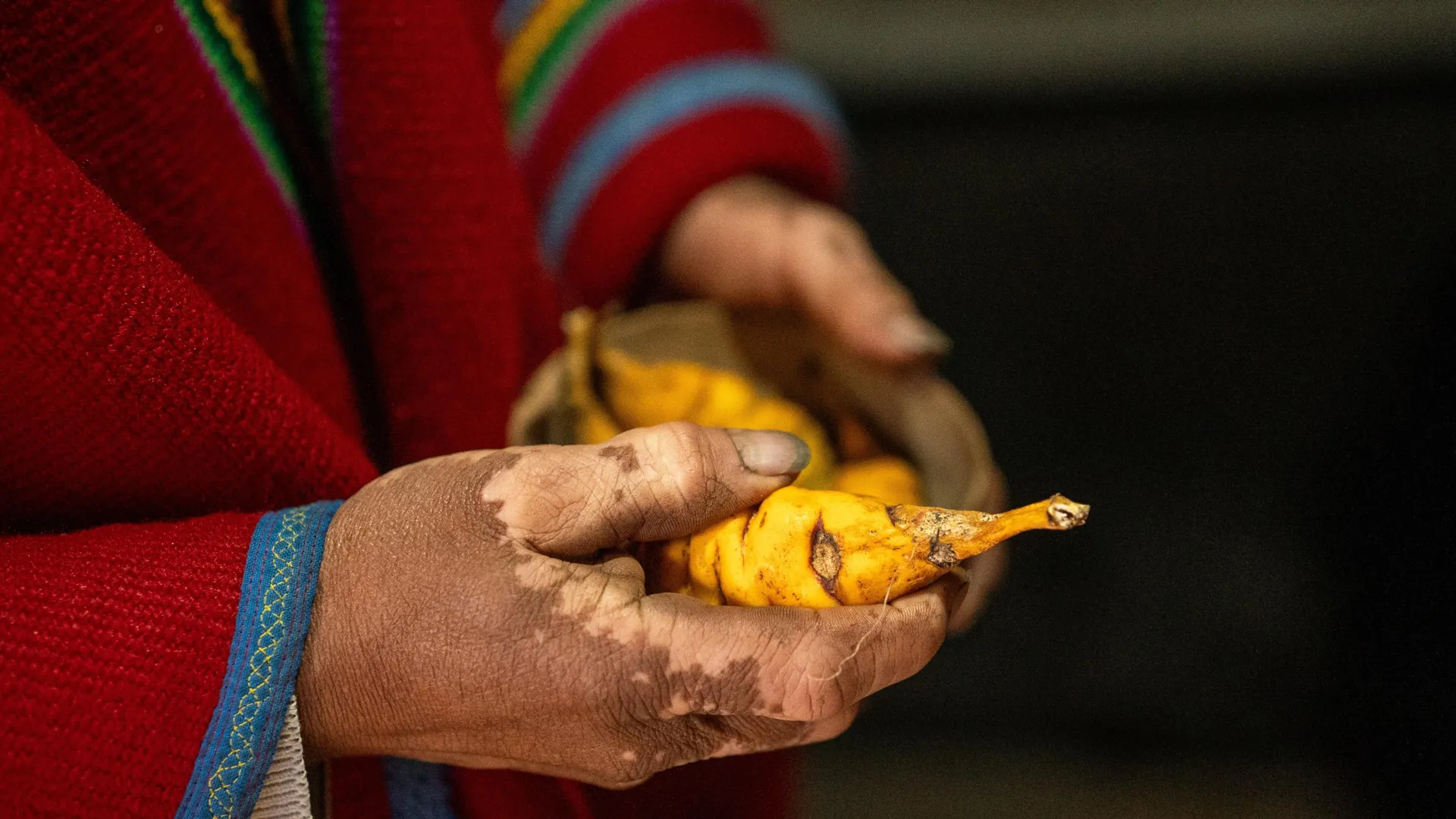
For millennia, the potato has been more than just a food source in the rugged highlands of the Andes; it has been the very cornerstone of civilization, culture, and survival. Originating in the high-altitude terrains of Peru, Bolivia, and Ecuador, this versatile tuber was first domesticated by indigenous Andean peoples between 7,000 and 10,000 years ago. Long before the Spanish conquistadors introduced it to Europe, the potato fueled mighty empires like the Inca, sustained diverse communities, and adapted to some of the planet’s most challenging agricultural environments, with thousands of unique varieties thriving in varying microclimates. This profound and enduring relationship between humans and potatoes in the Andes has now yielded a remarkable discovery: evidence that this ancient dietary reliance may have left an indelible mark on the very genetic makeup of Andean populations, fundamentally shaping human evolution.
A groundbreaking new study, co-led by researchers at UCLA and the University at Buffalo, reveals that indigenous people in Peru today possess an unusually high number of copies of a gene critical for starch digestion. This gene, known as AMY1 (salivary amylase gene), is present in greater quantities in this population than in any other known human group worldwide. The research suggests that natural selection began favoring individuals within Indigenous Andean communities who carried an elevated number of AMY1 copies, precisely during the period when potatoes became a fundamental and widespread dietary staple in the Andean highlands, roughly 6,000 to 10,000 years ago. This critical timing underscores the direct link between dietary shifts and genetic adaptation. The compelling findings were recently published in the esteemed scientific journal Nature Communications, offering a rare and robust example of diet-driven human evolution.
A Genetic Advantage for Digesting Starch: The AMY1 Gene Explained
The AMY1 gene is responsible for producing salivary amylase, an enzyme that initiates the breakdown of starches into simpler sugars even before food leaves the mouth. This initial enzymatic action is crucial for efficient digestion and nutrient absorption. As Abigail Bigham, an associate professor of anthropology at UCLA and a lead researcher on the study, explains, "People who carry more copies of AMY1 generally produce greater amounts of the amylase enzyme in their saliva and are believed to process starch more efficiently." Bigham, whose extensive research focuses on human populations in challenging environments like the Peruvian Andes and the Himalayas of Nepal, emphasizes the direct benefit: enhanced starch processing means better extraction of energy and nutrients from starchy foods, a significant advantage in environments where food resources can be limited or seasonally variable.
The AMY1 gene is a prime example of copy number variation (CNV), where individuals can have different numbers of copies of a particular gene. Unlike most genes, which typically exist in two copies (one from each parent), AMY1 can vary widely, from as few as two to as many as 15 or more copies per person. This variability has long intrigued evolutionary biologists, as it often correlates with dietary patterns. Populations with diets historically rich in starch, such as agricultural societies, tend to have higher average AMY1 copy numbers compared to populations with diets traditionally lower in starch, like some hunter-gatherer groups. This study provides a powerful, region-specific demonstration of this global trend.
Unveiling the Genetic Signature: Methodology and Rigor
To uncover this genetic signature, Bigham and her dedicated team of evolutionary anthropologists embarked on a meticulous research journey. They collected DNA samples from contemporary Peruvian Andean Quechua speakers, a population renowned for its deep historical and cultural ties to potato cultivation. These invaluable samples were then subjected to rigorous genetic analysis and compared against vast genomic databases. These databases contain thousands of DNA samples from dozens of present-day human populations spanning the globe, providing a crucial comparative framework to identify unique genetic patterns.
The Andes region itself is a living laboratory for understanding human evolutionary adaptation. "The high-altitude Andes are known for being a rich region for understanding human evolutionary adaptation—for instance, hypoxia, in which tissues do not get enough oxygen," Bigham notes. Her previous work, alongside co-author Kelsey Jorgensen, then a postdoctoral scholar, had already provided compelling evidence of selection in the starch digestion pathway of Andean peoples, setting the stage for this deeper dive into AMY1. "This new research highlights how the Andes are useful for understanding human evolutionary adaptation to other selective environmental pressures like diet," Bigham adds, underscoring the multifaceted challenges and adaptations inherent to life in the majestic mountain range. Beyond low oxygen levels, high-altitude residents face intense cold, high UV radiation, and often, limited dietary diversity, making efficient nutrient extraction paramount for survival and reproductive success.
Co-corresponding author Omer Gokcumen, a University at Buffalo professor of biological sciences and a leading expert on AMY1 CNV, has previously demonstrated that the initial duplication of the AMY1 gene occurred in humans at least 800,000 years ago, long before the advent of agriculture. This deep evolutionary history means that the capacity for variable starch digestion efficiency has been present in the human lineage for a considerable time. Gokcumen emphasizes that the new findings provide "unusually strong evidence" that natural selection specifically acted on this gene within the Andean population after potato cultivation became widespread. "Biologists have long suspected that different groups of humans have evolved genetic adaptations in response to their diets," he stated, "but there are very few cases where the evidence is this strong." The clarity of the signal in the Andean population, directly correlating with the historical adoption of potatoes, makes this study particularly impactful.
How Potato Farming Chiseled Andean Evolution
The evolutionary journey towards higher AMY1 copy numbers in the Andes was not a sudden event. The ancestors of Indigenous Andeans, like all human populations, already possessed varying numbers of AMY1 copies before they settled in the highlands and began the arduous process of domesticating potatoes. Some individuals carried relatively few copies, while others carried many. This pre-existing genetic diversity provided the raw material upon which natural selection could act.
Once potatoes transitioned from a wild plant to a cultivated and indispensable food source, the selective pressure intensified. In a diet where potatoes—rich in complex carbohydrates—became a primary caloric and nutritional component, individuals with higher AMY1 copy numbers would have gained a distinct evolutionary advantage. They could extract more energy and nutrients from their staple food, leading to better overall health, greater resilience to periods of scarcity, and critically, enhanced reproductive success.
The researchers meticulously estimated the timeline and strength of this selective pressure. Their models suggest that beginning approximately 10,000 years ago, coinciding with the earliest phases of potato domestication and widespread cultivation, individuals with roughly 10 or more AMY1 copies had a measurable 1.24% survival or reproductive advantage per generation. While seemingly small, this consistent advantage, accumulated over hundreds of generations, is a powerful force in evolutionary change.
Gokcumen vividly illustrates this process: "Evolution is chiseling a sculpture, not constructing a building." He clarifies that it’s not as if Indigenous Andeans suddenly "gained" additional AMY1 copies once they started eating potatoes. Instead, the mechanism was one of differential survival and reproduction. "Those with lower copy numbers were eliminated from the population over time, perhaps because they had fewer offspring, and the ones with the higher copy numbers remained." Over thousands of years, this subtle but relentless process produced a striking genetic difference. Today, Indigenous people living in Peru carry an average of 10 AMY1 copies, a remarkable figure that is approximately two to four copies more than the average found in any of the other 83 human populations examined in the study. This represents a significant genetic divergence, sculpted by a dietary staple.
A Potato Farming Signature in Human DNA: Comparative Evidence
To further solidify their conclusions, the researchers conducted a crucial comparative analysis. They contrasted the AMY1 copy numbers of Indigenous Peruvians with those of the Maya, an indigenous population in Mexico. While both populations share deep ancestral roots and a common evolutionary history within the Americas, their dietary traditions diverge significantly. The Maya, renowned for their sophisticated maize agriculture, do not have a historical tradition of potato farming. This comparative approach allowed the researchers to isolate the specific impact of potato consumption.
The results were compelling: Indigenous Peruvians carried an average of 10 AMY1 copies, while the Maya averaged around six copies. This substantial four-copy difference strongly supported the hypothesis that potato cultivation played a pivotal role in driving the selection for increased AMY1 copy numbers in the Andes.
However, the researchers had to meticulously rule out another major historical event that could potentially confound their findings: the devastating impact of European contact on Indigenous American populations beginning in the 15th century. The arrival of Europeans ushered in an era of unprecedented catastrophe for indigenous communities across the Americas, marked by rampant disease (such as smallpox), widespread famine, brutal violence, conflict, and the rapid loss of genetic diversity dueossive population bottlenecks. Such a severe population bottleneck can, in some cases, randomly alter gene frequencies, creating the appearance of natural selection even if a specific environmental pressure like diet was not the direct cause.
Separating these two possibilities – diet-driven natural selection versus the effects of a population bottleneck – was one of the study’s most significant challenges and required sophisticated analytical tools. To address this, the team employed state-of-the-art ultra-long DNA sequencing technologies. These advanced techniques allowed for a more precise and comprehensive analysis of the complex AMY1 gene region, which is notoriously difficult to sequence accurately due to its repetitive nature. Coupled with newly available comparative datasets and advanced computational models, the researchers were able to reconstruct the historical trajectory of AMY1 copy numbers.
Their detailed analysis revealed a critical timeline: the increase in high AMY1 copy numbers had already become significantly more common in the Andes several thousand years before Europeans arrived. This chronological evidence definitively supports the conclusion that natural selection associated with a potato-rich diet, rather than the later demographic collapse triggered by European contact, was the primary force responsible for the distinctive genetic pattern observed in Indigenous Peruvian populations today. The genetic "clock" pointed firmly to ancient agricultural practices as the driver.
What Ancient Potatoes Reveal About Human Adaptation and Modern Diets
The implications of this research extend far beyond the Andean highlands. Bigham suggests that these findings should encourage broader and deeper research into human populations living at high elevations globally. These environments present a unique confluence of challenges that stretch beyond just low oxygen levels, encompassing limited food resources, intense exposure to cold temperatures, and elevated ultraviolet radiation. Understanding how various populations have adapted genetically, physiologically, and culturally to these multifaceted pressures can provide crucial insights into human resilience and the complex interplay between environment and genome.
Furthermore, this research raises a much broader and highly relevant question about how humans may continue adapting to modern diets. In today’s globalized world, foods and cuisines from every corner of the planet are more accessible than ever before, leading to unprecedented dietary shifts in relatively short periods. While the pace of change is rapid, genetic adaptation remains a dynamic and ongoing part of the human story. The Andean potato adaptation serves as a powerful reminder that human evolution is not a relic of the distant past but a continuous process.
Bigham thoughtfully critiques popular dietary philosophies, such as the "paleo diet," which often posits that humans are biologically adapted only to the foods available in the Paleolithic era and are therefore unsuited to consume foods that emerged post-domestication. "There are ideas out there like the paleo diet, which is adapted to the Paleolithic environment and says we’re not suited to eat foods that come post-domestication," she explains. "But I think this research shows that human populations have responded and evolved to changing food conditions within the last 10,000 years. Our metabolic pathways are not simply a product of that Paleolithic past." This study, alongside other well-documented cases like the evolution of lactase persistence in dairy-farming populations, underscores the remarkable flexibility and adaptability of the human genome in the face of significant dietary transitions brought about by agriculture and cultural practices.
The collaborative nature of this groundbreaking research involved a diverse group of institutions, including researchers from the University of Kansas, Pennsylvania State University, the University of Pennsylvania, the University of Puerto Rico at Cayey, Syracuse University, Cayetano Heredia University in Peru, and Bilkent University in Turkey. The critical work was generously supported by grants from the National Science Foundation, the National Institutes of Health, and the Leakey Foundation, underscoring the significance of interdisciplinary and international cooperation in advancing our understanding of human origins and adaptation. This discovery not only deepens our appreciation for the enduring legacy of indigenous agricultural practices but also provides a compelling testament to the ongoing dance between human culture, environment, and evolution.
