
 By admin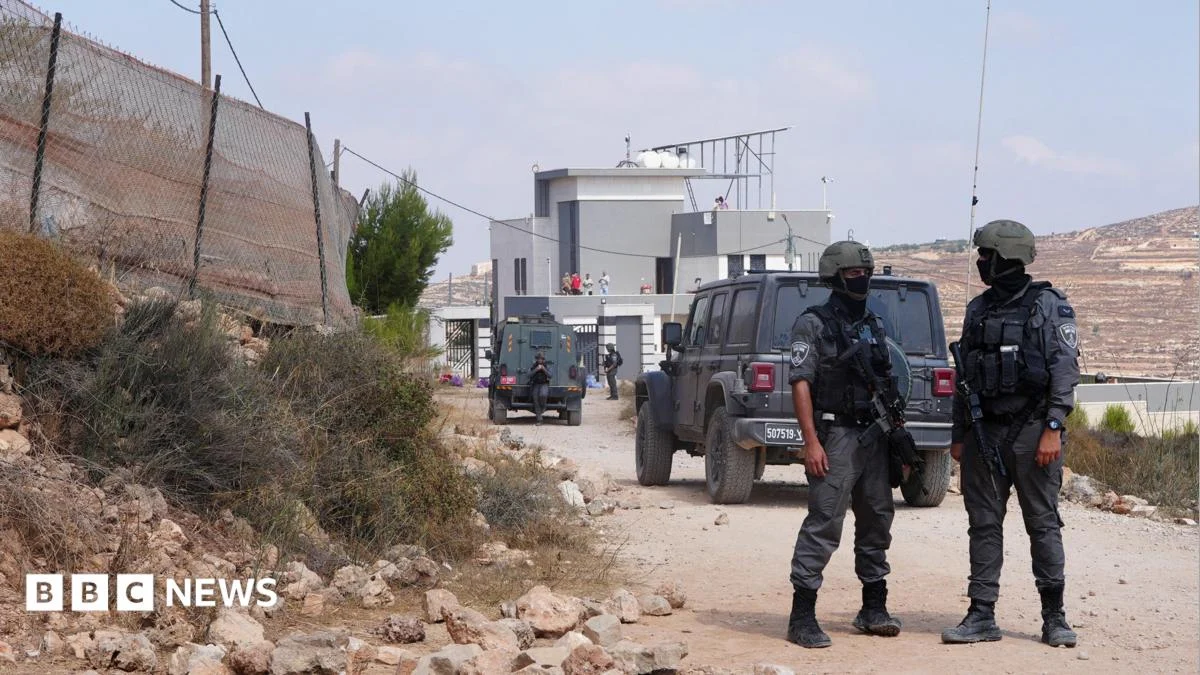
In a tense standoff in the occupied West Bank, activists have made a determined effort to deliver vital supplies to Palestinian families whose homes in the village of Qusra have been under siege for days by Israeli settlers. The operation, fraught with obstacles and conflicting accounts, highlights the escalating tensions and the complex dynamics of settler-Palestinian relations in the region. The humanitarian mission saw a group of activists attempt to reach two Palestinian families, members of the Abu Ridi and Hassan families, trapped in their homes since Sunday. These families have been living without essential power and water supplies, a situation exacerbated by the ongoing blockade imposed by Israeli settlers.
The supplies, consisting of water and food, were ultimately left near one of the besieged houses in Qusra after activists reported being prevented by Israeli forces from delivering them directly to the residents. Two individuals present at the scene corroborated this account, stating that Israeli soldiers had obstructed their direct access to the families. However, the Israel Defense Forces (IDF) has vehemently denied these claims. According to the IDF, Qusra has been designated a "closed military zone," a classification that ostensibly restricts the entry of Israeli civilians, including those among the activist group. The military spokesperson asserted that while civilians were not permitted to enter the area, this did not extend to preventing the transfer of aid to the Palestinian homes.
The situation in Qusra took another turn on Friday when a number of settlers reappeared in the vicinity, attempting to establish a tent near the besieged properties. This occurred just a day after an Israeli military operation aimed at dispersing settlers from the area. The tent was subsequently removed by Israeli forces. The IDF reiterated its stance on Qusra being a closed military zone, stating that their soldiers were tasked with removing the tent and ensuring the protection of the local Palestinian residents. This statement, however, stands in contrast to the experience of the activists and the besieged families, who reported being actively prevented from reaching their homes with aid.
The broader context of the operation to disperse settlers on Thursday revealed that approximately a dozen Palestinian households were instructed to vacate their properties. This included the homes of the Abu Ridi and Hassan families, two of the three properties currently under siege. Adding a layer of controversy to the situation, Qusra Mayor Abdul Azim Wadi informed the BBC that Israeli forces were reportedly using some of the vacated Palestinian houses as temporary barracks. The Israeli military countered this by stating that the objective of their presence was to "protect the residents" and that soldiers had been "instructed that the Qusra residents will remain in their homes." This assertion of protection is met with skepticism by residents and observers given the ongoing siege and displacement.
The origins of the crisis in Qusra trace back to Sunday, when, according to reports, settlers initiated the blockade by obstructing the road leading to the Palestinian families’ gates. This blockade was accompanied by the deliberate cutting off of their electricity and water supplies, effectively plunging the families into a state of isolation and deprivation. Disturbingly, the first Israeli soldiers who arrived at the scene were observed praying alongside the settlers, an act that the Israeli military acknowledged would lead to disciplinary action against the involved soldiers, highlighting a perceived alignment between some security forces and settler elements.
An earlier attempt by Israeli security forces to dislodge the settlers on Wednesday reportedly devolved into confrontations involving a larger contingent of settlers. Palestinian security camera footage, shared with the BBC, captured scenes of clashes between Israeli soldiers and border police and a significant crowd of settlers. During these confrontations, security forces deployed crowd control measures, including tear gas and stun grenades, in an effort to disperse the settlers. The exact motivations of the settlers in Qusra remain somewhat ambiguous, though their actions are consistent with a broader pattern observed in the West Bank. Historically, settlers have been known to force Palestinians from their homes and seize their properties, with their stated aim often being the depopulation of areas of their Palestinian residents.
It is crucial to contextualize the legality and international standing of Israeli settlements. Settlements in the occupied Palestinian territories are considered illegal under international law. Despite this, the Israeli government has actively promoted and overseen their rapid expansion in recent years, contributing to a consistent escalation of conflict and displacement. The events in Qusra are not isolated incidents but rather represent the latest manifestation of a pervasive issue: the relative impunity enjoyed by settlers and the persistent struggle of Israeli forces to effectively manage and curb rising settler violence against Palestinians.
The statistics paint a stark picture of the impact of settler violence and related Israeli policies on the Palestinian population. According to the United Nations, since January 2023, a staggering 127 Palestinian communities in the occupied West Bank have experienced either full or partial displacement. Of these, 47 communities have been entirely displaced, affecting the lives and livelihoods of over 6,390 Palestinians. Furthermore, data indicates that in 2026, approximately 3,800 Palestinians were displaced due to settler violence, demolitions, and evictions, with nearly half of these displaced individuals being children, underscoring the severe humanitarian consequences of these actions.
The situation in Qusra underscores a pattern of systematic pressure on Palestinian communities, aimed at gradually pushing them out of their ancestral lands. This pressure is often multi-faceted, involving direct intimidation, resource deprivation, and legal challenges, all facilitated by a framework that often appears to favor settler expansion. The presence of Israeli military forces, ostensibly tasked with maintaining security, is frequently perceived by Palestinians as complicit or ineffective in preventing settler aggression. The IDF’s pronouncements of protection and subsequent actions, such as the removal of the settler tent, are often seen as reactive rather than proactive measures, failing to address the root causes of the violence.
The international community has repeatedly condemned the expansion of settlements and the associated violence, yet concrete measures to hold perpetrators accountable or to halt the illegal construction remain limited. This inaction contributes to a sense of impunity for settlers and a growing despair among Palestinians. The role of external actors, including human rights organizations and international bodies, is crucial in documenting these events, advocating for accountability, and providing humanitarian assistance to affected populations. However, the effectiveness of these efforts is often hampered by political complexities and the sheer scale of the challenges on the ground.
The psychological impact on the besieged families and the broader community in Qusra cannot be overstated. Living under constant threat, with access to basic necessities like water and electricity cut off, creates an environment of fear and profound insecurity. Children growing up in such conditions are exposed to trauma that can have long-lasting effects on their development and well-being. The inability to access education, healthcare, or even conduct daily life without fear of reprisal is a direct consequence of this ongoing conflict.
The narrative surrounding the events in Qusra is contested, with differing accounts from Israeli authorities, settlers, activists, and Palestinian residents. However, the consistent reporting of settler aggression, the displacement of Palestinian families, and the obstruction of humanitarian aid paints a clear picture of a deeply troubling situation. The IDF’s statements about maintaining order and protecting residents are often juxtaposed with evidence of ongoing settler activities and the vulnerability of the Palestinian population.
The question of accountability remains a central concern. While the IDF has stated that the government would investigate and arrest those responsible for "deplorable" and "unacceptable" actions, the pace and effectiveness of these investigations are often questioned. The legal frameworks governing the occupied territories and the enforcement of laws against settler violence have been subjects of intense scrutiny and criticism. The disproportionate response to Palestinian actions versus settler aggression is a recurring theme in human rights reports and legal analyses.
In conclusion, the attempted delivery of supplies to Qusra is more than just a humanitarian act; it is a symbolic gesture of solidarity and a desperate attempt to alleviate suffering in a situation that has become increasingly dire. The ongoing siege of Palestinian homes by Israeli settlers, coupled with the complex and often contradictory responses from Israeli authorities, highlights the urgent need for greater international attention and action to address the systemic issues of occupation, illegal settlement expansion, and settler violence in the West Bank. The resilience of the Palestinian people in the face of such adversity, and the dedication of activists who risk their safety to provide support, stand in stark contrast to the ongoing violations of human rights and international law. The future of Qusra, and indeed of the entire occupied West Bank, hinges on a fundamental shift in policy and a genuine commitment to justice and accountability.
