
 By Rifan Muazin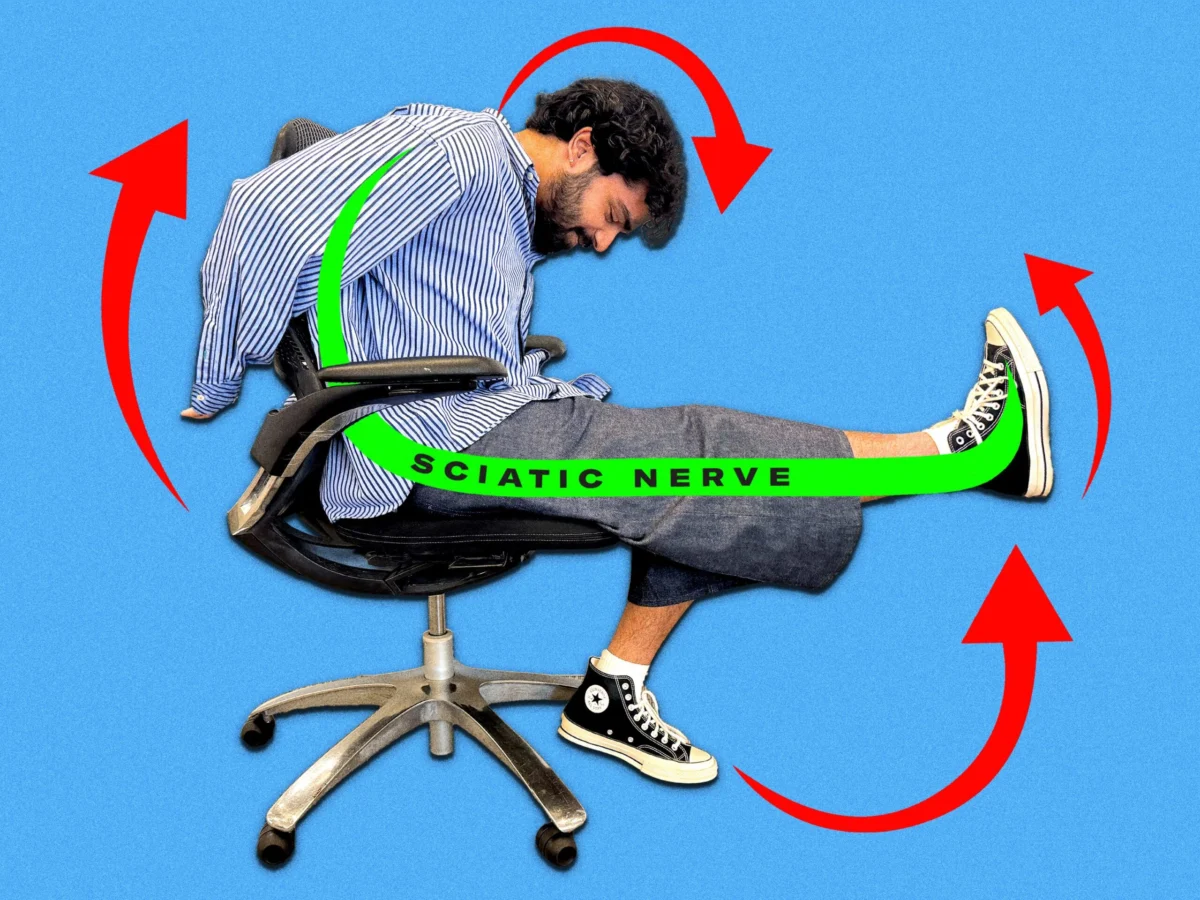
Lately, you might have noticed a new back pain remedy floating around your social media feeds, wedged between tutorials on sourdough starters and high-intensity interval training. Then again, maybe that’s just what happens when the relentless algorithms of the digital age detect a microphone-enabled smartphone in the vicinity of a grizzled reporter who spends far too many hours hunched over a laptop and, as a result, has developed the posture of a comma. Whether it is a result of targeted advertising or a genuine cultural shift in the wellness community, it seems influencers and fitness enthusiasts alike have recently taken an intense interest in “nerve flossing.” This technique is marketed as a relatively simple, instant, albeit temporary, form of relief from nerve-related pain, and it has garnered millions of views across platforms like TikTok and Instagram. However, the question remains: is it worth the breathless hype? Perhaps not in the way the influencers claim, but for a certain subset of people suffering from chronic compression issues, it could make a real and tangible difference. As Raj Desai, MD, a double board-certified physician at DISC Sports and Spine Center, succinctly puts it, the practice is “better than most internet advice, but weaker than the enthusiasm suggests.”
To understand why nerve flossing has become a viral sensation, one must first understand what it actually is and the physiological mechanisms it attempts to address. Known in clinical circles as nerve gliding or neural mobilization, nerve flossing is essentially a manual therapy technique or a series of targeted exercises designed to free up a nerve from any potential “sticking points” that could be causing pain, numbness, or tingling. In a healthy body, nerves are remarkably resilient and mobile; they are designed to slide and stretch within the tunnels of muscle, fascia, and bone that house them. However, when a nerve becomes entrapped, compressed, or irritated due to injury, inflammation, or repetitive strain, it loses this ability to glide. This lack of mobility can lead to a host of symptoms, ranging from the sharp, electric shock of sciatica to the dull, burning ache of carpal tunnel syndrome. Nerve flossing movements are designed to restore this mobility, functioning much like a yoga flow intended to shake the rust off a joint’s range of motion. Dr. Desai suggests thinking of it as “exercise for a nerve instead of a muscle.”
The biomechanics of nerve flossing are fascinatingly simple. For the most part, these exercises consist of subtle, controlled movements that do not require heavy equipment or even a trip to the gym. One of the most common examples, which Dr. Desai refers to as a “slider,” involves a coordinated movement of the head and a limb. For instance, a patient might sit on an elevated surface and extend one leg out in front of them while simultaneously tucking their chin toward their chest. They then reverse the movement, bending the knee as they tip their head back. This specific coordination is key to the “flossing” effect. By lengthening the nerve at one joint while shortening it at another, the individual allows the nerve to glide back and forth along its anatomical path without subjecting it to excessive tension. This "sliding" action helps to break up adhesions—small bits of scar tissue or inflammatory byproducts—that may be tethering the nerve to surrounding tissues.
To truly appreciate the necessity of such a movement, one must consider the complex journey a nerve takes through the human body. After exiting the spinal cord, our nerves must navigate a labyrinth of muscle, fascia, and connective tissue on their way to the furthest reaches of the extremities. At any point along that intricate path, a nerve can get caught, pinched, or irritated. Corbin Hedt, PT, DPT, SCS, CSCS, a physical therapist at Houston Methodist Orthopedics and Sports Medicine, explains that when a nerve is restricted, it can become inflamed, which serves as a primary source of chronic pain. "Nerve flossing is a technique that uses gentle, controlled movements to help a nerve move more freely through the surrounding tissues," Hedt says. "I often describe it as helping a nerve ‘slide and glide’ the way it’s supposed to." This movement doesn’t just reduce friction; it also promotes better circulation within the nerve itself. Nerves require a constant supply of blood and oxygen to function; when they are compressed, this "vasa nervorum" (the tiny blood vessels supplying the nerves) can be compromised. Flossing helps restore this vital flow, which can lead to immediate, if sometimes fleeting, relief.
The demographic that stands to benefit most from nerve flossing is specific. The technique has been found to be particularly effective in treating pain in cases where a nerve has become compressed or irritated by surrounding structures. This includes well-known conditions such as sciatica, where the sciatic nerve is pinched by a disc or muscle in the lower back or glutes; carpal tunnel syndrome, where the median nerve is compressed at the wrist; and thoracic outlet syndrome, which affects the nerves between the neck and shoulder. Dr. Hedt notes that identifying nerve pain can be tricky for the average person, but certain sensations are telltale signs. "Whether or not it’s the right tool for what’s actually driving your symptoms is somewhat hard to tell sometimes, but if you ever get that nagging, nerve-type pain where it’s more of a vague, burning sensation in the area, it could potentially help," he explains. It is a low-risk, high-reward intervention for those dealing with these specific "vague" sensations that traditional stretching or muscle-strengthening might not reach.
However, the "breathless hype" mentioned earlier often ignores the limitations of the practice. While nerve flossing can provide a "quick fix" for pain, it is rarely a permanent solution on its own. This is where the distinction between pain management and curative treatment becomes vital. Dr. Desai is careful to point out that nerve flossing is largely a symptomatic treatment. "It’s more of a pain management treatment," he says. "Nerve flossing isn’t going to heal the underlying issue of your sciatica, which is typically a herniated disc. The only thing that’s going to do that is physical therapy, core strengthening, and possibly surgery." In other words, if a bulging disc is physically pressing against a nerve root, flossing the nerve may temporarily soothe the irritation, but it won’t move the disc back into place. For many, this makes nerve flossing a valuable tool in a larger toolkit, rather than a standalone miracle cure.
Furthermore, the scientific community remains somewhat divided on the long-term efficacy of neural mobilization, leading some experts to describe the research as a "very gray area." While many clinical trials show that nerve flossing can improve range of motion and decrease pain scores in the short term, the data on long-term outcomes is less robust. Some studies suggest that the benefits are comparable to traditional physical therapy, while others argue that the placebo effect—driven by the immediate sensation of "doing something" about the pain—plays a significant role. This ambiguity is why many physical therapists recommend nerve flossing as a supplementary exercise rather than the primary focus of a rehabilitation program. It is an adjunct to the "heavy lifting" of biomechanical correction and postural retraining.
There is also a cautionary side to the nerve flossing trend. Because nerves are incredibly sensitive structures, overdoing these exercises or performing them with too much "tension" can actually exacerbate the problem. Unlike muscles, which often respond well to a "no pain, no gain" mentality, nerves do not like to be stretched aggressively. If an individual performs a "tensioner" (a movement that pulls the nerve from both ends) rather than a "slider," they risk increasing the inflammation they were trying to reduce. Experts warn that if nerve flossing causes an increase in numbness, tingling, or sharp pain, the individual should stop immediately. The goal is a gentle "gliding" sensation, not a deep, agonizing stretch.
Despite these caveats, the rise of nerve flossing highlights a positive shift in how we approach musculoskeletal health. It reflects a growing awareness that pain is not always a "muscle" problem or a "bone" problem; often, it is a communication problem within the nervous system. By popularizing these techniques, social media has empowered people to take a more active role in their own recovery, providing them with a zero-cost method to manage daily discomfort. For the office worker hunched over a laptop—that "comma" in human form—having a two-minute routine that can alleviate a burning sensation in the neck or a tingling in the hand is invaluable.
In the final analysis, nerve flossing occupies a unique space in the modern wellness landscape. It is a scientifically grounded practice that has been somewhat distorted by the hyperbole of the internet, yet it remains a legitimate and helpful tool for many. It serves as a reminder that our bodies are integrated systems where the movement of one part—a chin tuck, a toe point—can have profound effects on the delicate electrical wiring that allows us to feel and move. While it may not replace the need for professional medical intervention or the hard work of building a stronger core, nerve flossing offers a bridge between acute pain and functional movement. It is, perhaps, the perfect remedy for the digital age: quick, accessible, and surprisingly effective, provided you understand exactly what it can—and cannot—do for you. As we continue to navigate the "gray areas" of physical therapy and wellness, the "slide and glide" of nerve flossing remains a compelling chapter in the story of how we learn to live more comfortably in our own skin.
