
 By admin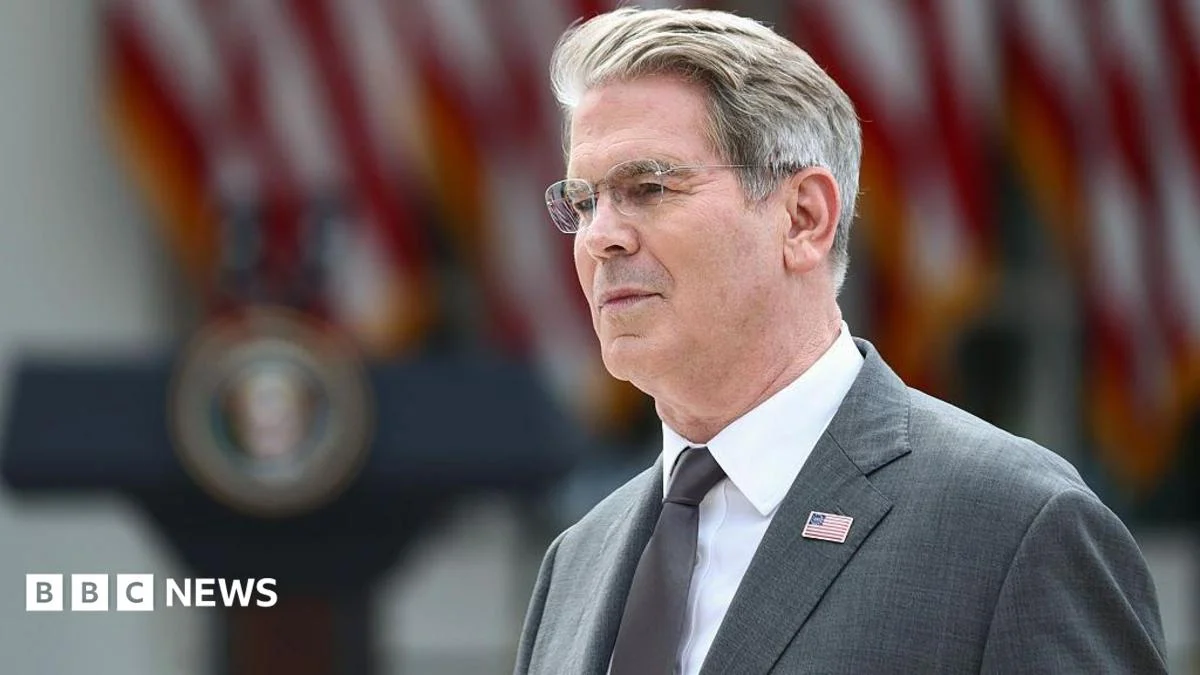
In a dramatic escalation of geopolitical tensions, the United States has declared an all-encompassing economic assault on Iran and its international partners, a move Treasury Secretary Scott Bessent has unequivocally labeled "the single greatest financial offensive ever." This aggressive strategy, likened by Bessent to an "economic D-Day" for the Islamic Republic, aims to sever all economic lifelines connecting Iran to the global financial system, threatening to isolate any nation daring to engage in financial partnerships with Tehran. The overarching objective, as articulated by Bessent at a press conference, is to "sever every economic lifeline that sustains this tyrannical regime until Tehran stands alone." This declaration comes amidst Iran’s own belligerent pronouncements, including a stark warning that it would cease all oil exports from the region should the ongoing conflict with the US and Israel persist.
The gravity of the situation is further underscored by Iran’s issuance of a new directive to international shipping, forbidding passage through the vital Strait of Hormuz without explicit permission, as reported by Reuters. This narrow waterway, a critical chokepoint south of Iran, typically facilitates the transit of approximately one-fifth of the world’s oil and gas. Since the commencement of the conflict at the end of February, Iran has effectively manipulated the flow through this strait, a move that has demonstrably contributed to a global surge in oil prices.
At the same press conference on Monday, which outlined what is being termed "Operation Economic Outcast," Secretary Bessent detailed the US’s commitment to launching an "economic onslaught against Iran’s financial connections around the globe." He presented Iran with a stark dichotomy: "Iran now faces a very clear choice with only two paths before them: complete global isolation….or a path back to normalcy with an opportunity to rejoin the global economy." This rhetoric signals a significant departure from previous US policy, with Bessent asserting that America is "no longer managing the Iranian threat, we are ending it."
To achieve this objective, the Treasury Department has reportedly undertaken extensive mapping of the intricate networks, facilitators, and financial channels that Iran has employed to circumvent existing sanctions and continue its oil trade. In a sweeping action, the department has issued determinations against five key sectors crucial to Iran’s economy: digital assets, technology, gold, aviation, and shipping. Furthermore, sanctions have been imposed on a substantial cohort of nearly 60 entities, individuals, and vessels deemed complicit in Iran’s illicit financial activities.
However, the current aggressive stance by the US administration is not without its historical context of wavering resolve. The latest stringent measures follow a series of "U-turns" and extended deadlines from President Donald Trump’s administration in its attempts to de-escalate and ultimately end the conflict. During the protracted war, former threats from President Trump have included an ultimatum issued in April, stating that "a whole civilisation will die tonight" unless Iran agreed to a deal to end the war and unblock the Strait of Hormuz. This hardline position was eventually softened after diplomatic intervention from Pakistan, which advocated for a more measured, diplomatic approach.
The economic repercussions of the Iran conflict are being felt acutely, both within the United States and on a global scale. The persistent rise in oil prices has ignited widespread concerns about the escalating cost of living, with gasoline and diesel prices significantly higher than they were a year ago. In the US, gasoline prices have now surpassed the psychologically significant threshold of $4 per gallon, making affordability a paramount concern for American voters in the lead-up to the crucial midterm elections in November. As of Monday, a barrel of Brent crude, the international benchmark for oil prices, stood at $93, reflecting the ongoing market volatility.
In a separate, albeit seemingly less impactful, intervention last week, Secretary Bessent announced the US government’s intention to intervene in the bond markets, specifically by repurchasing more government debt. The stated aim of this maneuver was to bolster demand for bonds and thereby reduce borrowing rates. However, the market’s reaction to this announcement proved to be short-lived, with long-term borrowing costs rebounding to higher levels just a day later, highlighting the complex and often unpredictable nature of financial markets in response to geopolitical events. The current wave of sanctions represents a dramatic shift in the US’s approach, moving from managing the threat to an outright attempt to cripple Iran’s economic capacity and force a fundamental change in its behavior on the international stage. The effectiveness and long-term consequences of this "economic D-Day" remain to be seen, but the immediate impact is a heightened sense of global economic uncertainty and a stark illustration of the power of financial warfare in international relations.
The strategic move by the US to implement such comprehensive sanctions is rooted in a broader objective to fundamentally alter Iran’s regional and global behavior, particularly concerning its alleged support for proxy groups and its nuclear program. For years, the international community, led by the US, has grappled with Iran’s assertive foreign policy, which includes its ballistic missile program and its influence in countries like Syria, Lebanon, and Yemen. The sanctions are designed not only to cripple Iran’s oil revenue, a primary source of funding for its military and regional activities, but also to compel its leadership to negotiate on terms favorable to the US and its allies. The "Operation Economic Outcast" signifies a departure from the more piecemeal sanctions previously imposed, aiming for a decisive blow rather than a gradual squeeze.
The inclusion of digital assets and gold in the targeted sectors suggests a sophisticated understanding of Iran’s evolving methods for circumventing traditional financial sanctions. Reports have indicated that Iran has increasingly utilized cryptocurrencies to move funds and evade international banking restrictions. Similarly, gold has historically served as a valuable store of wealth and a means of exchange in times of economic instability, making it a logical target for sanctions aimed at limiting Iran’s access to hard assets. The aviation and shipping sectors are also critical, as they are essential for both trade and the movement of goods, including potentially prohibited items.
The US Treasury’s assertion of having "mapped networks, facilitators and financial channels" points to a significant intelligence and analytical effort. This level of detail is crucial for ensuring that the sanctions are effectively implemented and that loopholes are minimized. The identification of nearly 60 entities and individuals underscores the extensive nature of Iran’s alleged sanction-evasion network, involving a complex web of businesses and individuals operating both domestically and internationally.
From an economic perspective, the impact on Iran is expected to be severe. Reduced oil exports, coupled with restrictions on its access to international finance, will inevitably lead to a contraction of its economy, increased inflation, and potential social unrest. The country’s currency, the rial, has already experienced significant devaluation in recent years due to sanctions and economic mismanagement, and this latest offensive is likely to exacerbate those pressures. The burden of these economic hardships will disproportionately fall on the Iranian populace, raising humanitarian concerns among international observers.
The global implications of this economic offensive are also significant. The disruption of oil supplies from Iran, even if not fully halted, contributes to price volatility in the global energy markets. This, in turn, affects transportation costs, manufacturing, and the overall cost of goods and services worldwide. Emerging economies, heavily reliant on imported energy, are particularly vulnerable to these price shocks. Furthermore, the broader economic isolation of a nation like Iran, with its significant regional influence, can create instability and uncertainty in global trade and investment flows.
The historical context of US-Iran relations, marked by decades of animosity and periodic escalations, provides a backdrop for understanding the current "economic D-Day." Following the 1979 Islamic Revolution and the subsequent hostage crisis, US-Iran relations have been characterized by a deep mistrust and a series of confrontations. The nuclear program and Iran’s alleged support for terrorism have been persistent points of contention, leading to the imposition of various rounds of sanctions over the years. The Obama administration’s Joint Comprehensive Plan of Action (JCPOA) offered a temporary respite, with the lifting of some sanctions in exchange for Iran curbing its nuclear activities. However, the Trump administration’s withdrawal from the JCPOA in 2018 and the reimposition of stringent sanctions marked a significant escalation, leading to the current state of heightened economic pressure.
The reference to "Operation Economic Outcast" suggests a coordinated, multi-pronged approach that goes beyond traditional financial sanctions. It implies a broader strategy to isolate Iran diplomatically and politically as well, thereby amplifying the economic pressure. The choice presented to Iran – "complete global isolation" or a "path back to normalcy" – is a stark ultimatum, designed to force a fundamental reevaluation of its foreign policy and its engagement with the international community.
The warning about potential shutdowns of oil exports from the region and the new directives for shipping in the Strait of Hormuz are significant because they highlight Iran’s capacity to inflict economic pain on a global scale. While the US aims to cripple Iran’s economy, Iran possesses the leverage to disrupt global energy markets, a tactic that could have far-reaching and unpredictable consequences for all parties involved. This strategic brinkmanship underscores the high stakes of the current confrontation and the potential for unintended escalation.
The effectiveness of these new sanctions will depend on several factors, including the willingness of other nations to comply, the ability of Iran to find alternative markets or methods of trade, and the resilience of the Iranian economy and its population. The US Treasury’s confidence in its ability to "end" the Iranian threat suggests a belief that the economic pressure will be so overwhelming that Iran will have no choice but to capitulate. However, history has shown that economic sanctions, while a powerful tool, do not always yield the desired political outcomes, and can sometimes lead to unintended consequences, including hardening of resolve and increased regional instability. The "single greatest financial offensive ever" is a bold claim, and its ultimate success or failure will be closely watched by the world.
