
 By Lina Irawan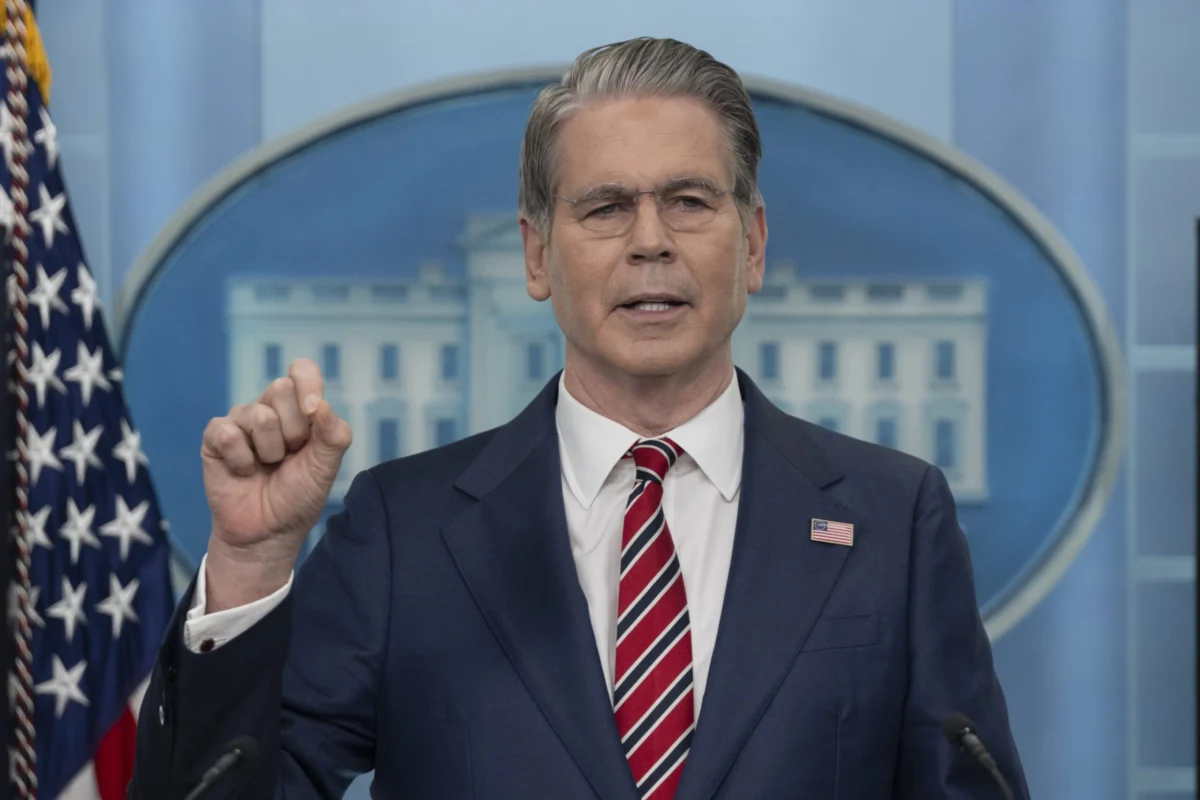
The Trump administration, navigating the treacherous waters of an increasingly aggressive Iran and a volatile domestic bond market, has placed its ambitious strategy squarely on the shoulders of Treasury Secretary Scott Bessent. The audacious plan is to wield the full might of the government’s financial arsenal to achieve a dual victory: compelling Iran to fully reopen the strategically vital Strait of Hormuz and simultaneously calm a slumping bond market by assuaging inflation concerns. This "two birds with one stone" approach hinges on the belief that a free flow of oil from the Persian Gulf will drive down global energy prices, thereby lowering inflation expectations and alleviating pressure on U.S. Treasury yields. However, Bessent faces an immense challenge in coercing a determined Iranian government, deeply committed to asserting control over the critical maritime chokepoint.
The Geopolitical Gambit: Confronting Iran with "Economic D-Day"
On Monday, Secretary Bessent outlined what he termed an "economic D-Day" that the United States is prepared to unleash against Iran. This comprehensive campaign targets not only the Iranian regime directly but also extends to nations and entities globally that continue to conduct business with Tehran. The core of this strategy is a dramatic expansion of the U.S. Treasury Department’s use of secondary sanctions, a potent tool designed to isolate Iran from the global financial system by punishing third parties that facilitate its economic activities.
In a stark warning delivered via a Financial Times op-ed, Bessent declared, "And any nation that serves as a financial artery of a withering regime should expect to share in its isolation. To become a sanctuary for terror is to become, in the eyes of the United States, a global pariah." This statement underscores a significant escalation in Washington’s approach, signaling an intent to enforce a near-total financial blockade. A critical component of this intensified pressure involves the explicit threat to remove any country or entity aiding Iran from the dollar-based financial system. Given the dollar’s indispensable role as the world’s primary reserve currency and the dominant medium for international trade and finance, such a move would effectively sever a nation’s access to the vast majority of global commerce, inflicting severe economic pain.
This aggressive stance inevitably places a colossal target on Chinese companies, which have historically been major purchasers of Iranian oil and critical facilitators of Iran-linked financial transactions. China, as the world’s largest energy consumer, has often maintained its economic ties with Iran despite U.S. sanctions, driven by its strategic energy needs and a desire to challenge U.S. geopolitical dominance. The potential for the U.S. to impose widespread secondary sanctions on Chinese entities complicates an already delicate relationship. President Donald Trump’s planned summit with Chinese President Xi Jinping in Washington in late September, intended to de-escalate bilateral trade tensions, could be severely jeopardized. Any significant action against Chinese firms could trigger a retaliatory response from Beijing, potentially spiraling into a broader economic confrontation and undermining efforts to stabilize the U.S.-China trade relationship.
Further illustrating the growing international alignment with U.S. pressure tactics, the United Arab Emirates (UAE)—a nation that has historically provided Iran with crucial access to global markets—has already declared an embargo on trade and financial transactions with the Islamic Republic. This move by a key regional player, known for its bustling free zones and historical commercial links with Iran, signifies a major blow to Tehran’s ability to circumvent sanctions and access essential goods and services. The UAE’s pivot underscores the increasing effectiveness of U.S. diplomatic and financial pressure in rallying regional partners against Iran.
Iran’s Internal Strife and the Cost of Isolation
The cumulative effect of the U.S. naval blockade and the expanding sanctions regime has plunged Iran’s economy into an unprecedented crisis. Oil exports, which traditionally constitute the vast majority of the country’s revenue, have been drastically slashed, severely curtailing Tehran’s financial lifelines. This has, in turn, crippled the nation’s ability to import critical goods, leading to widespread shortages, rampant inflation, and a significant devaluation of its currency. The economic hardship is palpable across Iranian society, fostering an environment of popular discontent and internal political friction.
Top Iranian officials are openly sounding the alarm regarding the profound economic damage being inflicted. This escalating crisis has ignited a fierce debate within Iran’s political establishment, with pragmatic voices pushing back against hardliners who steadfastly reject negotiations with the U.S. and advocate for continued confrontation. Mohammad Bagher Ghalibaf, the parliamentary speaker and a former commander of the Islamic Revolutionary Guard Corps (IRGC), has emerged as a prominent voice advocating for a shift in strategy. His recent statements highlight the growing recognition among some Iranian leaders that military strength alone cannot sustain a nation if its populace is suffering economically.
Speaking on Friday, Ghalibaf candidly stated, "No matter how strong we are militarily, if the people are hungry and we do not have financial circulation, economic growth and domestic production, we will not endure." He added a poignant reflection, "As someone who has experienced war, we understand the true value of peace." Such remarks from a figure with a strong military background are particularly significant, signaling a potential crack in the hardline consensus and suggesting that the economic pressure is indeed forcing a re-evaluation of Iran’s long-standing foreign policy and its approach to dialogue with the West. The internal fissures underscore the strategic aim of the "economic D-Day" – to create enough domestic pressure to compel a change in behavior or, at the very least, force negotiations.
The Domestic Front: Battling Bond Vigilantes
While Secretary Bessent spearheads the U.S. economic war against Iran, he is simultaneously engaged in a high-stakes battle on the domestic financial front: combating the "bond vigilantes" who are driving up the cost of U.S. government debt. The term, coined by Wall Street veteran Ed Yardeni in the 1980s, refers to bond traders who protest excessive government deficits and spending by selling off bonds, thereby pushing yields higher and increasing borrowing costs for the government.
The current fiscal landscape presents a grim picture. Despite robust economic growth and historically low unemployment rates, the U.S. deficit is projected to hit an alarming $2 trillion this fiscal year. This staggering figure is a stark reminder of persistent fiscal imbalances, fueled by factors such as tax cuts, increased government spending, and a lack of political will to rein in expenditures. The bond market, after years of accommodating rising debt levels, appears to have finally lost patience, reacting to the absence of credible plans from lawmakers to address the nation’s burgeoning financial obligations.
The consequences of soaring bond yields are severe and far-reaching. Higher yields translate directly into higher interest costs for servicing the colossal $40 trillion U.S. national debt, with annual interest payments already approaching $1 trillion. This diverts crucial taxpayer money away from other essential public services and investments. Moreover, rising Treasury yields serve as a benchmark for borrowing costs across the economy, impacting everything from mortgage rates and credit card interest to corporate loans, thereby squeezing consumers and businesses alike and potentially slowing economic growth. The bond market’s current trajectory suggests a growing concern about the long-term sustainability of U.S. debt, pushing the nation closer to a potential "debt tipping point."
Bessent’s Unconventional Arsenal: Bond Buybacks and the TGA
In response to this domestic financial challenge, Secretary Bessent has begun to deploy unconventional tactics. Last week, he surprised Wall Street with an announcement of a plan to increase buybacks of long-term bonds, a move designed to directly intervene in the market and lower yields. This initiative came after the 30-year Treasury yield surged to its highest level in nearly two decades, signaling deep market unease. While yields briefly dipped following the announcement, they quickly rebounded a day later, largely because the initially proposed size of the buybacks—a mere $4 billion—was perceived as minuscule compared to the immense $32 trillion Treasury market. Analysts widely agreed that such a limited intervention would do little to fundamentally alter market dynamics.
However, sources close to the Treasury Department have indicated to CNBC that Bessent possesses significantly more firepower to confront the bond vigilantes. He could potentially leverage the Treasury Department’s General Account (TGA) to substantially increase the scale of these buybacks. The TGA, essentially the government’s checking account, is funded by tax revenues and other government receipts. Under Bessent’s stewardship, the TGA has been deliberately built up to an impressive $950 billion, a figure significantly higher than the $550 billion-$600 billion it typically held during the previous administration. Utilizing a substantial portion of this nearly $1 trillion reserve for bond buybacks would represent an unprecedented level of direct market intervention, potentially capable of moving the needle on bond yields.
The Shadow of Financial Repression
The Treasury Department’s increasingly activist role in financial markets, particularly its bond buyback scheme, is raising serious concerns among economists and financial analysts about the government engaging in "financial repression." This term describes policies by which governments directly or indirectly keep interest rates artificially low, often below the rate of inflation, through various means of influencing markets. Historically, financial repression has been employed by governments facing large debt burdens, particularly after major wars, to reduce the real value of their debt over time.
Beyond the bond buyback program, Bessent’s intervention in currency markets last month, particularly in relation to Japan, also served to indirectly alleviate pressure on bond yields. In a coordinated effort to prop up the Japanese yen against a strengthening dollar, the U.S. Treasury opted to sell euros rather than dollars. This tactical choice is significant because selling dollars directly would likely weaken the dollar, potentially fueling inflation and pushing U.S. bond yields higher. By selling euros, the U.S. could support the yen without directly impacting the dollar’s value or the U.S. bond market in an undesirable way.
Furthermore, Tokyo’s use of the Foreign and International Monetary Authorities (FIMA) Repo Facility played a crucial role. FIMA allows foreign central banks to temporarily exchange their U.S. Treasury securities for dollars from the Federal Reserve, providing them with liquidity without having to sell their Treasuries outright on the open market. This facility effectively allows foreign central banks to maintain their holdings of U.S. debt while accessing dollar liquidity, thereby preventing large-scale sales of Treasuries that would otherwise push yields higher.
According to George Saravelos, head of FX research at Deutsche Bank, "we see both the buyback and encouragement to use the FIMA facility for FX reserves as soft-form financial repression policies aimed at containing the long-end of the US yield curve." This expert assessment underscores the sophisticated and multi-pronged nature of Bessent’s strategy, which appears to be designed to manage both geopolitical and domestic economic challenges through direct and indirect manipulation of financial markets.
The Trump administration’s strategy, as executed by Secretary Bessent, is a high-stakes gamble. By simultaneously escalating financial warfare against Iran and engaging in unprecedented interventions in the bond and currency markets, the government is attempting to exert control over both international and domestic economic forces. The success of this ambitious approach remains uncertain, as it carries significant risks, including potential blowback from targeted nations, unintended consequences in global markets, and the erosion of market integrity through perceived financial repression. The coming months will reveal whether Bessent’s "economic D-Day" can achieve its dual objectives or if these aggressive maneuvers will lead to unforeseen complications on an increasingly volatile global stage.
