
 By Rifan Muazin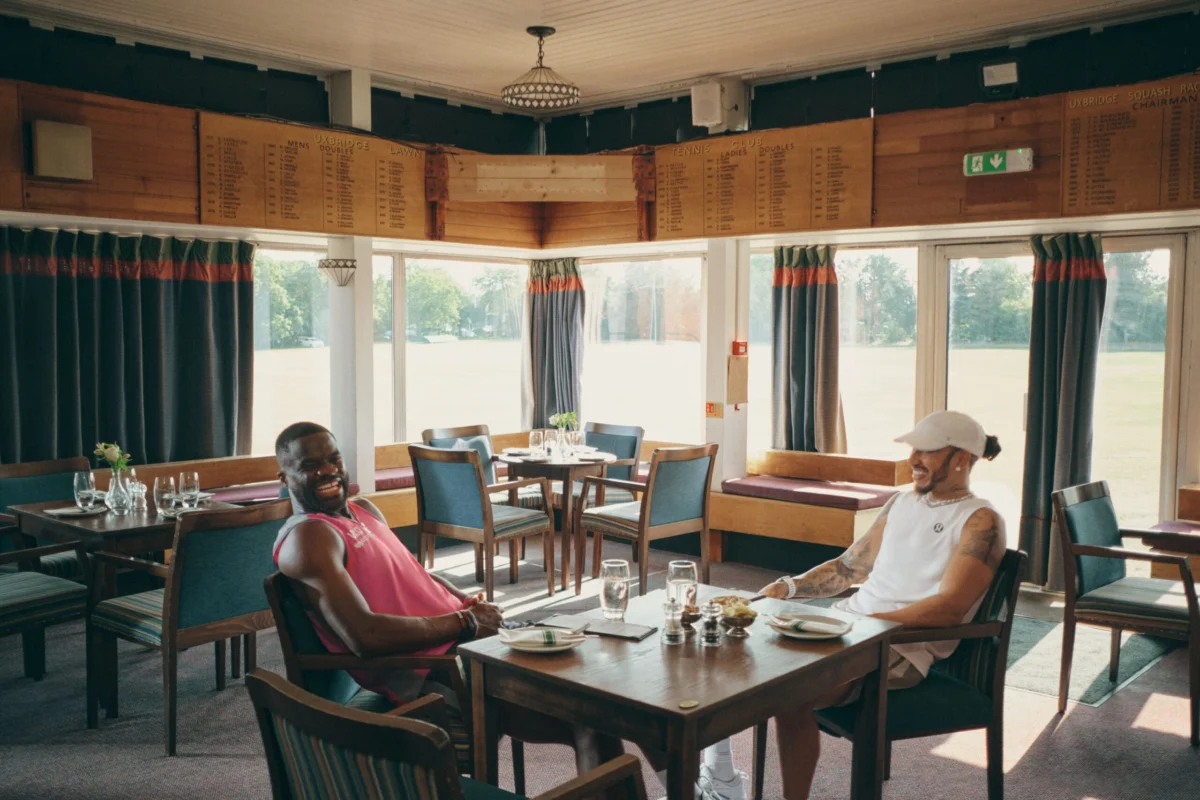
On a temperate spring afternoon, the worlds of high-octane motorsport and elite professional tennis converged in a display of mutual respect and shared purpose. Sir Lewis Hamilton, the seven-time Formula 1 world champion and arguably the greatest driver to ever grace the cockpit, found himself in an unfamiliar position: that of a student. His instructor was none other than Frances "Big Foe" Tiafoe, the charismatic American tennis star who has surged into the upper echelons of the ATP rankings. The setting was more than just a promotional backdrop for their shared sponsor, Lululemon; it was a profound meeting of two athletes who have spent their careers defying the demographic and socioeconomic expectations of their respective sports.
The encounter, captured in the mini-documentary "Rest Day with Lewis Hamilton," serves as the second installment of a series that explores the off-track lives of global icons. In the first episode, Hamilton traded his steering wheel for a golf club alongside PGA star Min Woo Lee. However, the chemistry between Hamilton and Tiafoe carries a unique weight. Both men represent a paradigm shift in sports that have historically been the playgrounds of the ultra-wealthy. Hamilton, hailing from a working-class background in Stevenage, England, and Tiafoe, whose journey began at a tennis center in Maryland where his father served as a custodian, share a narrative of resilience that resonates far beyond the trophy podium.
During the session, Tiafoe meticulously broke down the mechanics of the topspin forehand, urging Hamilton to brush upward against the ball to generate the necessary revolutions. Hamilton’s transition from the precision of a 200-mph corner to the finesse of a baseline rally was seamless. After a string of successful shots, Tiafoe’s characteristic enthusiasm broke through: “OK, Lewis Hamilton!” it was a moment of levity, but the underlying dialogue between the two focused on much more than athletic technique. They delved into the complexities of representation, the grueling nature of their training regimens, and the systemic barriers that continue to limit access to their sports.

The timing of this collaboration is particularly poignant. Tiafoe is currently navigating the high-pressure environment of the US Open, where he remains a perennial favorite and a symbol of the next generation of American tennis. Simultaneously, Hamilton is navigating the final chapters of his legendary tenure with Mercedes-AMG Petronas before his seismic move to Ferrari in 2025. As Hamilton enters the twilight of his career, his focus has shifted increasingly toward legacy—not just in terms of race wins, but in the diversification of the Formula 1 paddock.
When asked about their mutual admiration, the respect was palpable. Hamilton noted Tiafoe’s precocious maturity, observing that the tennis star turned professional and reached the world’s top tier at an age where most are still finding their footing. "He started his sport at just three years old," Hamilton remarked, comparing it to his own start in karting at age eight. "He just seems further ahead in terms of maturity and technicality in his training than I was at that age." This maturity is a prerequisite for Tiafoe, who carries the hopes of American men’s tennis on his shoulders while navigating the nuances of being a prominent Black athlete in a sport that has often struggled with inclusivity.
Tiafoe, in turn, praised Hamilton’s "class" and his ability to "break the mold." To Tiafoe, Hamilton is not just a driver; he is a blueprint for how an athlete can use a global platform to invite a "totally different demographic" into a space where they were previously unwelcome. This sentiment is backed by staggering data. Formula 1, despite its global reach, remains one of the least diverse sporting environments in the world. Hamilton has frequently cited a sobering statistic: of the approximately 40,000 jobs within the F1 industry, only about 1% are held by individuals from Black backgrounds.
To combat this, Hamilton launched Mission 44, a foundation dedicated to supporting, championing, and empowering young people from underserved communities. The foundation was born out of the findings of The Hamilton Commission, a research project he initiated to identify the specific barriers to recruitment and progression for Black people within UK motorsport. By focusing on STEM education and vocational pathways, Hamilton is attempting to move the needle from the inside out. "Changing the environment means sitting with stakeholders, applying pressure, and creating new job opportunities," Hamilton explained. He emphasized that representation on the track or court is only the first step; the real work lies in diversifying the boardrooms, the engineering bays, and the officiating crews.

Tiafoe’s journey mirrors this advocacy through his involvement with the National Junior Tennis and Learning (NJTL) network. Founded by Arthur Ashe, Charlie Pasarell, and Sheridan Snyder, the NJTL provides free or low-cost tennis and education programs to over 160,000 under-resourced youth. Tiafoe is a living testament to the efficacy of such programs. "I was a byproduct of NJTL," he said, stressing the importance of providing basic equipment like rackets and shoes, alongside access to quality coaching. He noted that while the "OGs" like Serena and Venus Williams paved the way, the mission must continue to ensure that tennis does not remain a "country club" sport accessible only to those with significant financial means.
The conversation also turned toward the mental and physical tolls of elite competition. Hamilton, who has become an outspoken advocate for mental health, shared his daily routine of mindfulness and ice baths. For Hamilton, these practices are no longer reserved for race weekends; they are essential components of his daily existence. He described a three-and-a-half-minute ice bath as a transformative experience that requires rigorous breathing exercises to endure. "It never gets easier," he admitted. "The breathing is what gets you through… it gives you a moment to steady your mind before everything else gets thrown at you."
This dedication to discipline was evident in Hamilton’s recent summer break. While many of his peers were seen vacationing in European hotspots, Hamilton retreated to Hawaii for a self-imposed training camp. Eschewing the traditional party circuit, he spent three weeks working with his trainers, focusing on physio, stretching, and meditation. "I honestly feel the fittest I’ve ever been," he stated, a warning shot to his competitors as the F1 season enters its final stretch. This level of preparation is what has allowed Hamilton to remain competitive into his late 30s, a period when many drivers begin to see a decline in their reaction times and physical stamina.
Tiafoe echoed this sentiment regarding the importance of authenticity and passion. In a sport often characterized by rigid etiquette and stoicism, Tiafoe has brought a refreshing sense of joy and personality to the court. "Authenticity is huge," he said. "I’m just going to be me, trying to be at the highest level, and have fun while doing it." This approach has made him a fan favorite, particularly at the US Open, where the New York crowd feeds off his energy.

The intersection of these two icons also touches upon the world of cinema. Hamilton is currently serving as a producer and consultant for the upcoming "F1" movie, directed by Joseph Kosinski and starring Brad Pitt. Hamilton’s involvement is not merely superficial; he has been adamant that the film accurately reflects the diversity he wishes to see in the sport. "In our very first meeting, I was the only person of color in the room," Hamilton recalled. He used that moment to insist that the production team and the on-screen world reflect a more inclusive reality. He hopes that by seeing a diverse range of faces in a blockbuster film, young people will realize that careers in engineering, mechanics, and logistics are within their reach.
As the interview concluded, it was clear that the bond between Hamilton and Tiafoe transcends their roles as brand ambassadors. They are two men navigating the complexities of fame and the responsibilities of being role models in a world that is still catching up to their vision of progress. Whether it is through Mission 44’s scholarship programs or the NJTL’s community outreach, both athletes are committed to ensuring that the next generation of talent does not have to fight as hard as they did to be seen. In the high-stakes worlds of Formula 1 and professional tennis, Lewis Hamilton and Frances Tiafoe are proving that the most important victories are often the ones that happen off the field of play.
