
 By Lina Irawan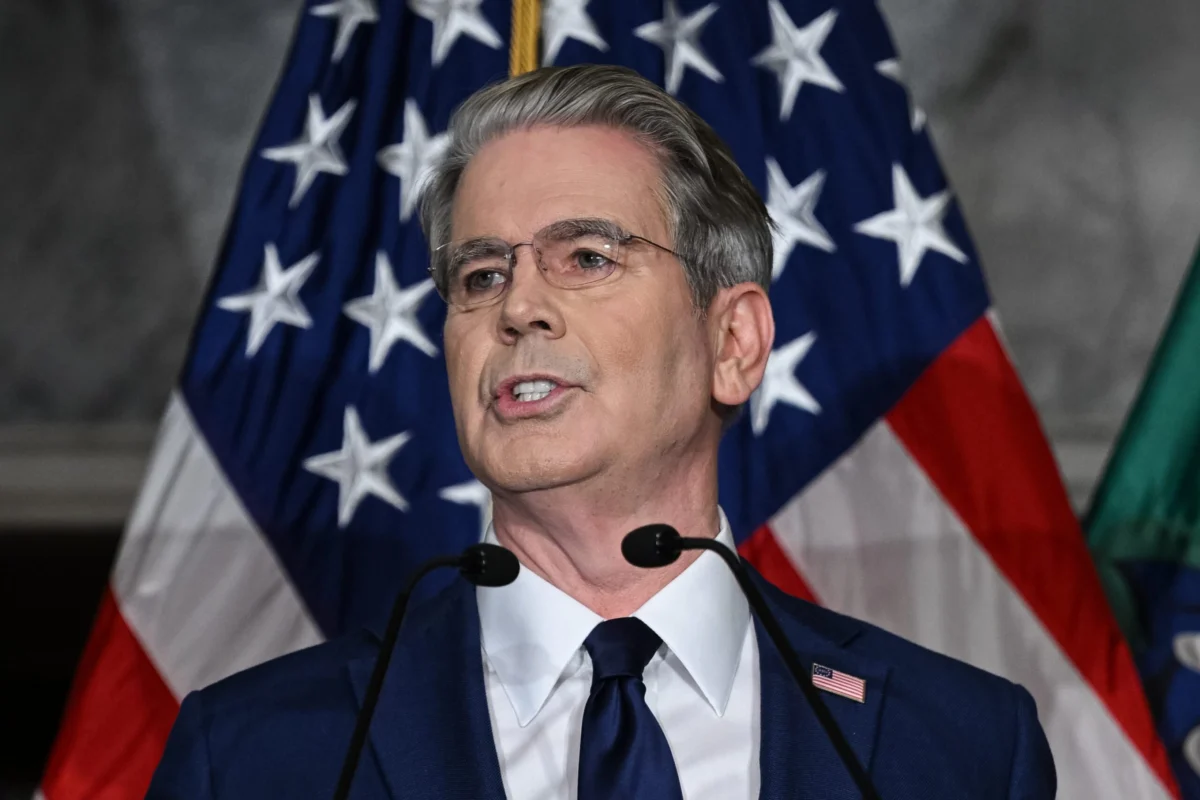
The initial fanfare surrounding Bessent’s pronouncement set a high bar. Speaking with an intensity that invoked historical parallels, Bessent had promised a decisive economic blow, drawing comparisons to the strategic coordination and impact of the 1944 D-Day landings in Normandy. This rhetoric suggested a comprehensive, multi-pronged attack designed to cripple Iran’s economy and force a change in its strategic calculus, effectively bringing an end to the protracted conflict that President Donald Trump, alongside Israel, reportedly launched in late February. This "war," understood primarily as an intense economic and proxy confrontation rather than a conventional military one, has passed its six-month mark, leaving a trail of regional instability and geopolitical maneuvering.
However, the world’s response was far from the unified front Bessent’s rhetoric implied. China, the largest single purchaser of Iranian oil, accounting for a staggering 90% of Tehran’s crude exports, immediately issued a defiant warning to Washington. Beijing’s stance was clear: it would not succumb to American pressure to sever its critical energy ties with Iran, a relationship deeply intertwined with China’s own economic growth and strategic ambitions in the Middle East and beyond. This defiance underscores a fundamental challenge to Washington’s strategy: any truly effective sanctions campaign would necessitate targeting China, a move that carries the severe risk of triggering retaliatory measures from Beijing and potentially unleashing massive, destabilizing economic fallout across the globe. China’s growing economic might and its efforts to create alternative financial ecosystems outside the dollar’s dominance further embolden its resistance to U.S. financial coercion.
Beyond China, the anticipated widespread economic disengagement from Iran failed to materialize. In the bustling financial hubs of Dubai and Abu Dhabi, branches of Iranian banks, including the state-owned Bank Melli, continued their operations seemingly unperturbed. Staff at one Bank Melli branch in Abu Dhabi were observed actively processing transactions, confirming that it remained "open for business." This continuity directly contradicted the implied objectives of the U.S. "onslaught" and highlighted the deep-seated economic links that transcend geopolitical pressures. The United Arab Emirates, a critical U.S. strategic ally, had previously pledged earlier in the month to sever all trade and financial transactions with Tehran following recent regional security incidents. Yet, the persistent banking and flight connections painted a picture of a nation carefully balancing its alliance with Washington against its long-standing economic pragmatism and complex regional dynamics. The UAE government’s subsequent characterization of its move as a "sovereign decision reflecting its strategic assessment of the national interest and the requirements of regional security" further emphasized its independent approach.
Commercial air travel, a vital artery for business and personal connections, also remained uninterrupted. Flights continued between Iran and Turkey, as well as Iran and the United Arab Emirates. Routes connecting Iran to Thailand and Azerbaijan, alongside multiple destinations in both Russia and China, showed no signs of disruption. This persistent connectivity suggested that many nations were either unwilling or unable to fully comply with the spirit of the U.S. economic pressure campaign, prioritizing their own commercial interests and regional relationships over Washington’s demands.
As the week concluded, the tangible actions taken by the U.S. Treasury Department fell significantly short of the bombastic warnings. The much-touted "major announcement of a financial institution being sanctioned" that Bessent had promised turned out to be the sanctioning of the UAE-based branches of Egypt’s Banque Misr. While symbolically significant, this move was widely perceived as underwhelming, especially when contrasted with the initial rhetoric that hinted at much broader, more impactful designations.
Expert analysis quickly echoed the sentiment of disappointment. Alex Zerden, a former U.S. Treasury official and founder of Capitol Peak Strategies, minced no words, stating, “As the war passes the six-month mark, the public actions taken by the Treasury Department this week do not match the hype.” Zerden further elaborated on the historical context, dubbing the current effort "Operation Economic Outcast," and characterizing it as "a continuation of 47 years of restrictive economic measures against Iran but does not provide a clearer theory of economic or military victory in this current campaign." This critical assessment underscores the perception that Washington’s strategy lacks novelty and a clear path to achieving its stated objectives, merely perpetuating a cycle of sanctions without discernible progress. The Treasury Department itself declined to comment on Friday, further fueling speculation about the coherence and effectiveness of its strategy.
The fundamental conundrum for the Trump administration remains glaringly evident: any truly effective sanctions campaign against Iran, designed to force it into meeting U.S. demands, would inevitably have to target China. Beijing’s absorption of 90% of Iran’s oil exports provides a vital lifeline to Tehran, allowing it to circumvent existing restrictions. Hitting Chinese entities, however, carries immense risks – not only of economic retaliation from Beijing but also of triggering a severe downturn in the global economy, already grappling with various uncertainties. Anything less than targeting China, as experts like Leland Miller, CEO of China Beige Book data platform and a commissioner on the US-China Economic and Security Review Commission, pointed out, would merely add to Iran’s economic pain without being significant enough "to move the needle" on its strategic calculus.
Moreover, U.S. credibility is increasingly at stake. Bessent’s repeated comparisons of the U.S. response to the historic D-Day landings, a meticulously coordinated land and air invasion aimed at toppling the Nazi regime, proved deeply problematic. D-Day represented a unified, multilateral effort by Allied powers, whereas the current U.S. approach has been largely unilateral, characterized by Washington pressuring other countries rather than working collaboratively with them. Bessent himself openly acknowledged the inherent danger of moving "too fast and too hard," which he admitted risked "tanking the global financial system." This recognition highlights the delicate tightrope the administration walks, caught between the desire for decisive action and the fear of precipitating a global economic crisis.
Further muddying the waters was Bessent’s assertion that the U.S. was simultaneously engaged in "quiet diplomacy" to achieve its objectives. Yet, this claim stood in stark contrast to President Trump’s own public statements. When asked on Thursday which countries the U.S. had approached regarding Iran, Trump responded dismissively, "There’s not a lot to speak to. We don’t want to speak to them. We’re not looking to meet or anything." This apparent disconnect between the Treasury Secretary’s diplomatic overtures and the President’s isolationist rhetoric raises serious questions about the coherence of the administration’s foreign policy and its internal communication. While U.S. officials reportedly turned to counterparts in the UK asking for a statement of support, the overall impression remained one of fragmented messaging and a lack of a unified international strategy.
The upcoming Group of 20 (G20) gathering in Asheville, North Carolina, where Bessent is expected to meet with fellow finance ministers, will be a crucial test. According to Josh Lipsky, chair of international economics at the Atlantic Council, one of the most pressing questions attendees will have for Bessent is whether the U.S. is genuinely prepared to sanction a major Chinese financial institution. The answer to this question will likely define the future trajectory of the economic pressure campaign against Iran and its broader implications for global economic stability.
Meanwhile, Iran, a nation that has endured decades of harsh sanctions since the 1979 revolution and has recently faced a full U.S. Navy blockade of its ports that has significantly curtailed oil exports, appears to be holding firm. Its economy, though undeniably strained, has developed resilience through years of isolation, fostering networks for illicit trade, barter systems, and reliance on non-dollar transactions. The country has a long history of adapting to external pressures, finding ways to bypass restrictions through various channels, often involving intermediaries in neighboring countries and sophisticated financial maneuvers.
The lack of clear guidance and coordinated action from the U.S. has left allies in a state of uncertainty. Officials in nations with traditionally strong economic links to Iran reported receiving little direct communication from the U.S. this week. Turkey, for instance, a NATO ally with significant energy needs and historical ties to Iran, has not received any formal instructions from the U.S. regarding the new restrictions or how they specifically apply to its trade with Iran. Turkish officials, however, expressed confidence that they would have ample time to discuss and implement any necessary requirements once officially informed.
Even countries with close ties to the U.S., such as Pakistan, indicated little immediate pressure from the new campaign. While Islamabad has garnered praise from President Trump for its mediation efforts to end the broader conflict, there was no discernible slowdown in its overland trade with the Islamic Republic, which includes vital commodities like rice and mangoes. Pakistan’s Foreign Ministry spokesman, Tahir Andrabi, articulated a common sentiment among non-aligned nations, stating that the country "is not obliged" to respond to unilateral sanctions. This stance highlights the enduring principle of national sovereignty and the limits of extraterritorial application of U.S. law without broad international consensus.
Ultimately, the efficacy of the U.S. "economic onslaught" is being met with profound skepticism. Stephen Fallon, principal adviser at DBM Consulting, summarized the sentiment, dismissing the idea that Iran could be "knocked out with this" as "risible." He asserted, "It’s not going to move the needle. It’s not possible to get a completely airtight seal on this thing. There are too many actors, and it’s too rewarding for the people involved." This perspective underscores the inherent challenges of imposing a truly comprehensive economic blockade on a nation deeply integrated into regional and global trade networks, especially when key global powers choose to prioritize their own interests and relationships over compliance with U.S. directives. The first week of Bessent’s promised "economic onslaught" has thus served less as a decisive blow and more as a stark illustration of the limits of American unilateral power in a multipolar world.
