
 By admin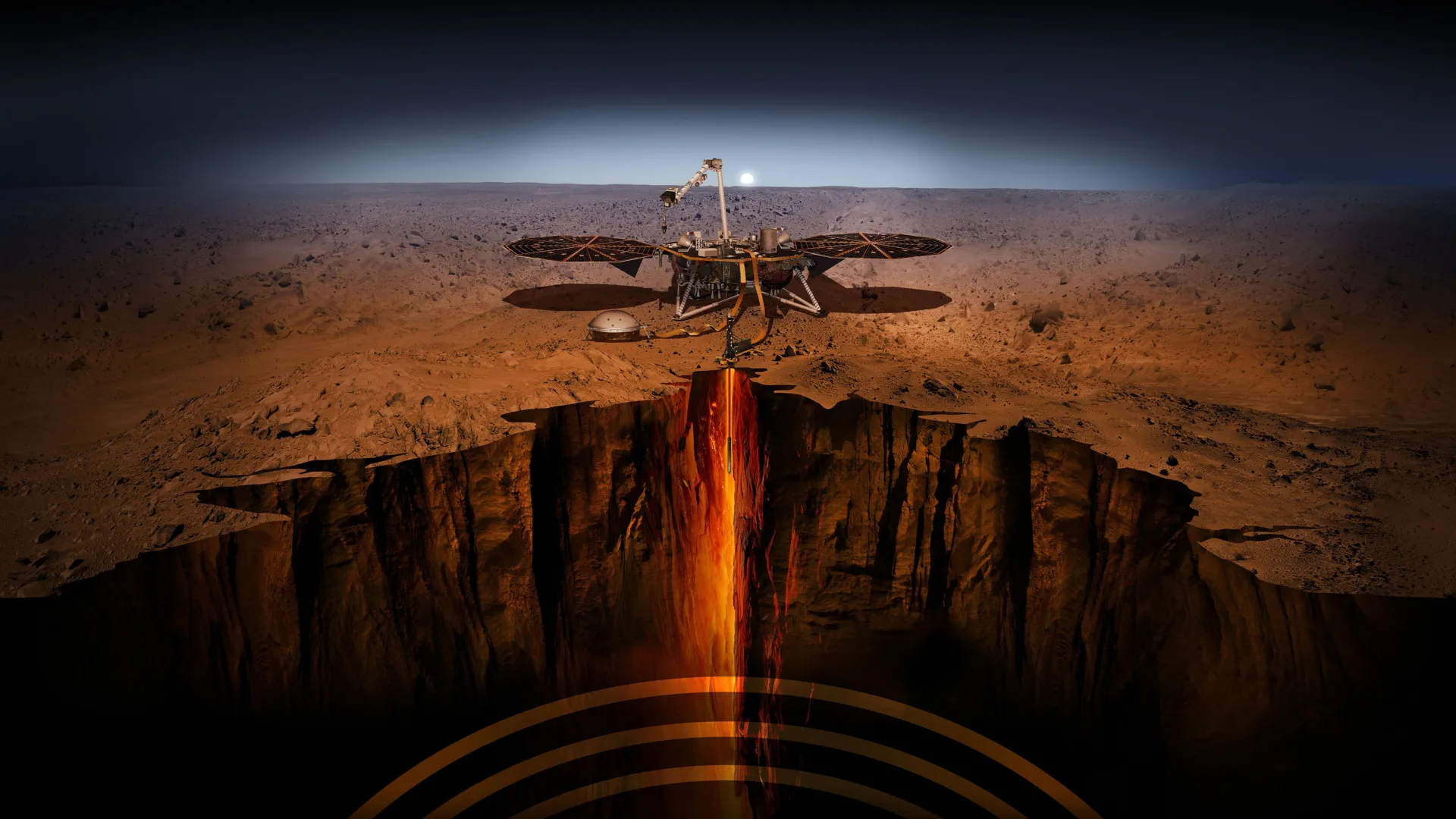
For decades, Mars has been predominantly classified as a "stagnant lid" planet. This classification implies a fundamental difference from Earth, whose outer shell is dynamically divided into numerous moving tectonic plates. On Earth, the relentless ballet of plate tectonics orchestrates a vast array of geological phenomena crucial for our planet’s ongoing vitality. It is the primary driver of volcanism, constantly recycles crustal material back into the mantle, plays a pivotal role in the formation and growth of continents, and is intrinsically linked to the long-term carbon cycle, which helps regulate Earth’s climate. Because Mars conspicuously lacks this dynamic process, scientists have conventionally assumed that its crust formed and evolved in a far simpler, more static manner, leading to a less geologically active and, by extension, less potentially habitable past.
However, the new study fundamentally challenges this deeply ingrained assumption. Its compelling results suggest that Mars, despite its lack of Earth-style plate tectonics, may have developed a highly evolved and complex crust through vigorous, sustained recycling within the planet itself. This internal reprocessing, distinct from the surface-level churn of plate tectonics, points to a much more dynamic and geologically sophisticated ancient Mars than previously envisioned. The implications are profound, suggesting that the criteria for complex planetary evolution and even habitability might be far less restrictive than current models predict.
A Mysterious Boundary 24 Kilometers Down: InSight’s Revelation
The foundation of this transformative discovery lies in the meticulous analysis of seismic data collected by NASA’s InSight mission. Launched in 2018, InSight was the first mission to place a dedicated seismometer on the Martian surface, effectively giving scientists an unprecedented "ear" to listen to the planet’s internal rumblings. Over several years, InSight diligently recorded thousands of "marsquakes"—the Martian equivalent of earthquakes—along with seismic waves generated by meteoroid impacts. These subtle vibrations, travelling through the planet’s interior, carry invaluable information about the composition, structure, and state of the Martian crust, mantle, and core.
Researchers from Oxford’s Departments of Earth Sciences and Statistics meticulously scrutinized these seismic measurements, focusing on a previously identified yet unexplained boundary located approximately 24 kilometers beneath the Martian surface. While earlier research had detected this seismic discontinuity, its geological significance remained an enigma. Was it merely a change in density, or did it signify something more profound about Mars’s internal workings?
To unravel this mystery, the interdisciplinary team embarked on an ambitious comparative analysis. They compared the seismic observations—specifically how seismic waves behaved as they passed through this boundary—with predictions derived from hundreds of possible rock compositions. This involved combining sophisticated thermodynamic modeling with advanced statistical methods. Thermodynamic modeling allowed the researchers to predict how different rock types would behave under the immense pressures and temperatures found at varying depths within Mars. By then applying statistical methods, they could determine which specific materials and their corresponding properties best matched the seismic signals detected by InSight at and around the 24 km boundary. This rigorous approach ensured the robustness and reliability of their interpretations.
The exhaustive analysis yielded a striking revelation: the rocks beneath the 24 km boundary were best explained by "ultramafic" material. Ultramafic rocks are characterized by their richness in iron and magnesium and a relatively low silica content, typically found in a planet’s mantle or in the primordial, undifferentiated crust. In stark contrast, above this boundary, the seismic properties were significantly more consistent with "mafic" rocks, which contain a higher proportion of silica. Mafic rocks, such as basalt, are commonly found in volcanic terrains and represent a more chemically evolved state compared to ultramafic materials. This distinct chemical stratification—a silica-rich layer overlying a silica-poor layer—was the smoking gun.
Evidence of a Vast Magma System: A Martian Differentiation Engine
The researchers interpret this buried layer as compelling evidence of a vast, long-lived magmatic system. They theorize that this chemical differentiation occurred when molten rock accumulated deep underground within the Martian crust. Over extended periods, this magma body underwent fractional crystallization—a process where dense mineral crystals precipitate out of the melt and settle towards the bottom, while the remaining, lighter, and more chemically evolved melt (enriched in silica) migrates upwards.
On Earth, similar processes of magmatic differentiation occur beneath volcanic arcs, where the subduction of oceanic crust leads to the generation of magmas that evolve as they ascend. This evolution is intrinsically linked to the formation of Earth’s continental crust, which is significantly more silica-rich and buoyant than the oceanic crust. The discovery of an analogous process on Mars, resulting in a distinct mafic-over-ultramafic layering, strongly suggests that ancient Mars possessed a sophisticated mechanism for crustal evolution, capable of generating chemically diverse and potentially more buoyant crustal materials, without the need for Earth’s plate tectonics.
Dr. Tobermory Mackay-Champion, the lead author of the study (formerly at the University of Oxford and now at the University of Bristol), articulated the profound implications of this finding: "We’ve traditionally assumed that volcanism on Mars was relatively simple compared to that on Earth. But this discovery suggests Mars could sustain large, long-lived systems where molten rock evolved and reprocessed itself throughout the entire crust. It raises exciting possibilities for how common such systems might be on rocky planets beyond our solar system." His statement underscores a significant paradigm shift, hinting that the complex geological machinery once thought exclusive to Earth might be a feature of many other rocky worlds.
Adding to the magnitude of this discovery, the buried layer identified by the study may be enormous in scale. The research suggests it could extend for hundreds, or even thousands, of kilometers across Mars’s northern hemisphere. This vast spatial extent challenges the notion that ancient Mars was dominated solely by simple, isolated volcanoes, erupting undifferentiated lavas. Instead, it paints a picture of a planet that may once have contained huge, interconnected magmatic systems spanning large portions of its crust. This process, known as "transcrustal magmatism"—the movement and evolution of magma through the entire thickness of the crust—had previously been thought to be a hallmark of Earth’s dynamic plate tectonics and a key mechanism in the formation of its continents. Finding evidence for it on Mars fundamentally rewrites our understanding of planetary differentiation.
What This Could Mean for Habitable Planets: Rethinking the Goldilocks Zone
The implications of these findings extend far beyond our understanding of Mars alone; they could fundamentally reshape our framework for understanding how rocky planets become habitable. Geological recycling, in its various forms, is a critical component in shaping a planet’s environment. It profoundly influences the development and evolution of atmospheres, the formation and sustenance of oceans, and the creation of environments where life might potentially emerge and thrive. On Earth, these intricate processes of crustal and mantle recycling play a vital role in regulating global climate, facilitating the long-term cycling of essential volatile elements like water, carbon, nitrogen, and sulfur, which are all indispensable for life as we know it.
Because plate tectonics is the primary driver of much of this recycling on Earth, scientists have often viewed it as an essential, perhaps even indispensable, requirement for creating and maintaining habitable conditions over geological timescales. The traditional view has been that without plate tectonics, a planet’s surface would quickly become geologically stagnant, unable to replenish its atmosphere, regulate its climate, or provide the necessary chemical gradients for life.
However, the new Martian findings powerfully suggest a different narrative: complex crustal evolution and extensive geological recycling may be possible even on planets that lack Earth-style tectonics. This paradigm shift broadens the potential for habitability significantly.
Co-author Professor Jon Wade from the Department of Earth Sciences at the University of Oxford eloquently summarized this new perspective: "One of the big questions in planetary science is whether Earth is unique. If Mars could develop this kind of complex crust without plate tectonics, then maybe the conditions needed for habitability can emerge on more planets than we realized, including those previously dismissed based on size or their apparent lack of tectonic activity." This statement opens up a floodgate of new possibilities for exoplanet research. Planets that are smaller than Earth, for instance, are often thought to struggle with initiating or sustaining plate tectonics due to their rapid cooling. Similarly, observations of exoplanets often lack direct evidence of tectonic activity. This new research suggests that even such planets could possess internal dynamics that foster conditions conducive to life, making them viable targets in the ongoing search for extraterrestrial life.
InSight’s Enduring Legacy and Future Frontiers
This groundbreaking research is a testament to the unparalleled value of the seismic observations collected by NASA’s InSight mission. Although the mission officially concluded its scientific operations in December 2022, its legacy of data continues to yield astonishing insights into the deep interior of Mars. InSight provided scientists with the first true geophysical "look" inside another rocky planet besides Earth, transforming our understanding of planetary formation and evolution.
The study, a collaborative effort led by researchers from Oxford University’s Department of Earth Sciences, in conjunction with the University of Bristol and the University of Oxford’s Department of Statistics, exemplifies the power of interdisciplinary science in unraveling cosmic mysteries. It not only illuminates the complex past of Mars but also casts a new light on the vast tapestry of rocky planets across the universe.
Looking ahead, this discovery will undoubtedly spur further research. Scientists will continue to pore over InSight’s rich dataset, seeking additional clues about Mars’s internal structure and evolution. Future missions to Mars might incorporate deeper drilling capabilities or deploy more extensive seismic networks to further confirm and expand upon these findings. Moreover, the insights gained from Mars will be applied to comparative planetology, influencing how we model and interpret observations of other rocky bodies in our solar system, such as Venus, and crucially, the ever-growing catalogue of exoplanets. The criteria for planetary habitability are evolving, becoming more nuanced and inclusive, thanks to the revelations from beneath the surface of our red neighbor. The quest to understand what makes a planet tick, and what makes it capable of harboring life, has just become significantly more exciting and complex.
