
 By admin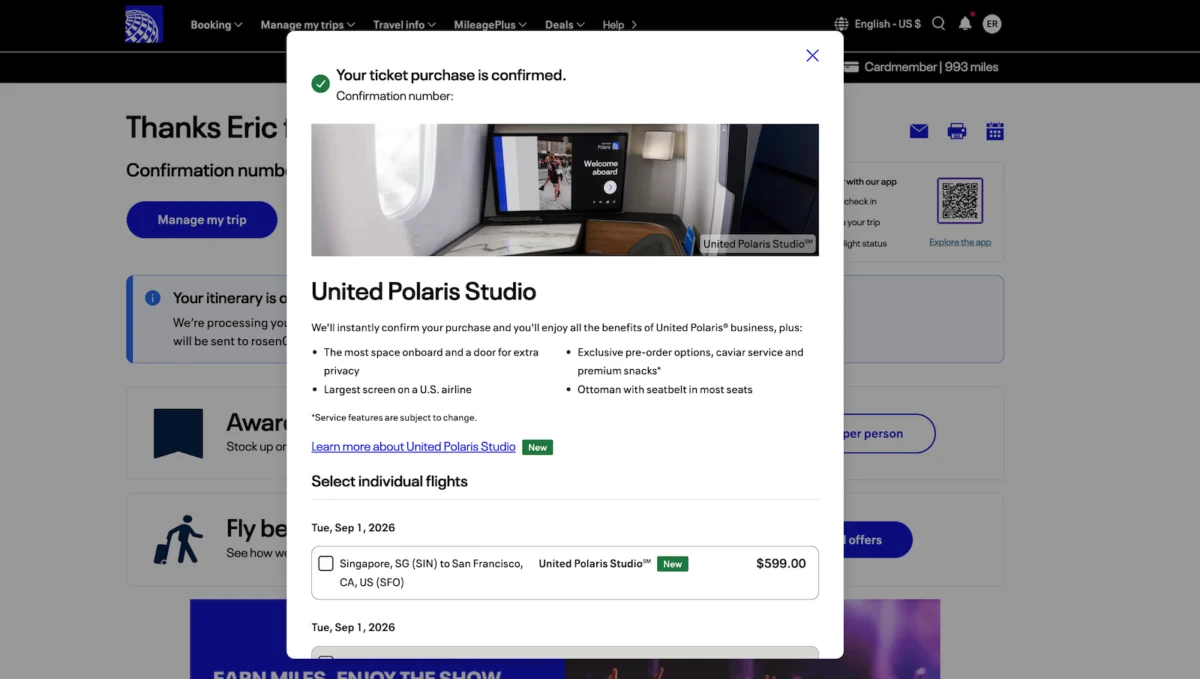
The landscape of international business class travel is currently undergoing a radical transformation. For years, the industry standard was defined by lie-flat seats and direct aisle access. However, as the "Golden Age" of the business class suite matures, airlines are now competing on a different plane: privacy, high-definition technology, and hyper-personalized soft products. United Airlines, long a stalwart of the "Big Three" U.S. carriers, first disrupted the market in 2016 with the debut of its Polaris brand. Now, nearly a decade later, the carrier is doubling down with a significant evolution known as "Elevated" Polaris. This new iteration, currently rolling out on select newly delivered Boeing 787-9 Dreamliners, represents a sophisticated step forward that aims to bridge the gap between United and its high-end international competitors like Qatar Airways and Singapore Airlines.
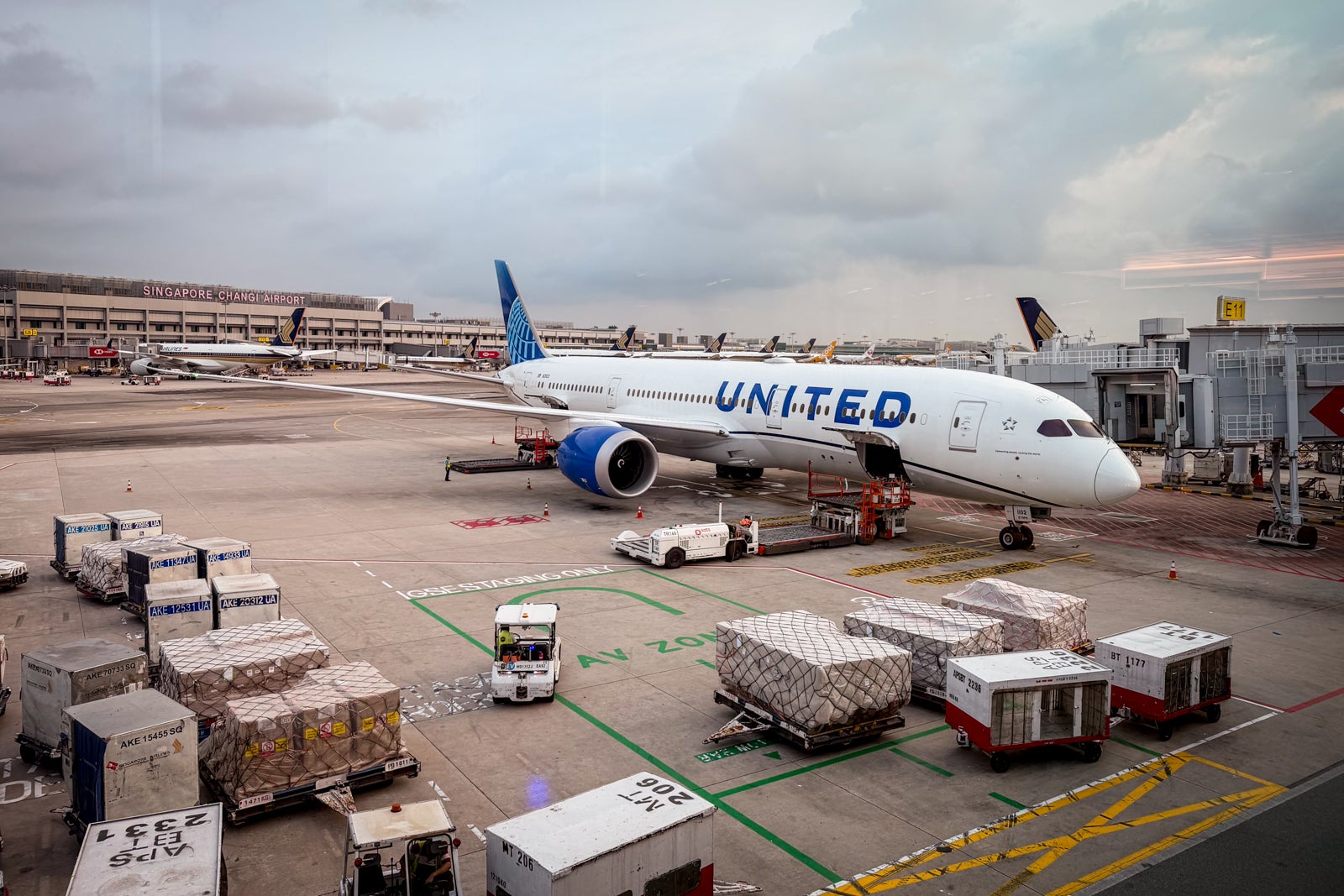
To understand the impact of Elevated Polaris, one must look at the competitive pressure mounting in the transpacific and transatlantic markets. With Delta Air Lines expanding its Delta One Suites and American Airlines preparing to debut its Flagship Suite, United’s update is both a defensive maneuver and an aggressive statement of intent. The centerpiece of this new product is the introduction of sliding privacy doors—a feature that has become the "holy grail" of business class—alongside a revamped "Studio" concept for bulkhead seats and a massive leap in inflight entertainment technology. Recently, I put this new product to the ultimate test: a nearly 16-hour journey from Singapore Changi International Airport (SIN) to San Francisco International Airport (SFO).
The Economics of the Experience: Booking and Value Proposition
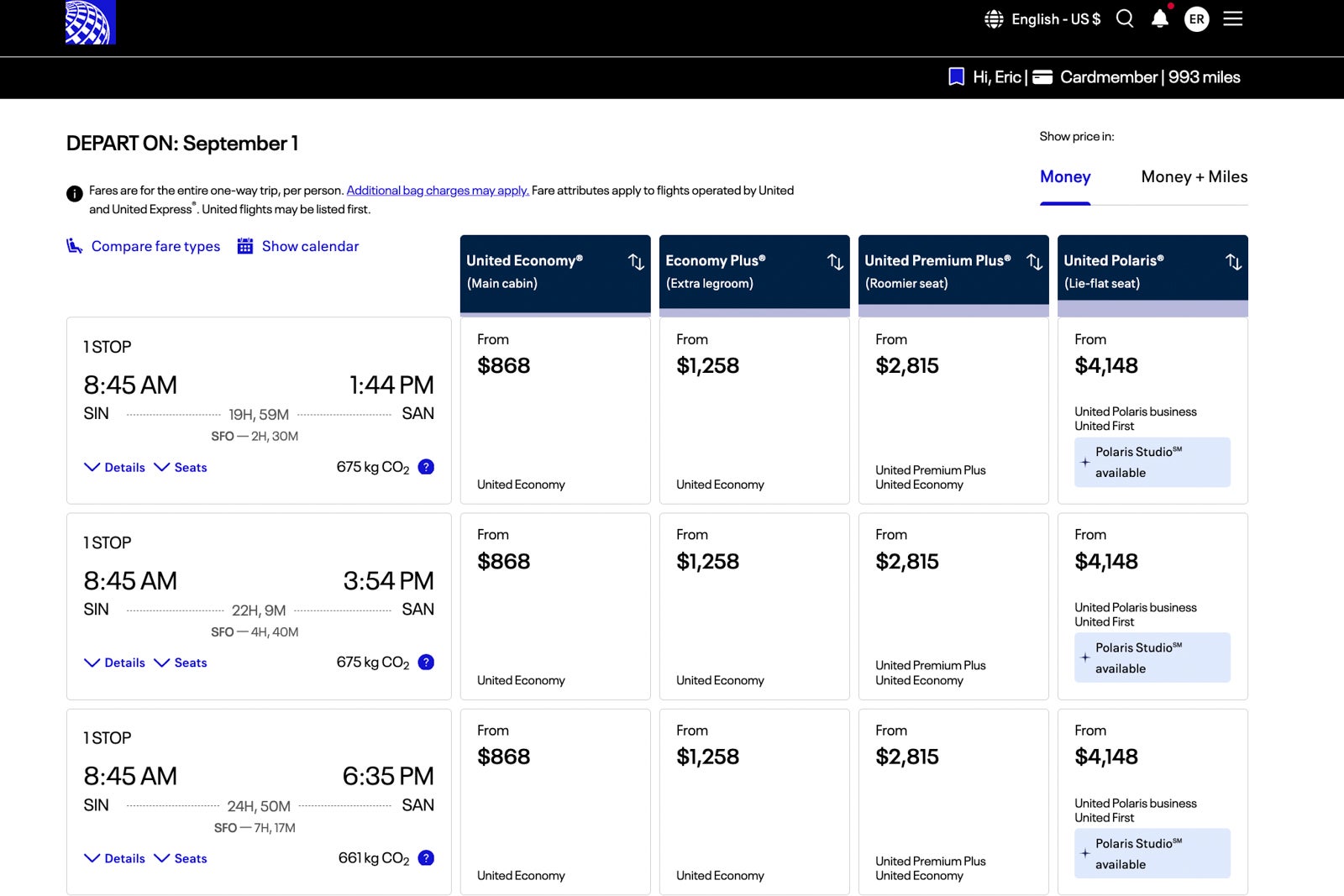
Booking a premium cabin on one of the world’s longest flights usually requires either a deep pocket or a strategic cache of frequent flyer miles. For my journey, the cash price for a one-way ticket hovered around $4,148. However, by leveraging the United MileagePlus program, I was able to secure the seat for 90,000 miles plus $74.23 in taxes and fees. This redemption yielded a value of approximately 4.5 cents per mile, significantly outperforming the standard valuations for United miles, which typically sit closer to 1.2 or 1.3 cents.
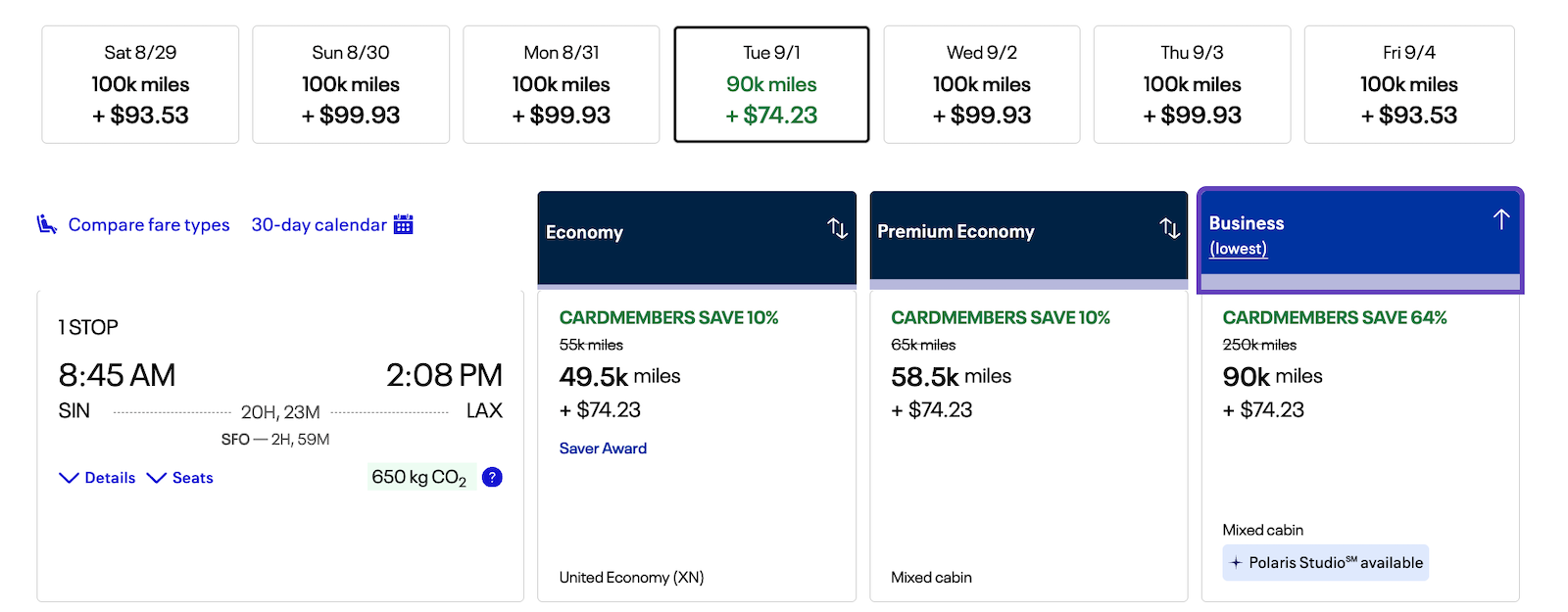
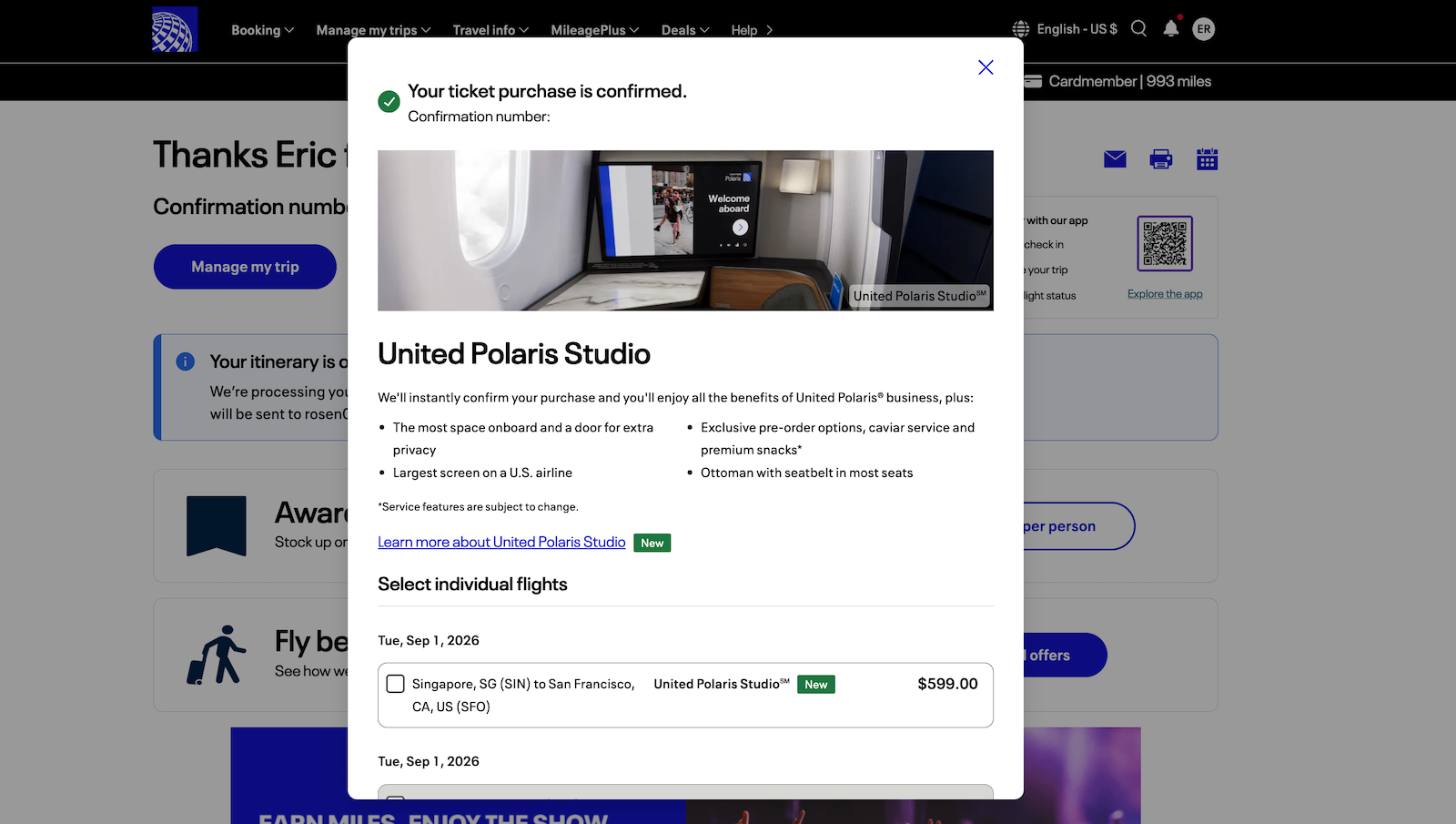
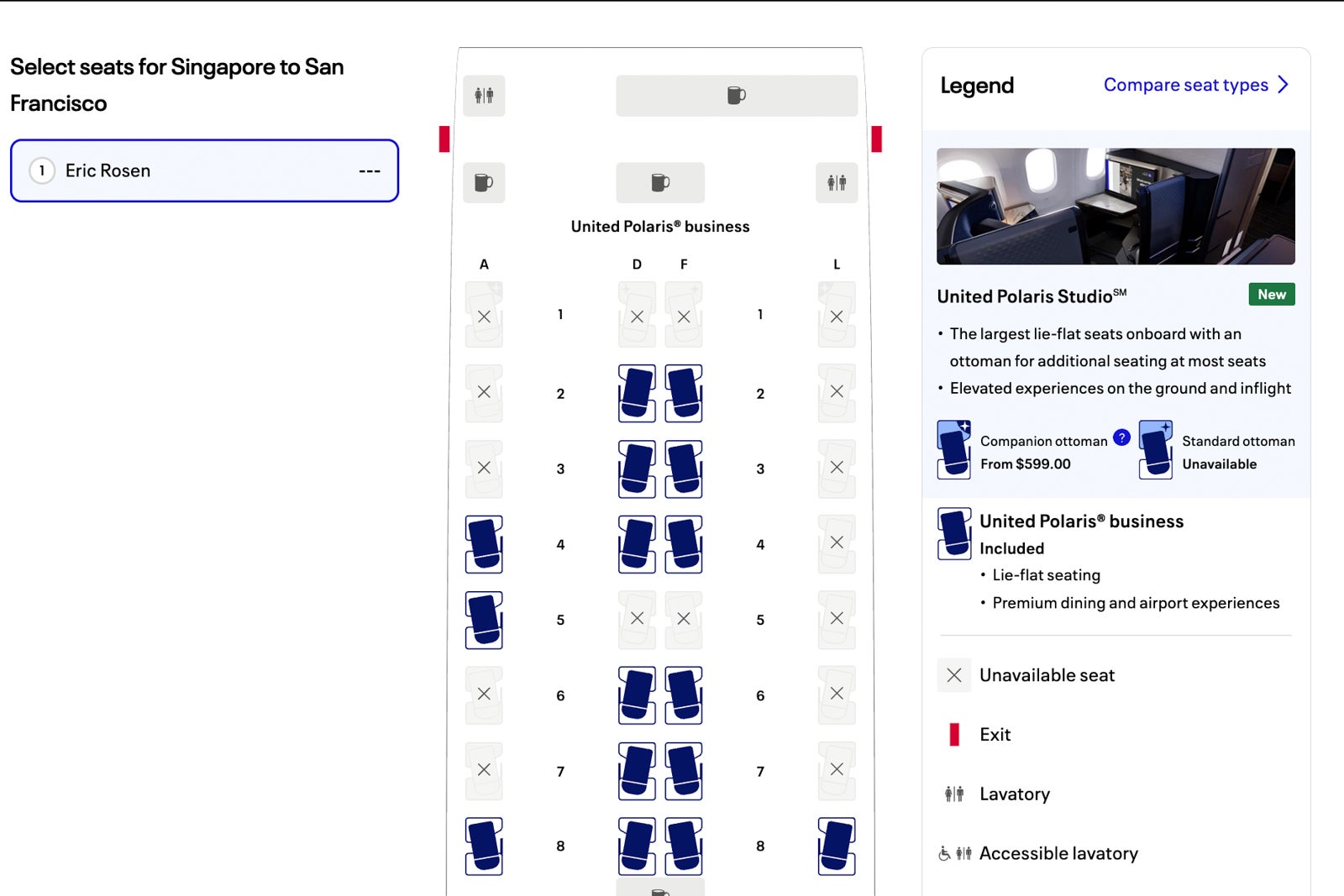
It is important to note, however, that this "saver" rate of 90,000 miles is increasingly rare and often gated behind loyalty status or credit card ownership. Without a United-branded credit card—such as the United Quest Card or the United Club Infinite Card—the price for the same seat often jumps to a staggering 250,000 miles. This tiered pricing structure underscores United’s strategy of rewarding its most loyal ecosystem participants. Furthermore, the airline has introduced a new upsell model for its "Polaris Studio" seats. These are the eight bulkhead seats on the aircraft that offer significantly more personal space. While regular Polaris seats were free to select with my business class fare, the Studio upgrade was offered for $599 at booking, dropping to $499 during the 24-hour check-in window.
Ground Experience at the World’s Best Airport
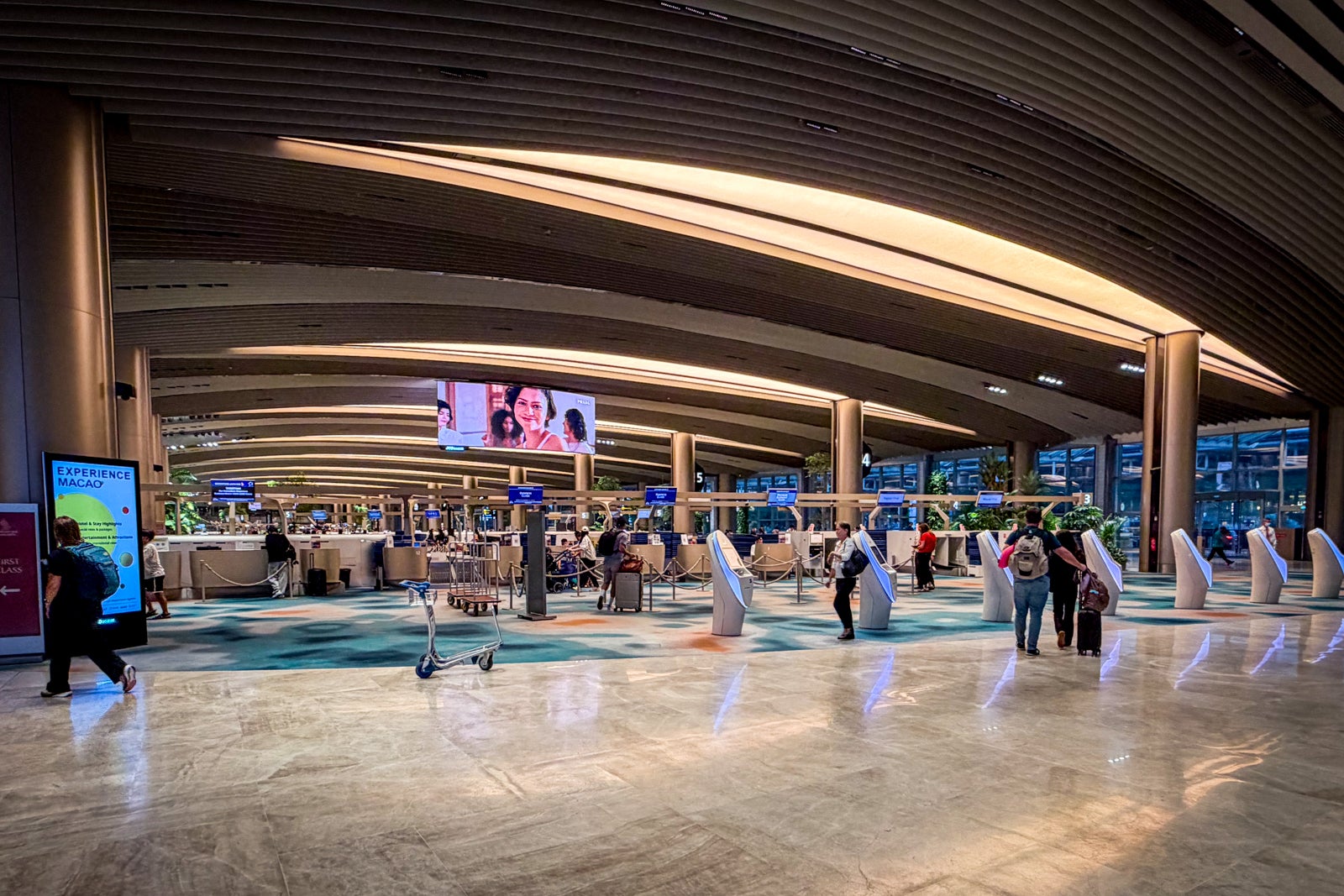
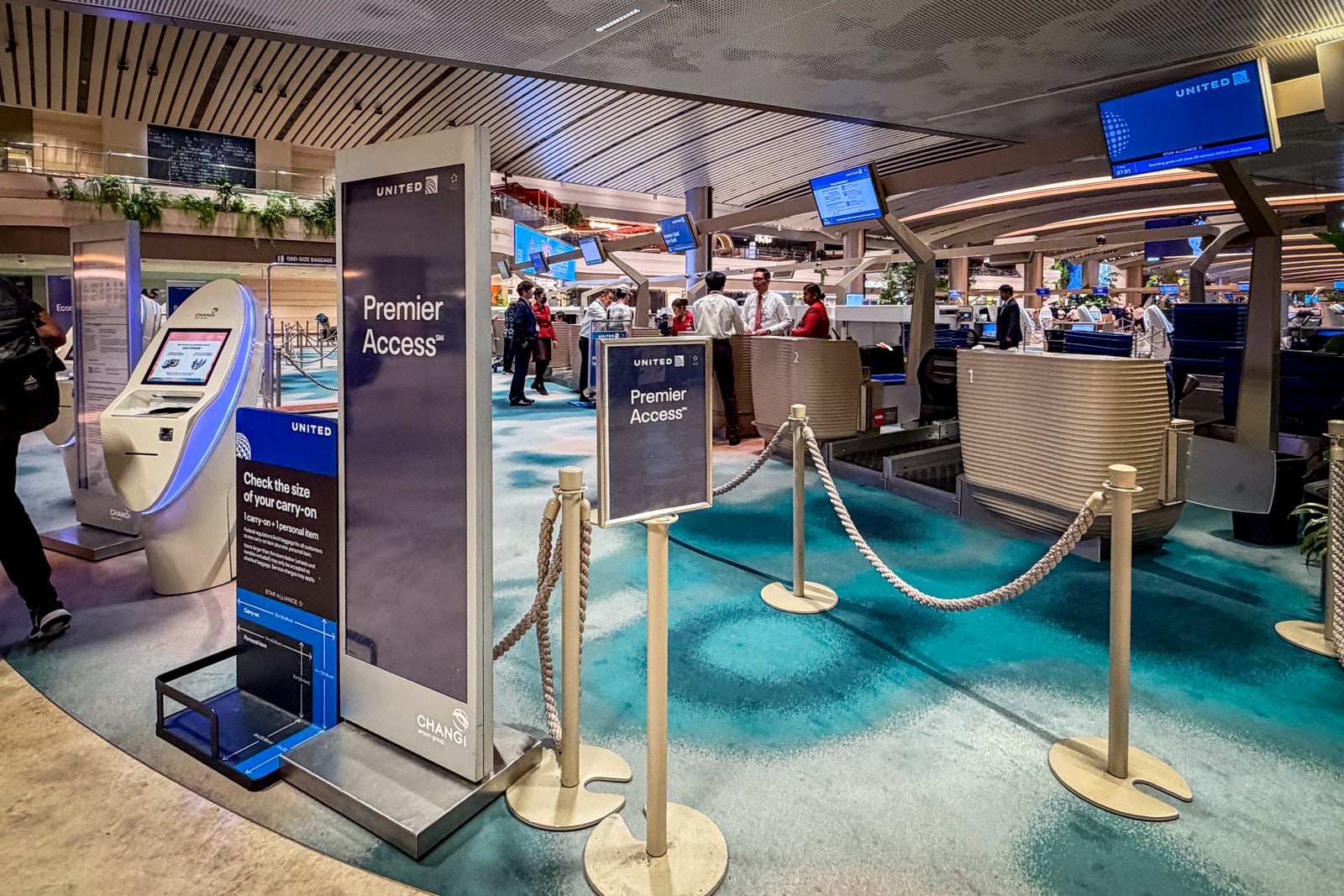
The journey began at Singapore Changi’s Terminal 2, an airport consistently ranked as the best in the world. United Polaris passengers receive the full suite of "Premier Access" benefits, including dedicated check-in lanes and a generous luggage allowance of two checked bags up to 70 pounds each. While United does not operate its own lounge in Singapore, business class passengers are granted access to the Singapore Airlines KrisFlyer Gold and Business Class lounges.
The KrisFlyer Business Class Lounge is a sprawling, modern space, though it can become quite crowded during peak departure windows. It offers an impressive array of culinary options, featuring live cooking stations serving local staples like laksa and made-to-order egg dishes. However, for those seeking a quieter environment, the lounge can feel a bit frenetic. After a quick espresso and a light snack, I made the 15-minute trek to the gate. Security in Singapore is conducted at the individual gate, a process that is remarkably efficient but requires travelers to arrive slightly earlier than they might at other international hubs.
The Hard Product: Cabin Design and the Privacy Paradox
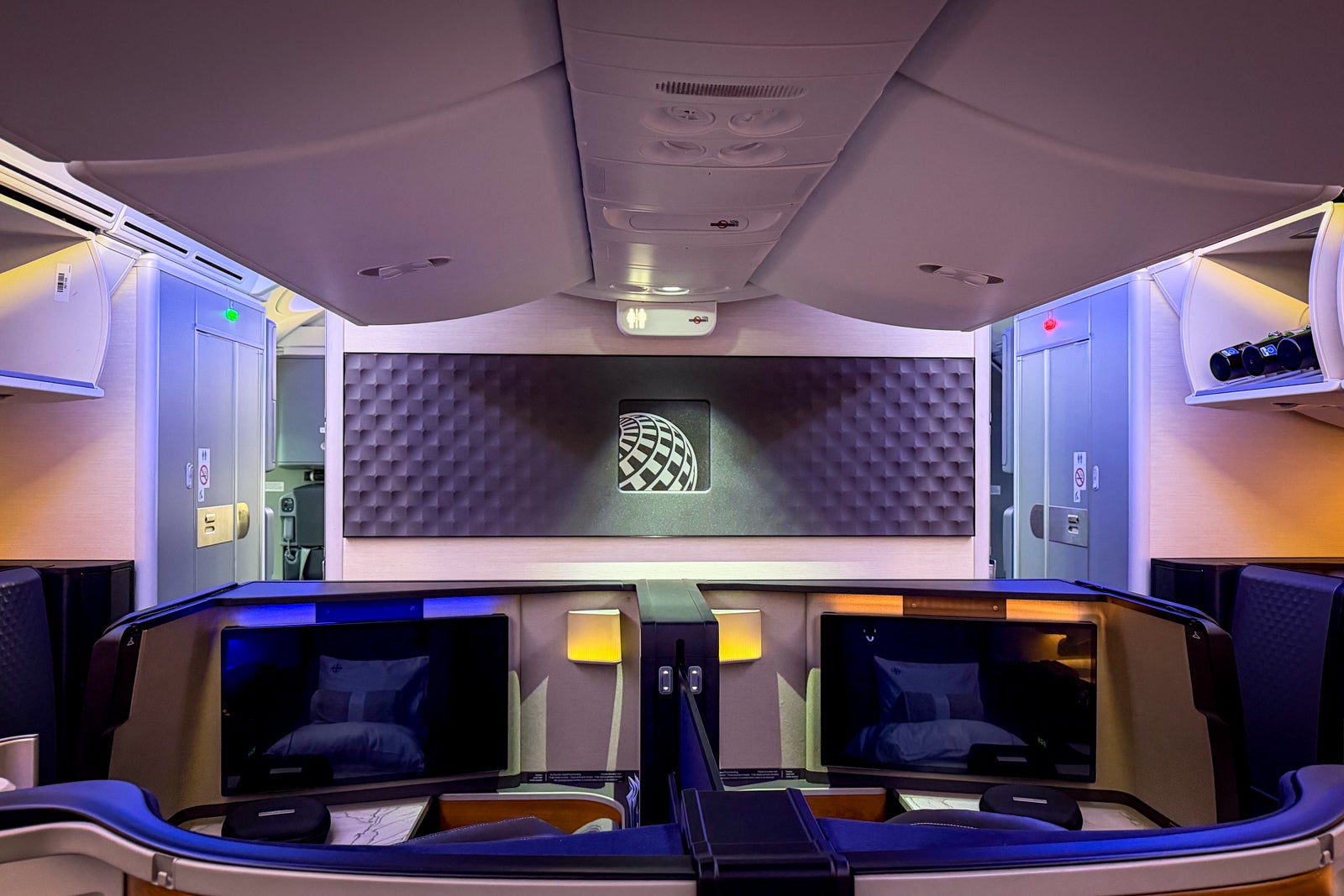
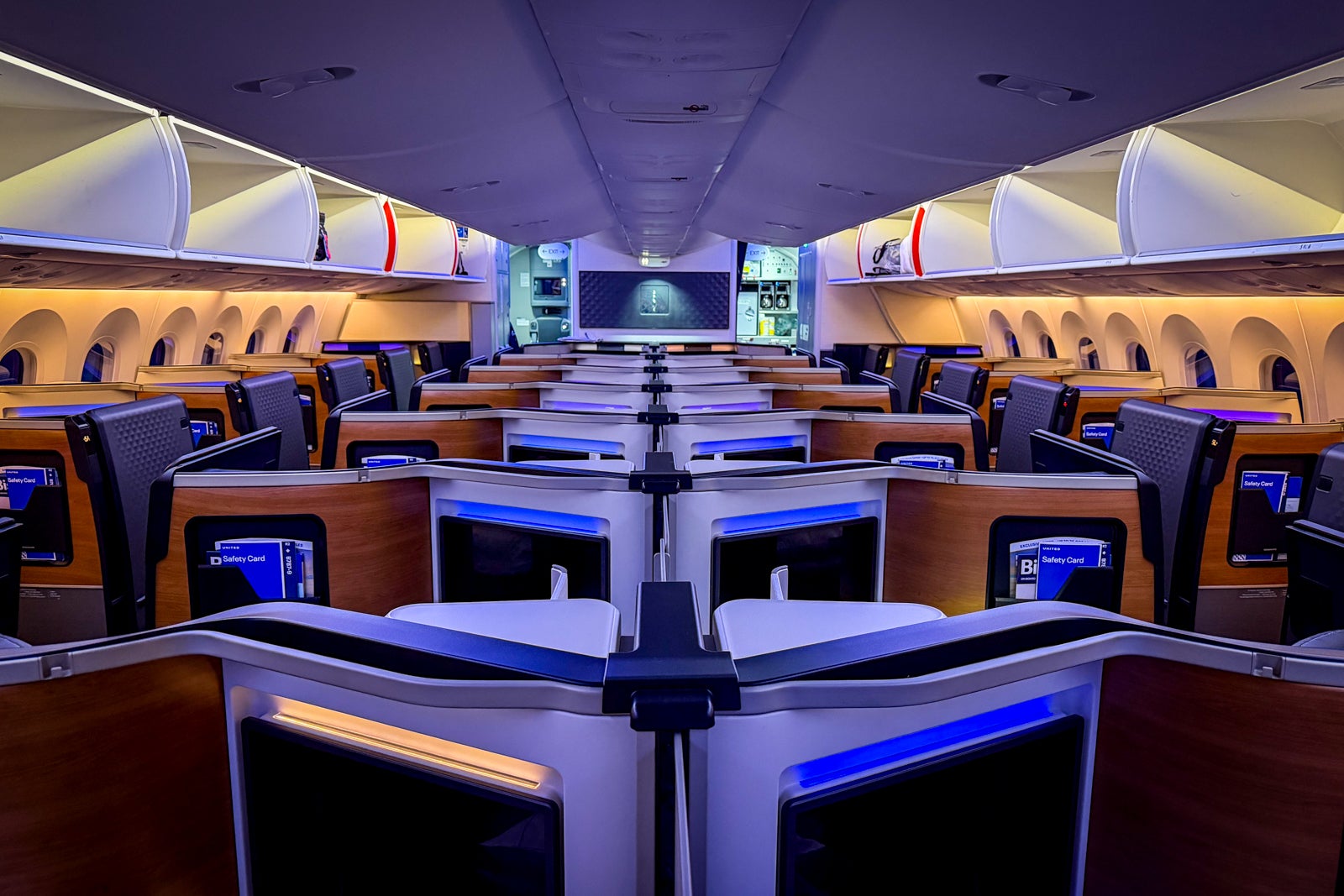
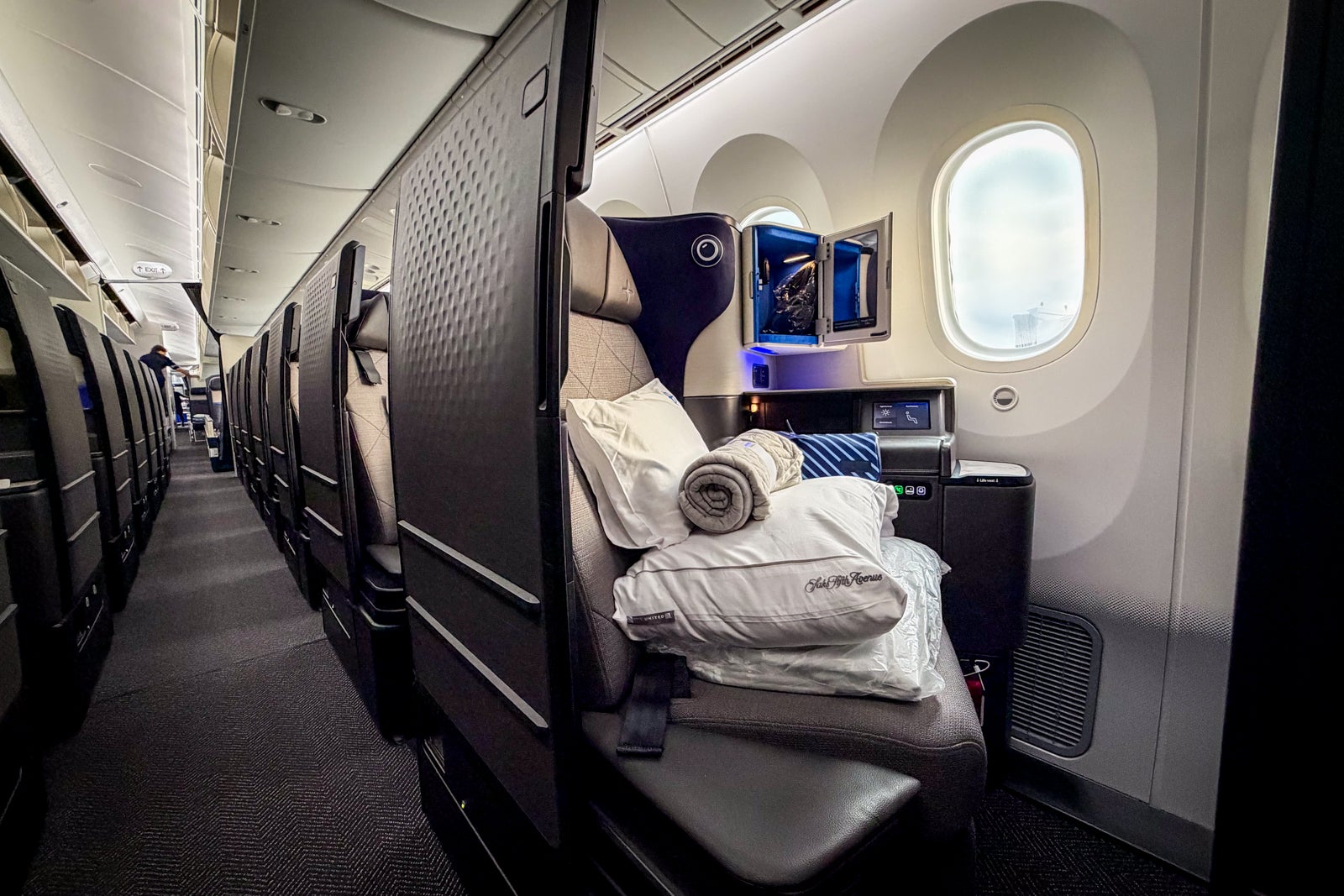
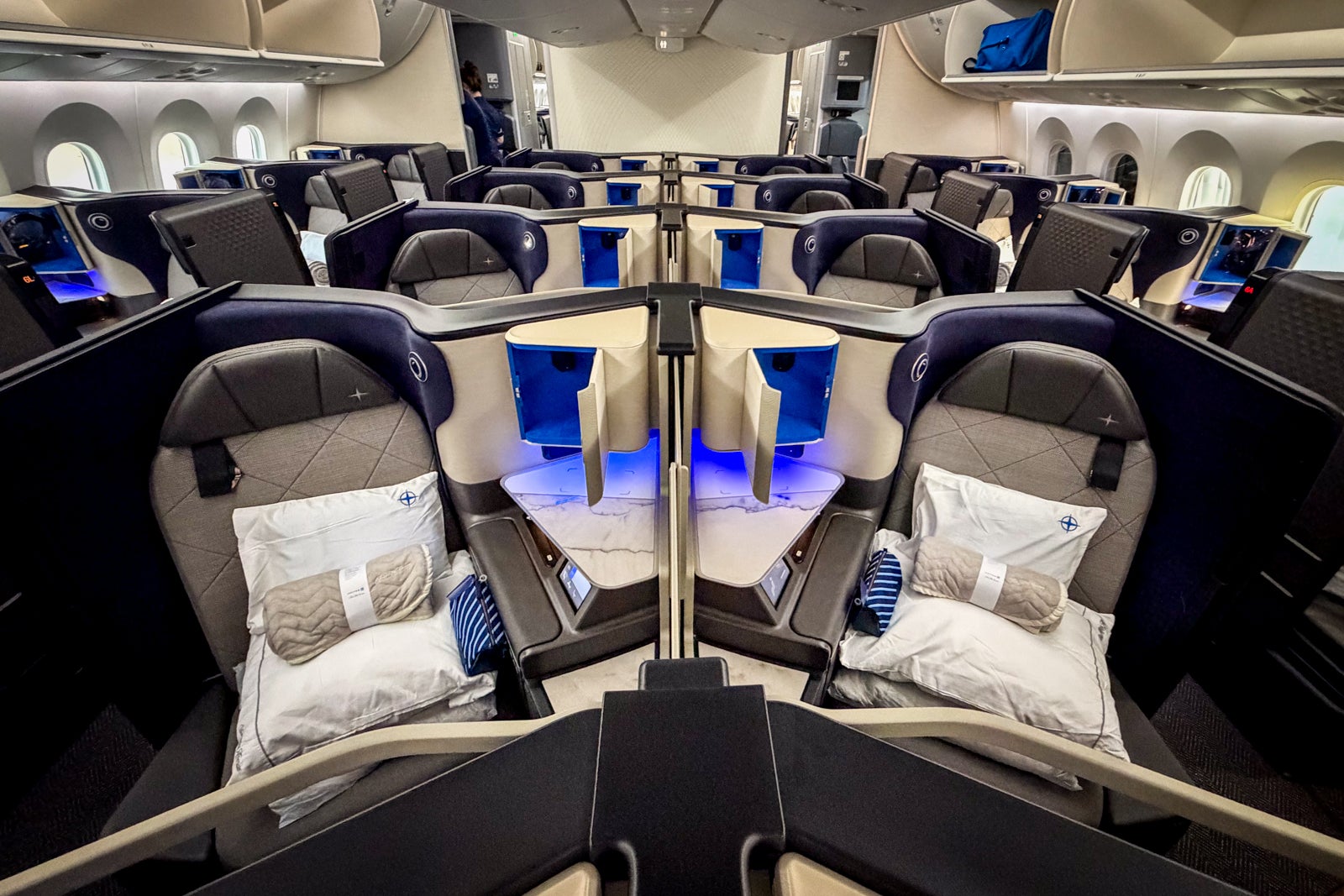
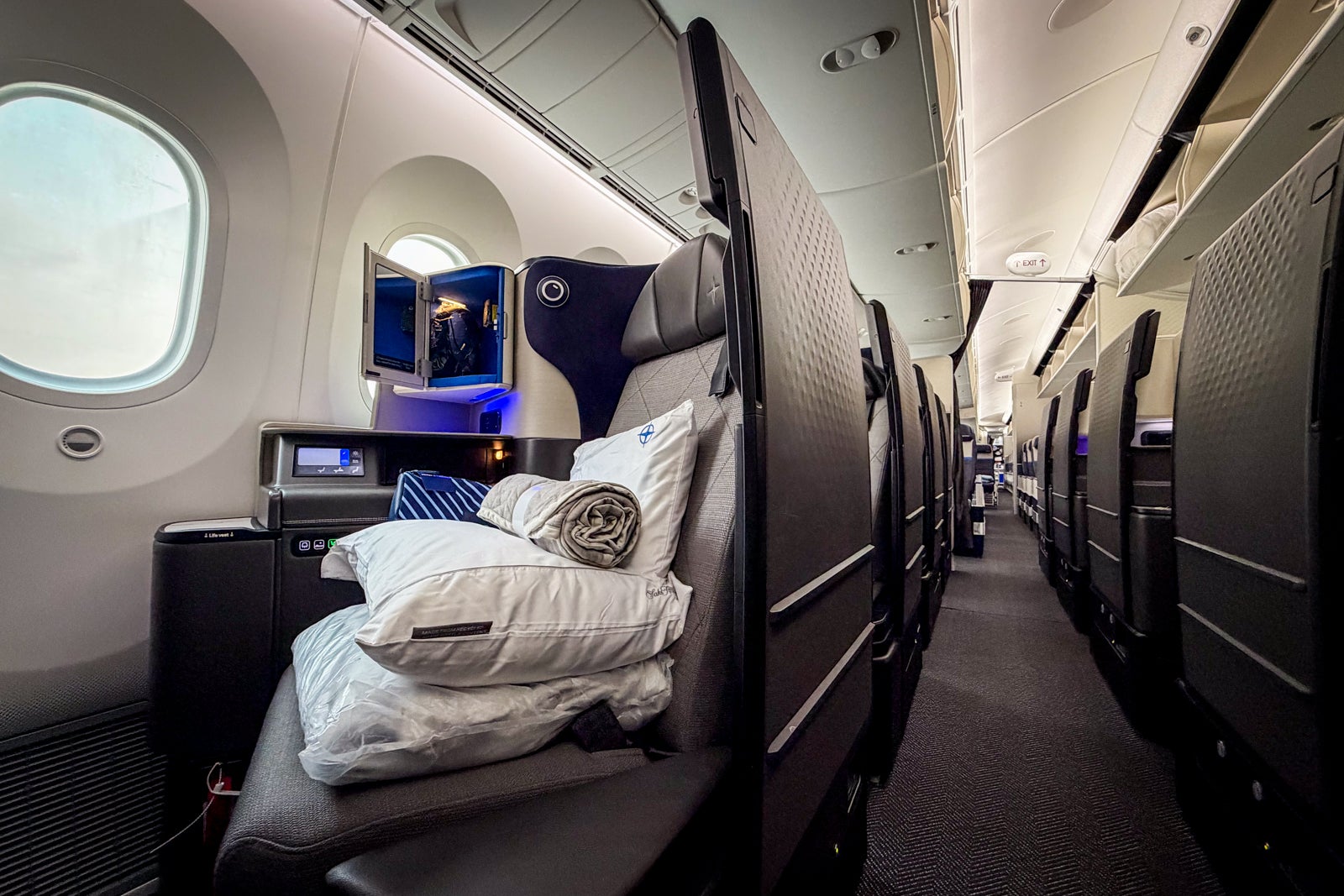
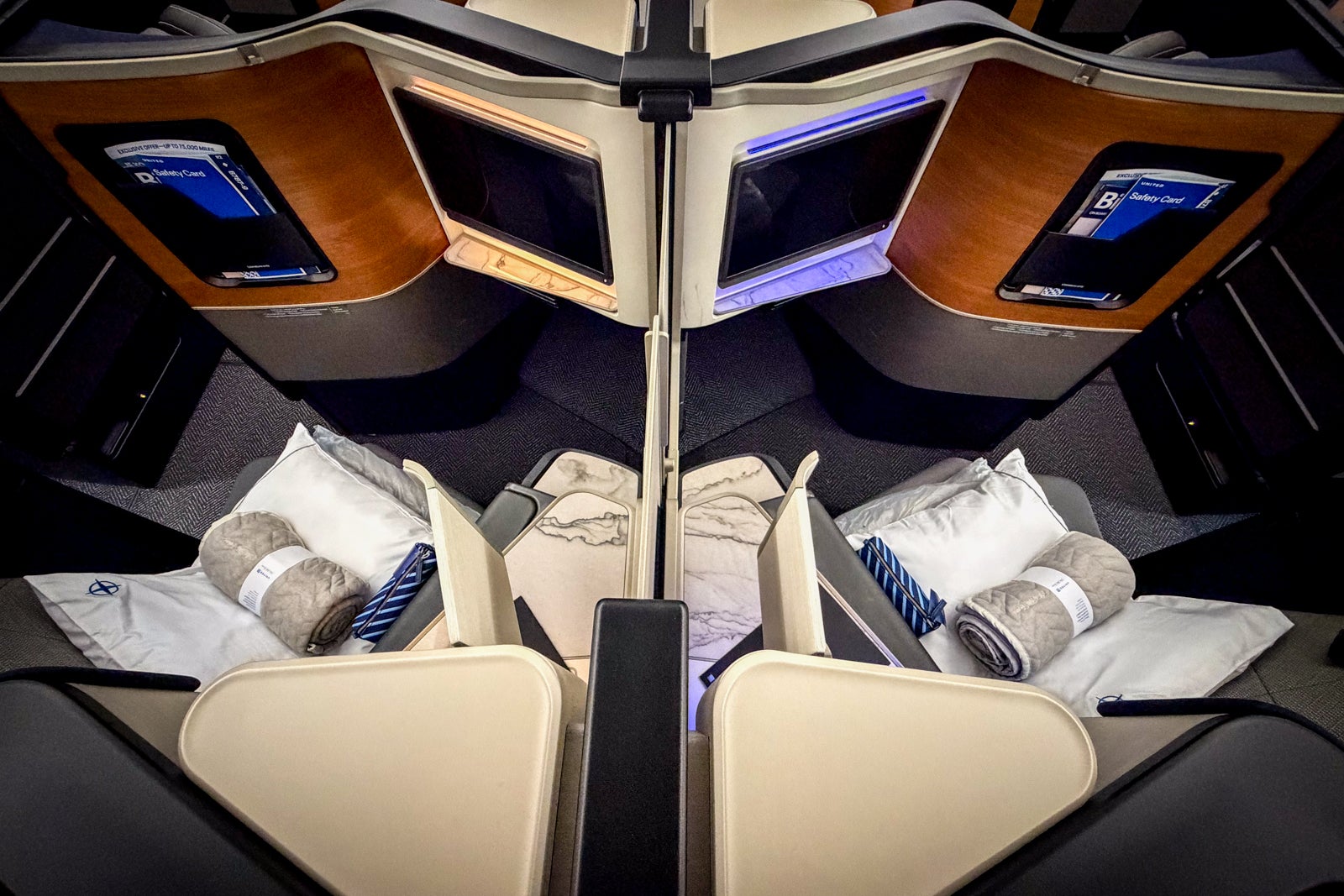
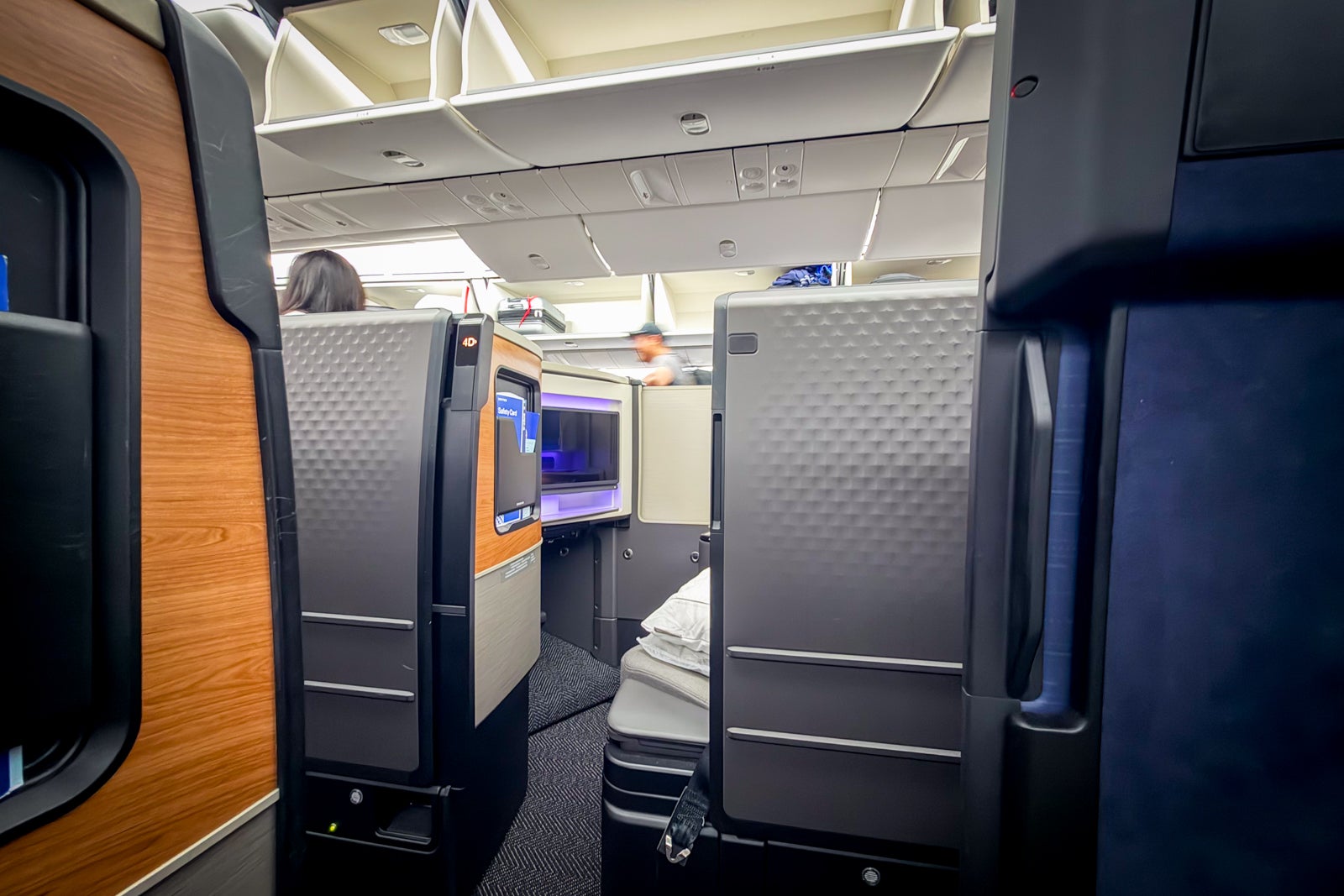
Stepping onto the Boeing 787-9 Dreamliner, the visual shift in the Elevated Polaris cabin is immediately apparent. United has moved away from the bright, clinical blues and brushed chromes of the original Polaris design in favor of a "moody" and "sultry" palette. The new aesthetic features textured graphite-gray exterior shells, navy-blue interior walls, and faux-marble shelving. Accents of caramel-colored woodgrain and silver-gray upholstery with cross-stitching give the cabin a residential, high-end feel that rivals the interiors of luxury automotive brands.
The 64-seat business class section is divided into two large cabins in a 1-2-1 configuration. While the layout ensures direct aisle access for every passenger, United has tweaked the geometry. Along the sides, seats are angled toward the windows for maximum privacy. In the center section, the airline has alternated the orientation: in the forward cabin, center seats angle toward one another, making them ideal for couples, while in the rear cabin, the seatbacks are closer together with footrests toward the aisle.
The most anticipated feature of Elevated Polaris is the sliding privacy door. Standing 54 inches from the floor, these doors are designed to turn each pod into a true suite. However, a significant caveat remains: as of late 2024, many of these doors are not yet FAA-certified for use on newly delivered aircraft. On my flight, the doors were locked in the open position. While the seat shell itself provides excellent "visual" privacy, the lack of a functional door was a reminder of the regulatory hurdles airlines face when introducing new cabin hardware. Once certified, these doors will undoubtedly place United in the top tier of global business class offerings.
Technological Integration: 4K, Bluetooth, and Wireless Charging
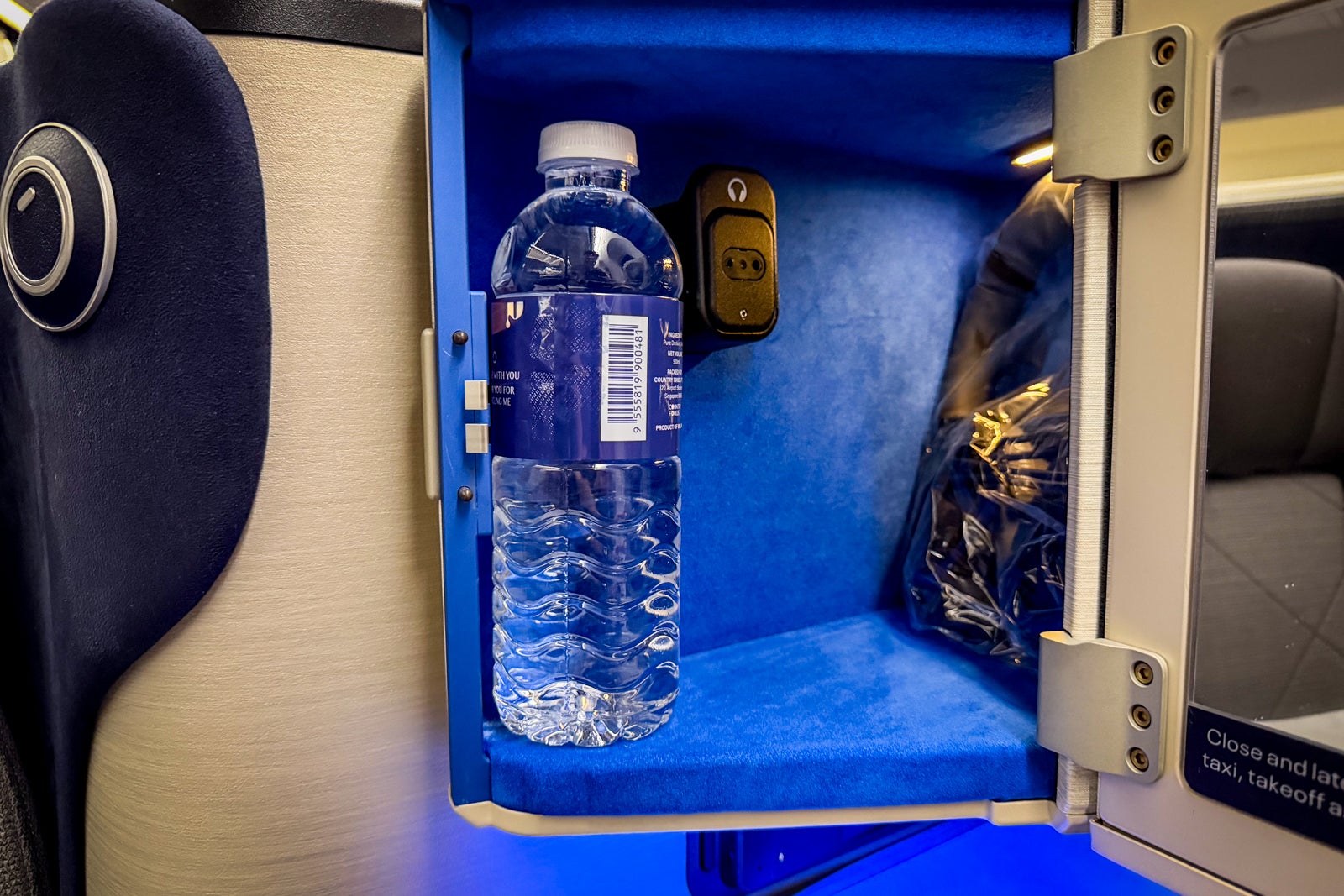
Where the hard product truly shines is in its technological integration. Each seat is equipped with a 19-inch 4K OLED touchscreen. The clarity of the screen is a generational leap over previous iterations, and the interface is notably more responsive. Perhaps the most welcome addition is Bluetooth connectivity. Historically, airline-provided noise-canceling headphones have been a weak point in the experience. With Bluetooth, I was able to pair my own Sony noise-canceling earbuds seamlessly, solving the common issue of faulty headphone jacks and tangled cords.
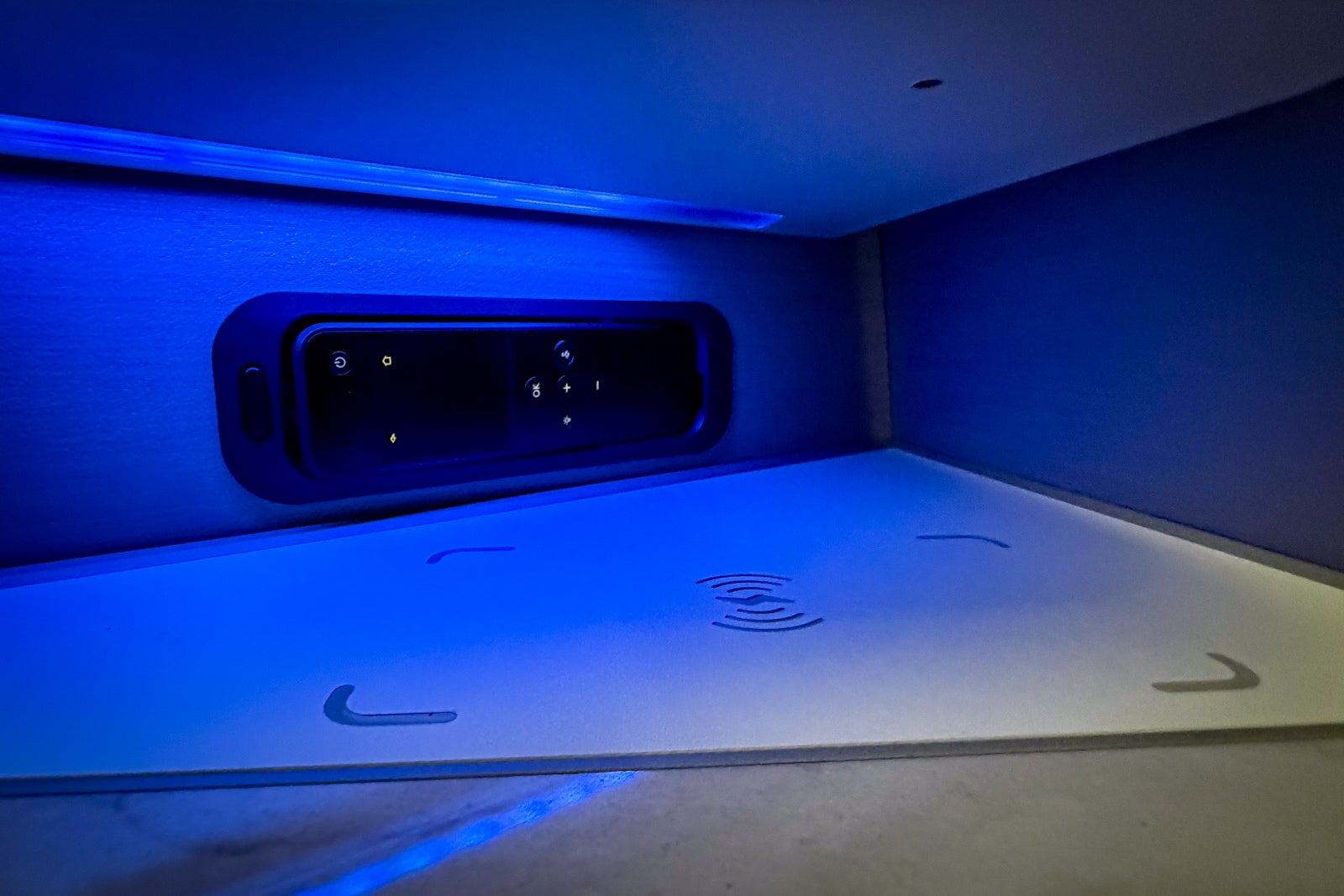
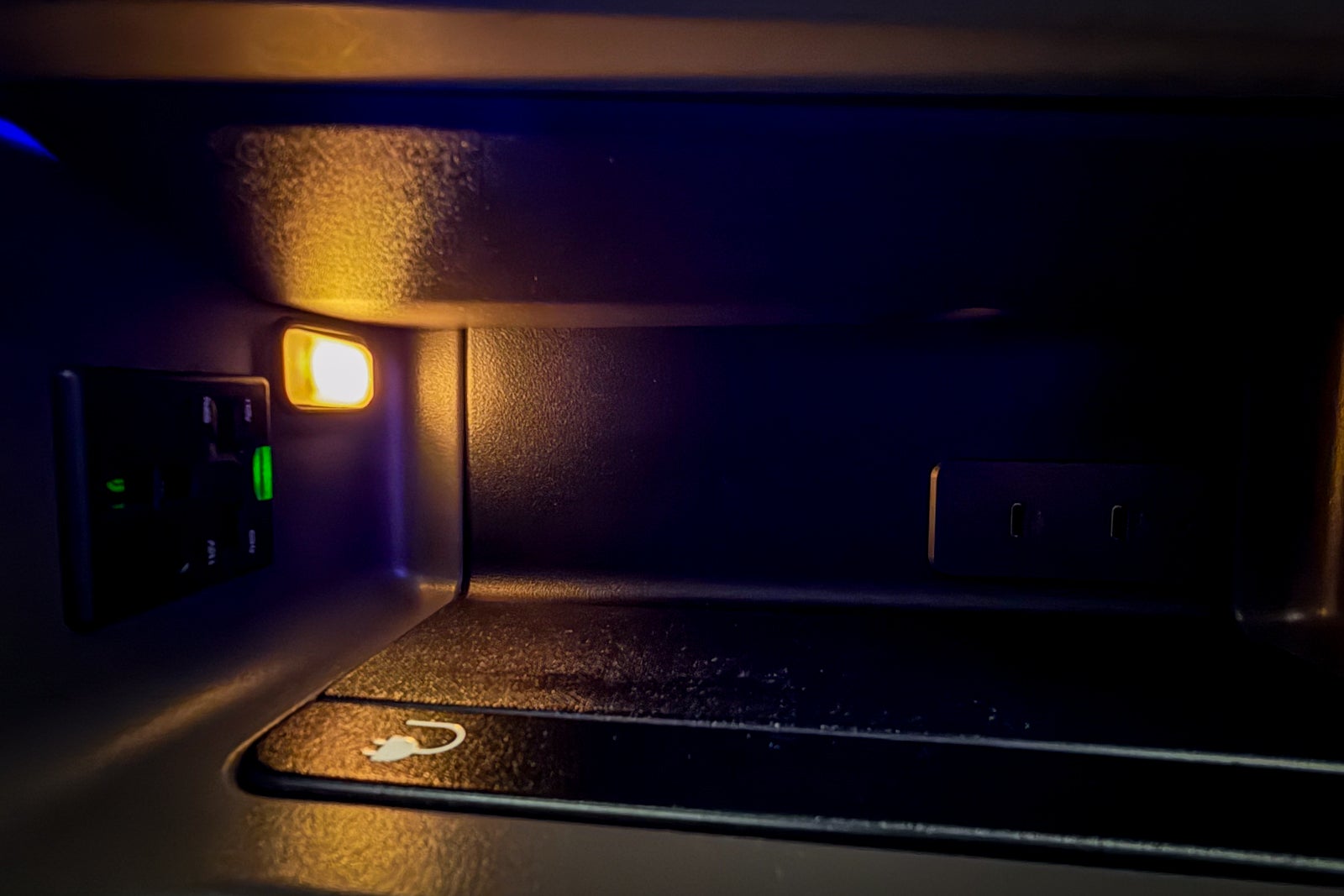
The "tech-forward" approach extends to the side console, which features a wireless charging pad. While wireless charging in a moving aircraft can sometimes be finicky, this pad worked consistently, juicing my iPhone 17 Pro at a respectable rate. For those with multiple devices, the seat also provides two USB-C ports and a universal AC power outlet. The seat controls have also been modernized; in addition to traditional buttons for "Upright" and "Bed" modes, a small touchscreen allows for granular control of the leg rest, lumbar support, and even the color of the accent lighting within the suite.
The "Studio" and the Bulkhead Advantage
For travelers willing to pay the premium, the Polaris Studio seats (found in rows 1 and 9) offer a "Business Plus" experience. These seats utilize the extra space created by the bulkhead to provide a much larger footwell, a larger entertainment screen, and an ottoman that is certified for a second passenger to sit on during meal service. This "buddy dining" feature is a rarity in business class and is usually reserved for first-class cabins. The Studio also comes with a slightly enhanced amenity kit and a different selection of "premium" snacks.
Culinary Excellence and the Tapas Innovation
United has faced criticism in the past for its inflight catering, but the Elevated Polaris service on the SIN-SFO route suggests a major shift in strategy. The airline now allows for meal pre-ordering up to 24 hours in advance, including "web-exclusive" entrees like roasted salmon.
The service began with a choice of water or Gambino prosecco, followed by warmed nuts and a choice of appetizers. I opted for the smoked duck with hoisin sauce, which was flavorful and well-presented. However, the standout feature of the dining program was the "Tapas" menu. Available between the two main meal services, this allows passengers to mix and match small plates such as chicken satay with peanut sauce, a Singaporean-style prawn salad, and vegetable samosas. This flexible, lighter dining option is perfectly suited for a 16-hour flight where a heavy three-course meal can often feel overwhelming.
The beverage program has also seen a significant upgrade. United is now pouring Heidsieck & Co Monopole Silver Top Brut Champagne and a high-end Cabernet Sauvignon that retails for over $100 per bottle. This investment in the "soft product" is a clear attempt to appeal to the wine-connoisseur demographic that typically gravitates toward Middle Eastern or Asian carriers.
Amenities and Bedding: The Saks Standard
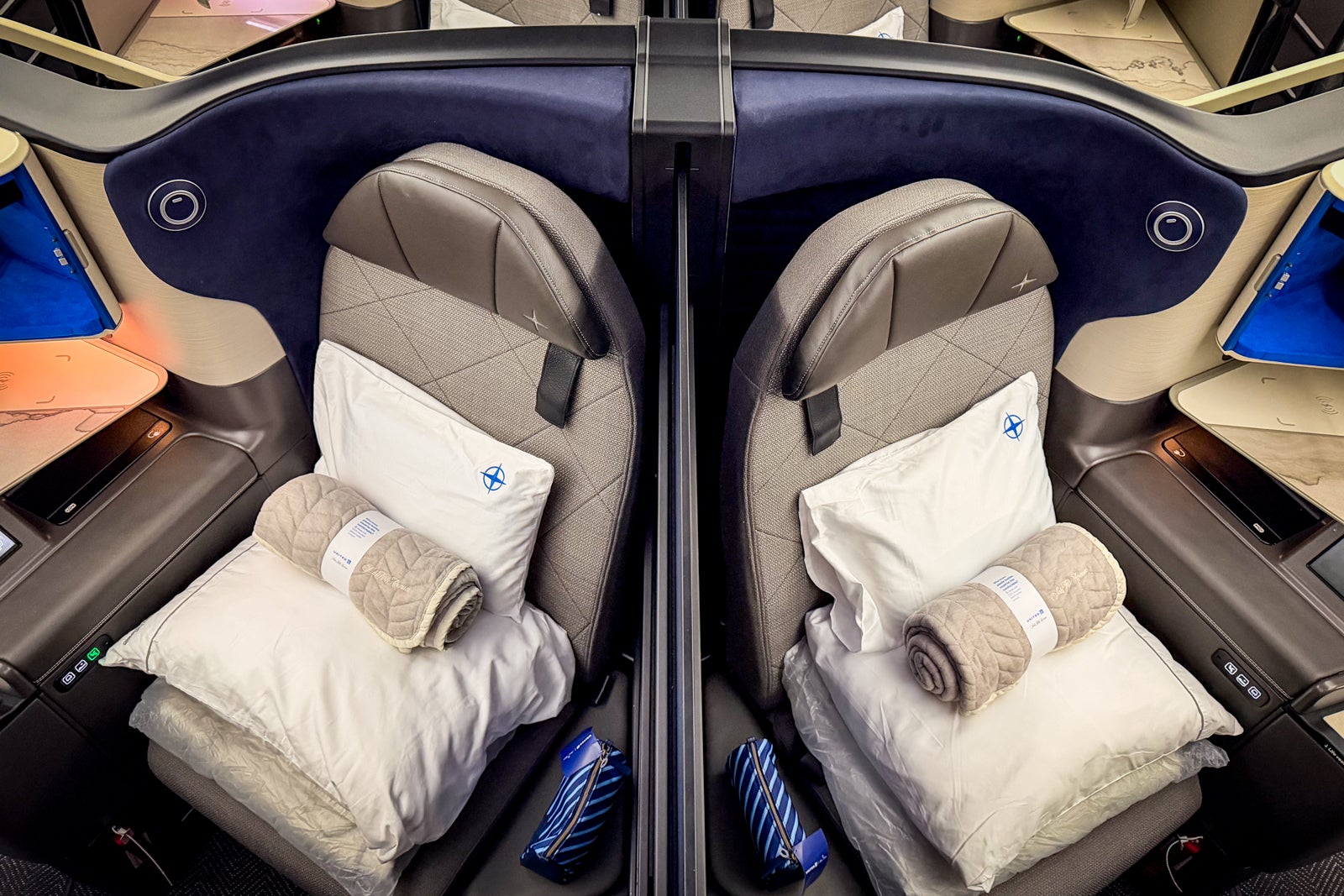
The one area where United did not need to make changes was its bedding. The partnership with Saks Fifth Avenue remains the gold standard for business class comfort. Every passenger receives a cooling gel pillow, a plush duvet, and a secondary "day blanket." On a flight of this length, the quality of the bedding is the difference between arriving exhausted or refreshed. The amenity kit, now a collaboration with Brooks Brothers, is compact and sustainable, containing high-quality skincare products from Perricone MD and Therabody.
Connectivity: The Starlink Frontier
While my specific aircraft was not yet equipped with United’s new Starlink Wi-Fi, the airline’s announcement that it will roll out the SpaceX-backed service across its entire fleet is a game-changer. Starlink promises "gate-to-gate" high-speed internet capable of streaming and gaming. On my flight, the traditional Panasonic Wi-Fi was available for $8 for the entire flight for MileagePlus members—a very reasonable price—though the speeds were only sufficient for light browsing and messaging.
Final Verdict: A New Benchmark for U.S. Carriers
United’s Elevated Polaris is more than just a facelift; it is a fundamental rethinking of the long-haul experience. By focusing on high-definition technology, a more refined aesthetic, and a flexible dining program, United has created a product that feels contemporary and premium.
The success of the product will ultimately hinge on two factors: the certification of the privacy doors and the consistency of the rollout. Once the doors are functional, the Elevated Polaris suite will be, pound-for-pound, one of the best ways to cross the Pacific. For the business traveler or the points-savvy vacationer, it represents a compelling reason to stay within the United ecosystem. As the airline continues to take delivery of new Dreamliners and retrofits older aircraft, the "Elevated" experience may soon become the new standard for the friendly skies.
