
 By admin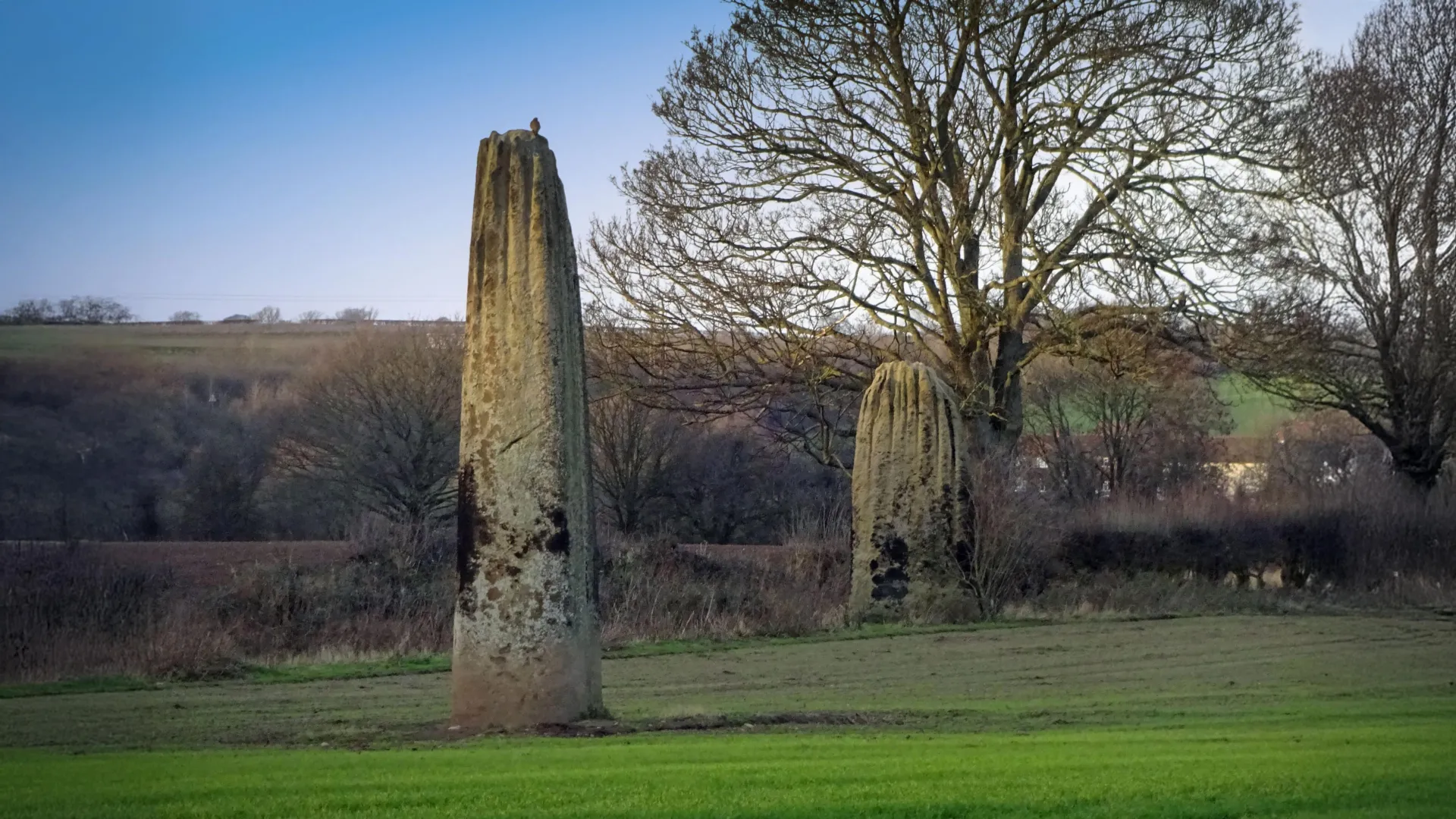
For centuries, the towering Devil’s Arrows, located near Boroughbridge in North Yorkshire, have stood as a silent testament to a forgotten era, their true origins shrouded in mystery and local folklore. Rising dramatically from the relatively flat lowlands, these three immense gritstone monoliths—the tallest reaching an impressive seven meters (23 feet)—form an unusual alignment that has captivated antiquarians and archaeologists alike. Despite their striking presence and their status as one of Britain’s most significant prehistoric monuments, the precise geological source of their colossal stones remained an enduring enigma.
The Devil’s Arrows: A Northern Megalithic Enigma
The Devil’s Arrows are not merely large stones; they are a profound statement embedded in the landscape. While only three stones remain upright today, historical accounts and archaeological evidence suggest there may have originally been as many as five. Their name, steeped in local legend, often links them to the Devil, who supposedly flung them at the nearby town of Aldborough, or to ancient battles involving giants. Such myths underscore the awe and wonder these structures have inspired for millennia, hinting at their immense age and the supernatural power attributed to their builders.
Archaeologically, the Devil’s Arrows are dated to the Late Neolithic or Early Bronze Age, likely around 2000 BC. This period was a transformative time in British prehistory, characterized by the construction of grand monuments like Stonehenge and Avebury, sophisticated social structures, and evolving belief systems. Yet, unlike some of their southern counterparts where stone sources were more readily identified, the provenance of the Devil’s Arrows remained stubbornly elusive, fueling speculation and hindering a full appreciation of their construction narrative. Previous theories had tentatively suggested Plumpton Rocks, a geological outcrop closer to the monument, as the likely quarry. However, without conclusive scientific evidence, this remained an educated guess.
Unveiling the True Source: A Scientific Breakthrough
The breakthrough came through an innovative and minimally invasive sampling technique developed by the research team. Lead author Dr. Anthony Clarke, from the Timescales of Mineral Systems Group within Curtin’s School of Earth and Planetary Sciences, explained the methodology: "We employed a new low-impact sampling technique using adhesive tape to collect microscopic mineral grains from the stones without causing any damage to the monument itself. This non-destructive approach is crucial when working with irreplaceable heritage sites."
These minute mineral grains, particularly zircons, contain radioactive elements like uranium that decay at a predictable rate. By analyzing the "age fingerprints" of these zircons—essentially dating the formation of the rock from which they originated—researchers could establish a unique geological signature for the Devil’s Arrows stones. This signature was then compared against samples collected from various potential geological sources in North Yorkshire, including the previously suspected Plumpton Rocks and other gritstone outcrops.
The results were unequivocal. The mineral age fingerprints from the Devil’s Arrows perfectly matched those from Brimham Rocks, a spectacular and geologically distinct area known for its dramatic, weather-sculpted gritstone formations. This finding definitively ruled out Plumpton Rocks and other closer sources, revealing a far more ambitious undertaking than previously conceived. Furthermore, the robust geological analysis allowed the team to confidently dismiss natural explanations, such as glacial transport, which often account for displaced boulders. The specific geological context and the direction of glacial movements in the region did not align with a natural origin for the Devil’s Arrows at their current site, confirming human agency in their relocation.
The Journey of Giants: From Brimham Rocks to Boroughbridge
The new research establishes that the enormous stones, each weighing over 25 tonnes—equivalent to several mature elephants or a fully loaded articulated lorry—were quarried from Brimham Rocks and transported at least 18 kilometers (11 miles) to their final resting place near Boroughbridge. This journey was not a simple stroll across flat plains. Brimham Rocks itself is a rugged, elevated landscape, implying a challenging initial extraction. The intervening terrain would have presented numerous obstacles, including undulating ground, forests, and potentially watercourses, all of which would have required immense planning, coordination, and sheer physical effort to overcome.
"Our research shows these stones weren’t simply taken from the nearest available source — they were deliberately chosen from a challenging landscape 18 kilometers away," Dr. Clarke emphasized. "Each stone weighs more than 25 tonnes, so moving them would have required incredible planning, coordination and engineering skill. This tells us prehistoric people placed real importance on the landscape itself. It wasn’t just about convenience — the location the stones came from likely held meaning for them."
Moving stones of this magnitude without the aid of modern machinery would have been a colossal undertaking, requiring the mobilization of hundreds, if not thousands, of people. While the exact methods remain speculative, archaeologists generally propose techniques involving wooden sledges, rollers, and an extensive network of ropes, pulled by human and possibly animal power. Ramps would have been constructed to load and unload the stones, and carefully engineered pathways would have been cleared. The logistics involved in feeding, housing, and organizing such a large workforce for an extended period speak volumes about the social cohesion and leadership structures present in these ancient communities. This feat stands alongside other great megalithic achievements in Britain, such as the transport of the much smaller bluestones over 250 kilometers to Stonehenge, or the 30-tonne sarsens moved around 25 kilometers for the same monument. The Devil’s Arrows transport, while shorter in distance than the bluestones, involved significantly heavier individual stones than even the largest sarsens.
Beyond Convenience: The Symbolic Landscape
Perhaps the most profound implication of this discovery lies not just in the engineering prowess it reveals, but in what it tells us about the decision-making and belief systems of prehistoric people. The choice of Brimham Rocks, a distant and challenging source, over closer, more accessible alternatives, strongly suggests that convenience was not the primary driver. Instead, the landscape around Brimham Rocks itself must have held profound cultural, symbolic, or spiritual significance.
Dr. Jim Leary, a co-author from the University of York, elaborated on this aspect: "These results show that ancient communities were making deliberate and meaningful choices about where their stones came from. It highlights the importance of landscape and shared belief systems, as well as the remarkable effort involved in transporting and raising stones of this size."
Brimham Rocks is renowned for its extraordinary natural rock formations, sculpted by millennia of wind and rain into fantastical shapes often bearing evocative names like the "Idol Rock" or "Dancing Bear." Such a visually striking and unique landscape may have been perceived as sacred, a place imbued with spiritual power, ancestral connections, or specific cosmological importance. The act of extracting stones from such a revered location and transporting them to a new site could have been a powerful ritual in itself, transferring the sacred essence of one place to another, or perhaps establishing a physical link between two significant points in their perceived world. It could have been a way to solidify territorial claims, to commemorate important events, or to serve as a focal point for communal identity and shared belief. The very difficulty of the task would have amplified its significance, transforming a pragmatic construction project into a deeply meaningful communal endeavor that reinforced social bonds and spiritual tenets.
Connecting Ancient Worlds: The Broader Archaeological Tapestry
The Devil’s Arrows, now understood to be sourced from Brimham Rocks, contribute a vital new chapter to the broader narrative of megalithic construction in Britain. This period, spanning the late Neolithic and early Bronze Age, witnessed an explosion of monument building across the islands, from the stone circles of Callanish in the Outer Hebrides to the monumental henges and avenues of Avebury and Stonehenge. Each site, while sharing common architectural themes, also possesses unique regional characteristics and local narratives.
The Devil’s Arrows, as Britain’s tallest surviving prehistoric stone row, now offer a clearer lens through which to view the distinct cultural expressions of northern England during this period. Their deliberate sourcing from a specific, distant, and visually dramatic landscape speaks to a sophisticated understanding of place, power, and symbolism, aligning with theories that suggest monuments were not merely markers, but active participants in the spiritual and social lives of their communities. This research underscores that megalithic builders were not simply primitive engineers; they were visionaries who invested immense resources, both human and material, into shaping their world according to deeply held beliefs.
Looking Ahead: Future Excavations and Unanswered Questions
The discovery of the stones’ origin opens new avenues for future research. Dr. Clarke noted that the team plans to apply their non-invasive sampling technique to other standing stones whose origins remain uncertain, potentially unlocking secrets from numerous other megalithic sites across Britain and beyond.
Crucially, the researchers also hope to carry out targeted archaeological excavations at both the Devil’s Arrows monument and the newly identified source area at Brimham Rocks. These excavations could yield invaluable information about the precise dating of the monument’s construction, the exact quarrying techniques employed, and—most tantalizingly—direct evidence of the transport routes and methods. Such discoveries might include remnants of ancient roadways, tool marks on the stones or surrounding bedrock, evidence of temporary camps for the workforce, or even artifacts that shed light on the cultural practices associated with the stone movement.
"These next steps could help us better understand when the stones were moved and how these extraordinary monuments were constructed," Dr. Clarke concluded, hinting at the potential for even more revelations about the ingenuity and spiritual depth of Britain’s ancient inhabitants.
A New Chapter for Yorkshire’s Heritage
For the National Trust, which cares for both Brimham Rocks and the Devil’s Arrows, this research forge a powerful new connection between two iconic Yorkshire landscapes. Justin Scully, National Trust General Manager for Fountains Abbey & Studley Royal and Brimham Rocks, expressed his enthusiasm for the findings. "We’re incredibly grateful to the researchers for helping us uncover this new chapter in the stones’ story and deepen our understanding of the people who shaped this landscape thousands of years ago," Mr. Scully said. "The Devil’s Arrows are deeply cherished by local communities, and we’re delighted that this discovery adds a new chapter to their story."
This groundbreaking research not only solves a long-standing archaeological puzzle but also enriches our appreciation for the complex interplay of engineering, culture, and spirituality that defined prehistoric monument building. The Devil’s Arrows now stand not just as ancient stones, but as enduring symbols of a community’s extraordinary vision and unwavering commitment to a landscape they imbued with profound meaning. Their arduous journey from the dramatic outcrops of Brimham Rocks to their final resting place in Boroughbridge serves as a powerful reminder of the ingenuity and deep spiritual connection to the land held by those who shaped Britain’s ancient past.
