
 By admin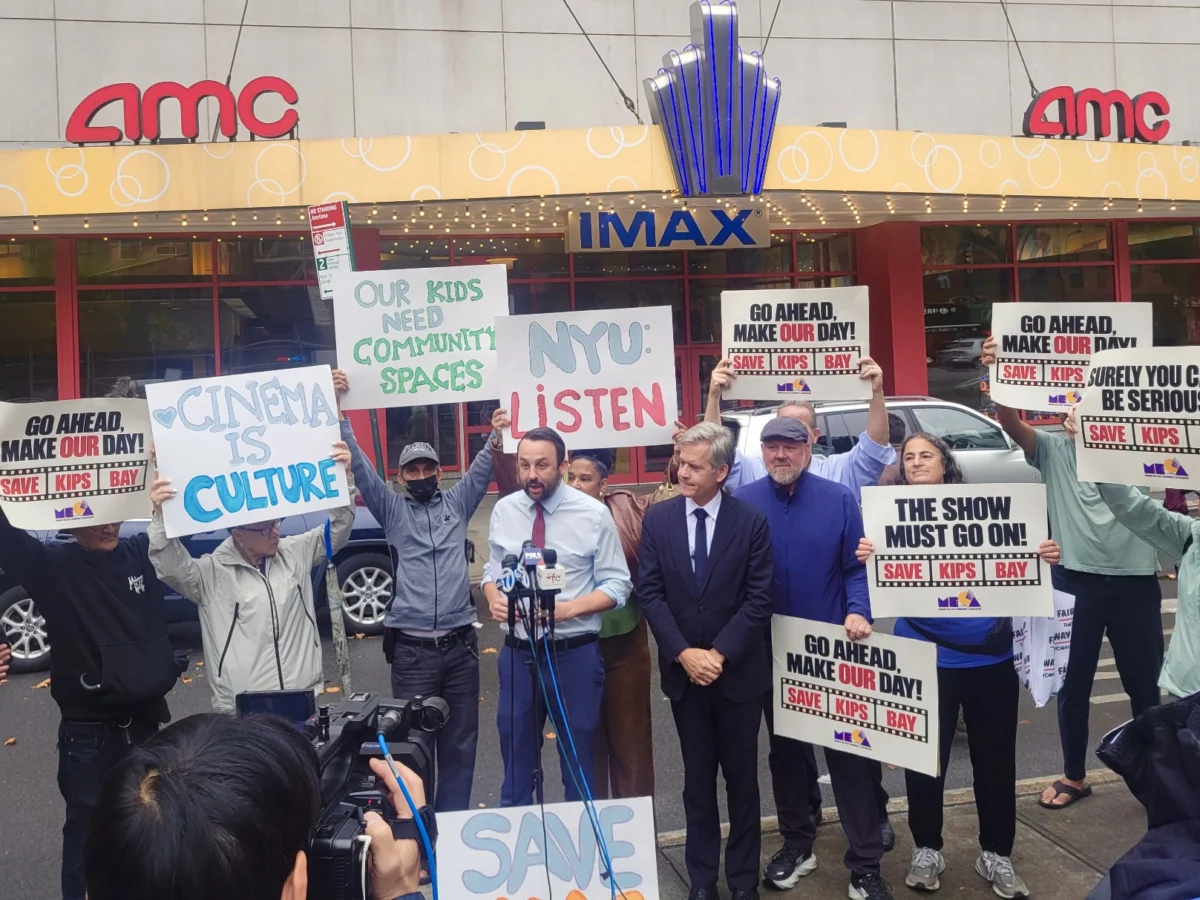
On a blustery, rain-swept Sunday afternoon, the iconic allure of the silver screen met the stark reality of urban development as over a hundred New Yorkers, united in their concern, gathered outside the AMC Kips Bay 15. Manhattan Borough President Brad Hoylman-Sigal, channeling his inner Nicole Kidman with a surprisingly pitch-perfect Australian accent, recited the famed AMC Theatres advertisement, a heartfelt homage to a beloved neighborhood institution. Yet, this touching tribute unfolded against a backdrop of impending closure, with the Kips Bay multiplex, a cultural anchor for decades, slated to shutter its doors by year’s end, a stark contrast to the record-breaking summer the box office has experienced.
The sentiment of loss was palpable, resonating deeply with attendees like Lucy Di Lorenzo, a Gen-Z lifelong resident of Kips Bay. "I’m a lifelong resident of Kips Bay, and I came out here to support my favorite theater that I’ve been going to since I was a child," she shared, her voice tinged with disappointment. Her presence, alongside many others from a younger generation, underscored the theater’s cross-generational appeal and its role as more than just a place to watch movies; it’s a repository of shared memories and a vital community space.
The very ground beneath the AMC Kips Bay 15, the chain’s second-largest multiplex in Manhattan, has been a subject of private transaction for over a year. NYU Langone, a prominent academic medical center, acquired the site. However, the opaque nature of this transaction has drawn criticism from city officials, many of whom, as revealed by Variety, only became aware of the deal after its finalization. This lack of transparency has fueled community frustration and a sense of being sidelined in decisions that directly impact their neighborhood.
New York State Senator Kristen Gonzalez, speaking after the rally, articulated this sentiment of surprise and disappointment. "NYU is a neighbor, and we’ve worked with them in many different capacities, so it was surprising that we had to reach out to them to find out that they were the ones looking to acquire the land behind us," she stated. Senator Gonzalez emphasized the need for greater community engagement from institutions like NYU. "It’s not unreasonable to ask NYU to be proactive in engaging with the community," she urged, highlighting a broader issue of institutional development often proceeding without adequate consideration for the existing social fabric.
The "Save the Kips Bay AMC Theater Rally" was meticulously organized by the Eleanor Roosevelt Independent Democrats, a local political club with deep roots in the Lower East Side, East Village, and Midtown East communities. Judith Gross, the club’s president, described her members as "devastated" by the impending closure, yet resolute in their determination to influence the outcome. Her hope is that both AMC Theatres and NYU Langone will heed the community’s outcry. "I’m hoping AMC and NYU see what we’ve done here," Gross declared, her voice firm. "This neighborhood is not a campus for NYU and its medical offices. We’re guiding the whole community to protest these takeovers of what little community space we have left." Her words underscored a growing concern in urban environments across the country: the erosion of accessible public and community spaces in the face of relentless commercial and institutional expansion.
The rallying cry has found a sympathetic ear among local businesses, many of which recognize the AMC Kips Bay 15 as a vital component of the neighborhood’s ecosystem. Paddy Reilly’s Music Bar, a beloved Irish pub just a stone’s throw from the cinema, has been an active supporter. After promoting the protest on social media platforms, the establishment offered a compelling incentive: a free drink to anyone who presented a selfie from the rally, a gesture that amplified the event’s reach and fostered a sense of collective action.
Desi Murray, the proprietor of Paddy Reilly’s for the past three years, expressed the bar’s commitment to the cause. "It’s very important because we have a lot of young people in this neighborhood who love to go to the movie theater," Murray stated. "It would be a big loss for the community." His perspective highlights the interconnectedness of local businesses and cultural venues; the closure of the theater could ripple outwards, impacting foot traffic and the overall vibrancy of the commercial strip. Paddy Reilly’s itself is celebrating a significant milestone, its 40th year in business, a testament to its own longevity and deep connection to the Kips Bay community. Inside the pub, the conversation among patrons often turned to the potential loss of a gathering space that has been a fixture for even longer.
"We’ve been here since ’73," a patron named Cesar reminisced to his companions at the bar, swirling his Guinness. "There has always been a theater here." His words, steeped in nostalgia, captured a historical perspective that stretches back decades, emphasizing that the Kips Bay AMC is not merely a modern multiplex but a continuation of a long-standing tradition of cinematic entertainment in the area. As pub-goers debated the surprising humor of "Resident Evil" and the merits of Robert Pattinson’s portrayal of Batman, the uncertain fate of their local movie theater loomed large, a microcosm of larger industry shifts.
The struggle to save the Kips Bay AMC can be viewed through the lens of broader trends impacting the film industry. The proposed merger between Paramount and Warner Bros., for instance, has sparked significant debate. Many prominent figures in Hollywood have voiced concerns that such consolidation could lead to a reduction in opportunities and resources for creatives, mirroring the community’s fear of diminished local options. As Senator Gonzalez eloquently put it, drawing a parallel between the macro and micro levels of this issue, "And right here, the same thing is happening. We’re getting a big new partner coming in, potentially kicking this out, limiting options to see the movies in our neighborhood."
This sentiment of being overshadowed by larger entities, whether corporate giants or expanding academic institutions, is a recurring theme. The community’s plea is not for a halt to progress, but for a more inclusive and considerate approach to development. "And all we’re asking for, whether it’s in Hollywood or right here in Pittsburgh," Senator Gonzalez concluded, her words carrying the weight of a universal concern, "is for everyday people to be included and have our voices heard." The fight for the Kips Bay AMC Kips Bay 15 is, in essence, a fight for the preservation of community spaces and the democratic principle that local residents should have a say in the future of their neighborhoods. The outcome of this battle will undoubtedly resonate far beyond the boundaries of Kips Bay, serving as a potent reminder of the ongoing tension between development and community preservation in urban landscapes.
