
 By admin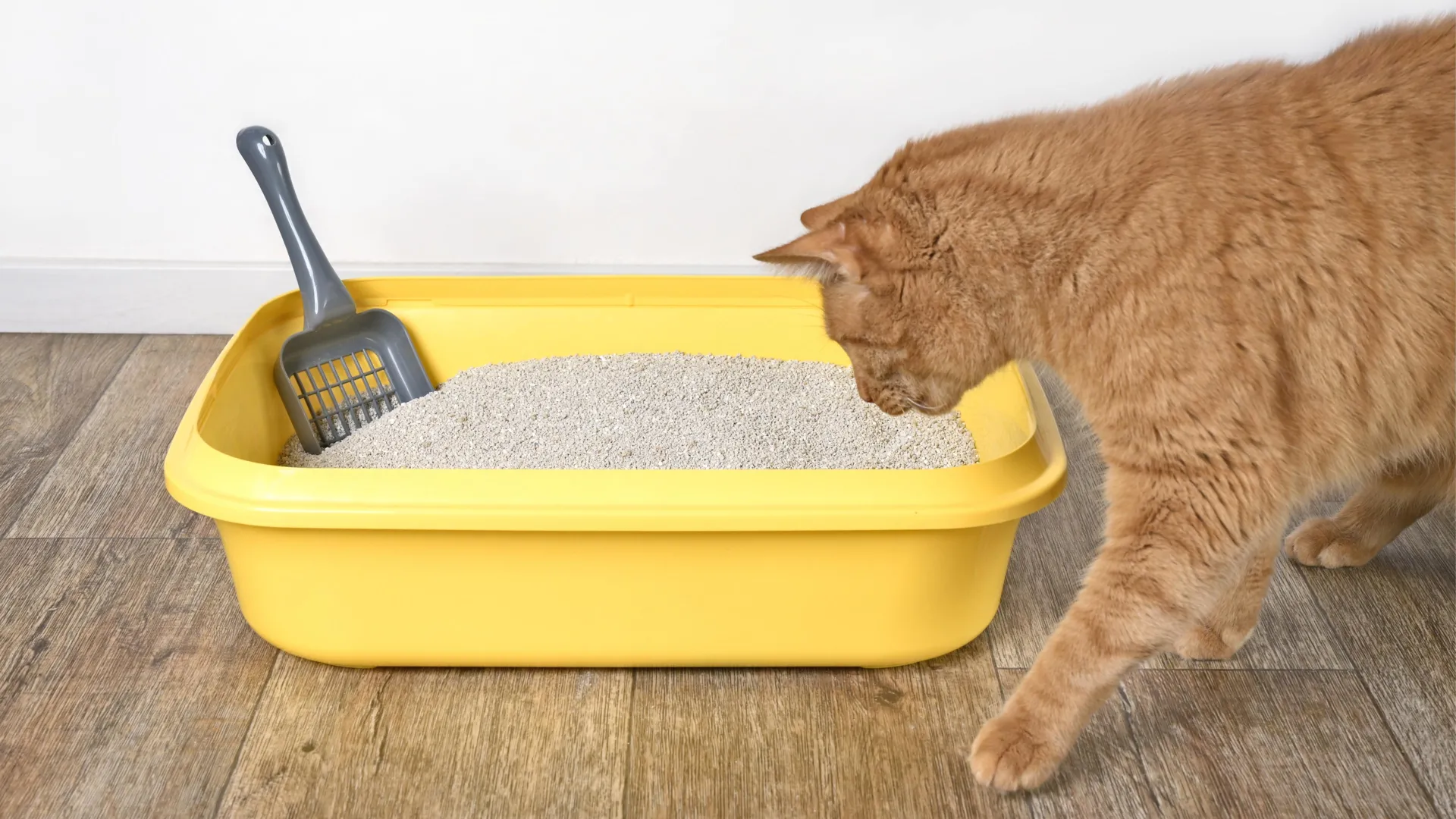
This fundamental aspect of feline communication presents a significant scientific paradox: how can a chemical signal, inherently subject to evaporation, breakdown, and transformation over time, reliably convey consistent information about an individual? Odor molecules are notoriously volatile and ephemeral, constantly interacting with the environment and undergoing chemical changes. Yet, cats, like many other mammals, appear to derive stable, long-lasting information from these transient chemical signatures. This enduring puzzle has long captivated ethologists and chemists alike, seeking to understand the mechanisms by which animals maintain a persistent olfactory identity.
A groundbreaking international research collaboration, spearheaded by Iwate University in Japan and involving scientists from Germany and Spain, has potentially uncovered a crucial piece of this complex biological puzzle in domestic cats. Their meticulous investigations point to a novel class of compounds – unusual branched-chain fatty acids (BFAs) – as the potential bedrock of a durable chemical signature within feline urine. These findings suggest that BFAs could serve as a remarkably stable "calling card," preserving vital information about an individual cat’s identity long after the initial scent mark has been deposited.
The researchers systematically identified 13 distinct branched-chain fatty acids within cat urine. What proved particularly illuminating was not merely their presence, but the highly individualized "profile" these compounds formed. The specific mixture and relative proportions of these BFAs varied significantly from one cat to another, creating a unique chemical fingerprint. Crucially, however, these profiles remained remarkably consistent within the same animal over time, suggesting an intrinsic biological signature rather than a fleeting environmental influence. To validate their chemical discoveries, the team conducted rigorous behavioral tests. These experiments compellingly demonstrated that cats could indeed discern differences between BFA profiles, even when other lipid components in the urine were carefully controlled, isolating the BFAs as the key informational carriers.
The implications of this discovery are profound, offering a fresh perspective on the mechanisms of mammalian chemical communication. The study, slated for publication in the prestigious journal Current Biology, proposes that BFAs function as a resilient chemical identifier, providing a stable source of information about individual identity in an otherwise rapidly degrading chemical environment.
Cats Remember Individual Urine Scents: The Behavioral Foundation
Before delving into the intricate biochemistry, the research team first needed to establish a robust behavioral foundation: demonstrating unequivocally that cats possess the cognitive capacity to distinguish between the urine of different individuals and retain this information over time. This foundational step is critical, as the presence of a unique chemical signature is meaningless if the target animal cannot perceive and interpret it.
To achieve this, the researchers employed a well-established behavioral paradigm known as habituation-dishabituation. In this method, an animal is repeatedly exposed to a stimulus until its initial interest wanes (habituation). If a new, significantly different stimulus is then introduced, the animal’s interest should rebound (dishabituation), indicating that it perceives a distinction. When cats were presented with the same urine sample multiple times, their investigative behaviors – sniffing, approaching, direct contact – gradually decreased in duration and intensity. This reduction in interest signaled habituation to that particular individual’s scent. However, upon the introduction of urine from a different cat, the cats’ interest immediately surged again, demonstrating a clear ability to differentiate the new scent from the previously encountered one. This robust dishabituation confirmed their capacity for individual urine odor discrimination.
Remarkably, this ability extended beyond short-term memory. Cats continued to exhibit reduced responses to previously encountered urine odors even after significant temporal gaps, stretching across several months. This striking pattern strongly suggests that cats possess long-term memories for specific urine scents, a cognitive feat that underscores the importance of these chemical signals in their social structure and environmental navigation. Such enduring memory highlights the evolutionary pressure for reliable, persistent chemical markers.
Further reinforcing these behavioral observations, the researchers meticulously documented the flehmen response. This characteristic open-mouthed expression, often accompanied by a curled upper lip, is a distinctive behavior seen in many mammals, including felines, when investigating certain odors. It serves to draw air, laden with chemical cues, into the vomeronasal organ (VNO) located on the roof of the mouth. The VNO is a specialized chemosensory organ distinct from the main olfactory system, believed to play a crucial role in detecting non-volatile, often pheromonal, compounds. Cats displayed the flehmen response significantly more often when encountering unfamiliar urine compared to their own, indicating heightened interest in novel chemical information. As the same urine was presented repeatedly, the frequency of the flehmen response diminished, mirroring the general habituation trend. Crucially, introducing urine from another cat prompted an immediate increase in the flehmen response, providing a direct physiological indicator of individual scent recognition.
Professor Masao Miyazaki of Iwate University, who spearheaded this ambitious research project, emphasized the strategic importance of these initial behavioral findings: "After confirming that cats can distinguish individual urine odors, we used the flehmen response as a clue to identify urinary molecules that may contribute to individual scent recognition." This systematic approach, moving from observed behavior to targeted chemical analysis, proved instrumental in narrowing down the vast array of potential odor molecules.
13 Unusual Fatty Acids Form Distinctive Profiles: The Chemical Breakthrough
Armed with compelling behavioral evidence, the scientists strategically narrowed their chemical investigation to a specific lipid fraction within the urine known to elicit strong behavioral responses. This targeted approach, guided by the cats’ own reactions, proved highly efficient. Within this lipid fraction, they ultimately identified a suite of 13 unique branched-chain fatty acids (BFAs).
A thorough review of existing scientific literature revealed a significant discovery: there were no previous reports of these specific BFAs occurring in such a pattern in mammalian excretions or secretions. This suggested a novel, potentially feline-specific, chemical signaling system. The true significance, however, lay not merely in the presence of these compounds, but in the intricate patterns they formed. Each individual cat possessed a distinct BFA profile, defined by the unique combination and relative abundance of these different fatty acids. These profiles were found to vary considerably between animals, providing the basis for individual identification. Yet, critically, they remained comparatively stable when samples were collected from the same cats on different dates, underscoring their potential as a consistent chemical signature.
The research also uncovered a fascinating genetic component. Related cats generally exhibited more similar BFA patterns, suggesting a hereditary influence on these chemical signatures. However, even within the same family, each animal maintained its own distinguishable profile, indicating a complex interplay of genetic predisposition and individual variation. This combination of genetic influence and individual distinctiveness makes the BFA profile a robust identifier.
Furthermore, the physical properties of these compounds addressed the fundamental paradox of scent longevity. Unlike many highly volatile chemicals responsible for the immediate, fleeting scent of urine, BFAs are classified as semi-volatile. This characteristic means they evaporate more slowly, allowing them to persist in the environment for longer periods. To quantify this durability, the researchers stored urine-soaked samples at 25°C. They found that the distinctive BFA profiles associated with individual cats remained comparatively stable and detectable for at least 24 hours. This extended persistence is a crucial attribute for a "calling card" meant to communicate long after the animal has departed.
Cats Can Detect the Chemical Differences: Behavioral Validation
Having identified the unique BFA profiles and established their relative stability, the next critical step was to ascertain whether cats themselves could actually perceive and interpret these chemical differences. This involved a sophisticated set of behavioral experiments designed to isolate the effect of BFAs.
The researchers meticulously controlled other lipid components within the urine samples, altering only the donor-derived BFA-containing fraction. This precision allowed them to pinpoint the informational role of BFAs. When cats, already habituated to an original sample, were presented with a new sample where only the BFA fraction had been switched to that of a different cat, their sniffing behavior increased significantly once again. This renewed interest, a clear sign of dishabituation, provided compelling behavioral evidence that cats are indeed capable of perceiving and distinguishing between different individual BFA compositions. This result powerfully strengthens the hypothesis that these fatty acids are not merely unusual chemical byproducts, but rather carry meaningful, actively interpreted information about individual identity.
A Century-Old Cat Kidney Mystery Solved (Partially): The Renal Connection
The investigation yielded an unexpected and particularly intriguing discovery, linking the newly identified BFAs to a long-standing mystery in feline physiology. The researchers detected BFAs not only in urine but also within the kidneys of cats, specifically in the renal cortex. Furthermore, lipids containing BFAs were found to be stored inside specialized lipid droplets within the kidney tissue.
These lipid droplets in the cat kidney have perplexed scientists for over a century. It has long been known that cats possess an unusually large number of these droplets compared to many other mammals, yet their precise biological purpose has remained an enigma. The new findings offer a compelling hypothesis: these lipid droplets may act as a crucial storage reservoir for lipids containing BFAs.
Such a reservoir could play a vital role in maintaining the consistency of a cat’s chemical signature. By buffering against temporary fluctuations in diet, hydration, or other physiological conditions, the kidney could help ensure that a cat’s individual chemical profile in urine remains relatively steady and reliable. This "buffering" mechanism would be essential for a stable chemical calling card, preventing environmental or physiological noise from distorting the signal of identity.
Professor Miyazaki elaborated on the significance of this unexpected link: "Lipid droplets in the cat kidney have been known for more than a century, but why cats have so many of them has remained a mystery. Our findings suggest that one of their functions may be to support a stable chemical signature in urine. How BFAs stored in renal lipids are ultimately released into urine is an important question for future research." This opens up exciting new avenues for investigating feline renal physiology and its connection to chemical communication.
Similar Chemistry Appears Across the Cat Family: Evolutionary Insights
To explore the broader evolutionary significance of their discovery, the researchers extended their investigation beyond domestic cats, examining whether similar traits appeared elsewhere within the diverse Felidae family. Their findings revealed that BFA-related compounds in urine and renal lipid droplets were detectable in a range of wild felid species, including majestic lions, powerful tigers, elusive leopards, sleek jaguars, agile lynxes, and the critically endangered Iriomote cat.
However, while the general presence of BFAs was widespread, the exact BFA profiles differed notably among species. Furthermore, researchers observed variations in both the quantity and distribution of lipid droplets within the kidneys of these different felids. Intriguingly, even between closely related subspecies, such as the Iriomote cat and the Tsushima leopard cat – two geographically isolated forms of the leopard cat found in Japan – discernible differences were noted. This suggests that while the underlying BFA-related chemistry and kidney physiology may be a common feature across the Felidae, these systems have also undergone significant evolutionary diversification, likely adapting to specific ecological niches and social structures.
It is important to note, however, that while the chemical and physiological evidence for BFAs is compelling across felids, the behavioral demonstration of whether wild felids like lions and tigers actually utilize these compounds to recognize specific individuals has not yet been established. This remains an exciting area for future ethological research.
How a Changing Odor Can Preserve Identity: A Broader Biological Principle
The discovery of BFAs in cats provides a significant contribution to a broader, fundamental problem in animal communication science: how can scent marks convey useful and stable information when their chemical composition inherently begins to change the moment they are deposited? Understanding how an animal can leave behind a consistent, recognizable signal of identity despite this inevitable chemical degradation has been a long-standing question in chemical ecology.
One well-studied solution comes from mice, where major urinary proteins (MUPs) play a crucial role in preserving individual information in urine. MUPs bind to volatile compounds, effectively stabilizing them and releasing them slowly, thus extending the longevity of the scent signal. However, scientists have not established a similar protein-based identity system in many other mammalian species, suggesting alternative evolutionary strategies.
Cats, it now appears, may employ a distinct and elegant strategy. Instead of relying primarily on proteins to stabilize volatile cues, they may produce distinctive combinations of semi-volatile, lipid-derived molecules – the BFAs. Because these compounds disappear more slowly than highly volatile ones and may be supported by a sophisticated storage reservoir of lipids within the kidney, they could effectively preserve an individual’s chemical identity over extended periods. This represents an innovative biological solution, leveraging the intermediate volatility of BFAs to strike a balance between immediate signaling and long-term persistence.
Possible Uses for Cat Scent Chemistry: Future Applications
While the current work is fundamental basic research, aimed at unraveling the underlying biological mechanisms, the findings lay the groundwork for several compelling future applications across diverse fields.
Firstly, a deeper understanding of BFAs and their role in feline scent could eventually contribute to novel and more effective methods for managing unwanted cat urine odor in domestic settings. By targeting the specific compounds responsible for individual identity, rather than just general odor, it might be possible to develop more nuanced solutions for controlling scent marking behavior or neutralizing specific components.
Secondly, the unexpected connection between BFAs and kidney lipid droplets could significantly advance our understanding of lipid metabolism and accumulation. This research might help investigate why lipid accumulation is a normal physiological feature in feline kidneys, contrasting it with situations where lipid accumulation is indicative of disease in other contexts or species. This could have implications for both feline health and broader medical research.
Finally, and perhaps most excitingly for conservation efforts, there could be profound implications for wildlife conservation. If future research can definitively demonstrate that BFA profiles reliably identify the same individual animal across multiple urine samples collected in the wild, this opens the door to a powerful non-invasive monitoring technique for rare and endangered wild felids. Instead of relying on stressful and often difficult capture methods, or requiring direct visual observation, conservationists could potentially gather vital data on population size, individual movements, health status, and habitat use simply by analyzing urine samples collected from the environment. This could revolutionize conservation strategies for species like the Iriomote cat, providing invaluable data with minimal disturbance to the animals.
What began as a focused search for the chemistry underpinning individual scent recognition in domestic cats has thus expanded into a multi-faceted discovery, potentially explaining both a century-old mystery within feline kidneys and addressing a fundamental, broader question about how animals leave recognizable, enduring identities behind in a chemically dynamic environment. The semi-volatile BFAs, supported by their renal reservoir, represent a sophisticated and evolutionarily successful strategy for persistent chemical communication.
