
 By Rifan Muazin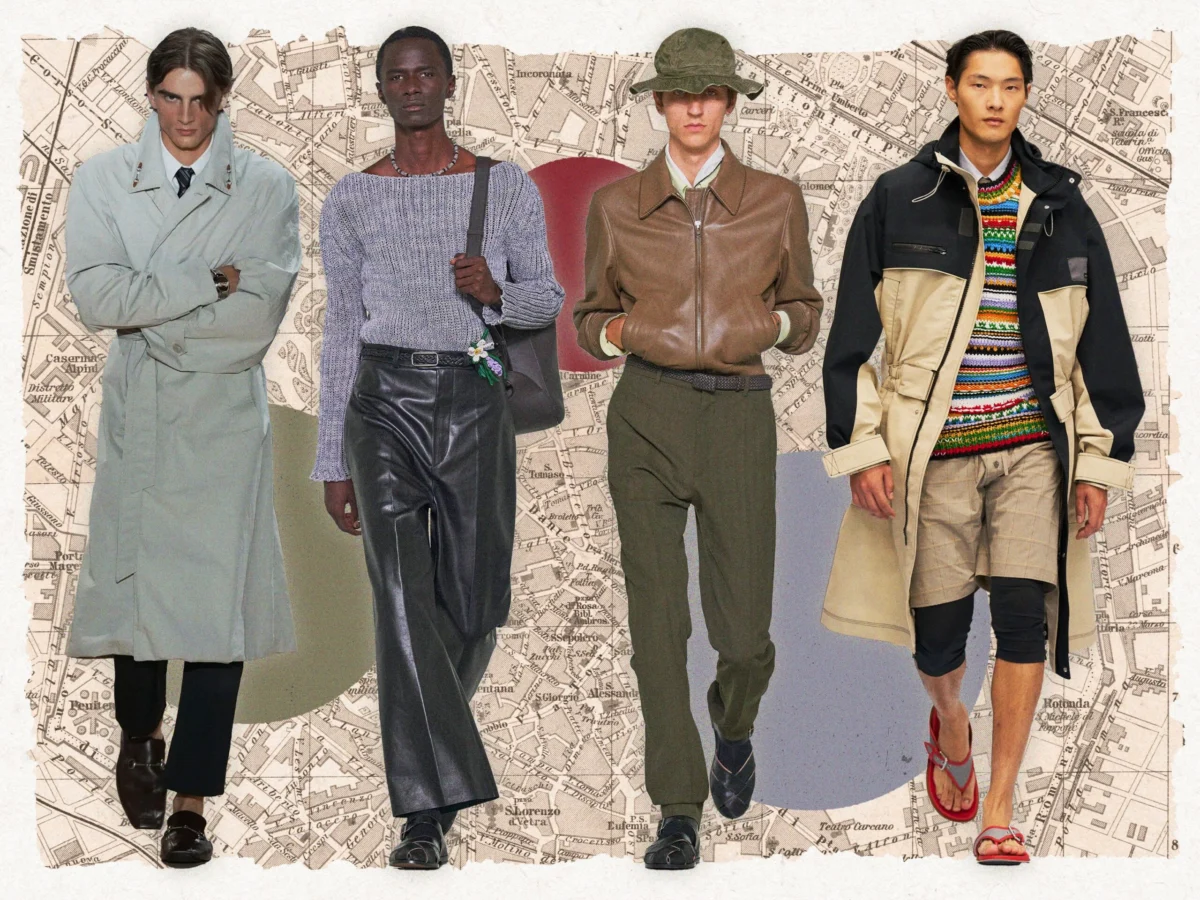
Milan Fashion Week concluded yesterday, following a whirlwind of spring-summer 2027 shows from marquee brands like Prada, Gucci, Jil Sander, and Bottega Veneta. This season served as a pivotal moment for the Italian fashion capital, solidifying its reputation as the epicenter of both heritage craftsmanship and radical aesthetic experimentation. While the industry had already caught a glimpse of the season’s direction during the SS27 menswear presentations in June, these most recent presentations were primarily for the ladies, but—as is increasingly the case in a post-gender fashion landscape—there were still plenty of men’s looks in the mix. This convergence of masculine and feminine silhouettes is no longer a mere trend; it is a fundamental shift in how the world’s most influential creative directors approach their collections, blurring the lines to create a cohesive brand universe that transcends traditional binaries.
Among the week’s most talked-about highlights was Glenn Martens’ farewell Diesel show. The Belgian designer, who has been credited with the miraculous resurrection of the Italian denim giant, ended his tenure with a spectacle that was both a celebration and a provocation. The show sent off Martens in a literal orgy of denim speedos and freaky leathers, a testament to his ability to blend high-concept avant-garde with the gritty, accessible roots of the Diesel brand. Martens’ departure marks the end of an era that saw Diesel move from the back of the wardrobe to the front of the cultural conversation, influencing everything from street style to the red carpet. His final collection for SS27 leaned heavily into the "distressed luxury" aesthetic he pioneered, utilizing laser-cut textures and experimental washes that made denim look more like organic matter than fabric.
The cultural gravity of Milan Fashion Week was further amplified by the high-profile front-row appearances of fashion-loving celebrities. The presence of Travis Scott, whose influence on the "sneakerhead" community and streetwear market remains unparalleled, signaled the continued importance of the intersection between hip-hop culture and European luxury. Alongside him, Jacob Elordi, who has quickly become a modern style icon for his embrace of soft masculinity and classic tailoring, represented the new guard of Hollywood leading men who treat the runway as a serious artistic medium. Naomi Osaka, the tennis champion and fashion entrepreneur, also made waves, bridging the gap between high-performance athleticism and high-fashion elegance. The presence of these figures is not just for the cameras; they represent the demographic shift in luxury consumption, where athletes and musicians hold as much sway as traditional fashion editors.
As a showcase of spring-summer 2027 designs, Milan Fashion Week’s collections don’t just preview what the world’s elite retailers will be selling next year—they also suggest how those clothes might influence the rest of the fashion pantheon. The "trickle-down" effect of Milanese design is a well-documented economic phenomenon. When Miuccia Prada and Raf Simons decide on a specific shade of industrial grey or a particular nylon weave, those choices eventually manifest in every tier of the market, from high-end boutiques on New York’s Fifth Avenue to the digital scrolls of fast-fashion giants. That means whether you’re shopping the racks at Prada or scrolling your feed for inspiration, the runways had plenty to get your wheels turning. The SS27 season specifically signaled a move away from the "quiet luxury" of previous years toward a more expressive, layered, and intellectually challenging way of dressing.
One of the most dominant and accessible themes to emerge from the week was the concept of "Oddball Layering." It’s no secret that precision layering is the keystone of many an elite fit, but this season’s shows pushed the idea far beyond its conventional boundaries. In previous seasons, layering was often about functionality—adding a sweater over a shirt for warmth. For SS27, however, layering has become an architectural exercise. Much of this was for theatrical effect, as designers sought to maximize the visual impact of their collections on the runway, but there is a deeper logic at play. By combining disparate elements that shouldn’t traditionally work together, designers are challenging the wearer to think more critically about their own personal style.
At Ferragamo, for instance, creative director Maximilian Davis continued his masterful refinement of the brand’s identity. One of the show’s strongest looks featured a utility vest worn over a crisp white button-up shirt and tie, all tucked into wide, cream-colored trousers. This combination is both counterintuitive and extremely vibey, merging the ruggedness of outdoor gear with the strictness of corporate attire. This "executive gorpcore" aesthetic reflects a world where the office and the outdoors are no longer mutually exclusive spaces. The utility vest, once the sole domain of fishermen and photographers, has been elevated to a piece of high-tailoring, suggesting that the modern man’s wardrobe must be as versatile as his lifestyle.
Marni, under the direction of Francesco Risso, tried something similar with a vest layered over a sleeveless dress shirt and tie. The result was a playful yet sophisticated take on traditional workwear. In an era where "business casual" has become a nebulous and often boring dress code, Marni’s approach might be the best cure yet invented for a case of the Mondays. It injects a sense of humor and irreverence into the morning routine, proving that professional attire doesn’t have to be synonymous with conformity. The key to this look is the contrast in proportions—the slimness of the vest against the volume of the trousers, and the unexpected exposure of the arms, which adds a touch of subversion to the ensemble.
Gucci’s contribution to the trend was perhaps the most daring. Sabato De Sarno’s overcoat-hoodie-dress-shirt-turtleneck combo is more of a swing, but—as with many ideas that appear on the runway—it’s as much inspiration as instruction. This four-layer stack creates a silhouette that is rich in texture and depth, challenging the eye to navigate the various collars and hoods. While wearing four layers in the heat of spring may seem impractical, the conceptual takeaway is about the interplay of fabrics. The softness of a cotton hoodie against the structured wool of an overcoat, punctuated by the sharp lines of a dress shirt, creates a visual narrative that is far more interesting than a simple jacket-and-tee pairing.
Integrating these trends into a real-world wardrobe requires a balance of bravery and restraint. If there’s one takeaway from all of the kooky layering we saw in Milan, it’s that wherever you’re at in your layering journey, the only limit is your appetite for experimentation. For those looking to adopt the Ferragamo look, start with a high-quality utility vest in a neutral tone like olive or navy. Wear it over your favorite Oxford shirt and see how it changes the dynamic of the outfit. The goal is not to look like you’re heading into a combat zone, but rather to use the vest as a modern alternative to a blazer or a cardigan. It provides the same structural benefits—framing the torso and providing extra pockets—while feeling much more contemporary.
Furthermore, the data from retail analysts suggests that this shift toward complex layering is a response to the "wardrobe fatigue" experienced by consumers after years of minimalist dominance. According to recent market reports, there has been a 15% increase in the sale of "modular" clothing items—pieces that can be easily layered or detached. Designers in Milan are tapping into this desire for customization. By showing "oddball" combinations, they are essentially giving the consumer permission to play with their clothes. This is particularly relevant for the younger Gen Z and Gen Alpha demographics, who value self-expression and "outfit repeating" through creative restyling over the constant acquisition of new, single-use garments.
The Bottega Veneta show also reinforced the idea that luxury is moving toward a more tactile and lived-in experience. Matthieu Blazy’s obsession with "the power of the everyday" resulted in garments that looked like simple flannels or denims but were actually made of intricately woven leather. This level of craftsmanship ensures that even the most "experimental" layers are rooted in a sense of extreme quality. It suggests that as we move into 2027, the value of a garment will be measured not just by its brand name, but by the complexity of its construction and the versatility of its use within a layered system.
In conclusion, Milan Fashion Week SS27 was a masterclass in the evolution of the modern wardrobe. From Glenn Martens’ high-octane farewell at Diesel to the intellectual layering at Prada and Gucci, the message was clear: fashion is entering a phase of radical personalization. The trends seen on the runway are not meant to be copied verbatim but rather to serve as a catalyst for individual creativity. Whether it’s a utility vest over a tie or a hoodie under a topcoat, the season encourages us to break the rules of traditional dressing. As the global fashion community looks toward the future, the lessons from Milan remind us that style is at its best when it is experimental, slightly "odd," and deeply personal. The spring-summer 2027 season will likely be remembered as the moment when the "rules" of layering were finally discarded in favor of a more expressive and inclusive vision of what it means to be well-dressed.
