
 By Rifan Muazin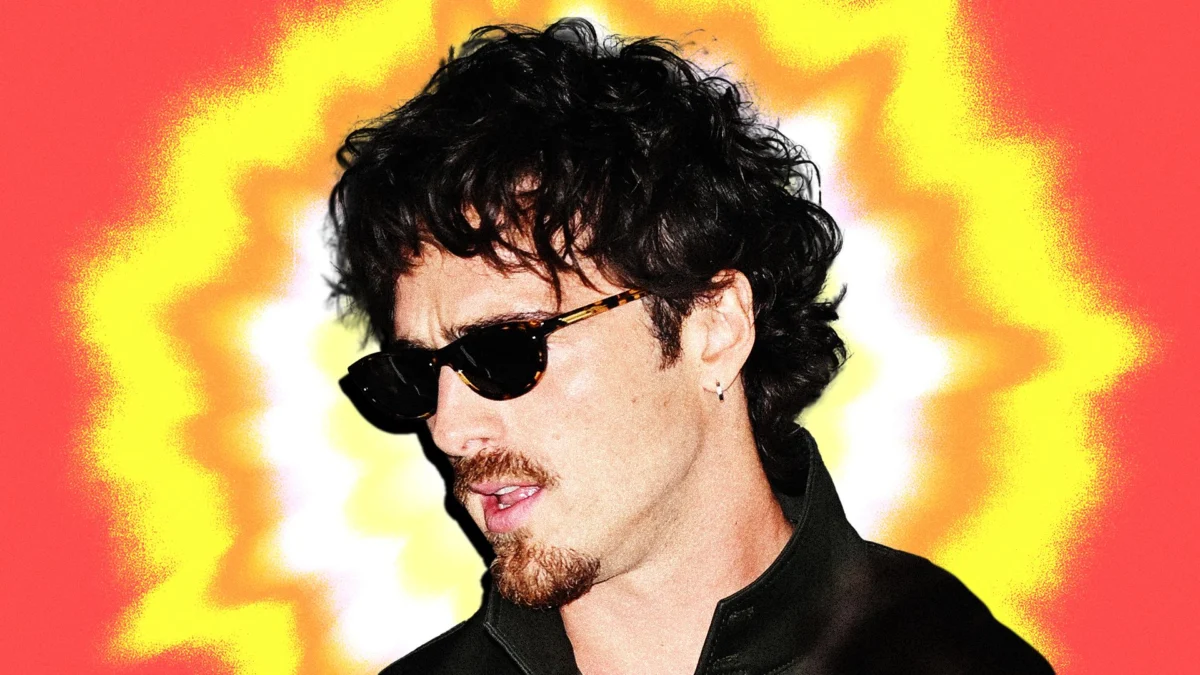
The trajectory of men’s grooming trends often follows a predictable cycle of rejection and reclamation, but few actors have navigated these waters with as much influence as Jacob Elordi. A few years ago, the Australian actor, known for his roles in Euphoria and Saltburn, became the unlikely poster boy for the modern mullet—a hairstyle once relegated to the annals of 1980s kitsch that he successfully rebranded as a staple of the "indie sleaze" aesthetic. Now, as he prepares to take on the iconic role of Heathcliff in Emerald Fennell’s upcoming adaptation of Wuthering Heights, Elordi is turning his attention to another polarizing facial hair choice: the goatee. By debuting a meticulously groomed version of the look at Milan Fashion Week, Elordi is not just experiment with his appearance; he is actively rehabilitating the reputation of a style that has spent the better part of two decades being mocked as a relic of the early 2000s.
Over the recent weekend, the Aussie star was seen sitting front row at the Bottega Veneta Spring/Summer 2025 show, an event that serves as a high-water mark for contemporary luxury and style. Decked head-to-toe in the Italian label’s sophisticated tailoring, Elordi’s presence was a masterclass in modern masculinity. While his hair remained in its signature state—typically wavy, voluminous, and effortlessly tousled—it was the new goatee that truly shook up his look. This was a sharp departure from his appearance only a month earlier, when he stepped out at the premiere of The Dog Stars looking entirely clean-shaven from the bottom lip down. The sudden shift from a boyish, smooth-faced profile to a more rugged, defined look suggests a deliberate move toward a more mature, perhaps even more cynical, screen persona.
The goatee has long been a lightning rod in the world of men’s fashion. For some, it evokes the suave sophistication of a 19th-century intellectual; for others, it brings to mind the questionable grooming choices of late-90s nu-metal frontmen. According to TJ Hunt, a professional barber at the renowned Time Shoreditch in London, Elordi’s choice is perfectly timed with a broader cultural nostalgia. “I immediately was like, ‘I swear, I’ve seen a few of these little goatee things around recently,’” Hunt observes, noting that the look is beginning to permeate the urban fashion scene once again. “I think it plays into the fashions at the moment for hair, which is leaning towards that early 2000s look. It links with that skater-y, surfer-y grunge scene of the early 2000s, when there was Limp Bizkit and those guys. There was a lot of those soul patches with mustaches. We used to call it like a disconnected goatee, because obviously it doesn’t go all the way round.”
This "disconnected" element is crucial to understanding why Elordi’s version works where others might fail. Unlike the traditional "circle beard" that fully encloses the mouth, the disconnected goatee separates the mustache from the chin hair. This creates a more open, less oppressive look that avoids the "villainous" or "dated" tropes often associated with facial hair. Maxwell Oakley, co-founder of the premium barbering brand Supply 91, notes that the geometry of the look is what provides its modern edge. “He paired his goatee with a mustache, using the shape to add definition around the jaw while keeping the overall look relaxed and modern,” Oakley explains. He further points out that Elordi is joining a cohort of contemporary leading men who are embracing facial hair as a tool for character building. “Adam Driver and Austin Butler are good examples of how the goatee can be used to anchor a look without overwhelming the face.”
Beyond the mere aesthetics of trend-chasing, there is a functional, almost architectural benefit to the goatee that Hunt highlights. In the world of grooming, facial hair is often used to "contour" the face, much like makeup is used in the beauty industry. “I think another good thing about this look is that it brings weight and definition to the chin and central area of the face, which can make the face look more angular,” says Hunt. While he acknowledges that “Jacob Elordi and handsome devils like that don’t need to worry about making themselves look more chiseled,” the takeaway for the average man is significant. For those who may not possess Elordi’s genetic lottery-winning jawline or prominent cheekbones, a well-placed goatee can create the illusion of a more masculine, structured profile by drawing the eye to the center of the chin and elongating the face.
One of the most encouraging aspects of the goatee’s return is its accessibility. While a full, thick beard requires significant genetic commitment and months of growth, the goatee is surprisingly democratic. Hunt suggests that men who struggle with "patchy" beard growth should view the goatee as their best friend. “A lot of guys grow quite a bit of hair around the goatee area and the sideburns, and then it’s a bit sparse or patchy in between, so this is a really good style for that,” he says. By leaning into the areas where hair naturally grows thickest—the upper lip and the chin—a man can achieve a deliberate, styled look that masks the lack of growth on the cheeks.

However, the transition from a "shruffy" face to a "high-fashion" goatee requires precision. As Maxwell Oakley emphasizes, “The key to a good goatee is definition.” To replicate Elordi’s success, one cannot simply stop shaving. It requires a strategic approach to negative space. Hunt recommends starting by removing the "noise" from the rest of the face. This means getting rid of any tufts on the cheeks and the jawline. “Clean shave those, or with the bare blade of a detail clipper, take all that off until you get down to that chin area,” he advises. This creates the necessary contrast that makes the goatee stand out as a choice rather than an accident of laziness.
From a technical standpoint, Elordi’s goatee appears to be maintained at a very specific length. Hunt observes that the actor likely trims his facial hair with a number two hair clipper guard, which translates to roughly six millimeters. This length is the "sweet spot"—it is long enough to be visible and provide texture, but short enough to look groomed rather than unkempt. This uniform length should also be applied to the mustache. “It doesn’t have to be crazy neat, but obviously you don’t want like a big bushy walrus mustache to go with your disconnected goatee,” Hunt warns. The goal is a balanced, symmetrical appearance that complements the facial structure.
Creating the actual shape of the goatee is the most delicate part of the process. For those attempting this at home, Hunt suggests using a trimmer without the guard to outline the edges. To mimic the Elordi look specifically, one should ensure there is a small "soul patch" of hair directly under the bottom lip, which then widens to cover the bulk of the chin. “Once you’ve got the original shape in, it should be relatively easy to keep it neat because you’ve got that guideline,” Hunt says. “Then it’s a case of clearing the stray hairs that grow.”
Symmetry, however, remains the ultimate challenge for the amateur groomer. A goatee that is even slightly off-center can distort the appearance of the entire face. Oakley advises a slow and steady approach: “Symmetry is particularly important with a goatee, so take your time when outlining each side and check your shape as you go. My advice is always to trim gradually—you can take more off, but you can’t put it back. Finish with a razor or precision trimmer to clean up the edges and remove any stray hairs.”
For many men, the prospect of taking a bare blade to their face to create such a specific shape is daunting. In these cases, the experts suggest outsourcing the initial "mapping" to a professional. A barber can establish the correct proportions based on an individual’s unique bone structure and lip shape. “They will make sure the shape is there, and you can just upkeep that,” says Hunt. “It will save you if you’re not feeling too confident with the bare blade of a clipper, or the wet razor to get that neat line.”
The return of the goatee, spearheaded by figures like Elordi, signifies a broader shift in men’s style toward "character-driven" grooming. We are moving away from the "clean-cut corporate" look of the 2010s and the "lumbersexual" full-beard craze that followed. In their place is a desire for something more expressive, a bit more rebellious, and deeply rooted in the subcultures of the past. By pairing a Y2K-inspired goatee with the high-concept designs of Bottega Veneta, Jacob Elordi is proving that even the most divisive trends can be elevated to the level of high art when executed with confidence and technical precision. As the goatee continues its ascent, it serves as a reminder that in fashion, no look is ever truly "dead"—it’s just waiting for the right person to bring it back to life.
