
 By admin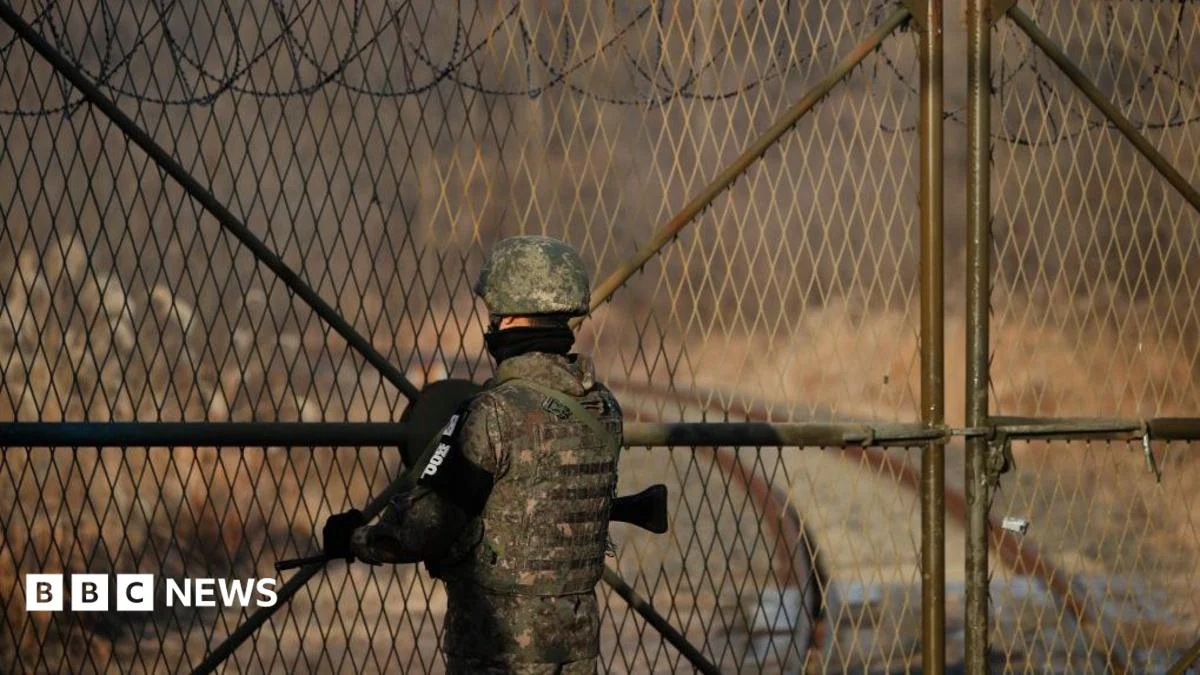
Seoul, South Korea – In a sharp escalation of inter-Korean tensions, South Korea’s military has issued a formal demand for an apology from North Korea following a series of landmine explosions that critically injured three South Korean soldiers earlier this month. The incident, which occurred within the heavily fortified Demilitarised Zone (DMZ) on September 21st, has reignited long-standing animosities and raised serious concerns about the fragile peace on the Korean Peninsula.
The precise location of the blasts, confirmed to have taken place on the South Korean side of the DMZ, has led Seoul to conclude with a high degree of certainty that Pyongyang is responsible. The South Korean Ministry of National Defense stated on Tuesday that the explosions were "highly likely" the result of North Korean mines, labeling the act a "clear" violation of the 1953 Armistice Agreement that brought an end to active hostilities in the Korean War. The ministry further vowed to take "corresponding measures," signaling a potential for retaliatory actions if North Korea does not offer a satisfactory response.
Pyongyang, however, has vehemently denied any involvement in the incident, dismissing Seoul’s accusations as "groundless" and a "farce" orchestrated to deliberately inflame tensions. In a particularly pointed statement, Kim Yo Jong, the influential sister of North Korean leader Kim Jong Un, launched a scathing attack on South Korea’s claims. She accused Seoul of "cooking up" the narrative for the purpose of "political and military provocation." Kim directly refuted any suggestion that North Korean personnel had crossed the border to plant the mines, characterizing such assertions as a "deliberate and planned strained assertion to shift the responsibility for escalating tension" onto Pyongyang.
Her statement, disseminated through state media on Wednesday, carried a stark warning to the South, urging them to "be prepared for paying price for the farce of their own making." This rhetoric underscores the deep chasm in communication and trust that currently exists between the two Koreas.
South Korea maintains that the mines are believed to have been strategically placed by Pyongyang to bolster its border defenses. In a subsequent statement on Wednesday, Seoul reiterated its call for North Korea to apologize for the blasts and immediately cease all such fortification activities along the shared border. The gravity of the situation was further emphasized by South Korean Defence Minister Kang Shin-chul, who on Tuesday unequivocally stated that the explosions constituted a "clear" breach of the 1953 Armistice Agreement. This landmark agreement, while halting open warfare, did not result in a formal peace treaty, leaving the Korean Peninsula technically in a state of war.
The Armistice Agreement led to the establishment of the DMZ, a 4-kilometer-wide (2.5-mile) buffer zone that runs across the peninsula, bisected by the Military Demarcation Line (MDL), which serves as the de facto land border between the two Koreas. This heavily militarized zone, despite its intended purpose as a buffer, has unfortunately been the site of numerous skirmishes and tragic incidents over the decades, including previous landmine explosions.
A chilling precedent was set in 2015 when two South Korean soldiers were severely injured by landmines while on patrol in the DMZ. At the time, South Korea asserted that the mines had been secretly planted by North Korean soldiers in close proximity to a South Korean guard post. Pyongyang, as is its current stance, denied any responsibility for that incident. Kim Yo Jong’s reference to this 2015 event in her recent statement suggests a pattern of North Korea viewing such accusations as a pretext for South Korea to escalate tensions, a narrative they appear to be deploying once more.
The relationship between Pyongyang and Seoul has been on a downward spiral since at least 2015, a trajectory that significantly amplifies the potential for friction when incidents like the recent mine blasts occur. Christopher Green, a senior consultant with the International Crisis Group, offered a sobering perspective on the current state of inter-Korean relations. He told the BBC that "The North Koreans have been wilfully attempting to harden the border [and] eliminate inter-Korean relations." This deliberate policy, according to Green, has eroded the "same low-level communication" channels that were once available in 2015.
Green further warned that "Accidental escalation on the Korean Peninsula is always just a few steps away, and it’s fewer steps now than it was in 2015." This assessment highlights the increased fragility of the security situation and the heightened risk of miscalculation or unintended consequences leading to a broader conflict.
Adding another layer to the diplomatic response, the United Nations Command (UNC), which collaborated with the South Korean military in conducting on-site investigations into the blasts, has stated that it will address the violation of the 1953 Armistice Agreement through "established Armistice mechanisms." The UNC, a multinational force tasked with supporting the Republic of Korea, reiterated its commitment to upholding the Armistice Agreement and fulfilling its mandate to "maintain stability and prevent escalation on the Korean Peninsula." This indicates that the issue will be handled through established protocols, though the effectiveness of these mechanisms in resolving such a direct accusation remains to be seen.
The context of the DMZ itself is crucial to understanding the significance of this incident. This buffer zone, established as a no-man’s-land, is designed to prevent direct confrontation. However, its very nature as a heavily mined and militarized area makes any breach of its integrity a serious matter. North Korea’s alleged actions, if proven, represent a deliberate disregard for the sanctity of this zone and the spirit of the armistice. The fortification of the border by North Korea is a long-standing concern for South Korea and the international community, seen as a move to further isolate the North Korean population and consolidate the regime’s control.
The implications of this diplomatic standoff extend beyond the immediate security concerns. The ongoing rhetoric from Pyongyang, particularly from Kim Yo Jong, reflects a strategic approach to information warfare and psychological operations. By framing the incident as a fabrication by South Korea, North Korea aims to undermine any international condemnation and to project an image of victimhood, thereby deflecting blame and potentially garnering sympathy from its allies.
The history of landmine incidents in the DMZ serves as a stark reminder of the enduring dangers inherent in the division of the Korean Peninsula. The 2015 incident, which Kim Yo Jong sought to reframe, underscores a pattern of North Korea denying responsibility for actions that cause harm to South Korean personnel. This denial is often coupled with accusations of provocation against South Korea, a tactic that aims to sow confusion and deflect scrutiny from Pyongyang’s own actions.
The current geopolitical climate surrounding the Korean Peninsula is also a significant factor. With North Korea continuing its missile and nuclear weapons development programs, and with heightened military readiness on both sides, any perceived transgression, however small, can quickly spiral into a larger crisis. The lack of robust communication channels, as highlighted by Christopher Green, means that de-escalation efforts are more challenging, increasing the likelihood of misinterpretation and unintended escalation.
The demand for an apology from South Korea is not merely a symbolic gesture; it represents a call for accountability and a recognition of the violation of international norms and agreements. North Korea’s outright denial and counter-accusations suggest a deliberate strategy to avoid any admission of guilt, which could have significant diplomatic and potentially economic repercussions.
The United Nations Command’s involvement signifies that this incident is being viewed not just as a bilateral dispute but as a matter of maintaining the integrity of the armistice and regional stability. The "established Armistice mechanisms" are designed to address violations of the agreement, but their effectiveness in situations where one party outright denies responsibility and accuses the other of fabrication is a persistent challenge.
In conclusion, the landmine blasts in the DMZ have plunged inter-Korean relations into another period of heightened tension. South Korea’s demand for an apology, coupled with North Korea’s vehement denial and counter-accusations, paints a grim picture of the current state of affairs. The incident serves as a potent reminder of the persistent dangers on the Korean Peninsula and the urgent need for effective de-escalation and communication strategies to prevent a relapse into open conflict. The world watches closely to see how this diplomatic standoff will unfold and what measures, if any, will be taken to ensure accountability and prevent future tragedies in the shadow of the Korean War.
