
 By admin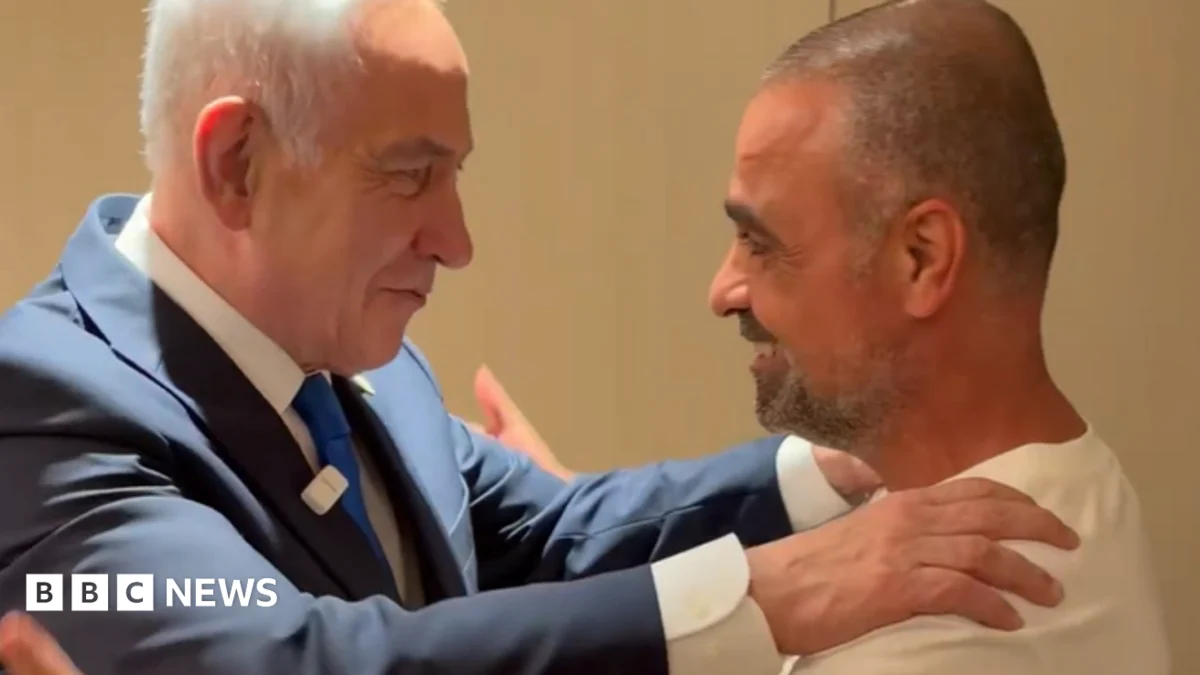
In a harrowing ordeal that unfolded at 30,000 feet, passengers aboard a Flydubai flight en route to Tel Aviv displayed extraordinary courage and quick thinking, subduing a pilot who allegedly stabbed his co-pilot and attempted to disable the aircraft. The terrifying incident, which saw the plane plummet thousands of feet in mere minutes, left travelers convinced they were facing their final moments.
Yaniv Hayun, a passenger who emerged from the ordeal in a bloodstained shirt, recounted the terrifying sequence of events to Israeli Prime Minister Benjamin Netanyahu, describing the moment he realized something was catastrophically wrong when the aircraft suddenly lurched downwards. The flight, originating from Dubai, experienced a precipitous drop of approximately 17,000 feet (5,200 meters) in under two minutes, a maneuver that would have been impossible under normal piloting conditions and a clear indicator of deliberate interference.
"Someone screamed… the light went out," Hayun stated in a video shared by the Prime Minister on social media, painting a chilling picture of the chaos that erupted in the cabin. As panic began to set in, Hayun and other passengers attempted to access the cockpit, only to find their efforts hampered by the proximity of the injured co-pilot, who was blocking the door before collapsing. In a critical moment of bravery, the wounded pilot managed to open the cockpit door, allowing Hayun and another passenger to enter.
Upon entering, Hayun described a scene of utter pandemonium and deliberate sabotage. He witnessed one pilot incapacitated and the attacker, the other pilot, actively interfering with the aircraft’s controls, positioned between the two seats. "Trying to destroy the instruments in order to…disable the plane," Hayun elaborated, underscoring the gravity of the pilot’s actions and the immediate threat to the lives of everyone on board.
With the aircraft potentially on a path to disaster, Hayun took decisive action. "I grabbed the attacker, put him in a chokehold, and pulled him – first and foremost – outside," he recounted, detailing his immediate and forceful intervention. The swiftness of their response was crucial. "We pulled him out; it was a matter of seconds. I called out to the Israeli guys with us on the plane – I called them, and two other guys came over to me… we pinned [the attacker] down to keep him secure," Hayun explained, highlighting the coordinated effort of several brave passengers.
The Flydubai flight, diverted from its intended destination, eventually made an emergency landing at Tabuk airport in northwestern Saudi Arabia. The passengers, shaken but alive, were subsequently transferred to Tel Aviv’s Ben Gurion airport via a repatriation aircraft. Their arrival was met with an outpouring of relief and national pride, with crowds of onlookers playing music, singing, dancing, and waving Israeli flags, celebrating the safe return of their fellow citizens.
For many passengers, the experience was profoundly traumatic. "Thank God I’m alive," expressed Haim Lazarovich, a passenger who spoke to journalists, describing the pilot’s loss of control as "the most terrifying moment in this flight." Oran Choen, an 18-year-old passenger, echoed this sentiment, labeling the incident as "a very tough moment." He added, "Maybe it was five minutes, but it feels like hell – I heard my brother behind me scream that we was going to die." The psychological toll was evident, with a paramedic from Israel’s ambulance service reporting that many passengers were "very emotional and crying as they came off the plane."
The injured pilot, identified as Captain Smit Machchhar, an Indian national, was promptly taken to a hospital. According to the Indian embassy in Saudi Arabia, he is in stable condition. Prime Minister Netanyahu lauded Captain Machchhar’s actions, calling him a "true hero" of "extraordinary bravery" for his role in mitigating the crisis. The attacker, whose identity has not been officially released, was apprehended by Saudi authorities and is currently undergoing questioning.
The incident has sent shockwaves through the international aviation community and raised immediate concerns about security protocols. Israeli Defense Minister Israel Katz has publicly characterized the event as an "attempted jihadist terror attack," signaling a potential motive driven by extremist ideology. However, as of this report, no official confirmation of the motive or further details regarding the attacker’s background have been provided by Saudi authorities, who are leading the investigation.
The gravity of the situation was recognized internationally, with U.S. President Donald Trump stating he had spoken with Prime Minister Netanyahu following the incident. Trump commented that it appeared the attacker was "perhaps a terrorist" or that there might have been "other reasons behind the attack," indicating that a full spectrum of possibilities was being considered by U.S. intelligence.
The nature of the attack, targeting the core control of a commercial aircraft, raises profound questions about the vulnerability of air travel, even with stringent security measures in place. The fact that the perpetrator was a member of the flight crew, entrusted with the lives of hundreds, highlights a chilling new dimension to potential threats. Experts in aviation security have long warned of the possibility of insider threats, but an incident of this magnitude, involving a direct assault on the flight deck and an attempt to sabotage the aircraft, is a stark and alarming development.
Further analysis will likely focus on the psychological state and potential radicalization of the alleged attacker, as well as the efficacy of existing screening processes for flight crew. The role of mental health assessments within aviation personnel is also expected to come under increased scrutiny. The incident underscores the complex interplay of geopolitical tensions, individual grievances, and ideological extremism that can manifest in unpredictable and devastating ways.
The successful intervention by passengers, while a testament to human resilience and courage, also exposes a critical vulnerability. The reliance on civilian intervention in such extreme circumstances is not a sustainable security solution. It prompts a re-evaluation of cockpit security measures, emergency protocols, and the psychological screening of all individuals with access to critical aircraft systems. The airline industry, in collaboration with international regulatory bodies, will undoubtedly be compelled to review and potentially overhaul existing safety and security frameworks to prevent such a catastrophic event from recurring. The bravery displayed by Yaniv Hayun and his fellow passengers serves as a powerful reminder of the best of humanity in the face of unimaginable terror, but it also casts a long shadow over the perceived safety of air travel and the potential for future threats from within. The investigation by Saudi authorities, coupled with the ongoing scrutiny from aviation security experts and international governments, will be crucial in understanding the full scope of this incident and implementing measures to safeguard the skies.
