
 By admin
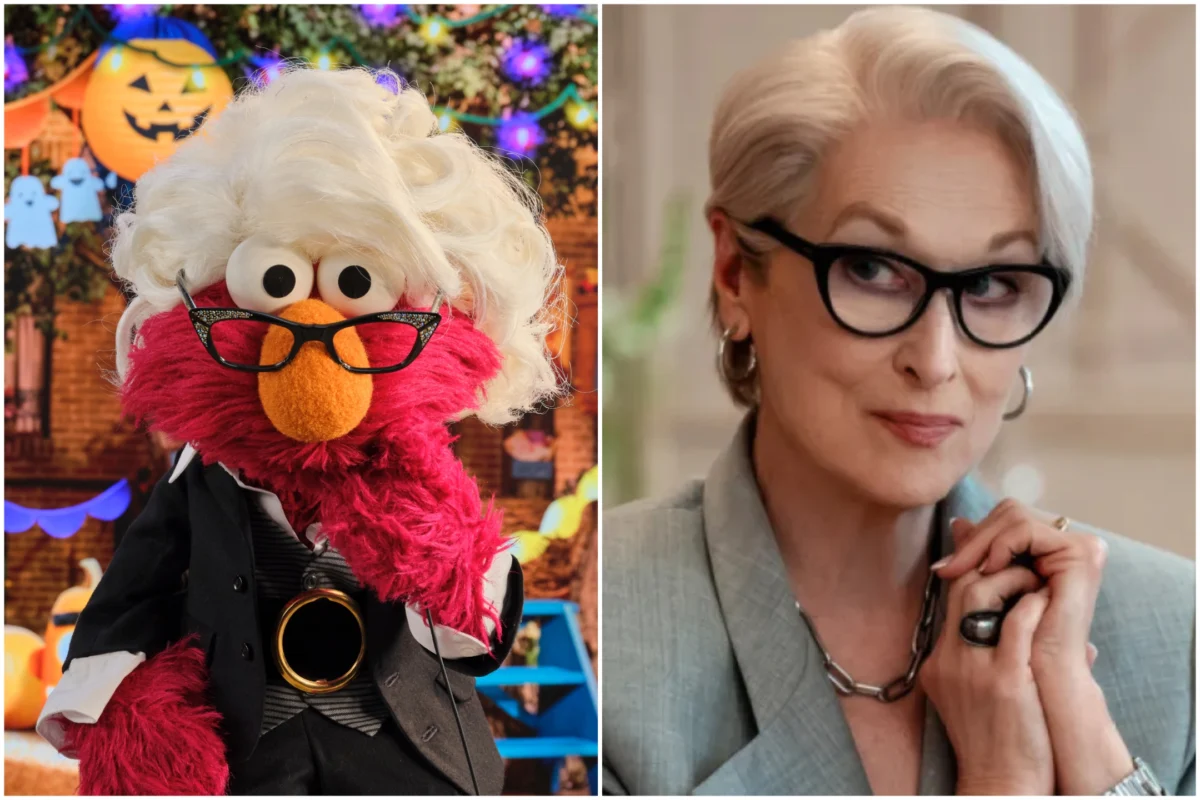
This Halloween, the universally adored, fluffy red resident of Sesame Street is making a dramatic departure from his usual artistic endeavors, trading in his crayons for haute couture and a decidedly frosty demeanor. In a move that has sparked delightful bewilderment across the cultural landscape, Elmo, for Halloween 2026, is embracing a persona that is the antithesis of his usual sunny disposition: he is channeling Miranda Priestly, the formidable and terrifyingly chic fashion magazine editor-in-chief from "The Devil Wears Prada," a role immortalized by the Oscar-winning Meryl Streep.
The unexpected announcement, delivered via a charmingly meta video released by the venerable children’s educational program "Sesame Street," features Elmo playfully engaging with his iconic catchphrase, "Guess who Elmo is?" before unfurling his meticulously crafted Miranda Priestly costume. This sartorial transformation is not merely a superficial costume change; it represents a sophisticated nod to a beloved cinematic character, one whose sharp wit and unforgiving standards have become deeply ingrained in popular culture. The choice itself speaks volumes about the evolving nature of children’s programming and its ability to engage with more complex, adult-oriented references, albeit in a context that can be appreciated on multiple levels.
The accompanying video offers a glimpse into Elmo’s interpretation of the formidable fashion editor, complete with the icy vocal inflections and dismissive gestures that defined Streep’s performance. In a scene that perfectly encapsulates the Priestly persona, a sentient pumpkin, presumably another resident of Sesame Street indulging in seasonal festivities, ambles into Elmo’s frame. Elmo, fully embodying Priestly, delivers a classic line dripping with disdain: "Pumpkins. For fall. How groundbreaking." This pithy observation, a direct echo of Priestly’s withering critiques of predictable trends, highlights the cleverness of the "Sesame Street" team in crafting a recognizable yet family-friendly parody.
The humor is further amplified with the arrival of Cookie Monster, another beloved denizen of the street. Elmo, as Priestly, surveys Cookie Monster’s iconic blue fur and delivers another perfectly timed, subtly snarky remark: "Well, it’s not cerulean. But, it works." This line is a direct callback to a pivotal scene in "The Devil Wears Prada," where Priestly famously dismisses a designer’s creation by noting its resemblance to a cerulean sweater, a moment that underscores her obsession with nuanced color palettes and the arbitrary nature of high fashion trends. Cookie Monster’s bewildered but ultimately accepting response, "Uh, thanks? Me think?", serves as a delightful contrast to Elmo’s sophisticated, albeit borrowed, attitude, reinforcing the inherent charm and good nature of the Sesame Street characters.
The video, embedded for viewers’ enjoyment, is a testament to the show’s enduring ability to innovate and connect with audiences of all ages. While the younger viewers might simply enjoy Elmo’s playful dress-up, the older demographic, who are undoubtedly familiar with the source material, will undoubtedly appreciate the layered humor and the insightful cultural commentary. This dual appeal is a hallmark of "Sesame Street’s" success, demonstrating a masterful understanding of how to entertain and educate simultaneously, even when referencing complex cinematic characters.
It is worth noting that Elmo’s Halloween escapades have a rich history of imaginative transformations. In previous years, the furry red monster has donned various guises, from the adventurous "Galactic Stan," a space explorer venturing into the cosmic unknown, to the more traditional Halloween archetypes of a swashbuckling pirate and a mystical witch. These past costumes, while charming and fitting for a children’s program, do not possess the same level of cultural resonance or sophisticated irony as his foray into the world of high fashion as Miranda Priestly. The evolution of Elmo’s Halloween personas reflects a growing willingness for children’s media to engage with more nuanced and adult-referenced content, a trend that can be seen across the entertainment landscape.
The enduring legacy of "The Devil Wears Prada" cannot be overstated. The original 2006 film, directed by David Frankel, was a critical and commercial success, catapulting Meryl Streep’s portrayal of Miranda Priestly into the pantheon of iconic cinematic villains. Streep’s performance, a masterclass in understated menace and effortless style, earned her an Academy Award nomination and cemented her status as a legend. The film, which also starred Anne Hathaway as the ambitious assistant Andrea Sachs, Emily Blunt as the stoic Emily Charlton, and Stanley Tucci as the inimitable Nigel Kipling, was based on Lauren Weisberger’s bestselling novel of the same name. Weisberger, who herself had a stint working for Vogue, drew inspiration for the formidable Miranda character from the real-life fashion editor Anna Wintour, the long-standing editor-in-chief of American Vogue. The novel and its subsequent film adaptation offered a captivating, albeit fictionalized, glimpse into the cutthroat and glamorous world of high fashion, exploring themes of ambition, integrity, and the often-blurry line between personal and professional life.
The popularity of "The Devil Wears Prada" was so immense that it paved the way for a sequel, "The Devil Wears Prada 2," from 20th Century Studios. This continuation of the story saw the beloved quartet of actors reprising their iconic roles, further solidifying the franchise’s place in popular culture. The fact that "Sesame Street" chose to reference this particular film and character speaks to its widespread recognition and enduring appeal across generations. It suggests that the themes of ambition, power, and the sometimes-harsh realities of professional life, as depicted in the film, resonate even with a younger audience when presented through the familiar and comforting lens of Sesame Street.
The choice of Miranda Priestly for Elmo’s Halloween costume is a particularly astute one. Priestly embodies a specific brand of power that is both intimidating and, in its own way, aspirational. Her unwavering commitment to excellence, her sharp intellect, and her unparalleled sense of style, though often delivered with an iron fist, are qualities that can be interpreted and adapted for a children’s context. Elmo, by embodying this character, is not just dressing up; he is engaging in a form of creative play that encourages children to explore different personalities and to understand that even characters who appear formidable can be approached with humor and a spirit of fun.
Furthermore, this crossover highlights the increasingly blurred lines between educational children’s programming and broader cultural touchstones. "Sesame Street," a program that has consistently been at the forefront of innovative children’s media, has demonstrated a remarkable ability to adapt and evolve, incorporating contemporary references and engaging with topics that are relevant to both children and their parents. This approach ensures that the program remains fresh, engaging, and educational for new generations of viewers while also providing moments of shared enjoyment and cultural connection for families. The "Sesame Street" team’s decision to tap into the cultural zeitgeist of "The Devil Wears Prada" is a testament to their understanding of the contemporary media landscape and their commitment to creating content that is both entertaining and meaningful.
The impact of such creative choices extends beyond mere amusement. By introducing children to characters and narratives from popular adult culture, "Sesame Street" can foster a sense of shared experience and encourage intergenerational conversations. Parents who grew up with "The Devil Wears Prada" can now share their appreciation for the film and its iconic characters with their own children, creating new bonding opportunities. This type of cultural osmosis is invaluable, as it bridges generational gaps and fosters a deeper understanding of the media that shapes our lives.
The meticulous detail in Elmo’s Miranda Priestly costume, as seen in the promotional materials, further enhances the comedic effect. From the sharp tailoring of the outfit to the stern expression, every element has been carefully considered to evoke the essence of the character. This attention to detail is characteristic of "Sesame Street’s" commitment to quality and its dedication to creating authentic and engaging content. It suggests that even in a playful Halloween segment, the production values remain high, ensuring that the final product is both visually appealing and thematically resonant.
In conclusion, Elmo’s transformation into Miranda Priestly for Halloween 2026 is a brilliant stroke of creative genius from the "Sesame Street" team. It is a sophisticated and humorous nod to a beloved cinematic icon, a testament to the show’s ability to engage with contemporary culture, and a clever way to entertain audiences of all ages. This unexpected cultural crossover not only provides a delightful Halloween treat but also underscores the enduring power of storytelling and the ability of beloved characters to transcend their original contexts and bring joy and laughter to new generations, all while subtly educating about the nuances of character and the art of performance. The choice to reference such an iconic and complex character as Miranda Priestly also speaks to the evolving sophistication of children’s media, which is increasingly capable of weaving in layers of humor and cultural commentary that resonate with both young viewers and their parents.
