
 By admin
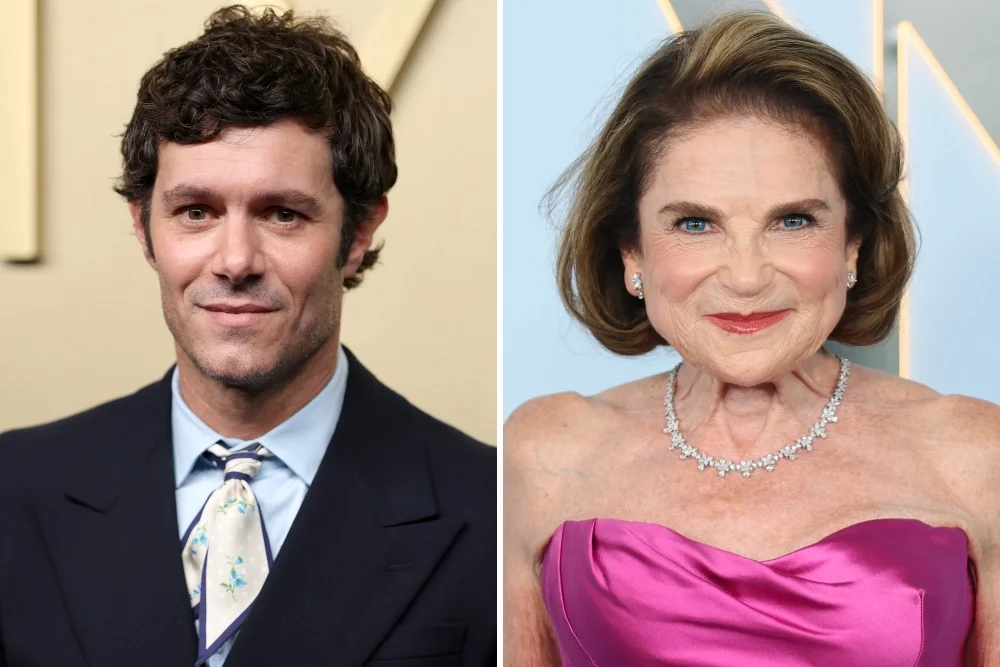
Veteran actress Tovah Feldshuh, a prominent voice within the entertainment industry and a staunch advocate for Israel, has strongly refuted the characterization of the ongoing conflict in Gaza as a "genocide," a sentiment recently voiced by her "Nobody Wants This" co-star Adam Brody. Feldshuh’s measured yet firm response, delivered in an interview with The New York Post, directly challenges Brody’s assertion that the situation constitutes genocide and expresses concern over the potential impact of such rhetoric, particularly when originating from individuals with Jewish heritage.
Adam Brody, who portrays Rabbi Noah Roklov on the Netflix comedy-drama "Nobody Wants This," made his position clear in a GQ interview last month. While he acknowledged that he had not previously engaged publicly with the complexities of the Israel-Gaza issue, Brody stated that it was a frequent topic of private discussion for him. He then unequivocally declared, "Put me down as thinking it’s a genocide. Put me down as wanting a free Palestine. It’s awful that it’s taken so much death and misery, but it does feel like it’s reaching a breaking point that it should have a while ago." Brody’s comments, made in the context of a widely read publication, brought the actor’s personal stance on the deeply divisive issue into the public sphere.
Feldshuh, a respected figure known for her extensive career in theater, film, and television, and a vocal supporter of Israel, deemed Brody’s accusation of genocide as "wild" and compared it to propaganda tactics employed by historical figures. "To accuse the Jewish people of genocide is wild," Feldshuh told The New York Post on Sunday. "It’s right out of Hitler’s playbook. You take the victim, and you make the victim the perpetrator." She emphasized that when such accusations are made by individuals who are themselves Jewish, as Brody is, it carries particular weight and can have a profound effect on the Jewish community. "When these accusations come from Jewish people themselves, it ‘makes a difference to the [Jewish] community,’" she added, highlighting the internal impact of such statements.
Feldshuh further elaborated on her perspective regarding the existential importance of the State of Israel, linking its survival to the broader stability of the democratic world. "I believe that the perseverance of the existence of the state of Israel is crucial to the well-being of the democratic world and of the free world… Of course, Israel needs the United States, [but] the United States needs Israel, believe me," she asserted. This statement underscores her conviction that the U.S.-Israel relationship is mutually beneficial and vital to global security and democratic values.
In her analysis of contemporary political discourse, Feldshuh invoked the concept of the "horseshoe effect," a theory suggesting that extreme political ideologies, regardless of their supposed origins, tend to converge. "We’re in a time where we have the ‘horseshoe effect,’ where socialism and antisemitism are trying to meet," she observed. This perspective suggests that certain progressive movements, in their critique of Israel, may inadvertently echo or align with antisemitic sentiments, a concern shared by many who advocate for Israel’s right to exist and defend itself. The "horseshoe effect" posits that far-left and far-right ideologies, while ideologically distinct, can share common ground in their opposition to established norms and their embrace of authoritarian tendencies. In this context, Feldshuh suggests that anti-Israel sentiment, particularly when framed in terms of systemic oppression or calls for the dismantling of the state, can intersect with antisemitic tropes that question the legitimacy of Jewish self-determination.
Feldshuh plays Bina Roklov in "Nobody Wants This," the mother of Adam Brody’s character, Rabbi Noah Roklov. This familial connection within the narrative adds a layer of complexity to the on-screen dynamic, given the real-world divergence in their views on the conflict. Reflecting on her professional role and her personal ethos, Feldshuh stated, "My job, as Bina but also as Tovah, is to love the people on set at my place of work, to be kind." This statement reflects a commitment to maintaining professional relationships and fostering a positive work environment, even amidst deeply held personal convictions that may differ from those of her colleagues. It also highlights the challenge of navigating personal political beliefs within a collaborative professional setting.
The controversy surrounding Brody’s comments is not confined to Feldshuh’s reaction. Earlier in October, Erin Foster, the creator of "Nobody Wants This," also addressed Brody’s public support for Palestine. In an appearance on the "Not Skinny but Not Fat" podcast, Foster stated, "I disagree with him, and that’s OK." She characterized the dynamic on set as reflective of broader societal conversations, noting, "You know, it’s complicated… I think our work environment, our set is very similar to dinner tables around the world where people are having debate and discussion and disagreeing. And, you know, while I love Adam, I also disagree with him, and that’s OK." Foster’s response emphasizes a belief in the importance of open dialogue and the acceptance of differing viewpoints, even within a creative team working on a project together. Her comments suggest a desire to foster an environment where such sensitive topics can be discussed, albeit with acknowledgment of disagreement.
The backdrop to these statements is the protracted and devastating conflict between Israel and Hamas, which intensified dramatically following Hamas’s October 7th attacks on Israel and Israel’s subsequent military operations in Gaza. The war has resulted in a severe humanitarian crisis in Gaza and has sparked widespread international debate, with varying perspectives on the root causes, the conduct of hostilities, and potential pathways to peace. The conflict has been marked by intense scrutiny of both parties’ actions, with accusations of war crimes and human rights violations leveled against both Israeli forces and Hamas. International bodies, including the United Nations, have called for ceasefires and humanitarian aid, while also investigating alleged violations of international law.
The use of terms like "genocide" in relation to the conflict has been particularly contentious. While some international legal scholars and human rights organizations have raised concerns about actions that could potentially constitute genocide or crimes against humanity, the legal threshold for proving genocide is extremely high, requiring proof of specific intent to destroy, in whole or in part, a national, ethnical, racial, or religious group. Critics of the use of the term often point to its historical significance and the gravity of such an accusation, arguing that its indiscriminate application can dilute its meaning and be used for political purposes.
Adam Brody’s comments, by framing the situation as a genocide and calling for a free Palestine, align with a growing segment of public opinion, particularly within certain progressive circles, that views Israel’s actions as disproportionate and constituting ethnic cleansing or even genocide. This perspective often emphasizes the immense suffering of Palestinian civilians, the extensive destruction of infrastructure in Gaza, and the long-standing occupation of Palestinian territories. Supporters of this viewpoint often advocate for international pressure on Israel, including sanctions and diplomatic isolation, to end the occupation and establish an independent Palestinian state.
Conversely, Tovah Feldshuh’s response reflects a perspective deeply rooted in the historical experience of the Jewish people, the existential threats they have faced, and the perceived necessity of a strong, sovereign Israel for their security and survival. This viewpoint often highlights the threat posed by Hamas and other militant groups, emphasizing Israel’s right to self-defense against attacks. It also often critiques what it perceives as a biased international media narrative that unfairly targets Israel while overlooking or downplaying the actions of its adversaries. The comparison to Hitler’s playbook is a stark reminder of the historical trauma of the Holocaust and the deep-seated fear of annihilation that continues to shape Jewish collective memory.
The debate surrounding the Israel-Gaza conflict is not merely a political one; it is also deeply intertwined with identity, history, and religious beliefs for many. The engagement of public figures like Adam Brody and Tovah Feldshuh in this discourse, particularly within the context of their professional work, highlights the pervasive influence of these global events on the entertainment industry and the broader cultural landscape. The tension between differing perspectives, as exemplified by the exchange between Brody and Feldshuh, underscores the profound disagreements and emotional complexities that characterize discussions about this enduring conflict. The differing views of Feldshuh and Foster also illustrate the spectrum of opinions within the creative team, showcasing a willingness to engage with these sensitive issues while maintaining professional decorum. The future of the region remains uncertain, and the debate over how to achieve lasting peace and justice continues to unfold on both global and personal stages.
