
 By admin
For over three decades, maritime travel experts and authors of definitive guides like Frommer’s "Alaska Cruises & Ports of Call" have emphasized a singular mantra for northern travelers: get out of the towns. The history of Alaska cruising is rooted in the pursuit of the sublime. Since the first steamships carried tourists up the Inside Passage in the late 19th century, the draw has remained the same: the intersection of massive geological forces and diverse wildlife. However, modern logistics mean that the most spectacular sites are often inaccessible to those on foot. This necessitates a strategic approach to shore excursions, treating them not as luxury add-ons, but as the core components of the journey. In Alaska, the excursion budget can often rival the cost of the cruise cabin itself, but the return on investment is found in once-in-a-lifetime memories.

The financial reality of Alaska is that it is one of the most expensive cruise destinations in the world for shoreside activities. The short operating season—typically running from May through September—coupled with the extreme costs of maintaining helicopters, floatplanes, and specialized wilderness equipment in remote environments, drives prices upward. For example, a three-hour helicopter and dogsledding adventure can now exceed $800 per person. While these figures may induce sticker shock, they reflect the complexity of operating in the Alaskan wilderness. For those looking to balance their budget, there are strategic ways to save. In Juneau, for instance, the Mendenhall Glacier is a primary attraction located only 13 miles from the docks. While dedicated shuttle companies often charge upwards of $70 for a round trip, a savvy group of three or four travelers can frequently secure a taxi for a fraction of that price, providing the same access to the glacier’s visitor center and surrounding hiking trails where salmon runs and black bear sightings are common.
When it comes to selecting the "best of the best," six specific excursions consistently stand out for their ability to deliver the quintessential Alaskan experience. The first, and perhaps most iconic, is the Dogsledding and Glacier Adventure by Helicopter in Juneau. This excursion is a masterclass in Alaskan logistics, combining a flight over the massive Juneau Icefield—a 1,500-square-mile expanse of ice and snow—with a landing at a high-altitude mushing camp. Here, travelers meet professional mushers and their teams of Alaskan Huskies, many of whom are training for the legendary Iditarod. The experience of gliding across a glacier on a sled pulled by a team of enthusiastic dogs, surrounded by jagged peaks that remain snow-capped even in July, is the pinnacle of Arctic tourism. Despite the high cost, the sheer sensory impact of the flightseeing and the interaction with the dogs makes it a perennial favorite for families and adventure seekers alike.

Also in Juneau, the Whale Watching and Wildlife Quest offers a different but equally profound connection to nature. The nutrient-rich waters of Auke Bay and the surrounding channels serve as a summer feeding ground for humpback whales that have migrated thousands of miles from Hawaii. The success rate for sightings is so high that many operators offer a money-back guarantee. Beyond the spectacular "breaching" or "tail-slapping" of humpbacks, these tours often provide sightings of Steller sea lions, harbor seals, and occasionally orcas. For those traveling in larger groups, booking a private charter can often be more cost-effective than purchasing individual tickets through the cruise line, while also offering a more intimate and customizable itinerary.
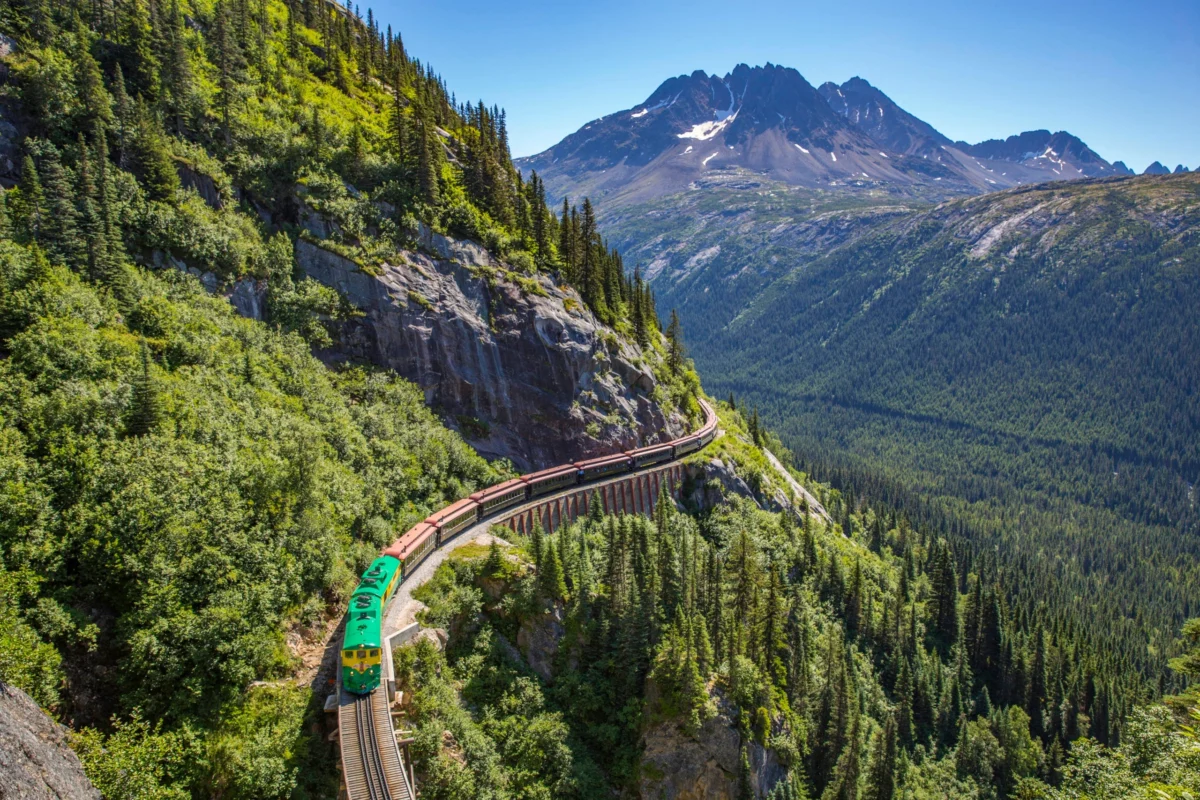
Moving north to the historic gold rush town of Skagway, the landscape shifts from marine wonders to dramatic mountain passes. The White Pass Scenic Railway is arguably the most famous train ride in North America. Constructed during the Klondike Gold Rush of 1898, this narrow-gauge railroad is a marvel of civil engineering. The train climbs nearly 3,000 feet in just 20 miles, traversing steep grades, cliff-hanging curves, and soaring wooden trestles. From the vintage railcars, passengers can see the original "Trail of ’98" worn into the mountainside by the boots of thousands of prospectors. It is an ideal excursion for those who want to see the rugged interior of the Yukon border without the physical strain of a backcountry hike.

However, for those who crave physical activity, Skagway offers the Klondike Rock Climbing and Rappelling excursion. Located along the granite cliffs of the Klondike Highway, this tour is designed to be accessible to everyone from six-year-old children to athletic adults. Professional guides provide a safe environment to scale 70-foot cliffs, offering panoramic views of the Skagway River valley as a reward for the ascent. The thrill of rappelling back down the rock face provides a rush of adrenaline that contrasts sharply with the sedentary nature of ship life. It is a highly-rated option for families looking to burn off energy while engaging directly with Alaska’s geological foundations.
For the ultimate Skagway experience that combines both the railway and the wilderness, the Laughton Glacier Hike and White Pass Rail Adventure is unsurpassed. This nearly 10-hour odyssey begins with a train ride on the White Pass & Yukon Route, but with a twist: hikers disembark at a remote "flag stop" in the middle of the forest. From there, a guided trek leads through the lush Tongass National Forest to the base of the Laughton Glacier. This is a rare opportunity to step away from the crowds and experience the silence of the Alaskan bush. Because the trail can cross into Canadian territory, travelers must carry their passports, adding a layer of international intrigue to the hike.

The final essential excursion is found in Ketchikan, the "Salmon Capital of the World" and the gateway to the Misty Fjords National Monument. Reached by seaplane, the Misty Fjords are a testament to the power of glacial erosion. Towering granite cliffs rise 3,000 feet straight out of the dark seawater, draped in ribbons of mist and spectacular waterfalls. Ketchikan is one of the wettest places on earth, receiving over 160 inches of rain annually, which fuels the vibrant temperate rainforest. A floatplane tour, particularly one that includes a water landing in a remote fjord, allows travelers to experience the profound isolation and beauty of a landscape that has remained largely unchanged for millennia.
Booking these excursions requires a strategic choice between the convenience of cruise-line-sponsored tours and the potential intimacy of independent operators. While cruise lines offer a "guaranteed return to ship" promise, many of the top-tier Alaskan tours—like the White Pass Railway—are partially owned or heavily contracted by the major lines like Princess and Holland America, meaning pricing is often standardized across the board. Regardless of the booking method, the key to a successful Alaska cruise is early planning. The most popular helicopter and flightseeing tours have limited capacity and often sell out months in advance.

While the towns of Alaska offer their own charms—the wooden boardwalks of Creek Street in Ketchikan, the spruce tip ales of Skagway Brewing Company, or the sophisticated exhibits of the Alaska State Museum in Juneau—they are merely the vestibules to the main attraction. The true soul of Alaska is found on the glaciers, in the fjords, and along the mountain ridges. By budgeting for high-quality shore excursions and venturing into the backcountry, cruisers transform a simple vacation into an epic exploration of one of the world’s last great wildernesses. Alaska is not a destination meant to be seen from a balcony; it is a destination meant to be felt underfoot and witnessed from the air.
