
 By admin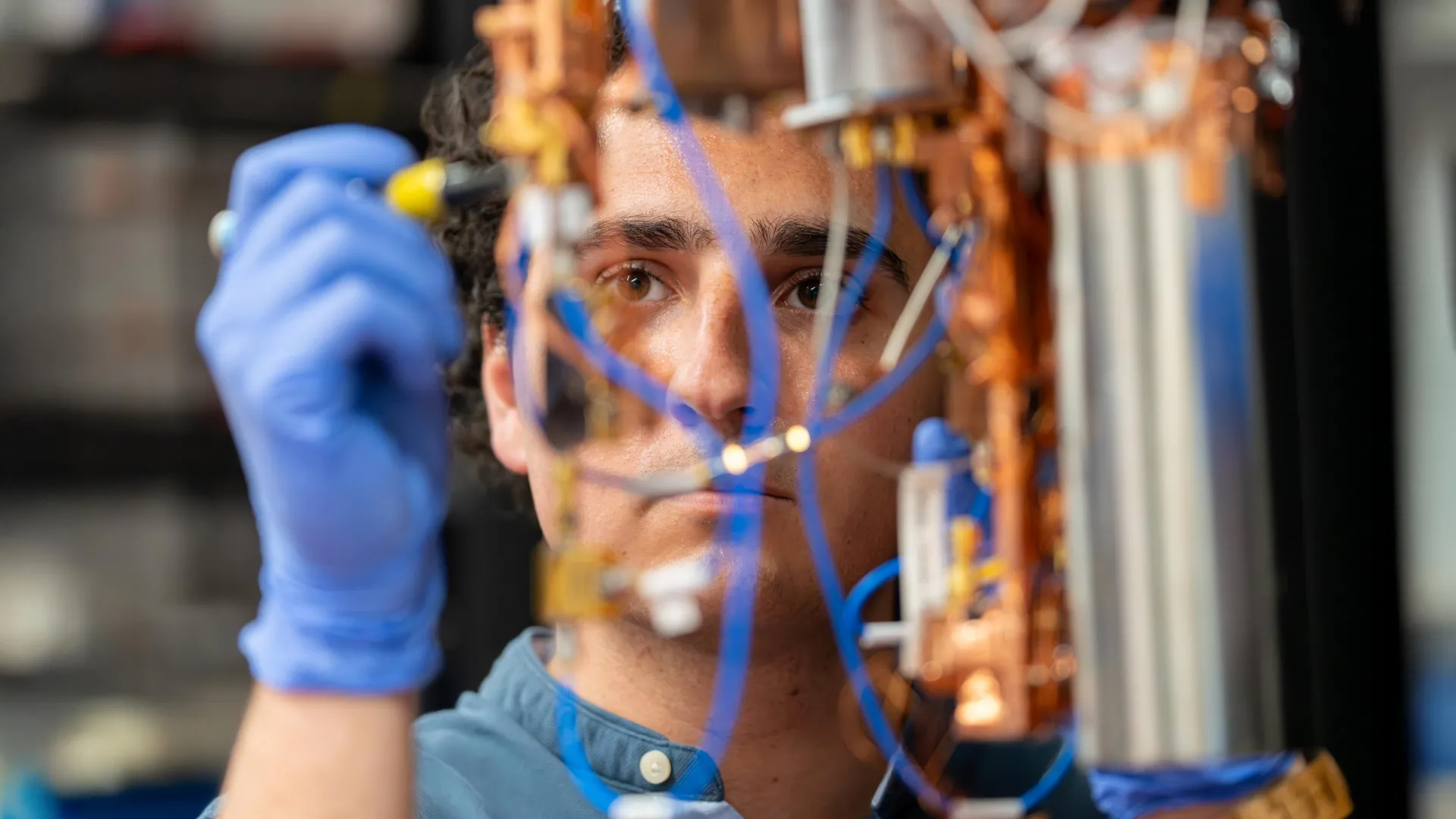
This pioneering experiment, recently published in the prestigious journal Physical Review X, marks the first successful experimental realization of a theoretical prediction made more than two decades ago. The implications are profound, as this innovative approach could lay an entirely new foundation for the development of practical quantum technologies, paving the way for scalable quantum computing architectures and intrinsically secure quantum communication networks.
The Indispensable Role of Entanglement in Quantum Computing
Entanglement stands as one of the most counter-intuitive and defining phenomena of quantum physics. It describes a unique correlation between particles or quantum systems where their fates become intertwined, irrespective of the distance separating them. A measurement performed on one entangled particle instantaneously influences the state of its entangled partner, a connection so profound that Albert Einstein famously dubbed it "spooky action at a distance." This non-classical correlation is not merely a scientific curiosity; it is the fundamental resource that underpins the extraordinary power of quantum computers, enabling them to process information in ways impossible for classical machines.
For quantum computing to move beyond small-scale laboratory demonstrations and achieve its full potential, it is imperative to build larger, more complex systems. This necessitates the ability to connect physically separated qubits, forming "distributed entanglement." Imagine a future quantum computer not as a single, monolithic device, but as a modular architecture where smaller, specialized quantum processors are interconnected, much like the networked classical computers of today. Distributed entanglement is the invisible thread that would bind these modules, allowing them to cooperate on complex computations and share quantum information across a network. Without a robust and efficient method for creating such connections, scaling quantum computers to thousands or millions of qubits – the scale needed for truly transformative applications – remains an intractable challenge.
Limitations of Current Entanglement Generation Strategies
Previous attempts to entangle distant qubits have largely followed two primary strategies, each with its own set of technical complexities and limitations.
One common method involves sending a single, actively controlled photon from one qubit to another. This approach demands exquisite control over the photon’s emission, propagation, and absorption, as well as precise timing and synchronization between the qubits. Any loss of the photon during transit, or imperfect interaction upon arrival, can lead to failure, making the process highly sensitive to environmental noise and experimental imperfections. Furthermore, maintaining the fragile quantum state of the photon over distance is a significant challenge, often requiring cryogenic temperatures and vacuum conditions.
The second, more widely adopted approach, involves having each qubit emit a photon independently. These two photons are then guided to a central point where they are "matched" or interfered in an effort to generate entanglement between the parent qubits. This technique gained significant recognition through the work of physicists like Alain Aspect, John Clauser, and Anton Zeilinger, who were jointly awarded the 2022 Nobel Prize in Physics for their groundbreaking experiments on entangled photons, particularly for demonstrating Bell inequality violations that confirmed the non-local nature of quantum mechanics. Their work validated the foundational principles of entanglement and its potential as a resource.
However, despite its fundamental importance and widespread use, this second approach still relies heavily on repeated measurements and a process known as "post-selection." In essence, entanglement is only successfully established when specific measurement outcomes occur, meaning the process is inherently probabilistic. If the desired outcome isn’t observed, the experiment must be repeated, leading to significant overhead and reduced efficiency. Moreover, the act of measurement itself can disturb the delicate quantum states, potentially destroying the very entanglement one seeks to create. This probabilistic, measurement-dependent nature makes it challenging to scale up and maintain stable, on-demand entanglement for practical quantum technologies.
A Paradigm Shift: The Autonomous Quantum Bath
It was against this backdrop of existing challenges that PhD student Alejandro Andrés-Juanes and Professor Johannes Fink at the Institute of Science and Technology Austria (ISTA), in collaboration with an international team of researchers, conceived and developed a radically different solution. Their innovative system introduces a "quantum bath" that autonomously brings distant qubits into a synchronized, entangled state. In a proof-of-concept prototype device, the researchers harnessed a shared source of correlated light particles to entangle two physically separated qubits, transforming an idea that had remained theoretical for over two decades into a tangible experimental reality.
"In this work, we aimed to overcome this mismatch between the readily available and the practically useful forms of entanglement," explains Andrés-Juanes. "By stabilizing the entangled states remotely, our approach is fully autonomous and requires no active control or measurement. This represents a significant conceptual leap, shifting from active, probabilistic entanglement generation to a passive, environment-driven stabilization."
Bridging Continuous and Discrete Entanglement
Quantum entanglement manifests in various forms. "Continuous-variable" entangled states, for instance, are relatively accessible and can be produced efficiently. These states can be conceptually compared to a classical pendulum, whose position and momentum continuously change and can be entangled with another pendulum’s state. While useful for certain quantum information processing tasks, many of the most promising quantum technologies, particularly those involving stationary qubits (like superconducting circuits or trapped ions), depend on "discrete-variable" systems. These involve ‘all-or-nothing’ forms of entanglement, where qubits exist in superpositions of distinct states (e.g., 0 and 1).
The core challenge faced by the ISTA team was finding an elegant way to bridge these two worlds: to connect the readily available and efficiently generatable continuous forms of entanglement with the discrete forms critically needed for practical, stationary qubit applications. Their quantum bath mechanism provides this crucial link.
The Quantum Bath: A Self-Stabilizing Entanglement Source
One of the most formidable difficulties in quantum computing is maintaining both entanglement and quantum coherence – the ability of a quantum system to exist in a superposition of states – for long enough to perform meaningful computations. Qubits are inherently fragile, constantly interacting with their environment in ways that can cause them to lose their quantum properties, a phenomenon known as decoherence.
The ISTA researchers addressed this fundamental problem by turning the qubits’ surrounding environment itself into the source and stabilizer of entanglement. "In our method, the quantum bath – meaning the qubits’ environment – is the source of entanglement. It creates a new ground state through a continuous stream of correlated photons," says Professor Fink. This is a profound shift from viewing the environment as a detrimental source of noise to an active, beneficial component.
Instead of fleeting, transient entanglement that must be used immediately before it vanishes, this new approach allows the entangled qubit state to be continuously stabilized. It remains available as a resource, even potentially beyond the natural "lifetime" of the individual qubits’ coherence. This means researchers can access the entangled state whenever it is needed, without the frantic race against decoherence that characterizes many current methods. This "always available" nature is what makes the approach conceptually significant, offering a path towards more robust and fault-tolerant quantum operations.
Microwave Photons: The Connective Tissue
To effectively couple the qubits with their entangled photon source, the researchers strategically employed microwave photons. These low-energy particles of light are particularly well-suited for manipulating quantum information within the leading superconducting-qubit technology platforms. Superconducting qubits operate at extremely low temperatures (millikelvin range) and interact with microwave-frequency electromagnetic fields. The use of microwave photons ensures seamless integration with these existing quantum hardware architectures, which are at the forefront of the race to build scalable quantum computers.
Optical photons, with their much higher energy, serve a different, complementary role. They are commonly used in optics and atomic physics experiments and are also envisioned as the primary carriers of quantum information over long distances through fiber optics, potentially connecting distant quantum computers to form a global quantum internet. The Fink group at ISTA is also actively investigating this area, suggesting a future where their autonomous entanglement generation could be integrated into broader quantum network architectures.
Probing the Hidden Quantum State: Quantum Tomography
A critical aspect of any quantum experiment is verifying that the desired quantum state has indeed been achieved. In the case of entangling two qubits within a quantum bath, the researchers needed to confirm that the qubits were truly synchronized and entangled. Direct measurement of an entangled state is problematic because the act of measurement itself collapses the delicate superposition, revealing only a classical outcome (a 0 or a 1).
To overcome this, the team employed quantum tomography, a sophisticated technique that allows for the reconstruction of a quantum system’s complete state by performing many different ‘slices’ of measurements. "Qubits can be in a superposition of states, but all these states collapse when we measure them, leaving us with a 0 or 1 state," explains Andrés-Juanes. By repeatedly preparing the system and performing different types of measurements on its collapsed states, researchers can statistically infer the full quantum state, including its entanglement properties.
The ISTA team performed these crucial measurements in incredibly short bursts, lasting only 20-80 nanoseconds (a nanosecond is one billionth of a second). This rapid measurement capability is vital to capture the system’s quantum state before significant decoherence can occur, providing a high-fidelity snapshot of the entanglement generated by the quantum bath.
Turning a 20-Year Prediction into Experimental Reality
By successfully entangling two isolated qubits through their innovative quantum bath, the ISTA researchers have not only provided a proof-of-concept laboratory prototype but have also brought to life a long-standing theoretical proposal that had eluded experimental verification for over two decades. "We present a relatively simple method that could be scaled up to synchronize multiple distant qubits," notes Andrés-Juanes, highlighting the potential for this approach to contribute significantly to the development of modular quantum processors.
While the new approach is highly promising, the researchers acknowledge that it is not yet as efficient as some methods that actively control qubit states. "Our method currently transfers about 10% of the bath’s available entanglement," states Fink. This initial efficiency, though a starting point, indicates room for optimization in future iterations, perhaps by refining the coupling strength between the qubits and the bath, or by engineering more advanced correlated photon sources.
The researchers suggest that one of the primary reasons this ingenious idea took more than two decades to demonstrate was that the original theory was developed under highly idealized conditions, which are notoriously difficult to reproduce in a real-world experimental setting. Laboratory environments are rife with noise, imperfections, and unwanted interactions that can quickly destroy fragile quantum states. "Our experiments helped us reveal several factors that may have prevented scientists from designing a functional quantum bath using a single source of correlated photons for distributed entanglement," says Fink. This implies that the ISTA team’s work not only demonstrated the concept but also provided critical insights into the practical challenges and necessary engineering solutions for realizing such a system.
The prototype developed at ISTA opens up a new frontier for quantum-optics experiments, offering a robust platform for exploring fundamental quantum phenomena and developing new quantum technologies. Crucially, this autonomous and self-stabilizing entanglement generation method could contribute significantly to ongoing efforts to expand the size and complexity of quantum processors. By offering a path towards reliable, on-demand entanglement, it moves the field closer to the ambitious goal of achieving fault-tolerant quantum operation, where errors inherent in quantum systems can be actively corrected, finally unlocking the full, transformative potential of quantum computing.
